
LONDON (AP) — British lawmakers are expected to pass a new law on Tuesday designed to prevent police and other government officials from hiding their mistakes and misconduct in the wake of public tragedies — a move coming 37 years after the nation’s worst sports disaster set off a long fight for accountability.
The legislation, formally called the Public Office (Accountability) Bill, places a legal obligation on public officials to be honest about disasters and their causes, regardless of how damaging that truth might be to their own standing or careers.
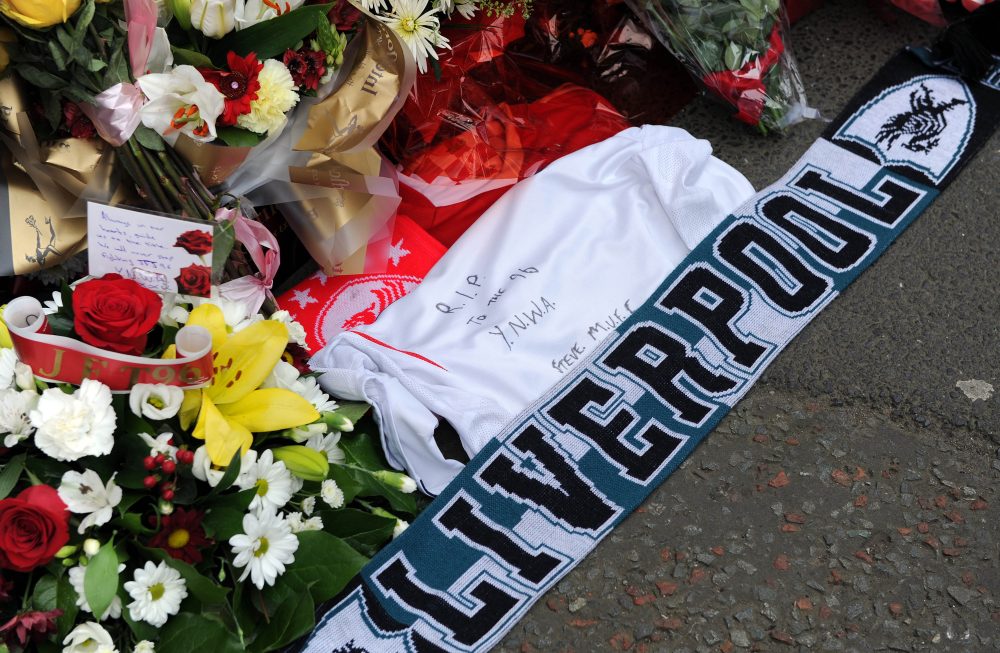
The bill is widely referred to as the Hillsborough Law, a name drawn from the 1989 tragedy at Hillsborough Stadium in Sheffield, where 97 Liverpool soccer supporters lost their lives after being crushed in a standing-only section of the stadium. A major independent inquiry conducted in 2012 revealed that police had actively concealed their own errors and shifted the blame onto fans.
The bill was expected to finish its journey through the House of Commons on Tuesday, following a delay tied to disagreements over whether Britain’s intelligence services would fall under its requirements. After sustained pressure from grieving families, the government agreed that spy agencies would be included under the duty of candor — though with a special process for handling disclosures that could pose a risk to national security.
Once the House of Commons approves the bill, it will move to the House of Lords, Parliament’s upper chamber, before becoming law.
Outgoing Prime Minister Keir Starmer, who made passing this law a promise during his 2024 election campaign, was scheduled to open the Commons debate on Tuesday in one of his last acts as the country’s leader.
His successor, Andy Burnham, who was set to take over as prime minister on Monday, has spent years advocating for the Hillsborough families. Writing in the Liverpool Echo, Burnham offered a tribute to their perseverance.
“We owe this moment to the Hillsborough families,” Burnham wrote. “For 37 years, they refused to accept a lie. They stood firm when powerful institutions closed ranks against them.”
“They have shown extraordinary courage, and because they never gave up, they will leave a legacy that reaches far beyond Hillsborough. They are helping to reshape the relationship between the public and the state for generations to come.”
On April 15, 1989, Hillsborough Stadium — which had a capacity of 54,000 — was nearly packed for a match against Nottingham Forest when more than 2,000 Liverpool supporters were funneled into an already overcrowded standing section behind one of the goals. Fans were crushed against metal barriers or knocked to the ground and trampled. Many died from suffocation. The death toll includes one victim who succumbed to his injuries in 2021.
At a time when violence among soccer fans was widespread in England, police constructed a false narrative blaming the deaths on drunken, disorderly, and ticketless Liverpool supporters. That account persisted for years before being dismantled through the relentless efforts of victims’ families.
An initial inquest in 1991 ruled the deaths accidental — a verdict the families rejected and fought to overturn. That ruling was eventually reversed in 2012 following an extensive inquiry that examined previously classified documents and exposed both misconduct and negligence by police.
Then in 2016, a second inquest jury determined that the victims had been “unlawfully killed” due to failures by police, the ambulance service, and the football club that operated the stadium. The jury also concluded that fan behavior played no role in causing the deaths.
The British government issued a formal apology in 2023 for how the families had been treated over the decades and for the slow response to the inquiry’s findings.
A review by the police oversight authority, concluded last year, found that 12 officers would have faced serious misconduct proceedings had they not already died or retired from service.