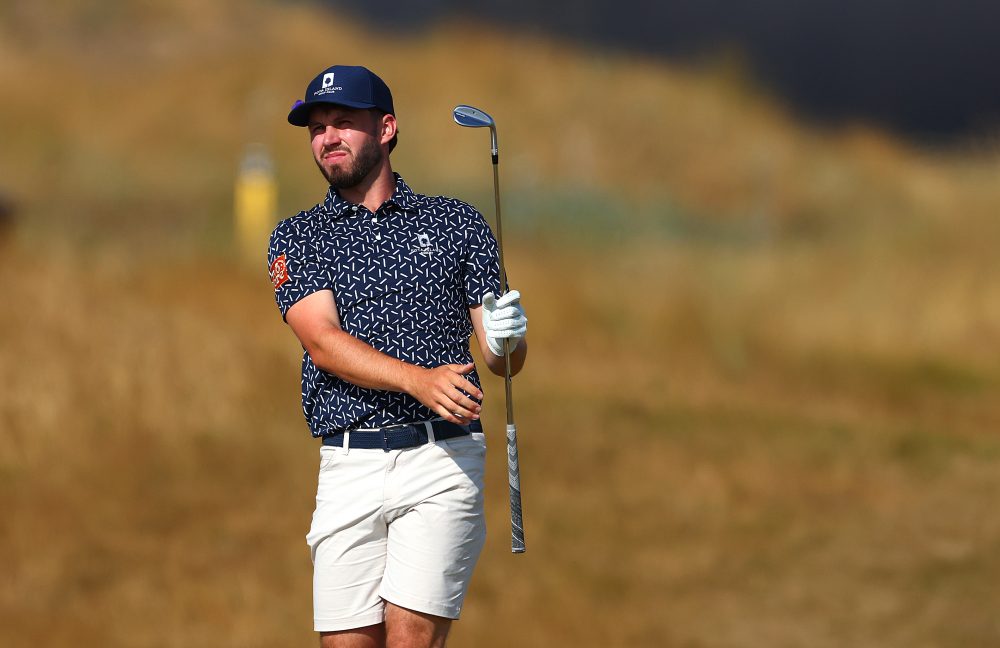

SOUTHPORT, England — When David Howard was just 7 years old, he received a diagnosis that would shape the rest of his life: cystic fibrosis. As a teenager, long before modern medicine had made the strides it has today, he stumbled across information online suggesting he likely wouldn’t survive past his mid-20s.
Today, Howard is 27 years old — and he’s teeing it up at the British Open at Royal Birkdale, preparing to compete against the finest golfers on the planet.
“Here I am, as healthy as ever and playing at the Open. It’s just nuts,” Howard said with a grin after completing his first practice round alongside former champions Padraig Harrington and Shane Lowry near the 18th green. “Yeah, I’d like to think I’m an inspiration.”
Howard is anything but a typical major championship participant. He’s a qualified car mechanic ranked No. 1,456 in the world amateur golf standings, and he earned his spot in golf’s oldest major by coming through one of four local qualifying events.
What he carries in his golf bag sets him apart as well. Alongside his clubs, Howard packs his daily medication — up to 30 tablets taken each day to fight off infection and help his body properly digest food.
Cystic fibrosis is a genetic condition that causes thick, sticky mucus to accumulate throughout the body, which can result in serious damage, blockages, and infections in the lungs and other organs. There is no cure, and the condition requires lifelong management — but newer treatments have dramatically improved quality of life for people like Howard.
He speaks openly about his past hardships. During his late teenage years, believing he “wasn’t going to be here much longer,” he turned to alcohol. Later, during the pandemic, he experienced what he described as “manic episodes and psychosis,” going weeks without being able to get out of bed or speak to anyone.
But Howard has rebuilt his life. At the end of 2023, he stepped away from full-time work as a mechanic — though he still tinkers with cars for family members — and committed himself entirely to golf.
That shift has also brought health benefits. “As a mechanic, working in dusty garages probably wasn’t ideal for me,” he said. “Being in the fresh air, around the coastlines with salty air, it’s really good. Hot weather is also good for CF, but there’s just a few things you need to keep on top of.”
Every time he eats, Howard takes digestive enzymes to break down fatty foods, meaning he’ll go through plenty of them during each round at Birkdale. Walking the course beside him will be his father, John, who is serving as his caddie. The cystic fibrosis unit at his local hospital in Cork, Ireland, provides him with a daily health plan and ongoing guidance.
He can still fall ill — air travel is particularly hard on his body — but instead of being admitted to the hospital two or three times a year, he can now typically manage with a two-week round of antibiotics.
“It’s great we are living longer with CF compared to before,” Howard said. “Loads of positives to take from it — living adulthood is the next challenge, but that’s a great thing to have to worry about.”
Howard’s golf résumé is already building. He’s won the East of Ireland championship and has represented Ireland in home international competitions. Later this year, he plans to attend qualifying school in a bid to turn professional on the European tour.
Since punching his ticket to the Open last month, Howard has heard from children with cystic fibrosis and their families, many of whom have told him they see him as “someone to look up to.”
“It’s a big thing,” he said. “Growing up with CF, it’s a lonely enough thing — you don’t meet other people with CF and really chat to them about it. So you’re figuring it out all on your own.
“It’s good to show that not everything is negative and there are positives to take from it. That you can follow your dreams and get at it.”