
BRUSSELS (AP) — Four nations with aspirations of joining the European Union took major steps forward Tuesday in what officials are calling a landmark moment for the 27-member bloc — one not seen in more than 20 years.
Formal intergovernmental conferences were held in Brussels to ceremonially open or close negotiating tracks for the four leading EU membership candidates: Albania, Montenegro, Moldova, and war-ravaged Ukraine. Despite the milestone, full membership for any of these countries remains years down the road.
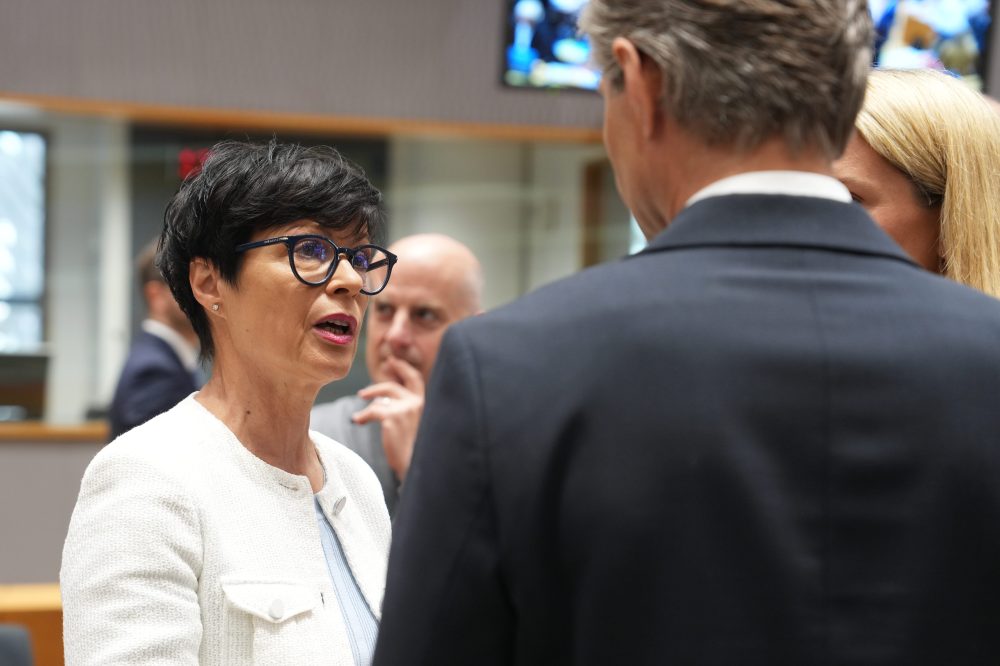
“We have not seen this in more than two decades. The last time, it was in 2002. This is a Super Tuesday for EU enlargement and Ukraine is part of it,” Enlargement Commissioner Marta Kos told reporters gathered in Brussels.
While conducting four such meetings in a single day is highly unusual, it is not without precedent. Ten countries — the majority from central Europe — were admitted to the EU in 2004. Croatia was the most recent nation welcomed into the world’s largest trading bloc, joining in 2013.
The flurry of activity Tuesday reflects sweeping political and geostrategic shifts across Europe. As recently as 2019, French President Emmanuel Macron had taken a firm stance against any expansion of the EU until the bloc itself underwent significant internal reforms.
However, Europe’s most devastating land war in decades has dramatically changed that position. Concerned about the growing foothold of Russia and China, the EU has pushed candidate nations to implement democratic reforms as a condition of moving forward.
Ukraine’s path to membership has advanced rapidly. The country only applied to join in 2022 — just four days after Russia launched its full-scale invasion. Moldova has similarly faced intense pressure from Russia throughout the process.
For Ukraine, EU membership represents a critical “security guarantee” for a stable postwar future. NATO membership would offer even stronger protections, but the Trump administration has stated that option is off the table, and other NATO members are reluctant to extend membership while the conflict is still ongoing.
Many European nations view the ongoing war as an existential threat, with fears that Russian President Vladimir Putin could set his sights on other European countries — particularly if Russia prevails in Ukraine.
“The case for Ukraine’s EU membership is very strong,” Commissioner Kos said. “The future security architecture of our continent is unimaginable without Ukraine. Ukrainians have turned their country into a military powerhouse with capabilities few other nations can match, especially with its rapidly evolving drone technologies.”
The possibility of EU membership has historically served as a powerful motivator for democratic reform. Joining the bloc has also boosted trade and created jobs, particularly in the unstable Balkans region, where a series of wars in the 1990s tore apart the former nation of Yugoslavia. The majority of current EU membership candidates are Balkan states.
Nations seeking to join the EU must complete negotiations across 35 policy areas — known as chapters — covering everything from agriculture and energy to taxation and trade. That process typically takes many years to complete.
Last month, Ukraine and Moldova opened negotiations on a cluster of five chapters tied to the core values and principles of the EU, including the rule of law, respect for fundamental rights, and the functioning of democratic institutions. On Tuesday, both countries opened a second cluster focusing on foreign relations, security and defense policies, trade policy, development cooperation, and humanitarian aid.
Albania’s session Tuesday was aimed at provisionally closing negotiating tracks in science and research, education and culture, and external relations. Montenegro — which has set a target of joining the EU in 2028 — made similar progress in the areas of competition policy and customs rules.
One key factor behind the EU’s renewed momentum is a recent change in government in Hungary. Ukraine’s accession process had long been blocked by Hungary’s nationalist former prime minister Viktor Orbán, who was widely regarded as Russia’s closest ally within the EU and a potential threat to the bloc’s cohesion. Because the candidacies of Ukraine and Moldova were linked, neither could advance while Orbán remained in power.
However, the ally of U.S. President Donald Trump was ousted by voters in April in a stunning electoral defeat after 16 years in power. Orbán had repeatedly used EU voting rules — which require unanimous agreement from all 27 member nations to open or close each negotiating chapter — to stall Ukraine’s progress.
Nine countries currently hold official EU candidate status: Albania, Bosnia, Montenegro, North Macedonia, Serbia, Georgia, Moldova, Ukraine, and Turkey. Accession talks with Georgia and Turkey remain on hold due to concerns about their democratic standards. Kosovo has applied for membership but has yet to be granted candidate status.