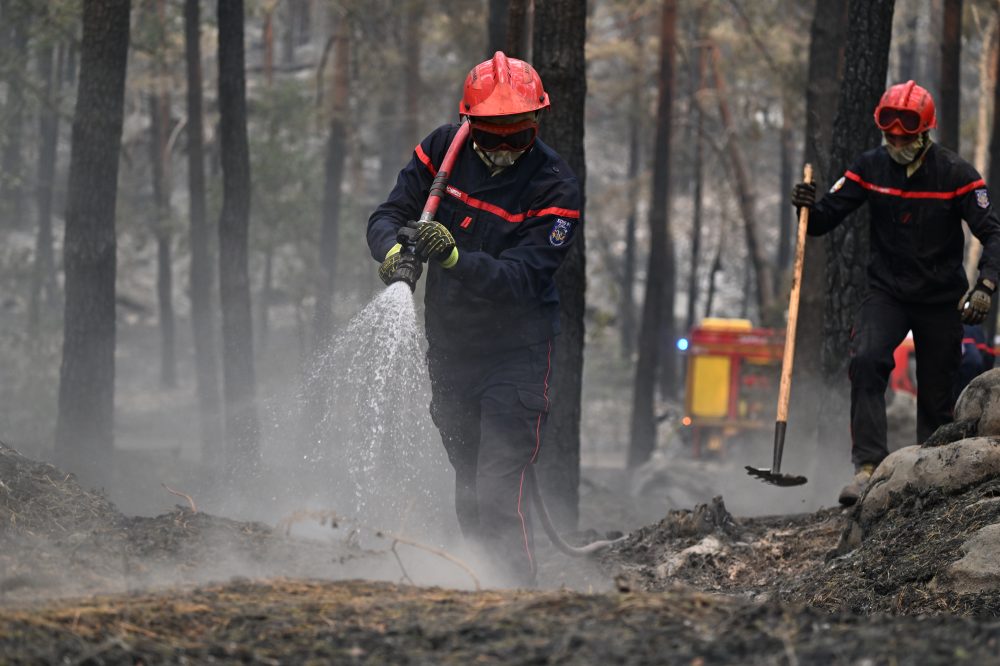

Hundreds of firefighters spent Tuesday battling two separate fires burning in the Fontainebleau forest, located south of Paris, as local authorities reported that the blazes had scorched nearly 2,000 hectares — roughly 4,900 acres — and forced approximately 1,000 residents to leave their homes.
While larger fires have been tearing through areas of southern France, the Fontainebleau fires stand out because of how close they are to the heavily populated region surrounding the French capital.
In an unprecedented move for the Paris area, water-dropping aircraft made repeated passes over the Seine River to collect water and drop it on the flames. The regional fire chief confirmed this marked the first time such planes had ever been deployed to fight fires in the Paris region.
Heavy smoke hung over the treetops throughout Tuesday as emergency crews worked to bring the situation under control. So far, no deaths or injuries have been reported.
Across the border in Spain, judicial authorities announced late Monday that they have identified 10 of the 13 people killed in a wildfire that devastated a remote expat community in southern Spain four days ago. Biological samples were used to make the identifications.
All of the victims were adults, and the majority were foreign nationals. Among those identified were five British citizens — including one woman who passed away in the hospital — three Belgian nationals, a French woman, and one Spanish national, according to a statement from judicial authorities. Ten people are still unaccounted for.
The fire, known as the Los Gallardos fire, burned through approximately 70 square kilometers — about 27 square miles — of forest and farmland, an area that exceeds the size of Manhattan.
Spain is currently enduring extreme heat, and when combined with strong winds and a lack of rainfall, those conditions are allowing small wildfires to rapidly grow out of control.
According to the European Union’s Copernicus Climate Change Service, Europe is warming faster than any other continent on Earth, with temperatures rising at twice the global average rate since the 1980s.