
MANILA, Philippines — Philippine police say a well-known American marine biologist was shot and killed by three masked men who forced their way into his home in the central Philippines on Sunday night.
Kent Carpenter, 73, was at a residence in the coastal town of Sibulan, in Negros Oriental province, with his Filipina companion when the intruders broke in. According to what his companion told police, one of the men pulled out a firearm and shot Carpenter in the head, killing him immediately.
National police spokesperson Col. Allen Rae Co told reporters that the attackers stole a laptop, a backpack, and an undisclosed amount of cash before fleeing the scene.
Regional police spokesperson Lt. Col. Joem Malong told The Associated Press that Carpenter’s companion suffered injuries and was receiving medical treatment. Investigators are working to establish a motive and track down those responsible.
Malong confirmed that Carpenter had been working as a lecturer at Silliman University in Dumaguete City, also in Negros Oriental province.
The U.S. Embassy in Manila had not responded to a request for comment as of the time of reporting.
Regional police director Brig. Gen. Romano Cardiño issued a statement promising accountability. “We assure the victim’s family, the community and our foreign visitors that this case is being treated with utmost urgency and no effort will be spared until justice is served,” he said.
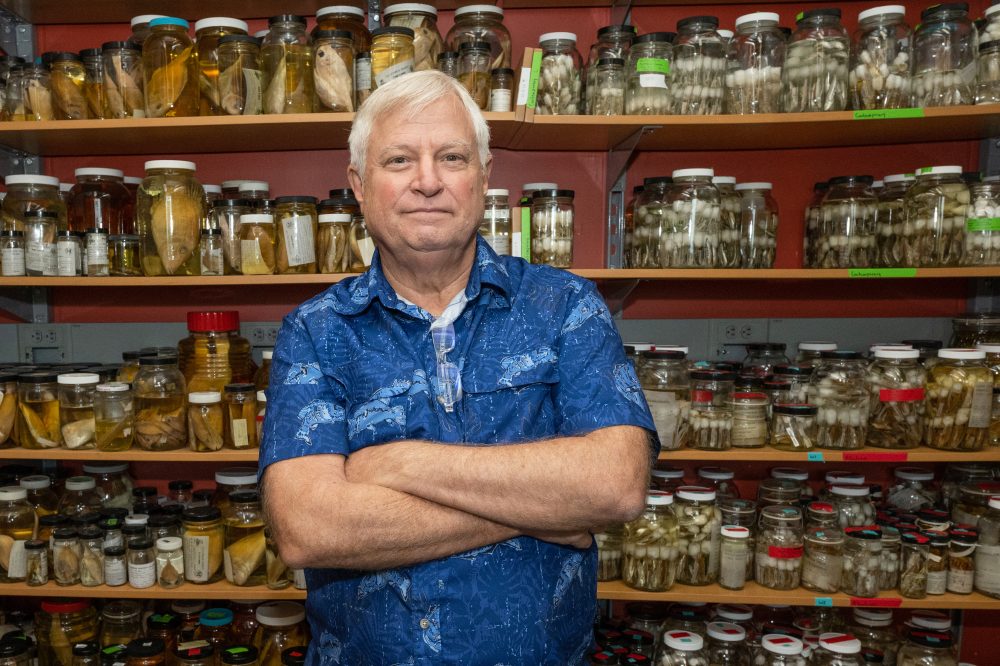
Carpenter had served as a biological sciences professor at Old Dominion University in Norfolk, Virginia, since 1996. University officials said his research centered on the Philippines and the Coral Triangle — the waters lying between the Indian and Pacific oceans — and that his work had influenced conservation efforts across the globe. He had been in the Philippines on an extended research trip and was reportedly planning to retire in September.
Old Dominion President Brian Hemphill released a statement mourning the loss. “He dedicated his career to expanding our understanding of the world’s bodies of water and protecting some of its most vulnerable ecosystems,” Hemphill said, calling the killing sad and devastating. “His scholarship and passion impacted and inspired many individuals locally, nationally, and internationally.”
On his university webpage, Carpenter described his research as focused on evaluating the extinction risks facing fish species and aquatic plants. In a 2010 interview with the AP, he warned that uncontrolled global warming could wipe out all of the world’s coral reefs within a century.
“You could argue that a complete collapse of the marine ecosystem would be one of the consequences of losing corals,” he said at the time. “You’re going to have a tremendous cascade effect for all life in the oceans.”
According to a 2007 Old Dominion University newsletter, Carpenter’s deep connection to the Philippines began during a Peace Corps assignment there in the 1970s.
Multiple Philippine environmental and biodiversity organizations expressed grief over his death. Silliman University called him an exceptional scientist and noted that he had partnered with the institution on marine research since 1976. “Dr. Carpenter made ground-breaking contributions that transformed global understanding of Philippine marine biodiversity,” the university said in a statement.