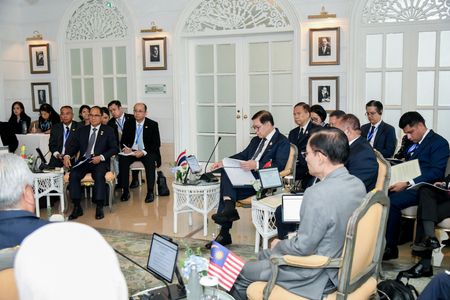

ASEAN’s special envoy on Myanmar sat down with ethnic minority rebel factions and a military-formed negotiation committee in Thailand on Monday, as part of an effort to find a resolution to the country’s ongoing civil war. The Philippines announced Tuesday that all parties present expressed a willingness to move forward with dialogue.
The Monday discussions came just one day after foreign ministers from the 11-nation Association of Southeast Asian Nations held a face-to-face meeting with their Myanmar counterpart — the first such direct encounter since a military coup in 2021 that plunged the country into widespread conflict.
Myanmar’s army-backed leadership has been excluded from high-level ASEAN gatherings due to their failure to follow through on ASEAN’s five-year-old peace framework known as the “Five-Point Consensus.” Still, some member nations are hopeful that Sunday’s ministerial meeting could mark a turning point. However, some analysts have cautioned that re-engaging with Myanmar’s new nominally civilian government — led by former junta chief turned president Min Aung Hlaing — could actually undermine ASEAN’s bargaining power.
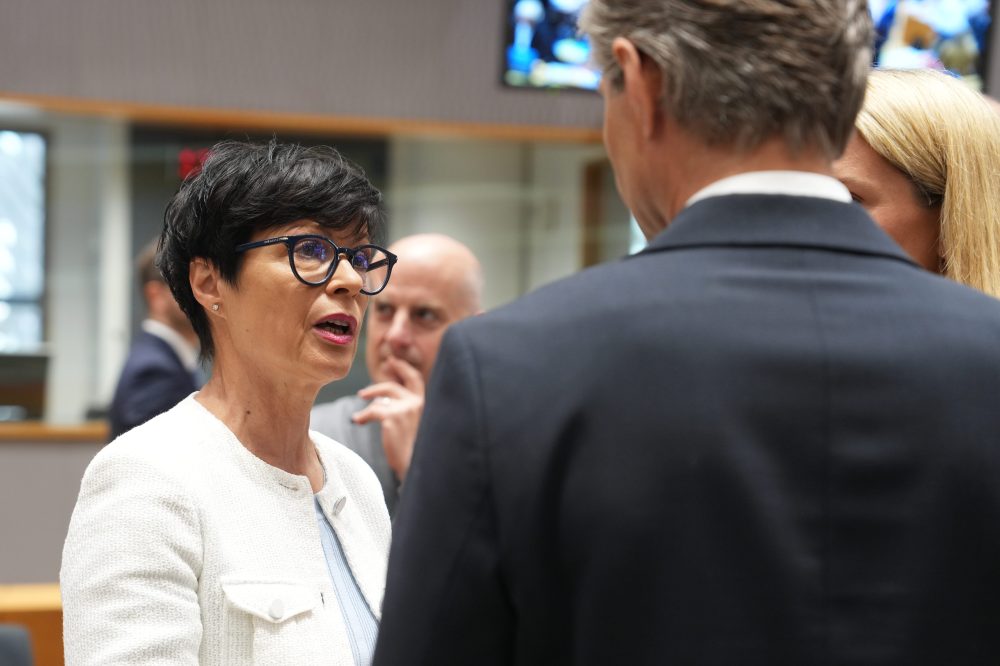
ASEAN special envoy Maria Theresa Lazaro, who also serves as the Philippines’ foreign minister, convened the talks to “discuss the way forward on an inclusive national political dialogue,” according to a statement from the Philippine foreign ministry. Representatives from select Myanmar rebel groups and the military-formed National Solidarity and Peacemaking Negotiation Committee attended the session.
“All sides expressed openness to the dialogue process and emphasised the importance of constructive dialogue,” the statement read.
Several ethnic armed organizations reached out to by Reuters declined to offer any comment.
Notably absent from the table was the National Unity Government — a shadow administration formed in exile by members of the party once led by Aung San Suu Kyi, whose democratically elected government was removed in the 2021 coup. The NUG said it received no invitation and voiced serious reservations about the nature of the talks.
“We have major questions about whether this meeting is intended to implement the ASEAN Five-Point Consensus, or if it is based on the military junta’s 100-day project and their own peace plan,” NUG Foreign Minister Zin Mar Aung told Reuters.
Shortly after taking office in April, Myanmar’s military-backed government announced a goal of initiating peace negotiations with opposition armed groups within 100 days.
The 2021 coup initially sparked widespread protests across Myanmar that eventually escalated into a multi-front civil war pitting the national armed forces against a range of rebel and militia groups. The conflict has claimed an estimated 100,000 lives and displaced approximately 3.6 million people.
Min Aung Hlaing was chosen as president in April by a parliament dominated by a pro-military party, following an election earlier this year that human rights organizations and Western governments widely condemned as illegitimate.