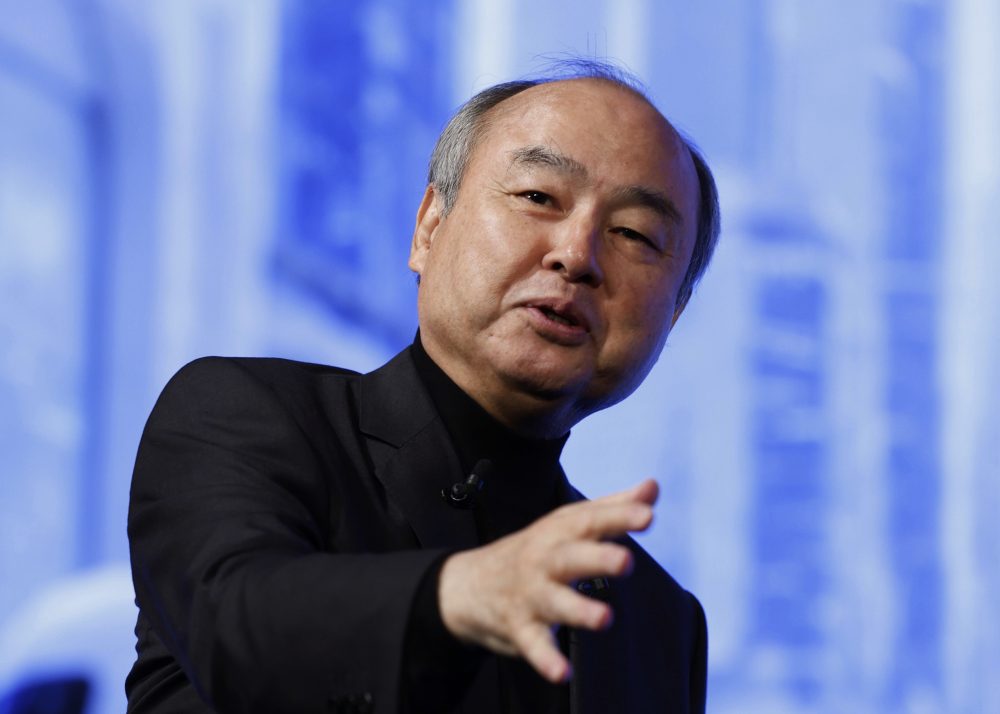

TOKYO (AP) — SoftBank Group CEO Masayoshi Son pushed back hard Tuesday against growing fears that the surge in artificial intelligence spending is an unsustainable bubble, calling such concerns outdated and comparing AI skeptics to people who questioned the value of automobiles and aircraft.
“To ask whether AI is a bubble is a foolish question,” Son told company executives gathered at an annual event in Tokyo. “AI will transform our lives completely, and do so in a way that generates profits.”
He went further, saying: “Those who refuse to evolve are closing down their world. Those who condemn AI are themselves spitting upward.”
His comments come as financial markets have grown increasingly uneasy over the rapid climb in share prices for companies like Nvidia and the enormous sums being poured into data centers — with some investors questioning whether those expenditures will ever generate returns that justify the hype surrounding AI technology.
Son built SoftBank from the ground up more than four decades ago and has long been a driving force in Japanese technology investment. He was an early champion of AI and has committed tens of billions of dollars to companies working in the field.
According to Son’s estimates, the world will need to spend close to $5 trillion every year to support AI growth — covering the expansion of data centers, ramped-up production of computer chips, and the development of energy systems and other critical infrastructure.
Looking further ahead, Son projected that “in 2040, approximately 20% of the world’s GDP will be replaced by AI-related industries, the world of superintelligence.”
SoftBank manages a wide-ranging portfolio of companies through its Vision Funds, with additional holdings in telecommunications and energy sectors.
The Tokyo-based company recently announced that profits for the fiscal year ending in March jumped nearly five times compared to the previous year, reaching 5 trillion yen — roughly $32 billion — largely driven by returns on its AI investments.
SoftBank has put $34.6 billion into OpenAI and previously sold off its stake in chip manufacturer Nvidia to free up capital for further AI and data center investments.
The company has also launched a new battery business in Japan aimed at developing next-generation electric power infrastructure, anticipating a major rise in electricity consumption as AI technology becomes more widespread.