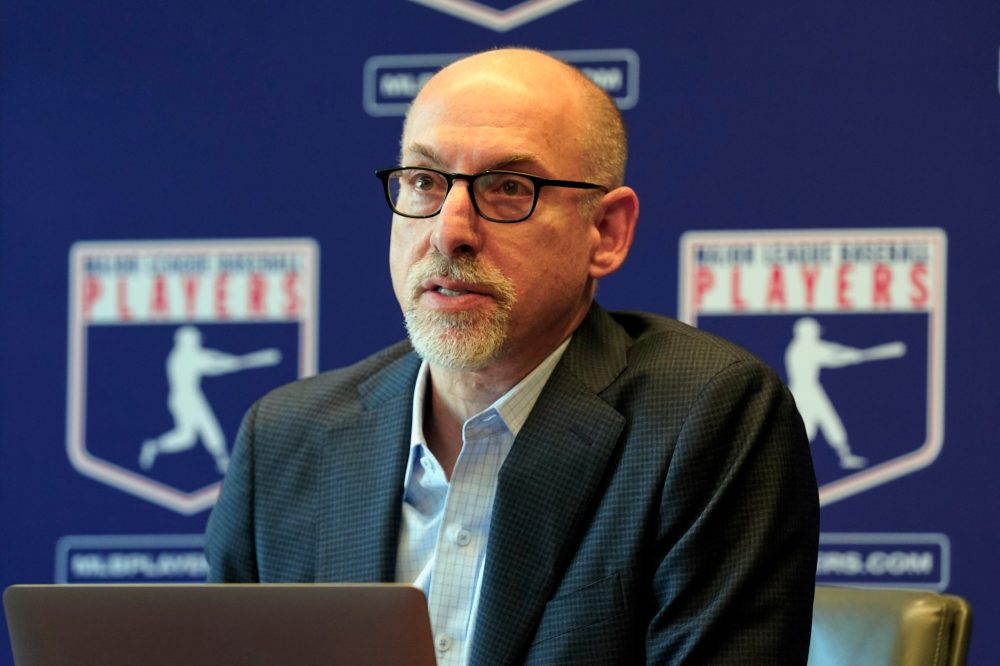

The leader of Major League Baseball’s players’ union took aim at league management on Tuesday, sharply criticizing an advertising campaign pushing for a salary cap and calling its message damaging to the very fans baseball depends on.
Bruce Meyer, who stepped into the union’s top role after Tony Clark was pushed out in February, made clear he believes the sport is doing well — not poorly as management has suggested.
“The supposed stewards of the game have spent an inordinate amount of time trying to convince those same fans that they don’t have hope or they shouldn’t have hope or that the product that they’re paying to consume in record numbers is somehow broken,” Meyer said. “I think it’s perverse.”
The numbers appear to back Meyer up. Average attendance this season has reached 29,230 per game, a 1.2% increase over last year’s comparable figure of 28,895. At this pace, MLB is on track for its best attendance numbers since 2017.
Management put forward a salary cap proposal back in May — something players have flatly rejected and say they will never accept. MLB’s campaign, called “Level the Field,” promotes the idea that fans want a salary cap, a concept baseball players have historically opposed.
“I believe that this system is bad for players and would be for generations to come,” Meyer said.
The current five-year labor agreement between players and management runs out on December 1. A lockout is widely anticipated to follow immediately, which would mark the sport’s tenth work stoppage since 1972. The last time games were actually lost was during a 7½-month strike in 1994-95, which resulted in the World Series being canceled for the first time in 90 years.
Meyer also pushed back on the idea that teams can’t afford to compete without a salary cap structure.
“Teams in every market across the league can afford to compete,” he said. “Many of them are choosing not to.”
He also pointed to other major sports leagues as cautionary examples, saying players in the NFL, NBA, and NHL only agreed to caps under pressure.
“In one way or other they were broken or forced into it,” Meyer said.