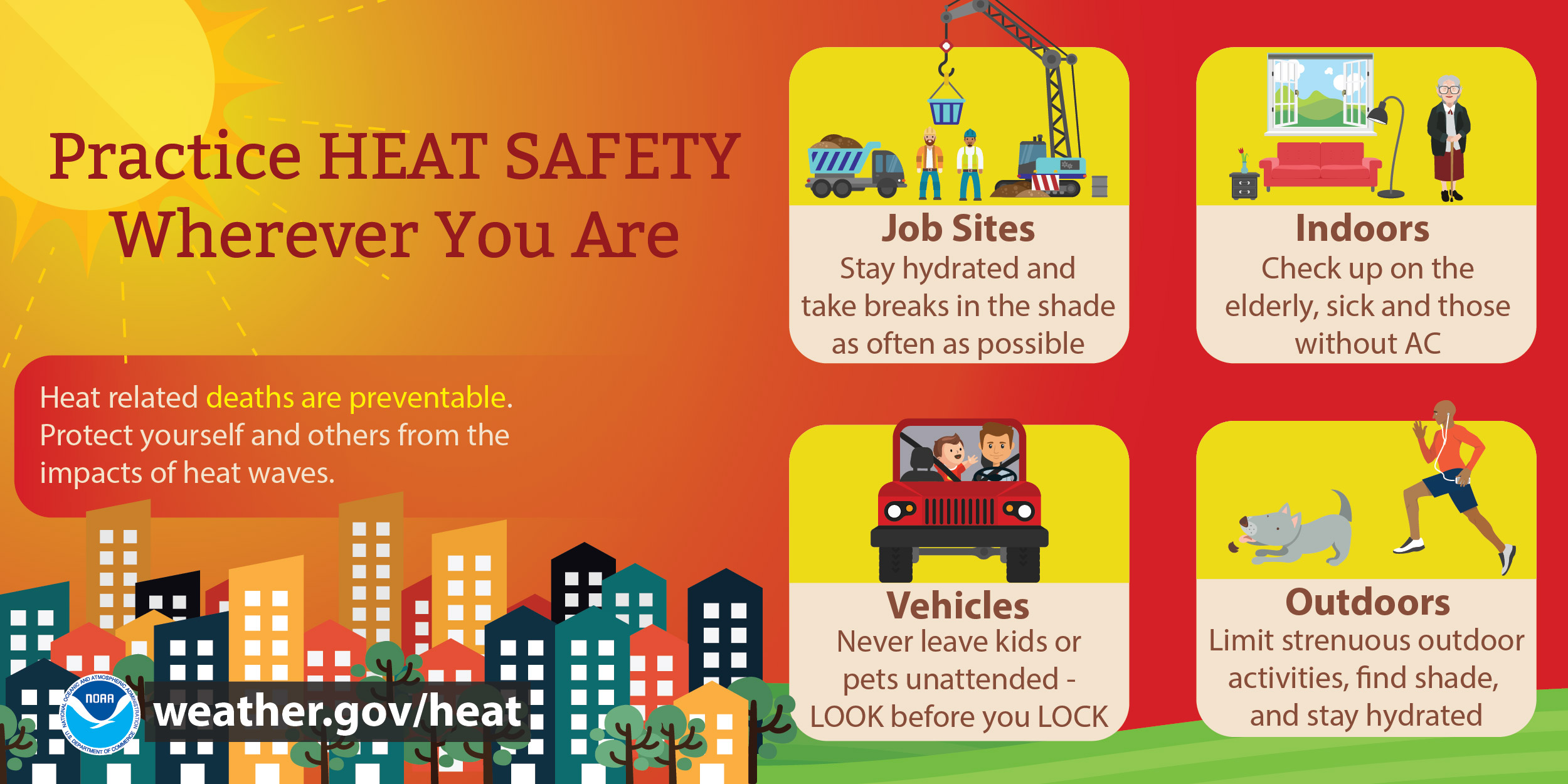

Dangerous heat and humidity will build across the Mid-Atlantic on Wednesday, July 15, and remain a concern into Thursday, July 16. Residents are being urged to prepare now and limit their exposure during the hottest portion of the day.
While high temperatures will be a major part of this heat wave, the combination of heat, humidity, direct sunlight and physical activity will create the greatest danger. Heat-related illnesses can develop quickly when the body is unable to cool itself properly.
Anyone can become sick from excessive heat, but older adults, infants, young children, pregnant women, outdoor workers and people with chronic health conditions face a greater risk. Hot weather can also worsen existing heart, lung and other medical conditions.
Prepare Before the Heat Arrives

Residents should complete outdoor chores, errands and other preparations before the worst heat develops Wednesday afternoon.
Check that air-conditioning systems and fans are working properly. Close curtains or blinds that receive direct sunlight and identify an air-conditioned location where you can go if your home becomes too hot.
People without reliable air conditioning should plan to visit a cooling center, library, shopping center, community building or the home of a friend or relative. During extreme heat, fans should not be relied upon as the only source of cooling inside a very hot building.
Residents should also check on older relatives, neighbors and anyone who lives alone. A phone call may not be enough. When possible, confirm that the person’s home is cool and that they have access to water, medication and transportation to an air-conditioned location.
Drink Water Before You Feel Thirsty
Begin hydrating before spending time outside and continue drinking water regularly throughout the day. Do not wait until you feel thirsty.
People performing physical work should take frequent water and rest breaks. Outdoor workers may need to reduce their workload, rotate assignments or move strenuous tasks into the early morning. The National Institute for Occupational Safety and Health recommends frequent water intake and periodic rest breaks for people working in hot environments.
Alcohol should be limited because it can contribute to dehydration. Heavy meals and excessive caffeine may also make some people feel worse during very hot conditions.
Anyone whose doctor has restricted their fluid intake should speak with a medical professional about how to remain safe during the heat wave.
Avoid the Hottest Part of the Day
The greatest heat stress will generally occur during the afternoon and early evening. Yard work, exercise, construction projects and other strenuous activities should be moved to the early morning whenever possible.
People who must remain outside should take frequent breaks in shade or air conditioning. Wear lightweight, loose-fitting and light-colored clothing, along with a hat and sunscreen.
Direct sunlight can make conditions feel significantly hotter than temperatures measured in the shade. Pavement, rooftops, athletic fields and other exposed surfaces can become especially dangerous during the afternoon.
Never ignore dizziness, weakness or nausea in order to finish a job, practice or outdoor event. Stop the activity immediately and move to a cooler location.
Never Leave Anyone in a Parked Vehicle
Never leave a child, older adult, person with a disability or pet inside a parked vehicle, even for a few minutes.
Cracking the windows or parking in the shade does not make a vehicle safe. Before locking your vehicle, check the front and back seats every time.
Parked vehicles should also remain locked when unattended so children cannot climb inside and become trapped.
Protect Pets
Keep pets indoors during the hottest portion of Wednesday and Thursday whenever possible. Outdoor animals must have continuous access to fresh water and full shade.
Limit walks to the early morning or later evening. Asphalt and concrete can become hot enough to burn an animal’s paws.
Never leave a pet inside a parked vehicle, even with the air conditioning running or the windows partially open.
Use Extra Caution With Medication
Certain medications may affect the body’s ability to regulate temperature, sweat or remain hydrated. People taking prescription medications should review their personal heat risk with a doctor or pharmacist.
Do not stop or change medication without medical guidance. The Centers for Disease Control and Prevention recommends developing a personal heat-action plan with a healthcare provider when medications or chronic health conditions may increase heat sensitivity.
Medication should also be stored according to its instructions and should not be left inside a hot vehicle.
Recognize Heat Exhaustion
Heat exhaustion is a warning that the body is struggling to handle the heat. Symptoms can include:
- Heavy sweating
- Dizziness or faintness
- Headache
- Nausea
- Weakness or fatigue
- Muscle cramps
- Cool or clammy skin
- A rapid pulse
Move the person into air conditioning or shade immediately. Loosen or remove unnecessary clothing, apply cool wet cloths and offer small sips of cool water.
Do not allow the person to return to strenuous activity. Seek medical help if symptoms worsen, vomiting occurs or the person does not begin improving.
Heat Stroke Is a Medical Emergency
Heat stroke can cause permanent injury or death and requires immediate emergency treatment.
Warning signs can include:
- Confusion or unusual behavior
- Slurred speech
- Loss of consciousness
- Hot or flushed skin
- Seizures
- A very high body temperature
- A rapid, strong pulse
Call 911 immediately if heat stroke is suspected. Move the person into a cooler area, remove excess clothing and begin rapid cooling with cold water, wet cloths or ice while waiting for emergency responders.
Do not give fluids to an unconscious or confused person. Delayed treatment can be fatal.
Take the Heat Seriously
Heat-related illness is preventable, but only when precautions are taken before symptoms begin.
Remain hydrated, reduce outdoor activity, seek air conditioning and check on vulnerable family members and neighbors throughout Wednesday and Thursday. Anyone experiencing signs of heat illness should stop what they are doing and move into a cooler environment immediately.
This is not the type of heat to push through. Taking a break, changing outdoor plans or seeking an air-conditioned location could prevent a medical emergency.