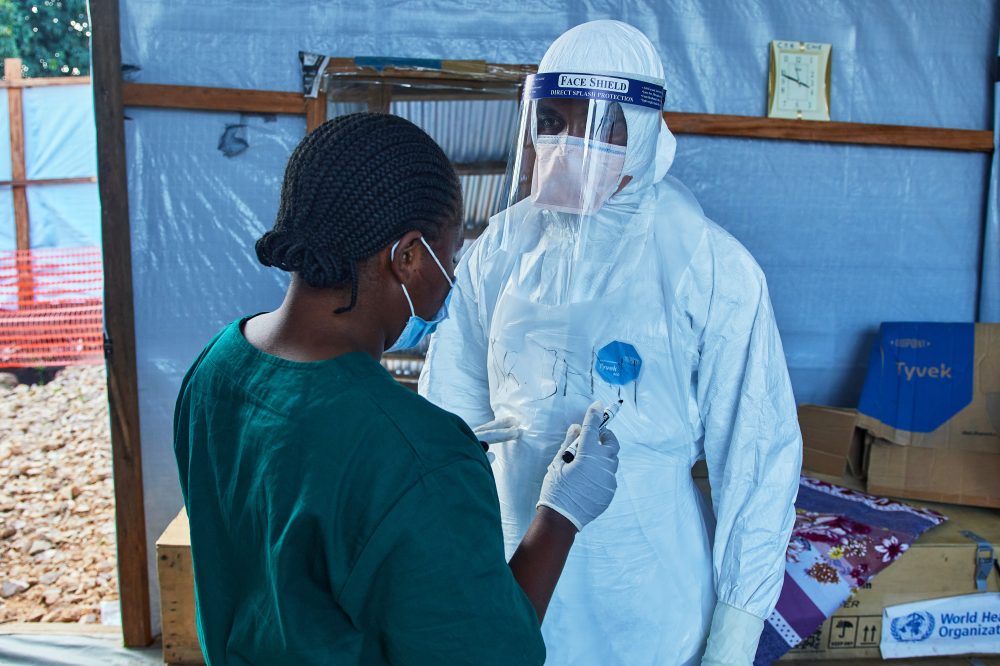

The Ebola crisis in eastern Congo is moving faster than health workers can contain it, according to the World Health Organization’s emergencies chief, who delivered a sobering assessment on Tuesday following a visit to Bunia, in Ituri province — one of the hardest-hit areas of the outbreak.
“Perhaps the most alarming finding is that many of the newly reported deaths are people who died in their communities without ever reaching a health facility and without receiving care,” said Chikwe Ihekweazu. “And as of today, 80% of new cases are outside our contact lists and so are coming to us from unknown chains of transmission.”
Congo has been fighting this outbreak of a rare strain of Ebola since May, with no approved treatment or vaccine available. Last week, the Africa Centre for Disease Control described it as the fastest-growing Ebola outbreak ever recorded on the continent.
Congolese health authorities reported that as of Monday, at least 1,926 people have contracted the disease and 702 have lost their lives across three provinces. The rare Bundibugyo virus is responsible for the outbreak, and cases have also been confirmed in neighboring Uganda.
Adding to the concern, the U.S. Centers for Disease Control and Prevention announced last week that a U.S. citizen employed by a humanitarian organization in Congo has tested positive for the Ebola virus. No additional details were provided.
Speaking to reporters in Geneva, Ihekweazu described his visit to Bunia as “quite encouraging on many fronts, but also deeply concerning on many fronts.” He noted that treatment capacity in the area has grown to nearly 800 beds, with more being added weekly, and that laboratory capacity has expanded from just one facility to 14. Other areas of the response have also seen improvement.
Still, Ihekweazu acknowledged that despite “our best efforts … we have not caught up in the race.”
The response has been slowed by a shortage of funding, violent attacks on health centers, an ongoing armed conflict in eastern Congo, and deep mistrust among local communities toward health workers.
On Monday, dozens of workers at an Ebola treatment center in northeastern Congo walked off the job to protest unpaid wages and bonuses.
According to the WHO, Congolese authorities officially declared the new Ebola outbreak on May 15, though the disease had already been spreading for weeks before being detected.
In a promising development, clinical trials for potential treatments got underway last week when researchers launched a long-awaited study aimed at finding an effective way to fight the virus.