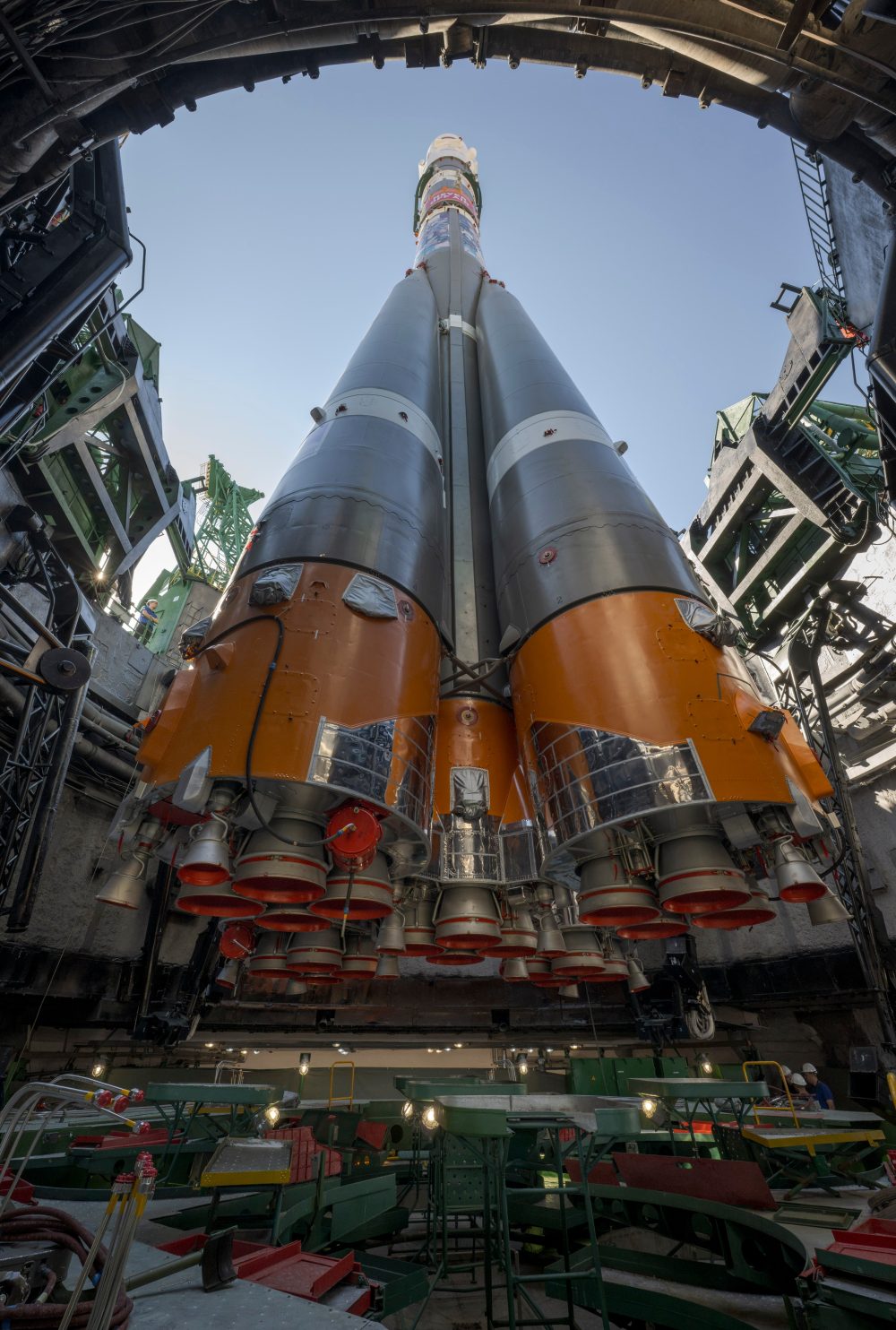

MOSCOW (AP) — NASA Administrator Jared Isaacman made his way to a scheduled Tuesday launch of a combined American and Russian crew headed to the International Space Station, demonstrating that space cooperation between Washington and Moscow continues even amid friction over Russia’s military operations in Ukraine.
Isaacman’s journey to the Russia-leased Baikonur cosmodrome, located in Kazakhstan, represented the first time a NASA administrator had set foot at the facility in eight years.
During a crew meeting on Monday, Isaacman expressed gratitude to Russia’s state space agency, Roscosmos, for its preparation efforts ahead of the mission. He noted that “the integrated work performed over the past several months reflects the professionalism and dedication of everyone involved.”
Isaacman also sat down with Roscosmos director Dmitry Bakanov ahead of the launch. The crew heading to the station includes NASA astronaut Anil Menon alongside Russian cosmonauts Pyotr Dubrov and Anna Kikina. The three were set to launch aboard the Roscosmos Soyuz MS-29 spacecraft for an eight-month stay on the International Space Station.
For Menon, the mission marks his first trip to space. Dubrov and Kikina are each making their second spaceflight.
Once aboard the station, the trio will link up with NASA astronauts Jessica Meir, Jack Hathaway, and Chris Williams, European Space Agency astronaut Sophie Adenot, and Roscosmos cosmonauts Sergei Kud-Sverchkov, Sergei Mikaev, and Andrei Fedyaev.
The United States and Russia, once fierce competitors during the Cold War’s space race, have long worked together on the International Space Station and other projects. That partnership grew strained after Russia sent military forces into Ukraine in 2022, but both nations have continued to collaborate, with crews from each country traveling to the orbiting station on their respective spacecraft.
Larger cooperative plans, including potential Russian participation in NASA’s Artemis lunar research program, have since collapsed. As Russia has grown more dependent on China for energy exports and critical technology imports due to Western sanctions, Roscosmos has begun working with China on its own planned lunar mission.