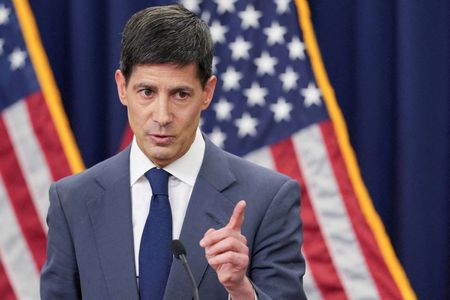

Federal Reserve Chairman Kevin Warsh is set to appear before Congress on Tuesday, marking his first testimony since assuming leadership of the U.S. central bank.
While Warsh has made his views known through public statements and his Senate confirmation hearing, a number of significant questions remain unanswered regarding his thinking on the economy, inflation, and the job market — the two areas Congress has specifically charged the Fed with managing.
Here is a look at some of the key issues lawmakers may raise:
EMPLOYMENT
Warsh has been relatively quiet on the subject of jobs and where he sees the workforce heading. Lawmakers may want to know how he views a labor force that could gradually shrink over time due to demographic shifts and changes in immigration. They may also ask whether an economy with low unemployment but sluggish monthly job growth would, in his view, meet the Fed’s obligation to achieve maximum employment.
INFLATION
On the topic of inflation, Warsh has suggested that when measuring against the Fed’s 2% target, the focus should be on the broad picture rather than precise numbers — describing it as looking to the “left of the decimal point.” This suggests he may be comfortable with inflation running slightly above 2%. But questions remain about how he views inflation that falls below that target. The Fed officially treats its 2% goal as a two-sided target, meaning inflation that’s too low is considered just as problematic as inflation that’s too high. Whether Warsh shares that view — or takes a more flexible approach — is still an open question.
MONEY SUPPLY
The Fed has largely set aside concerns about the money supply for years, but it made a notable reappearance last week in the first Monetary Policy Report released under Warsh’s leadership — the first mention in roughly a decade. Lawmakers may press him on what role he believes the money supply plays in driving inflation, and how he plans to use it as a policy tool. There’s also the question of whether a focus on money supply could lead the Fed to push back against federal deficit spending, a topic the central bank has traditionally considered off-limits and the responsibility of elected officials.
EXPECTATIONS
Fed policymakers have long held that what the public expects about future inflation plays a major role in how inflation actually unfolds. The Fed’s own policy framework states the central bank is “prepared to act forcefully to ensure that longer-term inflation expectations remain well anchored.” Warsh, however, has not spoken about this issue with the same level of emphasis as his colleagues. Congress may ask whether he agrees that managing public expectations is central to the Fed’s mission, and whether he shares the view held by other policymakers that keeping those expectations stable is among the Fed’s highest priorities.