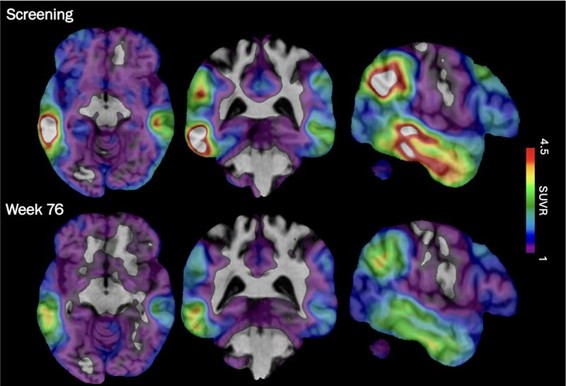

WASHINGTON — A new experimental medication may offer a different path to slowing early-stage Alzheimer’s disease by reducing levels of a brain protein known as tau, according to findings shared by researchers on Tuesday.
Tau is one of two key proteins believed to drive Alzheimer’s, alongside the better-known amyloid. While previous attempts to develop drugs targeting tau have come up short, two existing treatments — lecanemab and donanemab — work by clearing amyloid buildup and can modestly slow the progression of memory loss.
New data on Biogen’s drug diranersen suggests it did more than just reduce tau levels in the brain. A study involving roughly 400 participants found indications that it also slowed cognitive decline — and in one smaller group, the effect was comparable to what has been seen with amyloid-targeting therapies. The results were presented at the Alzheimer’s Association International Conference in London. Biogen has announced plans for a larger follow-up study to more definitively establish the drug’s benefit.
Jessica Langbaum of the Banner Alzheimer’s Institute in Phoenix, who had no involvement in the Biogen study, called the results encouraging. “This is really quite promising if it were to hold up” in the next phase of testing, she said.
Dr. Reisa Sperling of Mass General Brigham, also unconnected to the research, urged caution but expressed optimism. “This is early days,” she said, adding, “I think it will reinvigorate interest and investment in lots of tau mechanisms, and the field needs that.”
Diranersen is among several novel strategies being explored in the fight against Alzheimer’s, a disease that robs people of their memory and cognitive function. Other approaches include a potential tau vaccine, an experimental heart medication that may also benefit people at high genetic risk for Alzheimer’s, and new techniques to help drugs cross the so-called blood-brain barrier more effectively.
The exact cause of Alzheimer’s remains unclear. The disease affects more than 7 million Americans and tens of millions of people around the world. Scientists believe that sticky amyloid plaques begin forming in the brain roughly two decades before symptoms emerge, but amyloid alone is not thought to be sufficient to cause the disease. Many researchers believe that amyloid buildup eventually triggers an abnormal version of tau to form tangles inside neurons, which then sets off the disease’s symptoms.
Diranersen belongs to a class of drugs called antisense oligonucleotides. Rather than attacking existing tau buildup, it works by instructing the gene responsible for producing tau to make less of the protein.
Dr. Cath Mummery of University College London, who led the study, explained the logic: “If you lower tau production, you are lowering the amount of the abnormal tau that needs to be cleared by the microglia, by the clearance mechanism in the brain. And so you are enabling the normal clearance mechanism to have more capacity to clear the tau.”
Current anti-amyloid drugs are delivered through the bloodstream by infusion or injection. Diranersen, by contrast, is injected into the fluid surrounding the spinal cord — a more direct route to the brain.
Participants in Biogen’s study had either mild cognitive impairment or mild Alzheimer’s and were randomly assigned to receive different doses of diranersen or a placebo. Back in May, Biogen and its partner Ionis Pharmaceuticals announced that the lowest dose — administered every six months — produced the strongest results. That unexpected outcome meant the study did not achieve its original goal of demonstrating that higher doses led to greater benefits.
Despite that, scientists were eager to see the detailed results. Dr. Mummery reported that five out of six different cognitive tests showed that patients on diranersen still experienced a worsening of memory and thinking abilities, but at a slower rate than those who received placebo shots. In one test using the lowest dose, the slowdown translated to a 26% reduction in cognitive decline — “approximately the same” effect seen in earlier trials of amyloid-targeting drugs, she said.
Side effects included pain at the injection site and a temporary period of confusion that could begin a few days after the shot and last roughly a week. Importantly, there were no signs of brain inflammation — a side effect that can occur with anti-amyloid drugs.
Separately, the University of California, San Francisco, recently launched a first-of-its-kind research initiative called the Alzheimer’s Tau Platform. Supported by the National Institutes of Health, the program will test various experimental anti-tau treatments both on their own and in combination with existing amyloid therapies. The first therapy being evaluated is a vaccine called AADvac1, designed to train the immune system to recognize and combat a specific problematic segment of the tau protein, according to UCSF’s Dr. Adam Boxer.
Dr. Boxer said the platform will eventually expand to sites across the country, allow additional tau-targeting drugs to be added to the lineup, and include participants who carry Alzheimer’s-related protein buildup but have not yet developed symptoms.
Researchers also told the Alzheimer’s conference that an experimental cholesterol-lowering drug called obicetrapib may have benefits beyond heart health. Scientists are investigating whether the drug might also reduce the buildup of Alzheimer’s-related proteins in people who carry a genetic risk factor for the disease.
The connection lies in a gene called APOE4, which influences both Alzheimer’s risk and how the body handles cholesterol. The drug’s maker, NewAmsterdam Pharma, is planning to launch a study to determine whether obicetrapib’s cholesterol-related effects might also help reduce Alzheimer’s risk in people carrying one or two copies of the APOE4 gene.
Meanwhile, some companies are working on ways to get Alzheimer’s drugs into the brain more quickly and in larger amounts by finding ways through the brain’s protective lining. Denali Therapeutics’ CEO Ryan Watts described the approach as “hitching a ride” with iron, which naturally passes into the brain. His company is developing drugs targeting both tau and amyloid using what he calls a “transport vehicle” technology.