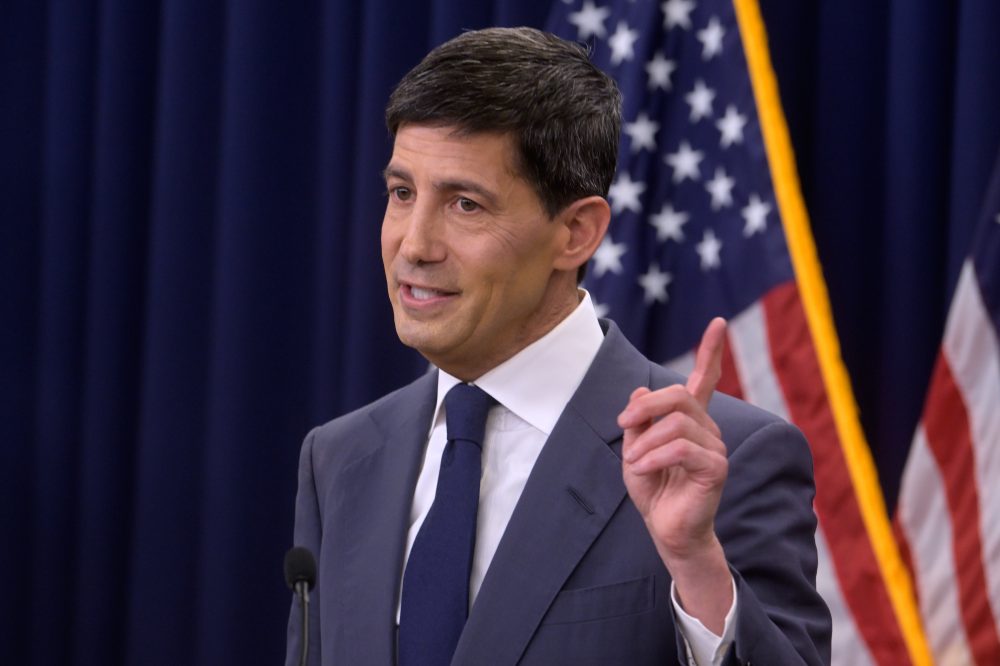

WASHINGTON — Federal Reserve Chair Kevin Warsh delivered written testimony to Congress Tuesday pledging to make high inflation “a thing of the past,” while deliberately avoiding any clues about the central bank’s next policy move.
In his prepared remarks ahead of a 10 a.m. Eastern appearance before a House committee, Warsh stated that Fed policymakers “have no tolerance for persistently elevated inflation” and added, “We share a resolute commitment to restoring price stability.”
Despite the strong language, the Fed’s interest rate-setting committee remains deeply split. Roughly half of its 19 members anticipate the Fed will need to raise its key interest rate before the year is out to get inflation under control, while nearly the other half expect rates to hold steady or even decline. That internal divide presents a significant challenge for Warsh as he tries to chart a course through a rapidly shifting economic landscape.
Consistent with his stated preference for offering less forward guidance, Warsh’s testimony gave no indication of whether rate increases would be needed to fight inflation, which currently sits at 4.1% — far above the Fed’s 2% goal — according to the central bank’s preferred measurement. He was set to face questions from House Financial Services Committee members following his opening statement.
Adding complexity to the inflation picture, the resumption of the Iran war has pushed oil prices back up after they had pulled back close to pre-conflict levels. Gas prices, which had dropped roughly 20% from their peak, have climbed again over the past week and remain about 35% higher than they were when the U.S. launched its attack on Iran on February 28.
A fresh government report released Tuesday offered some relief, showing that prices fell 0.4% in June compared to May — the steepest single-month drop in four years. On an annual basis, inflation slipped to 3.5%, down from 4.2% year-over-year in May and lower than most economists had anticipated.
Still, some Fed officials argue that core inflation — even when gas prices are stripped out — remains too high and may require higher borrowing costs to bring down.
Another potential inflation driver in the months ahead is the massive surge in artificial intelligence infrastructure spending by major technology companies, including Google parent Alphabet, Microsoft, Amazon, and Meta Platforms. The explosive demand for memory chips and processors has sent semiconductor prices sharply higher, triggering price increases for consumer electronics like laptops, tablets, and video game consoles.
Warsh described AI investment Tuesday as “the most striking feature of the economy right now” and said the Fed is “monitoring the implications” for both inflation and employment.
While Warsh has pulled back on offering policy signals, other Fed officials have stepped up to fill the void. Fed Governor Christopher Waller said Monday that another strong inflation reading Tuesday would force the Fed to consider raising rates “in the near term.”
Taking a different view, John Williams, president of the Federal Reserve Bank of New York, said last week that if core inflation holds at a monthly pace of 0.2% for the remainder of the year, the Fed could sidestep any rate hikes altogether — suggesting a wait-and-watch approach while new economic data rolls in.