NEW YORK (AP) — Representatives for Major League Baseball players and team owners launched what’s expected to be challenging contract negotiations on Tuesday, working to hammer out a new labor agreement before their current deal runs out on December 1st. League management is anticipated to push for implementing a salary cap structure that the players’ union has consistently refused to consider.
The opening meeting lasted approximately two hours at the Major League Baseball Players Association headquarters in Manhattan, just a short walk from MLB’s main offices in Rockefeller Center. This initial gathering focused on each side presenting their perspectives on the sport’s current state and financial situation, with no formal proposals exchanged.
Among the players present was Mets infielder Marcus Semien, who serves on the union’s eight-member executive subcommittee, alongside teammates Clay Holmes and Austin Slater, according to a source familiar with the proceedings who requested anonymity since attendee names weren’t officially released. Other players participated through video calls.
Baseball’s current five-year labor agreement reaches its expiration on December 1st. Commissioner Rob Manfred has repeatedly stated that team owners would rather implement offseason lockouts than face in-season strikes, hoping to avoid losing regular-season games. The sport hasn’t lost regular-season contests due to labor disputes since the devastating 7½-month strike of 1994-95, which led to the first World Series cancellation in nine decades.
Previous negotiations for the current contract started in April 2021 and concluded with an agreement on March 10, 2022, saving the full 162-game season only after both sides negotiated beyond multiple deadlines. Manfred had announced the cancellation of 184 games before they were ultimately restored.
Bruce Meyer will guide the union’s negotiating efforts, reprising his role from 2021-22 but now serving as interim union leader. He was promoted from deputy director in February following Tony Clark’s forced departure. Clark, a former All-Star first baseman, had led the union since Michael Weiner’s death in 2013.
Deputy Commissioner Dan Halem will again head MLB’s negotiating team, continuing his role from the previous two contract discussions.
Several major league team owners have advocated for a salary cap structure that includes both a ceiling and floor, arguing it would benefit the sport overall. Unlike the NFL, NBA, and NHL, MLB has operated without a cap system, instead relying on a luxury tax implemented in 2003 to discourage excessive spending.
“When I talk to the players, I don’t try to convince them that a salary cap system would be a good thing,” Manfred explained to the Baseball Writers’ Association of America last summer. “I identify a problem in the media business and explain to them that owners need to change to address that problem. I then identify a second problem that we need to work together and that is that there are fans in a lot of our markets who feel like we have a competitive balance problem.”
Current spending restrictions haven’t significantly impacted teams like the Los Angeles Dodgers and New York Mets in recent seasons. The Dodgers broke MLB’s spending records with a total of $515 million in payroll and luxury tax payments last year while capturing their second consecutive World Series championship, based on final calculations from the commissioner’s office. Los Angeles is projected to lead spending again in 2026. The gap between the five biggest spenders and five lowest spenders grew from 3.6 in 2021 to a record 4.7 last year.
The players’ union contends that cap systems reduce overall player compensation, while team management claims that both caps and floors would help the majority of players.
Players have built up their potential strike fund of cash and investments to $415 million entering 2026. MLB has similarly been stockpiling resources for negotiations, accumulating roughly $75 million per team through withheld central fund payments.
TEGUCIGALPA, Honduras — Law enforcement officials in Honduras detained three individuals Tuesday, including a former high-ranking politician, in connection with planning the 2024 murder of an environmental activist that highlighted government corruption and the dangers faced by those defending natural resources in Central America.
Former Tocoa mayor Adán Fúnez was taken into custody at his residence Tuesday as the suspected mastermind behind the killing, after years of allegations from religious and environmental groups.
The victim, Juan López, fought against corruption and spearheaded community opposition to an iron oxide mining operation in Colon, a remote area in northwestern Honduras. Activists argued the project threatened the region’s pristine forests and clear waterways, including protected conservation zones. López frequently criticized Fúnez, who backed the mining venture and maintained close ties to former Honduran President Xiomara Castro.
López demanded Fúnez’s resignation in September 2024 over corruption allegations.
Shortly afterward, a masked shooter killed the environmental and human rights advocate with six gunshots to the chest and one to the head, prompting calls for accountability from the Biden administration, Pope Francis and the United Nations. The killing also brought accusations against Fúnez, an influential figure in the region’s long-running violent land disputes. The murder recalled international outrage over the 2016 assassination of Honduran environmentalist Berta Cáceres.
More than a year after the killing, authorities arrested Fúnez alongside businessman Héctor Eduardo Méndez and Juan Ángel Ramos Gallegos. Prosecutors charged them with criminal conspiracy that violated fundamental rights.
“These three individuals are believed to be the intellectual authors of the environmentalist Juan López’s death,” Public Prosecutor’s Office spokesperson Yuri Mora told The Associated Press.
The arrests follow several other detentions made months earlier, though environmental and religious leaders had long identified Fúnez as the assassination’s orchestrator. The public trial for all three defendants is scheduled to start in June.
Environmental advocacy carries significant risks in Honduras. Activists like López frequently serve as unwelcome watchdogs in resource-abundant regions of Latin America, which ranks as the world’s most dangerous area for environmentalists, according to advocacy group Global Witness.
Global Witness recorded 117 defender deaths in 2024, with 82% occurring in Latin America. Five activists died in the small Central American country, compared to 18 the previous year, based on their latest findings. In López’s hometown of Tocoa, environmental advocates opposing the mining project have faced systematic targeting for years, with eight activists jailed for over two years in what attorneys described as retribution for their activism.
Dalila Santiago, López’s close associate and fellow movement leader, expressed surprise at Fúnez’s arrest given Honduras’ widespread culture of impunity. Santiago described the detentions as validation that their struggle for justice and land protection justified the violent consequences they endured. She emphasized that Honduran officials must pursue other responsible parties and business executives connected to the mining operation.
The Honduran mining companies — Inversiones Los Pinares, Inversiones Ecotek and their parent organization — face environmental destruction charges filed by Honduras’ Public Prosecutor’s Office following López’s murder. The companies have highlighted the hundreds of employment opportunities the mine generated and their regional economic contributions.
“We’ve been calling for justice for so long,” Santiago said. “And we need the masterminds behind this to be caught and punished.”
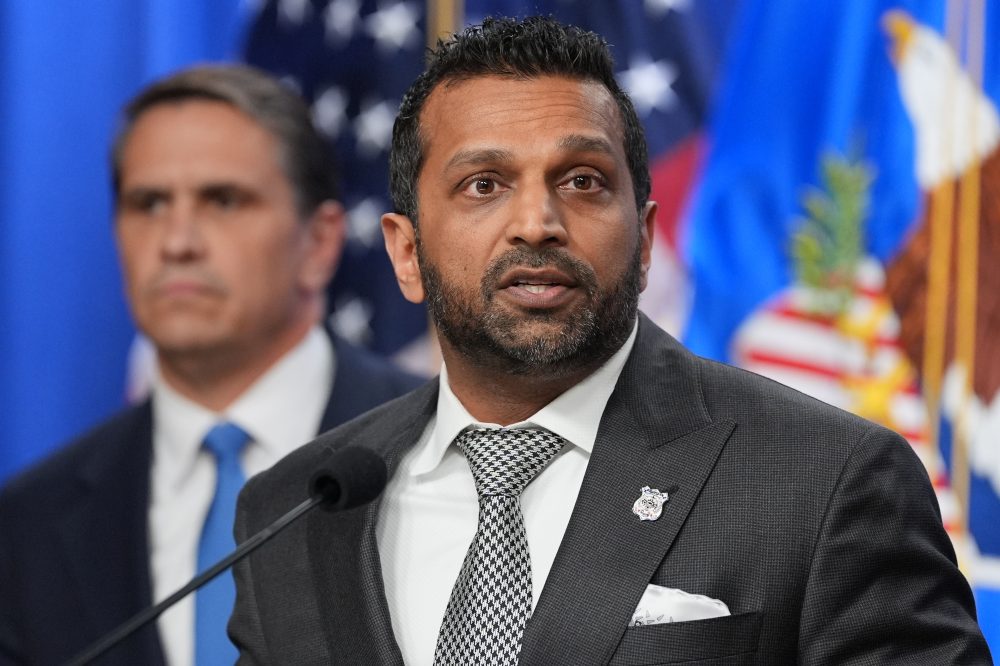
WASHINGTON — A confrontational moment erupted during a Senate budget hearing Tuesday when FBI Director Kash Patel forcefully rejected claims about his drinking habits and availability to staff members, declaring the accusations “unequivocally, categorically false.”
The heated confrontation occurred when Maryland Senator Chris Van Hollen questioned Patel about a recent Atlantic magazine report that portrayed his management of the federal law enforcement agency in negative terms. Patel responded with visible anger, stating “I will not be tarnished by baseless allegations.” The FBI director has filed a lawsuit challenging the magazine’s story, while The Atlantic maintains confidence in its journalism and plans to “vigorously defend against the meritless lawsuit.”
During the exchange, Patel interrupted Van Hollen and attempted to shift focus by referencing the senator’s own conduct, specifically mentioning “slinging margaritas” during a trip to El Salvador. This appeared to reference Van Hollen’s 2023 visit to see Kilmar Abrego Garcia during his detention there after being arrested in Maryland.
The contentious interaction took place during the Senate committee’s yearly budget review session, which included Patel and other top law enforcement officials.
Discriminatory phrases like “No dogs, no Negros, no Mexicans,” “Colored served in rear,” and “For whites only” once appeared prominently on businesses throughout the American South.
These signs served as daily, unavoidable reminders to Black Americans of their legally mandated second-class status in a society where they lived alongside, yet completely apart from, white citizens of any social standing.
Following the end of the Civil War and the eventual failure of Reconstruction efforts, the Jim Crow era established a comprehensive system of social rules and legislation that controlled how both Black and white Americans could move through public spaces for multiple generations, lasting until civil rights activists began dismantling institutionalized racial discrimination.
This segregation framework was built upon the premise that formerly enslaved individuals and their children were naturally inferior to white people in areas such as intellect, ethics, and conduct. Those who supported the system feared that treating Black and white people as equals would lead to interracial relationships and create what they viewed as a mixed race that would contaminate what they considered the superior white population.
Geographic separation initially gained cultural acceptance before being maintained through violence or threats of imprisonment that essentially recreated slavery conditions. Following the Supreme Court’s 1896 Plessy v. Ferguson ruling that established “separate but equal” as constitutional, Jim Crow segregation markers became legal mandates rather than simple warnings.
What began as systematic humiliation transformed into government-sanctioned oppression. Train cars, public transportation, drinking fountains, bathrooms, lodging, dining establishments, and recreational facilities represented just some of the many public amenities divided by discriminatory signage. African Americans were compelled to utilize inferior accommodations. Educational institutions, religious buildings, and burial grounds had already been racially separated for years. This deliberate structure prevented most Black men from interacting with white women while robbing Black people of their self-respect, civic identity, and sense of social and political inclusion.
The Civil Rights Act of 1964 abolished legal racial separation, though many throughout the American South continued opposing integration even after discriminatory signs were removed and placed in historical collections. Steven Reich, a history professor who authored an encyclopedia covering the Jim Crow period, notes that one enduring consequence of legalized segregation continues affecting today’s American workplace.
According to Reich, segregation created divisions within the working class that pushed white employees to align themselves more closely with management rather than their Black colleagues. This dynamic continues limiting opportunities for Black and white workers to unite and collaborate on shared concerns, including diversity and inclusion initiatives.
ATLANTA — A Georgia man admitted his guilt Tuesday in a vehicle burglary case that authorities say involved stealing unreleased tracks from music superstar Beyoncé.
Kelvin Evans, age 41, accepted responsibility in Fulton County Superior Court for automobile burglary and unlawful entry charges. Court officials sentenced him to serve two years behind bars, avoiding a trial that was set to begin this week.
The defendant targeted a rented Jeep Wagoneer in July that belonged to members of Beyoncé’s touring production team.
Christoper Grant, who works as a choreographer, and Diandre Blue, a professional dancer, reported to Atlanta authorities that they discovered their vehicle compromised on July 8, with a broken rear window and two missing travel bags.
The missing property contained computer hard drives with unpublished musical recordings, video content blueprints, and performance setlists, police documentation revealed. The crime happened just 48 hours before Beyoncé launched her four-show run at Atlanta’s Mercedes-Benz Stadium during her “Cowboy Carter” concert series.
Security footage documented the criminal activity. Authorities took Evans into custody the following month in August.
Law enforcement officials have not located the stolen hard drives or remaining property.
The Memphis Grizzlies announced Tuesday that forward Brandon Clarke has passed away at the age of 29.
Team officials did not immediately release details regarding the cause of death.
“We are heartbroken by the tragic loss of Brandon Clarke,” the Grizzlies said in a statement. “Brandon was an outstanding teammate and an even better person whose impact on the organization and the greater Memphis community will not be forgotten.”
The Vancouver native was picked 21st in the 2019 NBA Draft by Oklahoma City but was immediately traded to Memphis that same evening. Clarke remained with the Grizzlies throughout his professional career and received NBA All-Rookie First Team recognition in 2020 following a strong first season where he posted averages of 12.1 points and 5.9 rebounds per game.
Recent knee and calf problems restricted Clarke to only two games during the 2025-26 campaign.
Prior to joining the professional ranks, Clarke competed collegiately at San Jose State before transferring to Gonzaga, where he became one of the nation’s premier forwards in the 2018-19 season.
Clarke faced legal troubles last month when he was taken into custody in Arkansas on multiple charges, including controlled substance possession and trafficking, along with improper passing and fleeing in a vehicle while speeding, law enforcement officials reported.
NBA Commissioner Adam Silver expressed that the league was “devastated” by Clarke’s passing, calling him “a beloved teammate and leader who played the game with enormous passion and grit.”
“Our thoughts and sympathies are with Brandon’s family, friends and the Grizzlies organization,” Silver added in a statement.
Investment management company Blue Owl has experienced a dramatic decline in new money flowing into its largest retail credit fund, with contributions plummeting by 95% compared to the same period last year, according to recent regulatory documents.
The Blue Owl Credit Income fund, known as OCIC, received only $26.4 million in new subscription payments on May 1, a stark contrast to the $480 million it collected during the same timeframe in the previous year. The fund’s total portfolio is currently valued at approximately $34 billion.
This significant downturn reflects growing unease among affluent investors, who have been withdrawing funds from private credit investments in recent months. Their concerns center on deteriorating lending standards and fears that artificial intelligence technology could severely impact the software industry, where many of these funds have substantial investments.
The OCIC operates as a business development company, which functions by raising equity capital and combining it with borrowed funds to provide financing primarily to medium-sized businesses.
Federal communications regulators have given their approval for EchoStar to move forward with selling portions of its wireless spectrum to two major companies, according to an announcement made Tuesday.
The Federal Communications Commission’s wireless and space divisions have cleared the satellite company to transfer roughly 65 megahertz of spectrum to SpaceX, while also approving the sale of 50 megahertz to telecommunications giant AT&T.
The regulatory approval represents a significant step forward for both transactions, which will redistribute valuable wireless spectrum resources among the companies involved.
NBA superstar LeBron James remains uncertain about his basketball future following the Los Angeles Lakers’ playoff elimination Monday night, though betting experts believe the 41-year-old will continue playing next season.
Following the Lakers’ loss to Oklahoma City, James told reporters that “what my future (holds), I don’t know, obviously.”
Despite his uncertainty, SportsBetting.ag opened retirement odds with “No” at -450 compared to +275 that he will hang up his jersey, suggesting an 81.8% probability James will take the court for another season.
“I got a lot of time to sit back like I think I said last year after we lost, I think to Minnesota, to go back and recalibrate with my family and talk with them and spend some time with them and then when the time comes … obviously you guys will know what I decide to do,” James explained.
Following the Lakers’ season-ending defeat, the sportsbook released multiple betting lines related to James’s future decisions:
Regarding his potential return to Los Angeles next season: Yes (+110) No (-150)
These numbers indicate only a 40% likelihood of James remaining with the Lakers.
The odds for LeBron and his son Bronny playing together next season: Yes (+130) No (-170)
This suggests a 37% chance of the father-son duo sharing the same roster.
Should James decide to continue his career elsewhere, Cleveland leads the speculation as his most likely destination with 1/1 odds. The Golden State Warriors follow at 3/1, potentially setting up a partnership with Stephen Curry. Other contenders include Denver (5/1), New York Knicks (7/1), and Milwaukee (9/1).
The complete list of potential destinations ranges from Detroit at 10/1 odds down to several teams at 80/1, including Boston, Memphis, New Orleans, and Utah.
During the regular season, James earned his 22nd consecutive All-Star selection while adapting to a different role on the team. With Luka Doncic leading the league at 33.5 points per game and Austin Reaves averaging 23.3 points, James contributed 20.9 points per contest along with 7.2 assists and 6.1 rebounds.
In the playoffs without the injured Doncic, James elevated his performance to 23.2 points, 7.3 assists, and 6.7 rebounds per game.
“Obviously we fell a little short, but I’m not looking at my year as a disappointment, that’s for damn sure,” James reflected. “I was put in some positions I never played in my career before, actually in my life. I’ve never been a third option in my life.”
“So, to be able to thrive in that role for that period of time and then have to step back into the role that I’ve been accustomed with over my career or my life playing this sport and be able to thrive under that and then just my teammates allowing me to lead them under extreme circumstances, I thought that was pretty cool for me at this stage of my career.”
The latest federal agriculture statistics show a downturn in turkey production numbers compared to the same period last year.
According to data from the U.S. Department of Agriculture’s National Agricultural Statistics Service, the number of turkey eggs currently in incubators as of May 1 decreased by 4 percent when measured against the previous year’s figures.
The report also indicates that turkey poults successfully hatched throughout April were down 1 percent from April of the prior year.
Additionally, the net number of poults placed during the month of April showed a 1 percent decline compared to the same month in the previous year.
These statistics are part of the USDA’s regular monitoring of poultry production across the United States, providing industry stakeholders with current data on turkey breeding and hatching trends.
Motorists traveling on southbound Route 1 should expect delays today as construction crews have shut down the two right lanes between South Croppers Circle and South James Street.
According to DelDOT traffic officials, the lane closures are necessary for ongoing construction work in the area. The restrictions are expected to be lifted by 4 PM this afternoon.
Drivers are advised to use caution when traveling through the work zone and allow extra time for their commute. Traffic may be backed up during peak travel hours as vehicles merge into the remaining open lanes.
Senator Lindsey Graham is demanding a thorough examination of Pakistan’s diplomatic role following allegations that the country secretly provided safe harbor for Iranian military aircraft during recent tensions.
The South Carolina Republican’s concerns stem from a CBS News investigation published Monday revealing that Pakistan allegedly permitted Iran to relocate several aircraft to Pakistani military installations to shield them from potential American strikes.
“If this reporting is accurate, it would require a complete reevaluation of the role Pakistan is playing as mediator between Iran, the United States and other parties,” Graham wrote on X. “Given some of the prior statements by Pakistani defense officials towards Israel, I would not be shocked if this were true.”
The senator’s reference appears linked to inflammatory comments made in April by Pakistan’s Defense Minister, Khawaja Muhammad Asif, who characterized Israel as “a curse for humanity” and a “cancerous state.”
Graham expressed further skepticism in a follow-up social media post, stating: “I don’t trust Pakistan as far as I can throw them. If they actually do have Iranian aircraft parked in Pakistan bases to protect Iranian military assets, that tells me we should be looking maybe for somebody else to mediate. No wonder this damn thing is going nowhere.”
The CBS investigation detailed how Iran moved several aircraft to Pakistan Air Force Base Nur Khan, located near Rawalpindi, in the days following President Trump’s announcement of a ceasefire with Iran in early April.
Intelligence sources told CBS that among the relocated aircraft was an RC-130 reconnaissance plane, a specialized intelligence-gathering variant of the Lockheed C-130 Hercules used by Iran’s air force.
The report also indicated that Iran relocated civilian aircraft to Afghanistan, though it remains uncertain whether military planes were also moved there.
Pakistani officials have firmly disputed these accusations. A high-ranking Pakistani official challenged the claims to CBS News, explaining: “Nur Khan base is right in the heart of [the] city, a large fleet of aircrafts parked there can’t be hidden from [the] public eye.”
Pakistan’s Foreign Ministry issued a formal denial Tuesday, rejecting assertions that it provided sanctuary for Iranian military aircraft.
The ministry clarified that “a number of aircraft from Iran and the United States arrived in Pakistan to facilitate the movement of diplomatic personnel, security teams, and administrative staff associated with the talks process.”
“Some aircraft and support personnel remained temporarily in Pakistan in anticipation of subsequent rounds of engagement,” the ministry’s statement continued.
SAN ANTONIO — Victor Wembanyama will suit up for the San Antonio Spurs in tonight’s pivotal Game 5 matchup against the Minnesota Timberwolves, following his early dismissal from Game 4 due to an elbow thrown at an opponent.
The Spurs organization is breathing a sigh of relief over the news. According to guard Devin Vassell, if Wembanyama carries some frustration from missing most of the previous contest, that could work in San Antonio’s favor.
“I know he was upset not being able to play that game,” Vassell commented during Tuesday’s practice session, which featured notable attendees including Spurs President Gregg Popovich, franchise icon Manu Ginobili, and former assistant coach Brett Brown. “So, I know that he’s going to be ready to go. That’s what we need. We need that upset Vic who’s ready to attack the game for sure.”
Tuesday night’s contest represents what many consider the most significant game of Wembanyama’s professional basketball career — a Game 5 showdown in a deadlocked 2-2 playoff series, where the victor advances within one win of reaching the Western Conference finals.
While Vassell welcomes a motivated Wembanyama, he emphasized the need for controlled aggression.
“We’ve seen it before. We’ve seen when Vic gets upset,” Vassell explained. “I mean, we just need him to calm his emotions, make sure that he doesn’t let his emotions take over because at the end of the day like I said, he can’t get any flagrants, he can’t get anything like that. So, Vic knows what he’s got to do and he’ll be ready.”
The young star’s removal from Sunday’s game occurred during the second quarter following a rebounding situation that involved Minnesota players Naz Reid and Jaden McDaniels. While fighting for the ball, Wembanyama swung his arms and made contact with Reid’s face using his elbow.
Game officials reviewed the incident and elevated the initial foul to a Flagrant 2 violation, resulting in automatic ejection. The league office conducted its standard post-game analysis and announced Monday that no additional punishment would be imposed. The NBA retained the option to issue fines or extend the suspension into Game 5 and beyond if deemed necessary.
“I don’t think we even thought about it much at all,” Minnesota’s Mike Conley Jr. shared with media during the Timberwolves’ Tuesday practice. “I think once the ruling came down, it was just like, we expected that and just moved forward. It’s one of those things. We don’t want guys to miss games. We want to play against the best. We don’t want to have guys missing games like that.”
Beyond Wembanyama’s elbow situation, San Antonio faces additional concerns regarding player availability. The team recently added Dylan Harper to their injury report just hours before Thursday’s Game 5 tip-off, citing left knee discomfort. Harper joins point guard De’Aaron Fox on the questionable list, as Fox continues dealing with right ankle soreness according to team medical staff.
SAN FRANCISCO — Delaware residents, like Americans nationwide, find themselves caught in a complex relationship with their iPhones that mirrors many complicated emotional attachments.
These devices often feel like mystical tools so essential that imagining life without their countless benefits and conveniences seems impossible. iPhones and similar smartphones allow instant photo sharing across social platforms, gaming, video streaming, music playback, text messaging, email management, web browsing, news consumption, navigation assistance, and contactless payments.
Occasionally, people even use them for actual telephone conversations.
Yet at times, these same devices resemble predatory dealers exploiting our vulnerabilities and negative tendencies while feeding our dependency on constant notifications and alerts that draw our eyes to screens, steadily eroding our ability to focus.
This contradiction faces America as the iPhone remains relatively young, existing within the same age group it has potentially influenced most dramatically. Apple’s revolutionary device didn’t debut until 2007, when company co-founder Steve Jobs walked onto a stage and promised a captivated crowd they would witness something transformative.
His prediction largely came true. Jobs, as frequently occurred before his passing in 2011, demonstrated remarkable foresight — so accurate that research indicates many people would choose sharing their bed with their iPhone over their romantic partner if forced to decide.
The current dilemma involves determining whether society can better navigate this complex relationship with iPhones and Android-powered smartphones in a world that practically demands universal ownership. Can we maintain all the advantages while eliminating harmful behaviors? Should smartphone usage be grouped with cigarettes, alcohol, and unhealthy food?
Currently, America appears to drift deeper into a digital stream reminiscent of a famous closing line from classic American literature: We continue scrolling, like vessels fighting the tide, constantly pulled back toward the illuminated display.
A small daily tablet fundamentally transformed modern American society.
The oral contraceptive, receiving FDA approval six and a half decades ago, accomplished far more than pregnancy prevention. This groundbreaking medication provided women with unprecedented autonomy, fundamentally altering family structures and societal norms across the nation.
“Its introduction in the 1960s afforded U.S. women this unprecedented control over their childbearing and subsequent life trajectories,” says Suzanne Bell of Johns Hopkins Bloomberg School of Public Health.
The contraceptive separated sexual intimacy from reproduction. For the first time, women could manage their fertility independently, without requiring male participation in family planning decisions.
A pioneering woman led the charge for this medical breakthrough. Margaret Sanger, who established what would become Planned Parenthood Federation of America, championed the medication’s creation alongside financial backing from philanthropist friend Katharine Dexter McCormick. Sanger declared, “No woman can call herself free until she can choose consciously whether she will or will not be a mother.”
Scientists Gregory Pincus and Min Chueh Chang, working with gynecologist Dr. John Rock, developed the medication. The contraceptive employs artificial progesterone and estrogen to block pregnancy primarily through preventing egg release, while also creating barriers that impede fertilization. Perfect usage achieves 99% effectiveness in pregnancy prevention.
American adoption was rapid – over one million women were using the medication within just two years of availability. Dramatic societal shifts emerged. Studies connect the contraceptive to delayed marriage timing, increased educational achievement, and expanded female workforce engagement. The medication also contributed significantly to the sexual liberation movement of the 1960s and 1970s.
Opposition arose alongside acceptance. During the 1960s, Pope Paul VI denounced the medication while numerous states prohibited contraceptive access. Married women gained exemption from these restrictions in 1965, though single women faced continued bans for years afterward.
Contemporary concerns have emerged following the Supreme Court’s abortion ruling, with some fearing contraceptive rights may face similar challenges.
“With any device or procedure that gives women more reproductive or sexual autonomy, there are always groups that resist and push back,” says Bell, pointing to the recent push for women to have more children.
Despite opposition, women continue making independent choices. American birth rates have dropped to unprecedented lows, while the contraceptive maintains widespread popularity. Currently serving as America’s leading reversible birth control method, it serves more than 8 million users and continues influencing both individual lives and national trends.
The Maryland Department of Natural Resources’ Sport Fisheries Advisory Commission has selected Lenny Rudow to receive the 2026 Maryland Sport Fisheries Achievement Award for his outstanding contributions to recreational fishing.
Rudow, who lives in Anne Arundel County, founded FishTalk magazine and has spent three decades as an author advocating for responsible fishing practices. He actively promotes fisheries conservation through podcast appearances, speaking engagements, and participation in fishing competitions across Maryland.
“In all of his activities, Lenny’s commitment has consistently centered on enhancing Maryland’s recreational fishing experience, promoting conservation-minded angling, fostering education, and supporting sustainable fishery enjoyment for all,” said Jesse Howe, Commission member and Assistant Director of Coastal Conservation Association Maryland.
This prestigious recognition was created by the commission to celebrate people who have made lasting contributions through habitat management, conservation efforts, educational outreach, research, or other significant work that benefits recreational fishing in Maryland. Rudow becomes the tenth individual to earn this distinction since the program began.
A graduate of St. Mary’s College of Maryland, Rudow has maintained a lifelong passion for the Chesapeake Bay and its surrounding waters. His conservation philosophy and commitment to education are evident throughout his extensive body of published work spanning 30 years.
“Fishing is my life, and Maryland is my home, so to be recognized with this award means more to me than I can even say,” Rudow said. “Thank you, Maryland, thank you anglers, thank you fishing community for always being there when I needed you. I promise I’ll work as hard as I can for as long as I can to help bring new anglers into the fold, promote fishing in Maryland, and rejuvenate our many diverse fisheries. I hope everyone who happens to read these words will open up their calendar right now, look for the next open day, and mark it ‘Going Fishing!’”
Ted Carski, who submitted Rudow’s nomination, praised his approach to fisheries management. “Lenny is a very strong voice for the use of sound science to inform fish management. Lenny emphasizes the importance of good water quality and better habitat to good fishing, including what each fisher can do to help enhance water quality. Lenny often invites experts, or chairs a panel of experts, on these topics to help inform and educate Maryland fishers.”
Officials are planning a ceremony to honor Rudow prior to the commission’s fall meeting scheduled for October 20, 2026.
The National Oceanic and Atmospheric Administration is launching one of its most ambitious technological projects to date, moving its entire collection of environmental data to cloud-based storage for improved public accessibility.
NOAA’s National Centers for Environmental Information will transfer all of its data archives, products and services to Amazon Web Services cloud infrastructure during a 10-month period spanning 2026 and 2027.
The massive digital migration represents a significant shift in how Americans will access critical weather, climate and environmental information. Once complete, the cloud-based system will provide faster, on-demand access to NOAA’s vast repository of environmental data.
The initiative marks a major modernization effort for the federal agency, which maintains one of the world’s largest collections of atmospheric, oceanic and geophysical data. The move to cloud storage is expected to streamline data delivery and improve response times for users seeking environmental information.
NOAA officials say the transition will enhance the agency’s ability to serve researchers, businesses, emergency managers and the general public who rely on environmental data for decision-making.
The project timeline extends through 2027, with the agency working to ensure uninterrupted service during the migration process. The cloud-based platform will replace traditional data storage methods that have been in use for decades.
WASHINGTON — A space-based missile defense initiative championed by President Donald Trump carries a price tag of $1.2 trillion, according to a fresh Congressional Budget Office analysis, dwarfing the $175 billion figure the president cited last year.
The nonpartisan budget office released its report Tuesday, characterizing the assessment as reflecting “one illustrative approach rather than an estimate of a specific Administration proposal.”
Trump authorized the advanced defense system through executive action during his opening week back in the White House. At that time, he projected the program would be “fully operational before the end of my term,” which concludes in January 2029.
In his executive directive, Trump stated: “Over the past 40 years, rather than lessening, the threat from next-generation strategic weapons has become more intense and complex with the development by peer and near-peer adversaries of next-generation delivery systems.”
The missile defense concept draws inspiration from Israel’s layered protective systems, commonly known as the “Iron Dome,” which has proven crucial in shielding the nation from rocket and missile attacks launched by Iran and associated militant organizations during the ongoing conflict where the U.S. serves as an ally.
The American version of this protective shield would incorporate both terrestrial and orbital technologies designed to identify, target and neutralize incoming missiles throughout all critical phases of a potential assault.
Lawmakers have already authorized approximately $24 billion for this defense project as part of a comprehensive Republican tax and spending package that became law last summer.
When Trump announced the Golden Dome initiative in May, he pegged its cost at $175 billion. However, the CBO previously calculated that solely the space-stationed elements could reach $542 billion over two decades.
WASHINGTON — Dr. Marty Makary has stepped down from his position as Commissioner of the Food and Drug Administration following a tumultuous year-plus tenure that sparked criticism from multiple industry groups and political allies of President Donald Trump.
According to a White House official speaking on condition of anonymity ahead of Tuesday’s expected announcement, Makary’s departure comes after slightly more than 12 months overseeing the nation’s primary health regulatory body.
Kyle Diamantas, currently serving as the FDA’s food division leader, will assume the role of acting commissioner. Diamantas, who works as an attorney, maintains personal connections to Donald Trump Jr.
Makary, a surgeon and medical researcher, gained Republican attention during the pandemic through his vocal opposition to COVID-19 public health policies, frequently sharing his views on Fox News programming.
However, his leadership of the FDA proved challenging as he encountered difficulties navigating the agency’s complex bureaucratic structure and lost staff confidence following widespread job cuts, administrative shake-ups, and multiple incidents where scientific standards seemed subordinated to political considerations, particularly those championed by Health Secretary Robert F. Kennedy Jr.
Leading the FDA requires balancing scientific integrity with political realities while overseeing regulations affecting billions of dollars in consumer products and pharmaceutical treatments.
Makary confronted the distinctive challenge of satisfying Trump administration demands to reduce regulatory barriers while simultaneously addressing Kennedy’s push for heightened scrutiny of vaccine safety, pharmaceutical products, and food additives.
Nearly all senior career staff members at the FDA either resigned, retired, or faced removal during Trump’s second administration’s first year, resulting in continuous media leaks and reports highlighting staff demoralization, organizational chaos, and widespread workplace frustration.
Dr. Vinay Prasad, Makary’s chosen deputy, was removed from his position twice within 12 months after conflicts with specialty pharmaceutical companies and rare disease patient advocacy organizations. Despite ongoing pressure campaigns demanding his dismissal, Makary initially seemed likely to survive the controversies.
Recent months brought additional criticism from interest groups the White House considers essential for Republican electoral success in November.
Conservative anti-abortion organizations accused Makary of deliberately delaying an internal assessment of mifepristone, the abortion medication that has remained available for 25 years while continuing to face opposition from conservative activists.
E-cigarette industry leaders informed Trump that Makary was preventing approval of their products, particularly new flavored vaping devices considered vital for industry sustainability.
The agency dramatically reversed its vaping stance last week, approving the first fruit-flavored e-cigarette products and releasing guidelines that relaxed marketing restrictions for major manufacturers. However, these changes proved insufficient to preserve Makary’s position.
Trump must nominate a permanent FDA commissioner, who will then require Senate confirmation through a majority vote.
Drawing on his Fox News background, Makary actively promoted his achievements through cable television appearances, podcast interviews, and online editorial content.
Makary launched more than six initiatives designed to accelerate or simplify FDA pharmaceutical reviews, including eliminating specific study requirements, integrating artificial intelligence into drug evaluations, and providing fast-track reviews for medications supporting “national interests.”
However, pharmaceutical companies value FDA decision consistency and predictability even more than rapid approvals. Internal conflicts and organizational turmoil overshadowed Makary’s drug review improvements, creating complications for drug manufacturers, investors, and patients.
Several specialty pharmaceutical companies developing treatments for rare or difficult-to-treat conditions reported receiving rejection notices or requests for additional studies for medications previously approved by FDA staff. Prasad, who resigned for the second time from his vaccine and biotechnology leadership role in April, primarily supervised these drugs.
Prasad frequently overturned vaccine staff decisions to limit eligibility for new COVID vaccinations. In February, Prasad initially declined to review Moderna’s mRNA influenza vaccine. The FDA reversed course after Moderna threatened formal appeals and requested White House intervention.
Many of Makary and Prasad’s most contentious vaccine proposals never materialized, despite creating confusion and concern within the FDA and broader health community.
In a November internal document, Prasad claimed without providing supporting evidence that the FDA had connected COVID vaccines to 10 pediatric deaths. Prasad used this assertion to justify a comprehensive restructuring of the agency’s vaccine approval and update procedures.
Twelve former FDA commissioners issued a harsh criticism of the proposal, cautioning it would “undermine the public interest” and devastate vaccine development. The FDA has not released its death analysis or vaccine overhaul plan.
Within the FDA’s drug center, the agency’s largest department, Makary oversaw constant leadership turnover with six different directors serving during a single year.
Dr. George Tidmarsh, Makary’s original choice for the position, was compelled to resign following accusations that he exploited his FDA role to pursue personal grievances against a former business associate.
Dr. Rick Pazdur, a veteran FDA cancer specialist who replaced Tidmarsh, announced his retirement after only three weeks following disagreements with Makary regarding various drug review matters.
Makary’s departure leaves many developing initiatives in limbo.
Most programs Makary established have not completed the federal rulemaking process necessary to incorporate them into U.S. regulations and could be easily reversed by future leadership.
Congressional Democrats have challenged the legality of several initiatives, including a program providing expedited reviews for innovative pharmaceutical products.
Iraq and Pakistan have negotiated separate agreements with Iran to allow energy shipments through the strategically vital Strait of Hormuz, according to five sources familiar with the arrangements, showcasing Tehran’s growing influence over critical energy transportation routes.
Regional conflict involving the U.S. and Israel has dramatically reduced energy shipments from an area that typically provides 20% of global crude oil and liquefied natural gas supplies. Recent U.S. blockades of Iranian ports have further complicated the situation. While Iran initially attempted to completely shut down strait traffic, experts say the strategy has evolved.
“Iran has shifted from blocking Hormuz to controlling access to it … Hormuz is no longer a neutral transit route, it is a controlled corridor,” said Claudio Steuer from the Oxford Institute for Energy Studies.
Iraq, which typically ships most of its crude through the strait, has been severely impacted by the closure. Pakistan, attempting to mediate the conflict, relies heavily on Gulf energy imports and has experienced dramatically higher fuel costs.
Through a previously unreported arrangement between Baghdad and Tehran, Iraq obtained safe passage for two massive crude carriers, each transporting approximately 2 million barrels of oil, which successfully navigated the strait this past Sunday.
Baghdad continues working to obtain Iranian permission for additional transits, according to an Iraqi oil ministry official knowledgeable about the original agreement and ongoing negotiations. The government aims to protect oil revenues that comprise 95% of its national budget.
“Iraq is a close ally of Iran, and any deterioration in Iraq’s economy would also damage Iran’s economic interests in the country,” the official explained.
Two additional Iraqi oil ministry officials and a shipping industry source confirmed the Tehran negotiations. All sources requested anonymity since they lacked authorization to discuss the matter publicly.
Iraqi government representatives did not immediately respond to requests for comment.
Meanwhile, two tankers carrying Qatari LNG are traveling to Pakistan following a separate bilateral arrangement between Islamabad and Tehran, two industry sources told reporters, also requesting anonymity due to media restrictions.
Pakistan previously received approximately 10 LNG shipments monthly before the conflict began and now faces high summer electricity demand for air conditioning.
Sources indicated that neither Iraq nor Pakistan made direct payments to Iran or its Islamic Revolutionary Guard Corps for the transit arrangements.
Qatar was not directly participating in the bilateral agreements, industry sources noted, though it notified the United States before the Pakistan shipments.
Pakistani petroleum and information ministries, along with Qatar’s foreign ministry, did not immediately respond to comment requests.
Additional countries are exploring similar arrangements, according to sources familiar with the discussions, as escalating energy costs and supply disruptions heavily impact economies, particularly in Asia.
“As more governments become willing to cut deals with Iran for passage, it risks normalising the idea that Iran will control the Strait of Hormuz on a more permanent basis,” explained Saul Kavonic, research director at consultancy MST Marquee.
Before the conflict, approximately 3,000 vessels traveled through Hormuz monthly. Current traffic represents roughly 5% of previous levels, shipping data indicates.
The disruption has driven Brent crude prices up more than 50% since the conflict began in late February. European and Asian LNG prices have increased between 35% and 50%.
Iran has expressed intentions to maintain strait control after the war ends. Tehran has demanded reparations, sanctions relief, and access to frozen assets as settlement conditions, which President Donald Trump called “garbage,” eliminating hopes for a conflict resolution deal.
Industry sources report Iran is formalizing its strait control. Iraq has been asked to submit documentation for each tanker to enable transit through designated maritime routes under Iranian naval supervision, one Iraqi oil ministry official revealed.
Specialized Iraqi oil ministry teams are providing Iranian authorities with comprehensive vessel information, including destinations, shipping details, ownership, and cargo specifications to prevent incidents.
A Pakistani source involved in Iranian vessel passage negotiations mentioned some procedural difficulties.
“The IRGC sometimes changes the goalposts, so it is hard to keep things on track, but we are working through it,” he said.
Authorities have released the identity of the elderly man killed in Sunday’s deadly collision in Felton as 80-year-old Dennis Giles of Goldsboro, Maryland, according to Delaware State Police.
The crash remains under active investigation by Delaware State Police Troop 3’s Collision Reconstruction Unit. Authorities are seeking witnesses or anyone with details about the incident to reach out to Master Corporal W. Booth at (302) 698-8451. Tips can also be submitted through a private message to the Delaware State Police Facebook page or by contacting Delaware Crime Stoppers at (800) 847-3333.
Those affected by crime, witnesses, or families who have experienced sudden loss can access support through the Delaware State Police Victim Services Unit and Delaware Victim Center. The service provides around-the-clock assistance via their toll-free hotline at 1-800-VICTIM-1 (1-800-842-8461) or through email at [email protected].
NEW YORK (AP) — Renowned astrophysicist Neil deGrasse Tyson harbors an unusual dream: he genuinely hopes to experience alien abduction during his lifetime.
“I even picture the scenario in my head: I’m sitting out there alone, and a beam of light comes down,” he explains. “It’s not a spacecraft that’s hovering over me. It’s just a beam of light from space. And I just get lifted up into that beam of light, and I appear in a new place.”
The beloved space scientist has channeled this enduring obsession into his latest work, “Take Me to Your Leader: Perspectives on Your First Alien Encounter,” which explores our current understanding of potential extraterrestrial beings and what humanity might expect should they visit Earth.
“Even if it doesn’t actually happen, there’s value to going through the thought experiment of what could happen,” he explains. “Maybe there’s some takeaways that offer insights into how you think about the world, how we think about each other and the future of our civilization.”
Released Tuesday, this publication provides an extraordinary glimpse into Tyson’s remarkable intellect, showcasing his talent for combining popular culture with complex scientific concepts. Tyson serves as director of the Hayden Planetarium at the American Museum of Natural History in New York City.
The work draws from evolutionary biologist Stephen Jay Gould alongside Cartoon Network’s “Rick and Morty,” weaving together concepts from French philosopher Voltaire and Katy Perry song lyrics. It combines invisibility physics with “Star Trek” references and includes tangents about multispectral vision, how Superman — being an alien himself — could eliminate humanity simply by passing gas, and the reason supersonic aircraft “look badass.”
Tyson determines that any aliens reaching Earth would possess far superior intelligence compared to humans. He compares the situation to attempting to teach complex mathematics to a chimpanzee.
“They’ll not only be brilliant, but they’ll be way more powerful than us in practically any way that matters, which is why it’s so laughable when you see in Hollywood movies some mothership arrives and people pull out their pistols and start shooting guns at it. Like, ‘Really? Have you thought this through?’”
For initial contact scenarios, he recommends avoiding handshakes or wave gestures. “Leave all your habits at home, until you learn a thing or two about theirs,” he advises in the book.
This publication emerges amid heightened public fascination with extraterrestrial life. Pentagon officials have started releasing additional UFO documentation, “Project Hail Mary” became a bestseller, Steven Spielberg is developing his alien film “Disclosure Day,” and former President Barack Obama stated on a podcast that aliens exist. (Obama later clarified he had witnessed no proof but believed “the odds are good there’s life out there.”)
Tyson was inspired to create this book after observing recent congressional UFO hearings, where he noticed bipartisan cooperation in seeking answers.
“They had a common subject that they’re both interested in,” he notes. “When I saw it hit that level, I realized I have something to contribute.”
This marks the inaugural release from Simon & Schuster’s new Simon Six imprint, overseen by Jonathan Karp, who edited Tyson’s work and dubbed the scientist “the Bruce Springsteen of astrophysicists.”
“You name a respected scientist who has ever written a book of etiquette on how to meet aliens. It hasn’t been done. This is truly terra incognita,” Karp states.
While visiting aliens wouldn’t understand Earth languages, Tyson believes communication remains possible through scientific principles — unchanging concepts like light speed, Newton’s motion laws, gravitational forces, and Einstein’s relativity theory. These beings might even recognize our periodic table structure — not our terminology or symbols — but the fundamental arrangement they likely developed themselves.
He also predicts they won’t be extremely small or large, referencing brain-to-body weight proportions. Excessive size would cause structural collapse, while insufficient size would prevent constructing space-capable vessels. “The laws of physics greatly restrict the likelihood of Earth being visited by, much less invaded by tiny aliens,” he writes.
Should they be observing us currently, there’s reasonable probability they’d request meeting our apparent leader — Taylor Swift. However, Karp suggests Tyson should represent humanity, with this book serving as his credentials.
“I think this is the funniest factual book that anyone will ever read on aliens and that’s quite a statement,” Karp declares. “There’s so much chaos and conflict in the world, and it’s a book on aliens that has the potential to bring us all together. He’s clearly been thinking about aliens his entire life, and he’s managed to write about them with the acuity of a scientist and the appeal of an entertainer. That’s a powerful combination.”
ABUJA, Nigeria — Nigerian military officials are pushing back against allegations from a human rights organization that a weekend airstrike resulted in the deaths of 100 civilians at a local marketplace, highlighting ongoing concerns about military operations targeting armed groups in the nation’s unstable northern regions.
According to a Monday statement from Amnesty International, Nigerian forces conducted an aerial attack Sunday on a marketplace located in Tumfa within Zamfara state. Ibrahim Bello Garba, a Red Cross representative in the region, verified the military operation occurred and confirmed that “multiple civilians” lost their lives in the incident.
“In one village alone, 80 people were buried and there is no evidence that any of those people killed is a bandit. They are all civilians. The majority of them are young girls and small boys,” Amnesty International Nigeria director Isa Sanusi told the AP.
While military officials acknowledged conducting aerial operations in the area, they contested the casualty reports. “No verifiable evidence of civilian casualties as being suggested in the media has been established,” according to military sources.
Maj. Gen. Michael Onoja, serving as a military spokesperson, emphasized that “Civilians are not the target, and everything is being done to avoid civilian casualties.” He noted that military operations remain active in the region.
This latest accusation adds to a growing list of incidents involving unintended military strikes affecting civilian populations in the West African country, which continues battling various militant organizations including Boko Haram.
Just last month, Nigerian air force operations resulted in an accidental strike that claimed 100 lives.
Military experts point to insufficient coordination between aerial units and ground forces as a contributing factor to these incidents, which have resulted in hundreds of civilian deaths. Government representatives maintain their operations specifically target members of armed militant groups.
The challenge of distinguishing targets becomes more complex as armed groups frequently operate among civilian populations in their areas of control.
Russian President Vladimir Putin announced Tuesday that his country successfully conducted a test launch of its newest intercontinental ballistic missile, describing the weapon as part of ongoing efforts to upgrade Russia’s nuclear capabilities. The announcement came just days after Putin’s recent statements suggesting the conflict in Ukraine may be approaching its conclusion.
The nuclear-capable Sarmat missile is scheduled to begin active military service before the end of this year, according to Putin. The weapon is designed to take the place of the older Soviet-era Voyevoda missile system.
“This is the most powerful missile in the world,” Putin declared, explaining that the combined destructive capability of the Sarmat’s multiple independently targeted warheads exceeds that of comparable Western weapons by more than four times.
Putin has consistently used nuclear threats as a diplomatic tool since ordering Russian forces into Ukraine in February 2022, attempting to discourage Western nations from increasing their military assistance to Ukraine.
Following his participation in Saturday’s Red Square military parade marking the anniversary of Nazi Germany’s defeat in World War II—notably the first such parade in nearly twenty years without heavy military equipment on display—Putin stated that the Ukrainian conflict is nearing its conclusion.
Throughout his tenure since 2000, Putin has directed comprehensive modernization of Russia’s nuclear capabilities inherited from the Soviet Union, including deployment of hundreds of new land-based intercontinental missiles, construction of advanced nuclear submarines, and upgrades to nuclear-capable aircraft.
Russia’s nuclear modernization program prompted the United States to begin its own expensive arsenal upgrade initiative.
The final nuclear arms control agreement between Russia and the United States lapsed in February, marking the first time in over fifty years that the world’s two largest nuclear powers operate without restrictions on their atomic weapons stockpiles, raising concerns about an unlimited arms competition.
The Sarmat missile—known by the Western designation “Satan II”—is intended to replace approximately 40 Soviet-built Voyevoda missiles. Development of the weapon began in 2011, and prior to Tuesday’s test, the missile had achieved only one confirmed successful launch and reportedly experienced a catastrophic failure during a 2024 test attempt.
Putin explained Tuesday that the Sarmat—among several advanced weapons systems he unveiled in 2018 while asserting they would neutralize potential U.S. missile defense systems—matches the Voyevoda’s power while offering superior accuracy. The missile can achieve suborbital flight patterns, Putin noted, providing it with a striking distance exceeding 35,000 kilometers (21,700 miles) and enhanced ability to overcome potential missile defense barriers.
Among Moscow’s new weapon systems is the Avangard hypersonic glide vehicle, which can travel at speeds 27 times faster than sound. Initial units of this weapon have already been deployed.
Russia has also deployed the nuclear-capable Oreshnik intermediate-range ballistic missile, using conventional versions of this weapon twice in strikes against Ukraine. The Oreshnik’s maximum range of 5,000 kilometers (3,100 miles) allows it to strike any location across Europe.
Putin additionally revealed that Russia is approaching completion of two other advanced weapons: the nuclear-armed Poseidon underwater drone and the Burevestnik cruise missile, which operates using miniaturized nuclear reactors.
The Poseidon system is engineered to detonate near enemy coastlines, creating radioactive tsunamis. The Burevestnik possesses essentially unlimited operational range due to its nuclear propulsion system, enabling it to remain airborne for extended periods while circumventing air defense systems before attacking from unexpected angles.
Putin characterized these advanced weapons as Russia’s response to American missile defense systems developed following Washington’s 2001 decision to abandon a Cold War-era agreement that restricted missile defense capabilities.
Russian defense strategists have expressed concern that missile defense systems might encourage Washington to attempt a preemptive nuclear strike designed to eliminate most of Moscow’s nuclear forces, with the expectation of intercepting any remaining retaliatory missiles.
“We were forced to consider ensuring our strategic security in the face of the new reality and the need to maintain a strategic balance of power and parity,” Putin said.
A Holocaust survivor who dedicated his final decades to educating others about the Nazi era has passed away at 101 years old in northwestern Germany, local officials announced Tuesday.
Albrecht Weinberg died in the town of Leer just weeks after celebrating his birthday and attending the debut of a documentary about his experiences titled “Es ist immer in meinem Kopf” (“It is always in my head”), which drew hundreds of attendees, according to a city statement.
“Since returning from New York to his East Frisian home 14 years ago, Albrecht recounted tirelessly and with incredible energy his terrible experiences during the Nazi era and warned again and again against forgetting,” said Mayor Claus-Peter Horst.
Born on March 7, 1925, in Rhauderfehn near Leer, Weinberg endured imprisonment at Auschwitz, Mittelbau-Dora and Bergen-Belsen concentration camps, as well as surviving three forced death marches as World War II concluded. He dedicated many years to sharing his story with high school students and community groups about the horrors he witnessed.
In a recent interview, Weinberg described how his wartime trauma continued to affect him daily. “I sleep with it, I wake up with it, I sweat, I have nightmares; that is my present,” he explained.
He expressed deep concern about preserving Holocaust memory for future generations. “When my generation is not in this world anymore, when we disappear from the world, then the next generation can only read it out of the book,” he said.
In 2017, Germany honored Weinberg with its Order of Merit, though he returned the award last year following a parliamentary vote. He protested the decision where a motion by Friedrich Merz, now Germany’s chancellor, to increase border restrictions for migrants passed with support from a far-right political party.
Israel’s German ambassador Ron Prosor honored Weinberg on social media, describing him as “a bridge — between past and present, between pain and hope, between the dead he could never forget and the young people whom he encouraged to seek the truth.”
BOGOTA, Colombia – Civilians in Colombia endured their most devastating year of armed violence in a decade during 2025, according to a new report released Tuesday by the International Committee of the Red Cross highlighting the country’s worsening security crisis.
The humanitarian organization documented that forced displacement doubled last year, affecting 235,000 individuals as criminal organizations and insurgent groups battled both government forces and each other for territorial dominance. Community lockdowns enforced by rebel factions in rural towns and villages also surged by 99% compared to the previous year.
Colombia has experienced decades of warfare as insurgent movements and narcotics traffickers compete with government forces for control over remote regions, particularly strategic routes connected to cocaine smuggling operations.
While a 2016 peace agreement between Colombian authorities and the country’s most powerful rebel organization, the Revolutionary Armed Forces of Colombia (FARC), initially decreased rural bloodshed, security conditions have since declined across numerous regions. Smaller armed factions have moved to seize territories previously controlled by FARC fighters, imposing taxes on local enterprises and threatening civilians who resist their authority.
“The humanitarian situation in 2025, is the result of a progressive deterioration that the ICRC has warned about since 2018,” stated Olivier Dubois, the ICRC’s chief of mission in Colombia.
President Gustavo Petro’s government has spent the last four years attempting to curb rural violence through negotiations with surviving rebel organizations and establishing temporary ceasefires with several groups.
However, opponents argue these truces have allowed insurgent forces to reorganize, acquire weapons, and tighten their control over local populations, leading to increased recruitment of minors into criminal organizations.
Political violence has also escalated throughout Colombia, exemplified by the fatal shooting of a presidential candidate during a campaign event in Bogota last year. Government officials have attributed the assassination to one of the country’s rebel factions.
The United Nations Human Rights office in Colombia reported in February that the nation’s security conditions were experiencing significant “backsliding,” with killings of human rights advocates rising 9% during the previous year.
Tuesday’s Red Cross report also revealed that 965 individuals were killed or wounded by explosive weapons, including landmines and drone attacks, representing a 33% increase from the prior year.
The humanitarian organization called on all parties involved in Colombia’s ongoing conflict to honor civilian protections and safeguard those seeking to withdraw from hostilities.
“Respect for international humanitarian law is not optional,” the group emphasized.
CHARLESTON, W.Va. — West Virginia voters encountered stricter identification requirements during Tuesday’s primary election as a new law mandating photo ID at polling stations took effect for the first time.
The updated legislation strengthened previous voter identification rules by eliminating non-photo forms of ID, though certain exemptions remain in place. Election officials reported minimal complications with the new requirements.
“The whole point of the law is just making sure you are who you say you are,” Secretary of State Kris Warner said Monday.
Tuesday’s primary featured nominations for U.S. Senate, U.S. House, and state legislative positions, along with elections for two state Supreme Court justice seats.
Warner noted that during the early voting period ending Saturday, his office received no reports of voters attempting to cast ballots without proper photo identification. He explained that the state had encouraged photo ID use in recent elections, making “it was not a big shock that it was now law.”
While traveling across the state recently, Warner learned of isolated incidents where voters returned to their cars to retrieve forgotten photo identification. One voter utilized a law exemption by completing paperwork verified by a poll worker who had known them for six months or longer. Additional exceptions exist for first-time voters.
The majority of states currently mandate or request identification for in-person voting.
Supporters argue the West Virginia measure will reduce voter fraud, noting that photo identification is already standard for activities like air travel and alcohol purchases.
The legislation passed easily through the Republican-controlled legislature last year, with all opposition votes coming from Democrats who contended it would limit voting access. State Democratic Party Chair Mike Pushkin argued that legislative discussions produced no convincing evidence of widespread ineligible voting problems in West Virginia. Pushkin characterized the measure as “designed more for political messaging than solving actual problems.”
Warner emphasized that the law accommodates senior citizens by accepting expired driver’s licenses that were valid on their 65th birthday.
“I wanted to make sure it didn’t prevent anyone from voting,” Warner said.
Polling places no longer accept utility bills, bank statements, hunting and fishing licenses, bank or debit cards, and concealed carry permits as identification. Valid photo IDs now include driver’s licenses, U.S. passports, military identification, government employee IDs, and student identification from high schools or colleges.
Monongalia County Clerk Carye Blaney explained that her county has utilized electronic systems to scan driver’s license bar codes for voter check-in for several years.
“I think that it makes voters feel more secure, or it confirms for the voters the security of our elections when we are verifying a photo to a person,” Blaney said.
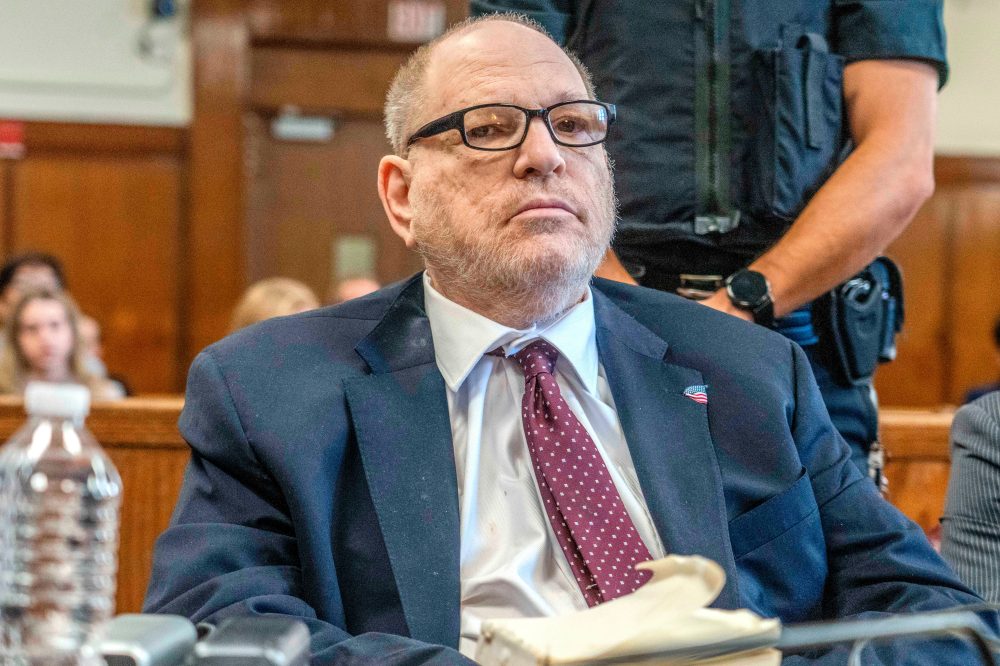
NEW YORK – Defense attorneys for Harvey Weinstein called on jurors Tuesday to dismiss rape allegations against the disgraced movie mogul, marking the conclusion of his third trial on the same charges stemming from the #MeToo movement.
Attorney Marc Agnifilo told the jury during closing arguments that the accusations are fabricated, stating “It’s just not true” regarding claims that Weinstein sexually assaulted actress and hairstylist Jessica Mann at a Manhattan hotel in 2013. “She has taken on a false narrative about all of this,” Agnifilo argued.
Prosecutors are scheduled to present their final arguments Tuesday afternoon before the jury begins deliberations in the complex case involving a multi-year relationship between Weinstein and Mann.
According to testimony, the two first crossed paths in early 2013 when Mann was pursuing her Hollywood dreams. She told the court she expected a business relationship but was surprised when Weinstein made romantic overtures, though she ultimately chose to continue seeing the then-married, Academy Award-winning producer.
Mann testified that weeks into their relationship, Weinstein unexpectedly appeared at a hotel where she and a companion were staying. She said when she went to his room to decline his sexual advances, he physically restrained her, forced her to remove her clothing, briefly left for the bathroom, and then sexually assaulted her.
“He just treated me like he owned me,” Mann stated during her testimony last month.
While Weinstein chose not to take the witness stand, his legal team maintains the encounter was mutual and occurred within a loving relationship that Mann actively maintained until Weinstein’s public disgrace in 2017. That year, media reports about accusations against him sparked the worldwide #MeToo movement addressing sexual misconduct. Weinstein has acknowledged inappropriate behavior but denies any criminal conduct.
The producer was initially found guilty of raping Mann in 2020, but that verdict was later reversed on appeal. A subsequent retrial in the previous year ended without a verdict when jurors could not reach agreement.
During Tuesday’s closing statements, Agnifilo questioned the credibility and logic of Mann’s testimony, highlighting friendly email communications and social meetings between the pair both before and after the alleged assault.
“Throughout the four years, she is going to Harvey Weinstein for things that she needs, and Harvey Weinstein is doing the best that he can,” Agnifilo told jurors, describing how Weinstein helped advance Mann’s career aspirations and provided personal support. “They are emotionally close. She relies on him. He is a very important person in her life, and she lets him know that.”
Regardless of this trial’s result, the former entertainment executive will remain behind bars due to separate sexual offense convictions in New York and California, though he continues to challenge those verdicts through appeals.
The Associated Press typically does not name individuals who report sexual assault unless they choose to be publicly identified, as Mann has elected to do.
A San Francisco artificial intelligence company announced Tuesday the launch of enhanced features for legal professionals using its Claude AI assistant platform.
Anthropic revealed that its expanded Claude system now offers specialized capabilities for attorneys, including direct integration with major legal research databases and third-party professional services platforms.
The technology firm said the new release enables law firms and existing Claude users to establish secure connections with platforms like Thomson Reuters for legal research, document organization, and additional professional services.
This development arrives as technology companies intensify their competition to create and promote professional AI solutions, while information-intensive fields like the legal profession rapidly embrace artificial intelligence technologies.
The latest Anthropic announcement expands upon Claude Cowork plug-ins that the company unveiled in late January, which triggered significant investor sell-offs in U.S. and European data analytics, professional services, and software firms.
According to Anthropic, Claude users will now gain access to Thomson Reuters’ Westlaw Primary Law database containing court records and legal documents, plus its Practical Law practice guidance resources.
Thomson Reuters simultaneously announced its integration of the Westlaw-powered AI platform CoCounsel with Claude on Tuesday, stating this connection will provide Claude users direct access to CoCounsel’s professional-grade legal research capabilities.
“We are actively building integrations that connect general-purpose AI to professional environments, ensuring that wherever lawyers are working, the full power of CoCounsel Legal is available to them,” stated Thomson Reuters Chief Technology Officer Joel Hron.
The companies did not reveal financial details of their partnership. Thomson Reuters serves as Reuters’ parent company.
Anthropic also announced a partnership with AI startup Harvey that will incorporate Harvey’s legal assistant technology into Claude, providing support for general legal questions.
Legal professionals using Claude will additionally be able to connect directly with Box content management platform, Everlaw cloud-based electronic discovery services, and DocuSign software solutions, according to Anthropic.
“We’re seeing an incredible uptick in adoption of AI in the legal industry,” Anthropic Associate General Counsel Mark Pike told Reuters. He noted that a recent webinar demonstrating how legal teams utilize Claude attracted over 20,000 registrations.
Tuesday’s release features 12 new legal practice plug-ins including “commercial counsel,” “employment counsel,” “litigation associate,” and “law student” tools. The company said these new capabilities can be implemented directly within Anthropic’s Cowork platform or integrated into individual firm systems.
A Jerusalem-based watchdog organization revealed Tuesday that it will experience its first leadership change since its founding, with current Vice President Olga Deutsch set to become CEO and president effective January 1, 2027.
NGO Monitor’s founder Gerald Steinberg, who has guided the organization for a quarter-century, will transition to the role of president emeritus while maintaining his involvement in research and writing activities.
Deutsch brings more than ten years of experience with the organization to her new role, having managed European engagement initiatives, fundraising efforts, and international partnership development during her tenure.
Speaking about her upcoming responsibilities, Deutsch expressed both reverence and determination for the task ahead. “I step into this role with humility and a profound sense of historic responsibility,” Deutsch said. “Gerald foresaw that human rights groups would weaponize their influence against the Jewish state and Jewish communities worldwide; since October 7, that warning has become reality, with the threat growing every day.”
Deutsch emphasized the organization’s continued mission to examine groups that target Israel while supplying critical information to government officials and policymakers.
“At this critical moment, NGO Monitor stands singularly positioned to expose the actors behind these campaigns, and to arm decision-makers with facts needed to inform sound policy decisions,” Deutsch said. “Together with our exceptional team, and our professional and lay leadership, I am honored to lead this mission forward.”
The organization traces its origins to 2002, when Steinberg launched NGO Monitor following the Durban Conference. The initiative emerged as what the group characterized as a counter-response to the growing political power of human rights nongovernmental organizations, especially concerning advocacy related to Israel.
NGO Monitor describes its core mission as conducting research, promoting transparency, and examining organizations and funding sources involved in human rights and humanitarian advocacy work.
Steinberg expressed confidence in the organization’s direction under new leadership. “As I transition into the role of President Emeritus, and continue with research and writing, I do so with full confidence in NGO Monitor’s future,” Steinberg said.
“Olga is distinctly qualified to lead NGO Monitor forward, and under her leadership, NGO Monitor will continue to expand the impact of its research and uphold the vision that has guided me for the past quarter century,” he added.
A Palestinian-Syrian journalist’s investigation into a luxury development project in Damascus sparked controversy not for its corruption allegations, but because of the reporter’s Palestinian heritage, highlighting growing tensions for Palestinian refugees in post-Assad Syria.
When Qusai Amameh published his report about Mount Qasioun’s redevelopment plans for a five-star hotel and commercial complex, he anticipated discussions about transparency and reconstruction priorities. However, the criticism he received centered on his Palestinian identity rather than his journalism.
On May 3rd, Syria Shift, a platform allegedly connected to Syria’s Ministry of Information, released a video called “The Palestinian Filter” targeting Amameh, who serves as editor-in-chief of the Syrian platform Street. The segment focused on his Palestinian background instead of addressing his reporting content, raising fundamental questions about belonging and acceptance in modern Syria.
Fayez Abu Eid, who leads the Action Group for Palestinians of Syria, explained to The Media Line how social media has amplified hostility toward Palestinian refugees. “As political debate has moved onto social media and digital platforms, it’s become easier for criticism to cross the line into hostility, especially toward Palestinian refugees in Syria. There’s a difference between criticizing a person or a political position and blaming an entire community. When people start speaking in broad generalizations, it can fuel prejudice and deepen stereotypes,” he stated.
The controversial video sparked widespread condemnation from journalists, activists, and Palestinian rights advocates who accused the platform of encouraging discrimination and collective suspicion. Following intense public backlash, Syria Shift eventually deleted the video from its platforms.
Palestinian community members view this incident as part of a broader pattern affecting minorities in post-Assad Syria. Similar to how Alawites face scrutiny due to their association with the former regime and Druze communities encounter separatism accusations, Palestinians increasingly find themselves viewed with suspicion rather than as integral members of Syrian society.
These concerns intensified in April when Syrian security forces detained Palestinians throughout Damascus and surrounding areas following demonstrations against an Israeli law imposing death penalties for certain Palestinians convicted of terrorism-related offenses. Authorities arrested at least 30 individuals from Khan al-Shih camp alone, with additional detentions in Jaramana, al-Huseiniyeh, Rukneddine, and al-Hamah. Many were transported to undisclosed locations without official explanation.
The controversial Israeli legislation, promoted by National Security Minister Itamar Ben-Gvir, passed the Knesset on March 30th with a 62-48 vote. Palestinian leaders and rights organizations condemned the law as creating discriminatory punishment systems, and its passage triggered regional protests.
Thousands of Syrians demonstrated from Damascus to Daraa, showing solidarity with Palestinians and opposing Arab normalization with Israel. In Damascus, protesters who had gathered at Umayyad Square broke away from the main rally and attacked the United Arab Emirates embassy. The UAE subsequently condemned what it termed “riots, acts of vandalism, and assaults” at its diplomatic facilities.
US Special Envoy to Syria Tom Barrack called on Damascus to protect all diplomatic missions while continuing “the courageous work of reconciliation,” describing Syria’s regional reengagement as a defining chapter. The Syrian Foreign Ministry distanced itself from the violence, stating it did not represent the Syrian people.
Ryan Maarouf, a Syrian journalist from As Suwayda, told The Media Line that the new authorities are applying the same control strategies to Palestinians that they’ve used with other minority groups. “Just as the authorities tried to impose central control over the Druze, Alawites, and Kurds, it is natural that they would seek the same with Palestinians: ensuring full loyalty, preventing any independent political space, and eliminating any force that could be seen as a future source of concern,” he explained.
Maarouf noted that Damascus interprets Palestinian political expression through an Israeli security lens. “The Palestinian file in Syria is not only a social or legal issue. It is also tied to Israel’s security file, because any political or organizational Palestinian presence can be read by Israel as a threat, which makes the authorities even more sensitive toward it,” he said.
Following the UAE Embassy incident, some commentators broadly implicated Palestinians, with pro-government voices using the event to incite against the community and revive accusations that they represent political and security burdens. Rather than being viewed as refugees with historical Syrian connections, they were portrayed as destabilizing external forces.
Human rights organizations have warned that Palestinians are increasingly characterized either as security threats or remnants of the old regime, leading to enhanced scrutiny and social exclusion. Activists argue that the rapid resurgence of collective blame demonstrates that the Amameh case represents a wider atmosphere treating Palestinians as permanent outsiders.
Abu Eid emphasized the humanitarian toll Palestinians endured during Syria’s conflict years. “During the years of war, Palestinians in Syria paid a severe humanitarian price, even though many tried as much as possible to stay out of the conflict,” he said. “More than 7,500 Palestinians were arrested by the former regime’s security forces, around 1,500 died under torture, and the fate of more than 5,000 remains unknown to this day.”
Yarmouk camp, established in 1957 for Palestinians displaced during the 1948 Arab-Israeli war, exemplifies this suffering. Located on Damascus’s southern edge, the camp housed approximately 160,000 residents by 2011, making it Syria’s largest Palestinian refugee community. The Free Syrian Army entered in December 2012, followed by an Assad regime siege in July 2013 that cut off food and medicine supplies. Over 160 people died from starvation, and a 2018 regime offensive destroyed most of the camp, including UN Relief and Works Agency facilities.
A Yarmouk camp social worker, speaking anonymously for safety reasons, told The Media Line that while Palestinians haven’t experienced direct ground-level measures, media discourse close to authorities has become increasingly harsh. “There is a growing feeling that some voices are trying to demonize Palestinians and portray them as an obstacle to Syria’s stability, and this is causing real concern among Palestinians in Syria,” the worker said.
According to UNRWA’s 2026 humanitarian appeal, 92% of Palestine refugees in Syria—more than 384,000 people—face food insecurity, up from approximately 63% in March 2024. Additionally, roughly 30%, or more than 125,000 people, remain in protracted internal displacement.
Abu Eid confirmed that suspicion has persisted under the new government. “Even today, many Palestinians feel they are viewed with suspicion or treated through broad narratives that ignore the diversity of their positions and experiences during the war,” he said. “This feeling grows stronger when decisions affecting them are issued and then later amended or apologized for.”
These fears escalated last year following reports that official documents had replaced “Syrian Palestinian” with “Palestinian resident.” The social worker described more extensive changes: “The description ‘Syrian Palestinian’ was replaced with ‘resident Palestinian,’ and the original place of registration was removed in favor of classifying them as ‘foreigners.’ This created serious fears for us as Palestinians, because we consider ourselves Syrians as well, not only Palestinians.”
While Syrian authorities characterized these changes as technical errors, Palestinian groups viewed them as attacks on their legal identity. Abu Eid explained the community’s interpretation: “When terms like ‘Palestinian resident’ appeared instead of ‘Syrian Palestinian,’ many people did not see it as a simple technical issue. They understood it as a possible sign of a deeper change in the legal approach to Palestinians and a warning that their long-established rights could be weakened.”
Maarouf offered a more skeptical perspective: “When the label ‘Palestinian resident’ appeared instead of ‘Syrian Palestinian,’ I do not see it as merely a technical mistake, but rather as a way of testing public reaction to any future change related to the legal and social status of Palestinians.”
Palestinians in Syria have historically maintained a unique legal status. Law 260 of 1956 granted many Palestinian refugees rights similar to Syrian citizens in employment, education, public services, and residence, while preserving their Palestinian nationality and excluding them from political rights like voting or holding office.
Maarouf emphasized the deep integration Palestinians achieved over decades: “Palestinians in Syria lived for decades almost as Syrians. They served in the army, owned homes, and built full lives. Presenting them today as an external party or a temporary guest is not just an administrative issue, but a clear political message.”
This contrasts sharply with Palestinian experiences in Lebanon, where they cannot own property, practice dozens of professions, or obtain citizenship, with UNRWA reporting that over 80% live below the poverty line.
A joint April analysis by Syrians for Truth and Justice, the Syria Justice and Accountability Centre, and Justice for Life documented presidential decrees and ministerial decisions throughout 2025 that amended laws and restructured state institutions without parliamentary approval. The reclassification of Palestinians as “foreigners” has raised concerns that Damascus is adopting Lebanon’s model of permanent legal marginalization.
While the Ministry of Information launched a media code of conduct in February to regulate hate speech and promote post-Assad professionalism, critics argue that pro-government media and online networks continue treating minorities—including Druze, Alawites, Kurds, and Palestinians—through loyalty and suspicion frameworks.
This pattern has resulted in documented violence. The US Commission on International Religious Freedom stated in its 2026 Annual Report that transitional authorities “exhibited systematic and ongoing tolerance for egregious violations of religious freedom” throughout 2025, recommending Syria for Country of Particular Concern designation. On March 7, 2025, fighters loyal to transitional authorities or operating under the Ministry of Defense killed at least 1,500 Alawite civilians in two days of summary executions along the Syrian coast. A July 2025 escalation in Suwayda displaced approximately 187,000 Druze, according to Syrians for Truth and Justice.
In March, Kurdish civilians returning from Nowruz celebrations in Afrin faced attacks by groups that forced them to step on Kurdish flags while General Security personnel watched without intervention. These attacks occurred two months after a presidential decree recognizing Kurdish cultural rights and criminalizing ethnic incitement.
The Action Group for Palestinians of Syria reported that monitoring of the April detention campaign suggests several possible justifications, including alleged Islamic State affiliations, alleged connections to Assad regime remnants, and the UAE embassy attack. The Ministry of Interior had already arrested two individuals connected to the embassy incident, with spokesman Nour al-Din al-Baba accusing them of former Syrian regime ties. While some Khan al-Shih detainees were later released, others remain in custody.
Abu Eid concluded with a call for balanced recognition: “Any fair approach to Palestinians in Syria must recognize both realities at once: They are part of the Syrian social fabric, but they are also a refugee community with a unique legal and historical status. Ignoring either side makes the issue far more dangerous and unstable.”
Culinary professionals from across Israel gathered at Tel Aviv’s waterfront to showcase their heritage through food, proving that even amid regional tensions, the spirit of celebration endures. The annual EAT Festival, running from May 11-14 at Charles Clore Park, drew massive crowds despite looming security concerns.
Roey Mantzour, who operates the Arayes catering business specializing in meat-filled pita bread, believes Israeli cuisine mirrors the nation’s character. “The food in Israel reflects who we are: smart, diverse, a gathering of exiles from all over the world who came here to live. And here, we have the best food in the world,” Mantzour explained.
Monday evening’s festival opening saw thousands of visitors flooding the seaside park, creating a lively atmosphere filled with aromatic spices, grilled meats, baked goods, and desserts. Vendors offered an extensive range of options, from traditional meat dishes and street food to plant-based alternatives, sweets, and beverages.
The event demonstrated Israelis’ determination to maintain normalcy and joy during challenging times. Families, couples, tourists, and friend groups filled the park, embracing the creative energy of Tel Aviv against the Mediterranean backdrop. Daily festivities begin at 6 p.m., featuring live music and dining as the sun sets over the coastline.
Yaniv Wahby traveled from Daliyat al-Karmel in northern Israel to serve traditional Druze specialties including stuffed grape leaves, rice-filled cabbage rolls, za’atar pastries with olive oil, and signature Druze flatbread topped with various ingredients from labneh and chocolate to fresh fruit, halva, and hummus.
Wahby’s northern community has endured significant hardship from Hezbollah rocket attacks in recent months, nearly forcing him to close his business due to decreased tourism. However, he maintained an optimistic outlook at the festival. “We really suffered in Daliyat al-Karmel. During the war, things were very difficult,” Wahby shared with The Media Line. “Now, thank God, we finally have a little breathing room. We came here, as we do every year, to create a good atmosphere and give people a chance to be happy. We’re giving it everything we’ve got.”
Chef Moti Yevdayev, an Azerbaijani immigrant who arrived in Israel in 1998, presented his mother’s traditional recipes while wearing colorful traditional clothing in turquoise, red, and yellow hues. “From the age of one, I was always near the tandoor oven, my aunt, my mother, and my whole family while they cooked,” Yevdayev told The Media Line. “Over the years, I grew up and decided I wanted to enter the culinary world because food is what I love most.”
Yevdayev emphasized the authenticity of Azerbaijani cooking, highlighting fresh vegetables and minimal seasoning. According to the chef, the cuisine relies primarily on salt, pepper, saffron, and “lots of love and patience.”
His featured dish, shah plov, consists of rice steamed with dried fruits, raisins, chestnuts, meat, caramelized onions, and pomegranate, all encased in dough and baked for hours. “It creates this incredible crust while everything inside steams together into one perfect bite, sweet, sour, salty, and rich,” the chef described.
Additional offerings included qutab, a grilled pastry with spinach and herbs or meat, brushed with vegan butter substitute to maintain kosher standards, and gürzə dumplings with both meat and vegetarian potato-onion versions. He also brought authentic stuffed grape leaves directly from Azerbaijan.
Currently serving as chef for the Azerbaijani Embassy in Israel, Yevdayev manages all embassy events and leads kosher culinary tours internationally. Security concerns have prevented his long-held restaurant dreams, though he hopes this year will finally allow that goal to materialize.
“Today we’re here at the festival in Tel Aviv. This is a huge dream of mine,” Yevdayev said. “We make all the food here by hand. It’s very hard work. Around 20 older women came to help cook because only they know the traditional folding, stuffing, and preparation techniques. It’s honestly beautiful to watch, almost like a movie.”
Asian cuisine was well-represented through authentic Thai and Korean food stalls. Suni Kim originally visited Israel eight years ago for the Jerusalem Marathon and fell in love with the country. After returning permanently a year later, she met her husband and now has a one-year-old child. Three years ago, she established Tel Aviv’s first Korean restaurant, Kimchi’s Korean Restaurant.
Kim’s festival offerings included authentic Korean dishes such as bibimbap, Korean barbecue, and Korean corn dogs – “anything that you see on TikTok that people love to try,” she explained to The Media Line.
Observing the packed park around her, Kim praised Israeli resilience. The people of Israel are “very, very brave. One day, there’s a tragedy, and the next day, they recover so fast. And it’s very, very impressive.”
She noted that despite living under war’s shadow, “everyone’s excited to come out for the food, so it shows the energy.”
Jerusalem’s renowned Machneyuda restaurant, established by celebrity chef Assaf Granit, sent representative Gal Hadar to the festival. According to Hadar, they participate because “the sea is here. You can get a tan. It’s not cold here,” and crucially, “The people of Tel Aviv want polenta. They don’t want to travel to Jerusalem for polenta, so the polenta comes to them.”
Machneyuda’s signature polenta with mushroom ragout and truffle oil was featured alongside buns filled with chorizo and siska, a spiced meat preparation. Hadar explained that superior siska originates from Jerusalem because “that is where the Kurdish people live and they brought their traditions and food culture there.”
When asked if Tel Aviv residents appreciate Jerusalem cuisine, Hadar responded confidently: “Yes, very much. We try our best to make them love it.”
Mantzour showcased his specialty dish of pita stuffed with kebab meat, typically fatty lamb. “We grill it over a very low flame so the pita becomes crispy while the kebab stays soft,” he described to The Media Line. “We serve it with dips like tahini, red harissa, and pickles.”
While acknowledging arayes as traditionally Lebanese, he jokingly remarked that “we took it from the Arabs like everything else.” Despite this humor, he expressed genuine pride in participating annually since the festival’s inception a decade ago.
“Tel Aviv is undoubtedly the culinary center of Israel,” Mantzour stated, emphasizing this year’s special significance. “This event is extremely important this year because there haven’t been many events since Purim. This is a very major event in Israel, and it’s important that it happens. We’re very happy it’s taking place despite the tension in the background.”
Tamir Cohen, Mantzour’s colleague, echoed these sentiments. “Food in Israel is the best therapy for us Israelis,” Cohen concluded. “Through food and culinary culture, we continue living. For us, food is the cure for all the madness we experience as a nation. We are a people constantly living through wars, but we also love to enjoy life, celebrate, and eat.”
Hadar from Machneyuda added: “Am Yisrael Chai – long live the people of Israel.”
The University of Delaware men’s tennis program has reason to celebrate after three of its student-athletes were selected for prestigious academic honors.
College Sports Communicators announced Tuesday that team members Lock, Mackenzie, and Tollenaar have been named to the CSC Academic All-District Team, recognizing their excellence both in competition and in their studies.
The Academic All-District recognition highlights student-athletes who demonstrate exceptional performance in their sport while maintaining high academic standards in the classroom.
This achievement reflects the continued success of Delaware’s men’s tennis program in developing well-rounded student-athletes who excel beyond just athletic competition.
European satellite company Eutelsat announced Tuesday that its third-quarter financial results aligned with market predictions, as expanding low Earth orbit internet operations helped balance declining video service revenues.
Market analysts are closely monitoring when the company’s LEO internet growth will fully compensate for losses in its traditional broadcasting division, following Eutelsat’s massive $3.4 billion purchase of OneWeb last year that transformed it into a major connectivity provider.
For the quarter ending March 31, comparable revenues from video services, government contracts, and mobile and fixed connectivity increased 0.9% compared to the previous year, reaching 284 million euros ($334 million). This figure came close to analyst projections of 286 million euros, with estimates ranging from 276 million to 296 million euros.
The company’s low Earth orbit services experienced dramatic expansion with revenues surging 65%. Meanwhile, video service income dropped 13.3% due to canceled contracts and restrictions affecting Russian broadcasting channels. Connectivity revenues climbed 15.3%.
Following the OneWeb purchase, Eutelsat has broadened its satellite internet offerings to capitalize on increasing demand for space-based connectivity services, partly fueled by the rising success of Elon Musk’s Starlink network.
The Paris-headquartered corporation operates OneWeb, which consists of over 600 LEO satellites delivering internet services to government agencies, military organizations, aviation companies, and maritime clients. Both France and Britain, among its primary financial backers, support Eutelsat as Europe’s leading domestic competitor to Starlink.
Company officials indicated that income from a decade-long agreement with French military forces should begin appearing in financial records during the fourth quarter ending in June.
Eutelsat recently obtained approximately 5 billion euros through government-supported refinancing efforts. Initial shipments of 440 additional OneWeb satellites are scheduled for completion by year’s end, with launch operations planned to commence in 2027.
Federal Transportation Secretary Sean Duffy has come under scrutiny after it was revealed that his family’s reality television project received financial backing from companies within the transportation sector that his department regulates.
Duffy, along with his wife and their nine children, participated in filming “The Great American Road Trip,” a reality series created to honor the nation’s upcoming 250th anniversary celebration. The family has emphasized that no government funds or taxpayer dollars were used to finance the production.
However, investigation shows that a nonprofit organization with ties to transportation-related businesses provided funding for the project. This arrangement raises questions about potential conflicts of interest, given Duffy’s position overseeing the very industry that sponsored his family’s television venture.
According to Duffy’s statements, the filming process was carefully scheduled around his official duties, with production taking place during weekends and school holiday periods over approximately seven months.
The situation highlights ongoing concerns about the relationship between government officials and the industries they regulate, particularly when personal projects receive support from those same sectors.
Hotels across America’s World Cup host cities are experiencing disappointing reservation numbers, falling well short of the anticipated tourism surge that was expected to accompany the world’s premier soccer tournament.
An April study conducted by the American Hotel & Lodging Association revealed that guest bookings have fallen below projections in most of the 11 American cities welcoming the globally televised competition.
Hotel managers in Kansas City, Boston, Philadelphia, San Francisco and Seattle reported that reservations are actually trailing behind normal seasonal patterns. Meanwhile, properties in New York City, Los Angeles, Dallas and Houston described demand as stagnant when compared to typical spring and summer periods, the association found.
The hospitality trade group identified several factors contributing to the underwhelming response: international visitors’ travel apprehensions, lengthy U.S. visa processing delays, and steep tournament expenses including costly match tickets and transportation in host cities.
“I think everyone had hoped the games would lead an influx of bookings, but with all going on in the world and the USA’s involvement, events are playing out differently for everyone,” said Michael Black, general manager at the Cloud One hotel in Manhattan.
The booking challenges aren’t limited to American venues. Mexico, which shares hosting duties with the United States and Canada, faces similar struggles. Hotels in Mexico City, where the tournament kicks off June 11, show occupancy rates between 30% and 36%, according to the Asociación de Hoteles de Ciudad de México.
Following the tournament schedule announcement, numerous hotels dramatically increased their nightly rates, betting that soccer enthusiasts would accept premium pricing to secure accommodations near match venues.
A New Jersey hotel near MetLife Stadium exemplifies this strategy, raising its typical $200 nightly rate to $800 during June World Cup dates. Prices climb even higher to over $1,300 per night before the July 19 championship match.
Experienced soccer followers likely anticipate these elevated rates will eventually decrease, according to Ronan Evain, executive director of Football Supporters Europe, a Germany-based fan advocacy organization.
“Fans that are used to traveling for tournaments know that this price will always go down,” Evain said. “There are many examples of hotel owners regretting that they priced too high and then panicking at the last minute and reducing prices.”
Alternative accommodations may explain some of the hotel booking shortfalls. Evain noted that many visitors have likely arranged less expensive lodging at greater distances from stadiums or through Airbnb and similar short-term rental services.
Data from AirDNA, which monitors Airbnb and Vrbo reservations, confirms increased short-term rental activity in metropolitan areas around Kansas City, Seattle, San Francisco, Dallas/Fort Worth and Miami/Ft. Lauderdale compared to the previous year.
Airbnb announced that anticipated guest numbers during the tournament will surpass initial projections and potentially exceed the 2024 Olympic and Paralympic Games in Paris, making it the platform’s largest hosting event ever.
FIFA reports selling more than 5 million tickets so far, approaching the 6 million total expected for all 104 tournament matches.
While tournament attendees represent potential hotel guests, major international events like the World Cup often deter other visitor categories, explained Andrew Zimbalist, a Smith College professor specializing in sports economics.
“The general problem is that soccer tourists — and expected congestion, high prices and security concerns — push away normal business travel and tourism,” he explained.
Vijay Dandapani, president of the Hotel Association of New York City, reported a modest 10% increase in summer reservations compared to the previous year, but noted this falls far short of the economic boost promised by FIFA and tournament promoters.
Toronto, Canada, which will stage six matches, shows stronger performance with room demand up approximately 28% over June 2025, said Sara Anghel, president of the Greater Toronto Hotel Association.
Despite 90% of Kansas City hotel operators telling the American Hotel & Lodging Association survey that bookings missed expectations, local tourism leaders maintain optimism for record visitor numbers.
“While hotel occupancy in Kansas City has not followed the trajectory originally predicted by FIFA, there are positive indicators for Kansas City on the horizon,” said Derik Detter, market research director at Visit KC.
Jon Bortz, CEO of Pebblebrook Hotel Trust, which operates numerous hotels nationwide, shares this positive outlook.
He reported higher occupancy rates at the company’s host city properties compared to last year, though acknowledged that cities like Boston with premier matchups are outperforming locations like San Francisco hosting less popular games.
“We haven’t seen anything that would cause us to think it’s going to be less than what we were expecting,” he said. “Maybe other people had much grander expectations.”
Delaware State Police have charged a 22-year-old Pennsylvania man with multiple felonies after he allegedly broke into a Claymont nonprofit organization several times over a four-day period in March.
Ammar Dixon of Chester, Pennsylvania faces burglary, theft, and vehicle theft charges in connection with repeated break-ins at Conexio Care on Naamans Road.
Police say the crime spree began between March 13 and March 17, 2026, when Dixon repeatedly entered the nonprofit’s building during overnight hours. Officers responded to the business at 590 Naamans Road on March 17 after receiving reports of multiple burglaries.
According to investigators, Dixon’s first break-in was interrupted when he encountered an employee still working inside the building. Police say Dixon ran away but managed to steal an access badge during his escape. However, he left behind a bag containing items that helped identify him.
The Delaware State Police Criminal Investigations Unit discovered that Dixon, who had no connection to the organization, returned to the building on subsequent nights using the stolen access badge. Detectives say he searched through offices and stole keys to company vehicles, which he then drove around before bringing them back to the parking garage.
Dixon was taken into custody on April 12, 2026, in Pennsylvania on unrelated charges. He was brought back to Delaware on May 5, 2026, and processed at Troop 2.
Following his arraignment at Justice of the Peace Court 2, Dixon was released on $19,000 unsecured bond. He faces the following charges:
• Four counts of Burglary Third Degree (Felony) • Three counts of Theft Under $1500 • Attempted to Commit Theft Under $1500 • Three counts of Unauthorized Use of a Vehicle Without the Consent of the Owner
Authorities have released the identity of the motorcyclist who lost his life in a weekend crash in Seaford. Jeffrey Collins, age 56 and a resident of Seaford, Delaware, was killed in the accident that took place on Saturday.
Delaware State Police’s Collision Reconstruction Unit continues to examine the circumstances surrounding the deadly incident. Investigators are seeking anyone who may have seen the crash or has relevant details to reach out to Master Corporal J. Smith at (302) 703-3267. Witnesses can also share information through a private message on the Delaware State Police Facebook page or by contacting Delaware Crime Stoppers at (800) 847-3333.
Those affected by crime, traumatic incidents, or sudden loss of a family member can access support through the Delaware State Police Victim Services Unit and Delaware Victim Center. These services operate around the clock and can be reached at 1-800-VICTIM-1 (1-800-842-8461) or via email at [email protected].
Devastating floods have swept through six provinces in South Africa, claiming the lives of at least 10 people and leaving thousands of homes in ruins since the severe weather began on May 4.
Government officials have officially declared a natural disaster in response to the widespread flooding, severe thunderstorms, powerful winds, and even snowfall that have impacted the Western Cape, North West, Free State, Eastern Cape, Northern Cape, and Mpumalanga provinces. This official designation allows authorities to access emergency funding and deploy additional resources for disaster response.
Cape Town has experienced some of the worst damage, prompting the Western Cape provincial government to temporarily shut down schools and close portions of the popular Table Mountain tourist site. Officials reported Tuesday that flooding has impacted no fewer than 26 informal settlements surrounding the city, with more than 10,000 structures suffering damage.
President Cyril Ramaphosa expressed his grief Monday over the weather-related deaths as the Southern Hemisphere enters its winter season, stating he felt “deep sadness” about the loss of life.
“Authorities are making the best use of science to pre-empt some of these events and to respond to the aftermath,” Ramaphosa said.
Climate experts warn that severe flooding throughout Southern Africa is becoming more intense due to extreme weather conditions. Mozambique, South Africa, and Zimbabwe have all experienced exceptionally heavy rainfall in recent months, creating what many consider the region’s most devastating flooding in years.
This marks the second time this year South Africa has faced such extreme weather conditions. In January, officials declared a national disaster following torrential rains and flooding in the northern region that killed at least 30 people, damaged thousands of homes, and destroyed critical infrastructure including roads and bridges.
BUDAPEST, Hungary — Hungary completed its historic political transition Tuesday as Péter Magyar’s cabinet ministers officially took their oaths of office, bringing to a close Viktor Orbán’s 16-year reign over the Eastern European nation.
The ceremony installing 16 new ministers occurred just two days following parliamentary committee reviews, demonstrating the 45-year-old attorney’s determination to rapidly dismantle the political framework Orbán established during his extended tenure as leader.
Magyar’s European Union-aligned Tisza party delivered a decisive electoral victory over Orbán’s nationalist Fidesz movement last month, capturing more parliamentary support than any political organization in Hungary’s post-Communist era.
This electoral triumph provided Tisza with a commanding two-thirds parliamentary majority, positioning the party to reverse numerous policies that earned Orbán criticism as an authoritarian leader from the far-right.
Speaking after his ministers’ installation ceremony in Hungary’s legislative building, Magyar declared that “the government now being formed will be the government of all Hungarians” and “a servant of the nation and not of the prime minister,” delivering a clear rebuke to his predecessor’s approach.
“We must repair the destruction, division, backwardness and loss of trust over the past two decades by making Hungary a functioning, livable and self-reliant country again,” he stated.
The electoral results gave Tisza control of 141 parliamentary positions from the total 199 available, while Orbán’s EU-skeptical Fidesz party retained just 52 seats, falling dramatically from their previous 135. The extreme-right Mi Hazánk (Our Homeland) movement secured six positions.
Nearly 3.4 million Hungarian voters who supported Tisza anticipate Magyar will pursue accountability measures against Fidesz leadership and their business partners for alleged wrongdoing and corrupt practices during the previous administration.
Magyar intends to establish a National Asset Recovery and Protection Office, a specialized agency responsible for examining and attempting to reclaim public resources allegedly misappropriated throughout Orbán’s leadership period. He has additionally announced Hungary’s participation in the European Public Prosecutor’s Office, enabling EU investigators to examine fraud allegations and monitor how bloc funding was utilized.
The new leader has also promised to halt operations at Hungary’s state broadcasting network — commonly viewed as Orbán’s party propaganda outlet — until journalistic neutrality can be reestablished.
During his inaugural address, Magyar once again demanded that numerous Orbán appointees holding extended-term positions resign by May 31, specifically naming the president, attorney general, media authority director, and Constitutional Court chief justice.
The incoming administration will oversee 16 ministerial departments, an increase from Orbán’s final government structure of 12. Magyar has committed to substantially reorganizing governmental operations, creating independent ministries for health, environmental protection, and education that were previously consolidated under Orbán’s system.
He has also emphasized restoring democratic frameworks and legal accountability that deteriorated during Orbán’s administration, while pursuing consequences for individuals he claims oversaw and profited from systematic official corruption.
Magyar’s leadership is anticipated to reshape political relationships throughout the European Union, where Orbán frequently disrupted bloc operations by blocking important decisions, particularly regarding assistance for Ukraine.
Supporting these objectives, Magyar’s team has indicated priority efforts to release approximately 17 billion euros ($20 billion) in EU funding that was suspended during Orbán’s tenure due to rule-of-law and corruption issues. These resources are critically needed to revitalize Hungary’s economic performance, which has remained stagnant over the past four years.
In a Facebook video message Monday, newly appointed Foreign Minister Anita Orbán, a diplomatic and international policy specialist, explained her department’s main objective will be to “bring EU funds home” and “consolidate Hungary’s place in Europe and in the EU.”
Other cabinet officials installed Tuesday included Economy and Energy Minister István Kapitány, a former Shell corporation executive, and Finance Minister András Kármán, an economist and previous Erste Bank executive.
Medical officials in Denver have concluded that a 41-year-old man who died after being hit by an aircraft at Denver International Airport last Friday had intentionally ended his own life by breaching security and entering the runway area.
Denver’s chief medical examiner Sterling McLaren announced Tuesday that investigators ruled the death a suicide following their examination, though she noted no suicide note was found and declined to share additional details about their findings.
The tragic incident occurred when the individual climbed over perimeter fencing at the remote location and walked directly into the path of a departing Frontier Airlines flight bound for Los Angeles around 11:19 p.m. Friday.
Airport surveillance footage captured the events from a distance, showing a small figure approaching the runway with swinging arms before crossing into the aircraft’s path. The video shows the person being struck by the plane’s right engine, which immediately erupted in flames.
The engine fire prompted pilots to halt their takeoff and emergency crews to evacuate all passengers using inflatable slides. Airport officials reported that twelve individuals sustained minor injuries during the evacuation, with five requiring hospital treatment.
Passengers later described concerning moments during the evacuation, including being trapped inside the aircraft for several minutes as smoke entered the cabin, then being left outside in freezing temperatures after exiting. Some travelers were seen carrying personal belongings down the emergency slides.
Security expert Jeff Price, who previously served as assistant security director at Denver International Airport during the 1990s, explained that unauthorized entries onto airport property occur regularly across the nation, potentially dozens of times each year.
“The vast majority of airport trespassers are intoxicated or simply ‘messing around just to see if they could do it,’” Price noted, adding that most incidents don’t create genuine security threats. He mentioned that Denver occasionally sees individuals attempting to access the airport to investigate conspiracy theories about alleged UFO operations at the facility.
Price pointed out that breaching airport boundaries isn’t particularly challenging, stating: “It’s really not that difficult to jump an airport perimeter fence. They meet the standards for TSA, but the standards are not that robust.”
The security barriers typically stand 6 to 8 feet high with barbed wire crowning the top, and while federal inspectors must approve their design, no standardized construction requirements exist. Major facilities like Denver International also employ detection systems featuring cameras and motion sensors, with some technology capable of identifying the ground impact when intruders drop over fences.
Denver International Airport spans approximately 36 miles of perimeter fencing that officials say undergoes continuous inspection. The facility sits northeast of downtown Denver, surrounded largely by open fields and agricultural land. The fatal collision occurred on the airport’s easternmost north-south runway, more than 1.25 miles from any terminal buildings.
The Transportation Security Administration maintains regulatory authority over airport security protocols, including perimeter protection standards.
Federal investigators from the National Transportation Safety Board announced Sunday they are collecting information about the passenger evacuation procedures. Agency representatives indicated a formal investigation may proceed if injuries meet their criteria for “serious,” which includes hospitalization exceeding 48 hours, fractured bones, or significant burn injuries.
Frontier Airlines representatives have declined to respond to questions about the incident and evacuation, directing inquiries to airport authorities instead.
If you or someone you know is struggling with thoughts of suicide, help is available by calling or texting 988 for the national suicide and crisis lifeline, or through online chat at 988lifeline.org.
President Donald Trump has assembled a high-powered delegation of American business leaders to accompany him on his diplomatic mission to China this week, a White House source confirmed.
The president departed Tuesday for Beijing, where he will hold discussions with Chinese President Xi Jinping covering topics ranging from Iran policy to trade relations and artificial intelligence development.
A White House insider, speaking anonymously due to lack of authorization for public statements, revealed the roster of business executives joining the presidential delegation.
Tesla and SpaceX chief executive Elon Musk will participate in the China visit. The billionaire entrepreneur previously headed Trump’s Department of Government Efficiency before departing in spring 2025, months before the temporary agency closed in November. Musk, who controls social media platform X, engaged in public disputes with Trump last summer, including unsubstantiated allegations about the president’s connections to convicted sex offender Jeffrey Epstein. The tech mogul later expressed remorse for his social media statements regarding Trump.
Currently, Musk has redirected his attention to Tesla and his other business ventures. Tesla maintains significant operations in China, where Musk has conducted business visits. He faces ongoing legal challenges from French authorities regarding X’s handling of child exploitation content, artificial manipulation, false information, and potential complicity in crimes against humanity through the platform’s AI system Grok. Additionally, Musk is engaged in litigation against OpenAI’s Sam Altman.
Apple’s Tim Cook joins the delegation as his leadership tenure nears completion. Cook revealed last month his intention to step down from his 15-year role as chief executive on September 1, transferring responsibilities to hardware engineering head John Ternus. Under Cook’s leadership, Apple’s market capitalization increased by over $3.6 trillion during the iPhone-driven growth period. Cook will transition to executive chairman following his CEO departure.
Cook’s management of Apple’s global manufacturing relationships demanded sophisticated political navigation skills, especially during Trump’s trade conflicts with China across both presidential terms. After successfully securing iPhone and other product exemptions from Trump’s initial tariff policies, Cook confronted greater obstacles during the current administration.
Despite Trump’s demands for Apple to relocate iPhone production from China to America, the administration implemented some device tariffs. Cook mitigated these costs by transferring US-bound iPhone manufacturing to India and securing additional exemptions after committing Apple to $600 billion in American investments during Trump’s second term.
Boeing’s Robert “Kelly” Ortberg, former Rockwell Collins chief executive, assumed Boeing’s leadership in 2024. His focus centers on Boeing’s rehabilitation efforts following the aerospace giant’s legal, regulatory, and manufacturing difficulties, along with significant financial consequences he inherited.
Last year, Ortberg stated his belief that US-China trade tensions would not derail Boeing’s financial recovery or prevent achieving delivery goals with Chinese carriers who had rejected the company’s aircraft. Beijing escalated import duties on American products to 125% in April 2025, responding to Trump’s decision to raise Chinese product tariffs to 145%. China’s tariff policy would more than double costs for passenger aircraft that Boeing, America’s largest exporter, sells for tens of millions each. However, Beijing poses reduced threats to Boeing compared to previous periods, as the company has gradually decreased shipments to that market.
Boeing continues negotiations with China regarding a potential major aircraft purchase agreement.
The business delegation also includes BlackRock’s Chairman and CEO Larry Fink, Blackstone’s Chairman, CEO and co-founder Stephen Schwarzman, Cargill’s Chairman and CEO Brian Sikes, Citi’s Chairman and CEO Jane Fraser, Coherent’s CEO Jim Anderson, GE Aerospace’s Chairman and CEO H. Lawrence Culp, Goldman Sachs’ Chairman and CEO David Solomon, Illumina’s CEO Jacob Thaysen, Mastercard’s CEO Michael Miebach, Meta’s President and Vice Chairman Dina Powell McCormick, Micron’s Chairman, President and CEO Sanjay Mehrotra, Qualcomm’s President and CEO Cristiano Amon, and Visa’s CEO Ryan McInerney.
CAMBRIDGE, Mass. — A gunman wielding an assault-style weapon opened fire on vehicles traveling along a busy Cambridge highway Monday afternoon, injuring two people before being shot by a Massachusetts state trooper and a civilian who intervened to stop the rampage.
Tyler Brown, 46, of Boston, discharged more than 60 rounds while walking along the roadway near the Charles River, striking at least a dozen vehicles including a police cruiser. Terrified drivers fled their cars or took cover underneath them as bullets flew, according to law enforcement officials.
The violence unfolded on a major thoroughfare in Cambridge, the city that houses Harvard University and MIT. The area typically sees heavy foot traffic from walkers, runners and bicyclists using nearby paths and sidewalks.
Middlesex District Attorney Marian Ryan praised the actions of both the trooper and the former Marine during a Monday evening press briefing, saying they moved toward danger rather than away from it.
“While people were jumping from their cars, scattering in various directions … both that trooper and that civilian, rather than going in one direction, went toward the suspect with their weapons to try to end that situation,” Ryan stated.
Brown sustained multiple gunshot wounds to his arms and legs and is anticipated to face charges that include two counts of armed assault with intent to murder along with additional firearms violations.
“What happened today cannot stand,” the district attorney declared.
Investigators have found no link between Brown and his victims, Ryan noted. She also reiterated her position calling for stronger penalties against individuals who discharge weapons with disregard for public safety.
Brown remained hospitalized Tuesday and was unable to appear in Cambridge District Court for his arraignment. The Committee for Public Counsel Services will represent him, though the agency has not yet responded to requests for comment.
Attempts to reach Brown and potential family members were unsuccessful Tuesday.
NEW YORK, May 12 — American corporate bond markets are experiencing remarkable strength, with investment-grade credit spreads narrowing, bond issuance climbing, and robust economic fundamentals motivating investors to deploy their available capital.
Despite ongoing Middle East conflicts that have driven oil prices beyond $100 per barrel, the appetite for risk that has propelled U.S. stock markets to record highs and pushed credit spreads near historical lows continues to build.
“The market very quickly gets over the bad news,” said Johnathan Owen, portfolio manager at TwentyFour Asset Management in New York. The key factor, he explained, is that “people have cash.”
“We’re not seeing earnings deteriorate and we’re not seeing downgrades tick up. And when fundamentals are strong, people are going to own risk assets,” Owen stated.
Data from ICE BofA U.S. Corporate Index reveals investment-grade spreads are hovering near record lows at 78 basis points above Treasuries, close to January’s 73 basis point mark. Market analysts note this is tighter than 2007 levels, just prior to the global financial crisis. High-yield credit spreads narrowed to 275 basis points last week, marking the lowest point since September.
Market participants point to enhanced credit quality across both investment grade and high yield securities. SIFMA data indicates U.S. corporate bond issuance reached over $1 trillion during the first four months of 2026, representing a 28.2% increase compared to the previous year’s same period.
Rising Treasury yields have also provided positive momentum, according to market observers.
“While spreads are tight, the higher yield is still attractive for fixed-rate bonds,” explained Ken Shinoda, portfolio manager at DoubleLine Capital in Los Angeles.
ABUNDANT LIQUIDITY FUELS DEMAND
Corporate bond appetite has been supported by substantial liquidity, with investors pointing to robust money supply expansion and accommodative fiscal policies.
The broad U.S. money supply, designated as M2, increased 6% from April 2025 to April 2026, based on recent St. Louis Federal Reserve statistics.
This liquidity boost stems partly from Federal Reserve policy changes, including Treasury bill purchases through a program that has stabilized bank reserves at the central bank around $3 trillion.
M2 had declined during portions of 2023 and 2024 following pandemic-era expansion, partially due to the Fed reducing its balance sheet through quantitative tightening measures.
The recent recovery indicates liquidity conditions have eased somewhat, despite the central bank maintaining relatively tight policy rates.
“We have the big, beautiful bill from the Trump administration, which is fiscally expansive. That means there’s plenty of cash on the sidelines and it’s self-fulfilling,” Owen from TwentyFour noted. “You’ve got a government that’s spending money and that feeds into risk assets.”
Substantial cash reserves have established favorable technical conditions, where investors anticipate modest spread increases—projected at 15 to 30 basis points for investment grade—will be rapidly absorbed through new investments.
Additionally, investors had positioned defensively during recent market volatility and are now gradually returning to neutral allocations, supporting rallies in both primary and secondary markets.
Insurance companies have emerged as significant players in U.S. credit markets, according to DoubleLine’s Shinoda, driven by strong appetite for fixed-rate annuities. Fixed annuity providers profit from the difference between investment returns and policyholder credits.
Treasury securities alone typically don’t generate sufficient yields to make annuities economically viable, particularly after factoring in distribution expenses, reserves, hedging costs and regulatory capital requirements. Consequently, insurers seek additional yield through corporate credit investments.
Shinoda estimates insurers now represent nearly half the demand in certain corporate bond market segments, up from approximately 20% ten years ago.
On the supply side, primary issuance remains strong, led by AI technology companies. New offerings are completing with minimal or no pricing concessions, and investor interest exceeds available bonds by multiple times, analysts report.
BNP Paribas projects record investment grade bond supply of roughly $2 trillion for 2026.
SOLID FUNDAMENTALS WITH UNDERLYING RISKS
However, potential weaknesses remain below the surface. Investors have identified lower-quality high yield segments and private credit as concerning areas, especially if economic growth decelerates. Increasing defaults in these sectors could serve as pathways for broader credit market stress, analysts warn.
Currently, the combination of strong fundamentals, ample liquidity and consistent investment flows continues supporting credit markets.
Corporate financial health remains solid, with no significant increase in downgrades or earnings decline, reinforcing investor confidence despite ongoing macroeconomic uncertainties.
“Tight spreads limit the excess return potential of the sector, but the risk of significant spread widening is lessened by the excellent health of corporate balance sheets,” stated Ryan Swift, chief U.S. bond strategist at BCA Research.
British tennis player Jack Draper revealed Tuesday that former Wimbledon champion Andy Murray will be joining his support team for the upcoming grass court season, as the 24-year-old athlete makes coaching changes ahead of the prestigious tournament.
The announcement comes as Draper ends his working relationship with coach Jamie Delgado after a six-month partnership. Murray, who stepped away from professional tennis in 2024, recently concluded his own coaching arrangement with Novak Djokovic in May 2025.
Draper, who reached the U.S. Open semifinals, has faced a challenging year marked by various injuries and will be absent from the French Open due to persistent knee problems.
“I am very grateful for everything Jamie Delgado has done for me over these past six months. He is a world-class coach and a great man,” Draper expressed in a statement to British media outlets.
“In the interim, I will continue to be supported by the excellent team at the (Lawn Tennis Association), with the addition of Andy Murray, who will be supporting me throughout the grasscourt season,” he continued.
The young tennis player has yet to advance past the second round at Wimbledon during his career, and among his three ATP tournament victories, only one was achieved on grass courts.
While Draper did not detail Murray’s specific responsibilities within his team structure, media sources suggest the former champion may take on a coaching role.
GREENWOOD, Ind. – Student-athletes from Salisbury University’s tennis programs have earned academic recognition from a national collegiate sports organization.
The College Sports Communicators announced Tuesday that five players from both the women’s and men’s tennis squads at Salisbury University have been selected for the 2026 Division III Academic All-District Teams.
The academic honor recognizes student-athletes who excel both on the court and in the classroom, combining athletic participation with strong academic performance.
The United States produced 13,539,200 running bales of cotton during the 2025 growing season, according to the latest annual report from the National Agricultural Statistics Service.
The figure represents the total volume of cotton processed through ginning facilities across the country during the complete 2025 season. Cotton ginning is the process of separating cotton fibers from their seeds after harvest.
The data comes from the USDA’s comprehensive tracking of cotton production nationwide, providing an official tally of the year’s cotton output from American farms.
The nation’s winter wheat farmers are facing a challenging season as production numbers show a substantial decrease from previous years.
According to the latest agricultural data, winter wheat output has fallen by 25 percent when compared to 2025 production levels, marking a significant setback for the farming industry.
The decline represents a notable shift in crop yields that could impact both farmers and consumers in the coming months as the agricultural sector continues to navigate various production challenges.
A comprehensive investigation released Tuesday reveals that Hamas and allied Palestinian militant groups employed systematic sexual violence during their October 7, 2023 attack on southern Israel, according to a detailed civil commission report.
The extensive 300-page document, called “Silenced No More,” was compiled by the Civil Commission on October 7 Crimes by Hamas Against Women and Children following two years of intensive research, witness interviews, forensic analysis, and examination of visual evidence.
Investigators reviewed an enormous collection of evidence including over 10,000 photographs and video clips, more than 1,800 hours of recorded material, and conducted over 430 interviews with survivors, witnesses, former hostages, experts, and family members of victims.
The commission documented 13 distinct patterns of sexual and gender-based violence that occurred both during the initial assault and while victims were held captive in Gaza. These included rape, gang rape, forced nudity, sexual torture, mutilation, posthumous sexual abuse, and attacks committed in front of family members. Investigators also found instances where family members were forced to commit sexual acts against each other, which the commission termed “kinocidal sexual violence.”
“The scale, coordination, and repetition of the conduct demonstrate a widespread and systematic attack against civilians in which sexual violence was deliberately used as a method of terror,” the investigation concluded.
The report details how attackers filmed, broadcast live, and shared images of abuse and killings on social media platforms and through victims’ personal accounts, weaponizing the documentation as psychological warfare against families and Israeli society.
Commission investigators determined that the documented actions constitute war crimes, crimes against humanity, and genocidal acts under international law. They called on Israeli officials and international governments to recognize sexual and gender-based violence as a separate category requiring specific criminal accountability in future legal proceedings.
These conclusions support previous findings, including a March 2024 United Nations report by Special Representative Pramila Patten, whose investigation found “reasonable grounds” to believe conflict-related sexual violence took place during the October 7 attacks and “clear and convincing information” that Gaza hostages experienced sexual violence.
During the October 7 assault, Hamas-led militants breached the Gaza border into Israel, resulting in approximately 1,200 deaths and the kidnapping of 251 hostages. Israeli officials report that hundreds of attackers were captured inside Israel following the assault. The Israeli Knesset approved legislation Monday to create a specialized court system for prosecuting October 7 defendants, including those facing charges related to sexual crimes.
The University of Delaware women’s tennis program has reason to celebrate after the College Sports Communicators organization recognized four Blue Hens student-athletes with Academic All-District honors, according to Tuesday’s announcement.
The prestigious academic recognition from the College Sports Communicators showcases the dedication these Delaware tennis players have shown to maintaining excellence in their studies while competing at the collegiate level.
This achievement reflects the program’s emphasis on developing well-rounded student-athletes who excel both athletically and academically. The Academic All-District designation recognizes student-athletes who demonstrate outstanding performance in the classroom alongside their athletic commitments.
The announcement came from Greenwood, Indiana, where the College Sports Communicators organization is based. The recognition adds to the accolades for Delaware’s women’s tennis program, highlighting the Blue Hens’ commitment to academic achievement.
KYIV, Ukraine – Ukrainian President Volodymyr Zelensky confronts his most serious corruption crisis to date as criminal charges have been filed against his former chief of staff in a multimillion-dollar laundering operation.
While Zelensky himself has not been implicated in the extensive investigation that has shaken Ukraine since November, the allegations against his former top aide Andriy Yermak represent the closest that anti-corruption investigators have come to the president’s inner circle.
The 54-year-old Yermak, a former film producer who orchestrated Zelensky’s remarkable transformation from television comedian to wartime president, was formally designated as a suspect Monday evening in an alleged $10.5 million money laundering operation involving a luxury housing project near Kyiv.
Through his attorney, Yermak dismissed the allegations as baseless when speaking to Ukrainian public broadcaster Suspilne.
Anti-corruption court officials are currently considering prosecutors’ request to set Yermak’s bail at $4 million.
Zelensky has remained silent regarding the charges against his longtime associate, with his communications adviser stating Monday that it was premature to address the matter. The president’s office has not responded to detailed inquiries about the case.
Political analyst Volodymyr Fesenko from the Penta think tank believes the charges against Yermak may not immediately threaten Zelensky’s position but could damage his reputation if he seeks re-election post-war.
“This entire affair is a delay-action mine for President Zelenskiy that may not explode now, but later,” Fesenko stated.
The charges stem from Ukraine’s National Anti-Corruption Bureau’s extensive “Midas” investigation, which has captivated the nation as anti-graft agencies have intensified their wartime activities.
Previous revelations last year exposed an alleged $100 million energy sector kickback scheme involving Timur Mindich, a former business associate of Zelensky from his entertainment career. The scandal erupted as Russia was targeting Ukraine’s electrical infrastructure, sparking public outrage.
The controversy prompted a government reorganization that led to Yermak’s resignation in November. Mindich subsequently fled to Israel and maintains his innocence.
The investigation gained renewed attention recently when Ukrainian media outlets and opposition politicians released what they claimed were wiretapped conversations involving Mindich.
Reuters was unable to independently confirm the authenticity of these transcripts, which allegedly captured Mindich discussing a prominent Ukrainian drone manufacturer with national security chief Rustem Umerov. Umerov’s spokesperson has denied any misconduct. Ukraine’s chief anti-corruption prosecutor confirmed Tuesday that Umerov served as a witness in the “Midas” investigation.
Additional transcript excerpts reportedly feature Mindich and an unidentified woman discussing real estate matters and referencing individuals called “Andriy” and “Vova” – the latter being a common nickname for “Volodymyr.”
Opposition parliament member Oleksiy Honcharenko remarked, “This is now something that Zelenskiy himself, personally, cannot ignore.”
NABU director Semen Kryvonos informed reporters Tuesday that Zelensky has not been the focus of any investigations. Current Ukrainian law prohibits criminal investigations of sitting presidents.
The timing of these charges is particularly delicate as Ukraine continues to rely on essential Western financial assistance, which is partially tied to anti-corruption initiatives. Meanwhile, U.S.-supported peace efforts have stagnated in the conflict’s fifth year.
Some legislators, including members of Zelensky’s Servant of the People party, view the Yermak case positively as evidence of Ukraine’s commitment to combating corruption.
Parliamentary foreign affairs committee chairman Oleksandr Merezhko noted, “Partners see that Ukraine has an independent anti-corruption system that is performing its function.”
Despite increased attention on corruption issues, Zelensky’s public support has remained relatively steady in recent months, with approximately 58% of Ukrainians expressing trust in their president, according to May 4 data from the Kyiv International Institute of Sociology.
However, a May 6 survey revealed that 54% of respondents consider corruption a greater threat to Ukraine’s future than the ongoing war with Russia when forced to choose between the two.
Kyiv residents interviewed Tuesday expressed mixed reactions of concern and wariness.
Valentyna Nevoyt, 70, commented, “Clearly the president is involved, because it can’t be that people near him were in very close contact and he didn’t know anything about what they were doing.”
Currency exchanger Natalia Chernilevska, 53, acknowledged the risk of Zelensky becoming personally implicated while praising his wartime leadership.
“For me, Zelenskiy is an example of a good leader of the country who is fighting to the end,” she said.
LOS ANGELES — Despite claims from the Oklahoma City Thunder that their performance hasn’t been flawless during their championship defense, their unblemished playoff record tells a different story.
At the midway mark of the postseason, their spotless record speaks volumes.
Oklahoma City secured their second consecutive series sweep of the season on Monday evening, defeating the determined Lakers 115-110 in the fourth game of the second round. The Thunder dominated LeBron James and Los Angeles throughout the entire season with an 8-0 record — and the title holders now stand at 8-0 in this year’s playoffs following consecutive eliminations of Phoenix and Los Angeles.
While head coach Mark Daigneault acknowledges room for growth and issues to address, MVP Shai Gilgeous-Alexander emphasizes that their mission remains incomplete.
Nevertheless, the Thunder have established themselves as the premier team in basketball with this playoff run following their commanding regular season performance, as they pursue the NBA’s first consecutive titles since Golden State achieved the feat in 2017 and 2018.
Sam Presti’s relentless organization appears nearly unstoppable as it advances to the Western Conference finals for the second consecutive season and the sixth occasion in the last 16 years.
“We’ve done our job so far, that’s all it really means,” Gilgeous-Alexander said. “We’ve gone out there, we’ve executed, we played at a high level and we’ve been able to win eight tough games against really good opponents. That’s all it really means. And nothing is guaranteed. In the playoffs, no two games are the same, especially when you change opponents. So the challenges are all coming up, I guess you can say.”
Their upcoming challenge involves facing either the San Antonio Spurs or Minnesota Timberwolves in the conference finals — following additional rest days compared to those teams, who remain deadlocked before Tuesday evening’s fifth game.
However, whichever team survives that intense battle will confront the league’s most formidable obstacle in the fluid, unstoppable Thunder, who seem to be performing at an even superior level than during last season’s championship run.
“We’ve been very, very good,” Daigneault said. “I thought we had more lapses tonight than we had had in previous games, so we have to learn from that. Obviously we have to play better in more of the 48 minutes, but I also think the wind is going to be in your face in a playoff game for different reasons at different times, and you’ve got to be able to recenter. I thought we did that exceptionally well.”
Oklahoma City had never achieved consecutive playoff series sweeps, nor had the former Seattle SuperSonics franchise.
Los Angeles suffered three blowout defeats against Oklahoma City before finally producing one competitive contest. The Thunder found themselves behind during a fourth quarter for the first time this postseason, and their five-point victory marked their narrowest margin of the spring.
Yet Oklahoma City mounted a comeback, as they consistently manage to do.
Gilgeous-Alexander contributed nine of his 35 total points during the final quarter. Ajay Mitchell, the reserve guard who has emerged as a standout performer during Jalen Williams’ injury-related absence, delivered 10 of his career playoff-best 28 points in the same period. Chet Holmgren provided perhaps the most crucial baskets, including a decisive dunk with 32.8 seconds remaining.
Oklahoma City celebrated a closing quarter that appeared to showcase significant contributions from every player who entered the game. Moments afterward, they returned to their focused mindset.
“Everything that we’ve done so far is behind us,” Gilgeous-Alexander said. “We still have a huge target on. We have two more series to win to reach our ultimate goal, and that’s what we’re focused on.”
Los Angeles head coach JJ Redick and his coaching staff seemed to develop an unexpected, successful strategy to disrupt the Thunder’s offensive players — yet it failed to significantly affect the final score.
Daigneault discovered learning opportunities during his team’s dismantling of the Lakers, who deployed double-team pressure against Gilgeous-Alexander and other primary ball-handlers at a frequency not witnessed since Oklahoma City’s playoff matchup with Denver last season.
Perhaps most concerning for the Thunder’s future adversaries, they have absorbed lessons and enhanced their play based on the Lakers’ limited achievements.
“It really had us having to sharpen our attacks, but I thought we did a great job of that,” Daigneault said. “Down the stretch, we had some big-time plays (with) high-lows, traps, and we had a dunk for Chet. That was a great attack, and I just thought we showed great execution of that. So I think we’re a lot better in that area than we were coming into the series.”
Medical researchers are adapting an innovative cancer treatment to potentially combat HIV by enhancing patients’ natural immune defenses.
Scientists announced Tuesday that a single treatment using these enhanced immune cells successfully controlled HIV in two individuals – maintaining suppression for almost one year in the first patient and nearly two years in the second – all while they remained off their standard HIV medications.
Dr. Steven Deeks from the University of California, San Francisco, who spearheaded the research, emphasized that more extensive and extended studies will be necessary to determine whether CAR-T cell therapy could provide lasting benefits for HIV patients.
“We find the fact that two people have had such a really sustained response provocative,” he said. “There is a real need for a one-and-done, safe and scalable cure … and this is one of the strategies that we’re pursuing.”
The findings were shared at the American Society of Gene and Cell Therapy conference in Boston.
Approximately 40 million individuals worldwide are currently living with HIV. Modern medications have transformed the AIDS-causing virus from a rapidly fatal condition into a controllable chronic illness, frequently reducing viral loads to undetectable amounts. However, this only works when patients can access and consistently take their medications. The virus remains dormant in bodily reservoirs and quickly returns when treatment stops.
Scientists have spent years searching for an elusive cure, investigating leads such as uncommon genetic variations that provide natural HIV resistance, and studying cases where a small number of HIV patients with specific cancers achieved cure or extended remission following stem cell transplants – a procedure too dangerous for most individuals.
The CAR-T treatment process involves extracting T cells (immune system fighters) from a patient’s bloodstream, genetically modifying them into “living drugs,” then reintroducing them to the patient. This approach is already successfully treating certain cancers and is under investigation for additional conditions.
Scientists at nonprofit drug developer Caring Cross designed CAR-T cells with two special capabilities for HIV treatment. These cells are programmed to more effectively locate and destroy HIV-infected cells while being engineered with defenses against the virus they’re meant to combat.
According to Caring Cross executive director Boro Dropulić, this protective enhancement should allow the cells to multiply sufficiently to maintain HIV suppression.
Deeks’ preliminary trial tested various dosing approaches in participants who discontinued their HIV medications on the same day they received CAR-T cells. No severe adverse reactions occurred. The initial three participants showed no improvement and returned to standard treatments.
Six additional participants received mild chemotherapy to create room for the new T cells. The two successful responders experienced HIV levels dropping to undetectable amounts, with only occasional slight increases when the CAR-T cells apparently resumed their work. A third participant had temporary improvement before returning to regular HIV therapy.
All three of these patients had begun their initial HIV treatment shortly after becoming infected, Deeks noted. This pattern makes sense since individuals treated early typically have less HIV hiding in their bodies and stronger immune systems.
Dr. Hans-Peter Kiem, a gene therapy specialist at Seattle’s Fred Hutchinson Cancer Center who wasn’t involved in the study, commented: “This is certainly very fascinating that they’ve had this positive response.” However, he warned that additional research will be required to confirm CAR-T’s effectiveness.
The approach is promising because it’s “boosting what our body, our immune system, can already do,” explained Andrea Gramatica, vice president for research at amfAR, The Foundation for AIDS Research, which supports efforts to develop more accessible versions.
Federal authorities announced criminal charges Tuesday against the company that operated the container ship responsible for bringing down Baltimore’s Francis Scott Key Bridge, along with one of the vessel’s key personnel.
Prosecutors have indicted Singapore-based Synergy Marine Pte Ltd. and its Chennai, India subsidiary Synergy Maritime Pte Ltd., as well as 47-year-old Radhakrishnan Karthik Nair, an Indian citizen who served as the Dali’s technical superintendent.
The massive container vessel struck the bridge on March 26, 2024, resulting in the deaths of six road crew members who were repairing potholes at the time.
“The collapse of the Francis Scott Key Bridge was a preventable tragedy of enormous consequence,” said Acting Attorney General Todd Blanche.
The defendants face multiple federal charges including conspiracy, deliberately withholding information about dangerous conditions from the U.S. Coast Guard, interfering with government proceedings, and providing false information to authorities.
Federal investigators examined the ship’s operations and whether crew members were aware of serious mechanical problems before departing Baltimore’s port.
Safety officials determined that two separate power failures – one from a disconnected electrical wire on the Dali and another from fuel pump malfunctions – knocked out the massive cargo vessel’s control systems prior to the collision.
The ship had been heading to Sri Lanka when the electrical failures caused it to lose steering capability. The vessel slammed into one of the bridge’s support pillars around 1:30 a.m.
Maryland authorities project that rebuilding the span will require between $4.3 billion and $5.2 billion, with the new bridge scheduled to open for traffic by late 2030.
However, state officials say the disaster’s total impact extends far beyond reconstruction costs. The collapse shut down Port of Baltimore operations, disrupted thousands of jobs, forced traffic through already overburdened neighborhoods, and created economic ripple effects across Maryland.
These criminal charges follow a preliminary legal agreement reached in April between Maryland, Synergy Marine, and Grace Ocean Private Limited, the Singapore company that owns the vessel, as announced by Attorney General Anthony Brown.
The civil lawsuit claimed the crash resulted from careless operations, poor management, and reckless handling of an unseaworthy ship that should have remained docked. The case includes claims from families of the six deceased workers, cargo owners, and local jurisdictions seeking compensation for financial damages. Settlement terms remain confidential and parts of the litigation continue.
Maryland pursued compensation for government agencies covering bridge reconstruction, environmental damage to the Patapsco River, lost state income, and economic harm to Maryland citizens.
The civil agreement does not address any potential claims against shipbuilder Hyundai, according to the attorney general’s office.
The bridge served as a crucial Baltimore icon and transportation link that enabled motorists to avoid traveling through the city center. The original 1.6-mile steel structure required five years of construction before opening in 1977.
Student loan difficulties that have plagued borrowers nationwide appear unlikely to trigger widespread problems in the broader consumer credit market, according to a Federal Reserve Bank of New York analysis released Tuesday.
The regional Fed bank reached this conclusion in its comprehensive review of consumer debt patterns during the first three months of the year, which revealed moderate increases in major borrowing categories and minimal changes in overall delinquency rates during a period characterized by steady employment and continued economic expansion.
Student debt has followed a concerning trajectory in recent quarters following the government’s decision to restart mandatory loan repayments after an extended suspension. However, the New York Fed observed that the rate of student loans entering serious financial distress slowed during the quarter, with the overall default level in this borrowing category remaining “relatively low.”
Nevertheless, student loan borrowers continue to show “very high delinquency rates across all credit products,” and “these high rates suggest that their payment struggles extend beyond student loans – and are likely to worsen when collection efforts resume,” researchers noted in a blog post that accompanied the debt analysis.
Despite these challenges, student borrowers represent a relatively small portion of total credit usage in the American economy, meaning “spillover from the recent wave of defaults and delinquencies to broader credit markets is likely to be limited,” the New York Fed economists concluded.
Outside of student loan borrowing, Americans’ debt management remains “on pretty stable footing overall” despite some indicators of “weakness,” New York Fed researchers explained during a media conference call.
The analysis revealed that the rate of student loans transitioning into serious delinquency reached 10.9% during the first quarter, a decrease from the 16.2% rate recorded in the fourth quarter of 2025.
Student loan delinquency rates overall climbed to 10.3% for loans at least three months overdue in the first quarter, rising from 9.6% at the close of the fourth quarter of 2025. Approximately 2.6 million student loan borrowers who fell 120 days or more behind on payments had their loans transferred to the U.S. Department of Education’s Default Resolution Group.
Total delinquency rates across all debt types remained largely unchanged during the first quarter at 4.8%.
Household borrowing patterns showed stability throughout the first quarter period. However, uncertainty remains about whether this relative calm will continue as consumers confront rising energy costs linked to Middle Eastern conflicts that have disrupted global supply networks. Recent New York Fed research indicated that lower-income families are experiencing increased financial pressure from higher energy expenses.
The Fed’s analysis showed total household debt reached $18.8 trillion in the first quarter, representing an $18 billion increase from the final three months of 2025. Mortgage balances totaled $13.2 trillion, climbing $21 billion from the previous quarter, while credit card debt decreased by $25 billion to $1.3 trillion.
WASHINGTON, May 12 – The U.S. Defense Department is actively using an artificial intelligence cybersecurity system from Anthropic to identify and repair software security weaknesses across federal government systems, while simultaneously working to end its partnership with the company, according to the Pentagon’s leading technology official on Tuesday.
The AI tool, known as Mythos, is being utilized to discover and fix vulnerabilities in government software infrastructure even as military officials move forward with plans to terminate their business relationship with Anthropic.
The Defense Department’s top technology leader revealed this information during discussions about the military’s current cybersecurity initiatives and future technology partnerships.
WASHINGTON – The financial services company PayPal has reached a $30 million settlement agreement with federal authorities following a government investigation into a business investment initiative, the Department of Justice announced Tuesday.
The investigation centered on PayPal’s investment program that was designed to support Black and minority-owned businesses. According to the Justice Department’s Tuesday statement, officials determined the program violated federal law and constituted discrimination.
The settlement resolves the federal probe into what the Department of Justice characterized as an “unlawful” and “discriminatory” investment initiative.
Boeing experienced a significant boost in aircraft orders during April, with the aerospace manufacturer announcing 135 new net bookings on Tuesday.
The April surge nearly equaled Boeing’s entire order total from the first quarter of the year. When combined with earlier months, the company has accumulated 284 new orders through April after accounting for cancellations and aircraft type changes – marking their strongest four-month performance since 2014.
Despite this positive momentum, Boeing remains behind European competitor Airbus, which has secured 405 orders through the end of April when factoring in cancellations and conversions. Airbus also outpaced Boeing in deliveries, handing over 67 aircraft to customers last month.
Boeing’s April deliveries totaled 47 jetliners, representing a slight increase from March’s 46 deliveries. These handovers are crucial financial milestones since airlines typically pay the majority of an aircraft’s cost upon delivery, making them a key metric for investors.
The delivered aircraft breakdown included 34 of Boeing’s 737 MAX models and six 787 Dreamliners.
Boeing’s 787 delivery schedule continues facing obstacles due to ongoing certification issues with premium cabin seating. However, Chief Financial Officer Jay Malave indicated during last month’s earnings discussion that the company maintains its goal of delivering between 90 and 100 of these popular wide-body jets in 2024.
April’s order breakdown featured 57 requests for 737 MAX aircraft and 51 for 787 models, with most customers choosing to remain anonymous. Additionally, Boeing received 28 orders for its 777X aircraft from undisclosed buyers. The company continues working through the certification process for this long-delayed model.
A milestone occurred on May 7 when the first passenger-configured 777-9 completed its inaugural flight. This particular aircraft, destined for Lufthansa, had initially been scheduled to fly in April, though such timeline adjustments are common in aircraft testing programs.
Federal prosecutors announced Tuesday that a grand jury has brought criminal charges against two international shipping companies and a technical supervisor in connection with last year’s devastating cargo ship crash that toppled Baltimore’s Francis Scott Key Bridge.
The March 2024 disaster occurred when the 984-foot vessel Dali experienced multiple power failures while departing Baltimore’s port, ultimately striking the Francis Scott Key Bridge and killing six construction workers. Federal authorities estimate the incident resulted in more than $5 billion in damages plus substantial environmental harm.
Facing charges are Singapore-based Synergy Marine Pte Ltd, Chennai-based Synergy Maritime Pte Ltd, and Radhakrishnan Karthik Nair, a 47-year-old Indian citizen who served as technical superintendent for the Dali at both companies. Authorities believe Nair is currently located in India.
The defendants face multiple federal charges including conspiracy to defraud the United States, conspiracy resulting in the deaths of six bridge workers, deliberately withholding information about dangerous vessel conditions from the Coast Guard, interfering with a federal investigation, and making false statements.
Additionally, prosecutors charged the companies and Nair with submitting fraudulent statements and documentation to the National Transportation Safety Board during their investigation.
The two Synergy companies also face environmental violations under the Clean Water Act, Oil Pollution Act, and Refuse Act for releasing contaminants into the Patapsco River.
Federal investigators determined that a loose electrical wire triggered a circuit breaker malfunction, setting off a chain reaction that caused the ship to lose power twice within four minutes as it departed Baltimore’s harbor, resulting in the loss of both propulsion and steering capabilities.
According to the federal indictment, the defendants improperly relied on a flushing pump to deliver fuel to two of the Dali’s four power generators. However, this flushing pump lacked automatic restart capability following electrical failures, leaving the generators without fuel during the blackouts.
Prosecutors contend that had the vessel been equipped with appropriate fuel supply pumps, the Dali would have restored power quickly enough to safely pass beneath the bridge without incident.
Officials with the Maryland Horse Industry Board have announced their upcoming virtual gathering set for Thursday, May 21st, 2026, beginning at 1:00 in the afternoon.
The session will take place online using Google Meet technology, originating from Adamstown, Maryland. Individuals who wish to participate in the virtual meeting must reach out to Anne Litz, the board’s Executive Director, at [email protected] to obtain the necessary connection details.
For additional details regarding the meeting or other board-related matters, interested parties can also contact Litz through the same email address.
The Board of Trustees for the Maryland Agricultural Land Preservation Foundation has scheduled its next meeting for May 26, 2026, beginning at 9 a.m. through teleconference.
The virtual session will address routine board matters and general foundation business, according to the meeting announcement.
Community members who wish to share feedback, ask questions, or voice concerns about the foundation’s work are encouraged to contact Michelle Cable, who serves as Executive Director of the Maryland Agricultural Land Preservation Foundation. Cable can be reached via email at [email protected] or by phone at (410).
BEIRUT (AP) — Lebanon’s Hezbollah leader is pushing his country’s government to abandon upcoming face-to-face negotiations with Israel, arguing such meetings favor the enemy and demanding a return to indirect diplomacy.
The two nations are set to begin two days of Washington-hosted discussions this Thursday, aiming to halt the current conflict that erupted two months ago after the Iran war and address the broader relationship between these longtime enemies who have been fighting since Israel’s establishment in 1948.
In a letter to his organization’s leadership, Naim Kassem argued that face-to-face negotiations serve Israel’s interests and represent “concessions by Lebanese authorities.” He insisted Lebanon’s leadership should return to indirect diplomacy with Israel, similar to previous approaches that led to the November 2024 ceasefire agreement.
Third-party mediators typically facilitate indirect negotiations.
Kassem also declared that disputes over Hezbollah’s weapons stockpile remain a domestic Lebanese matter and should not be included in discussions with Israel. Lebanon’s government has pushed for the militant organization’s disarmament following the latest fighting that began in early March, declaring all military operations by the group unlawful.
Lebanese officials have also called for an end to hostilities, Israeli forces leaving Lebanon, Lebanese military deployment south of the Litani river, freedom for Lebanese prisoners in Israeli custody, and the return of displaced civilians to their communities.
Kassem announced Tuesday that his organization stands ready to work toward achieving these five government objectives.
Even with the U.S.-mediated ceasefire that took effect April 17, both Israel and Hezbollah continue launching daily strikes against each other.
Lebanese Health Minister Rakan Nassereddine reported Tuesday that 380 people have died and 1,122 have been injured since the ceasefire began.
He noted that since the current war started March 2, when Hezbollah launched rockets into northern Israel two days after U.S. and Israeli strikes on Iran, Lebanon’s casualties have reached 2,882 killed and 8,786 wounded.
Starting early Tuesday, Israeli warplanes conducted strikes across southern Lebanon and hit the village of Sohmor in the eastern Bekaa Valley, according to the state-run National News Agency. The agency reported that airstrikes on Jibchit village resulted in three deaths and four injuries Tuesday.
Israeli forces had previously warned residents of Sohmor and four southern Lebanese villages to evacuate.
The National News Agency also reported that Israeli troops entered portions of the southern village of Deir Mimas along the Litani River and destroyed a solar-powered water pumping station serving the community. The agency said the 5 a.m. (0200 GMT) explosion caused extensive damage.
Israeli military officials shared images of soldiers positioned along the Litani River but did not specify exact locations.
Hezbollah released a statement claiming its fighters targeted Israeli forces Tuesday morning near the Litani River in Deir Seryan village using rockets, though no additional information was provided.
Also Tuesday, Hezbollah acknowledged that one of its military leaders died in an airstrike near Beirut last week. The organization published a photograph of Ahmed Ghaleb Balout, describing him as a commander who dedicated most of his life to combat.
Balout died May 6 during an airstrike on a Beirut suburb.
This marked the first airstrike near Beirut since the ceasefire took effect.
Israeli military officials announced Thursday they had eliminated Balout, whom they identified as a leader in Hezbollah’s elite Radwan Force, along with two additional militants.
FORT LAUDERDALE, Fla. (AP) — Firefighting teams continue working to control two major wildfires that have consumed thousands of acres across South Florida’s Everglades region, with both blazes expanding Monday despite ongoing containment efforts.
According to a Facebook update from the Florida Forest Service, the expanding fires are creating heavy smoke and limiting visibility across the area, though containment efforts are being ramped up. Authorities report no significant injuries or structural damage at this time.
The more extensive fire has now consumed approximately 5,600 acres in wilderness areas located southwest of Fort Lauderdale, with firefighters achieving 30% containment, according to state officials. National Guard personnel are providing support to state and local firefighting teams.
Emergency response teams are simultaneously working to suppress a separate 300-acre fire burning near Homestead in southern Miami-Dade County, which has also reached 30% containment, authorities reported.
Arid weather conditions have contributed to wildfire activity across multiple regions nationwide. Similar blazes destroyed numerous residences in southern Georgia during the previous month.
A major warm-up is expected across the Delmarva region this weekend into early next week as high pressure builds across the eastern United States.
After cooler and unsettled weather this week, a developing ridge of high pressure and persistent southerly winds will transport much warmer air into the Mid-Atlantic. Temperatures are forecast to climb into the 70s and lower 80s Saturday before widespread 80s arrive Sunday.
Even warmer conditions are possible Monday, with some inland areas potentially nearing 90 degrees. Coastal communities will likely stay cooler thanks to the influence of the Atlantic Ocean and southerly winds.
The strengthening ridge is also expected to keep conditions mainly dry through early next week, providing several days of sunshine and summer-like warmth across the region. While a slight chance for isolated thunderstorms may develop near the southern Poconos Monday afternoon, no widespread rainfall is expected across Delmarva.
A traffic accident has resulted in several lane closures on Marsh Road at its intersection with Naamans Road, according to Delaware Department of Transportation officials.
The crash has blocked multiple lanes of traffic, creating potential delays for commuters and travelers in the area. DelDOT is actively monitoring the situation and working to clear the roadway.
Motorists are advised to use alternate routes if possible or expect significant delays when traveling through this intersection. The duration of the lane closures has not yet been determined as crews work to address the incident.
This is a developing traffic situation and updates will be provided as more information becomes available from transportation officials.
Goldey-Beacom College recently celebrated the achievements of its student-athletes during an annual awards ceremony that highlighted excellence in both sports and classroom performance.
The ceremony carried forward the college’s longstanding practice of honoring students who demonstrate exceptional commitment to their athletic pursuits while maintaining strong academic standards.
The event recognized student-athletes who have distinguished themselves through their dual dedication to competitive sports and scholarly achievement throughout the academic year.
Young people from communities across the First State converged on Dover’s Legislative Hall this past Friday, May 1st, for an innovative educational experience that transported them back to America’s founding era.
The Students’ Mock 2nd Continental Congress brought together middle and high school participants who stepped into the shoes of colonial delegates from 1776, recreating the pivotal moments that led to American independence.
This hands-on learning opportunity was organized as part of Delaware’s official observance of the Declaration of Independence’s 250th milestone anniversary. The full-day event challenged young participants to engage with the complex debates and decisions that shaped our nation’s birth.
By assuming the identities of historical figures from the revolutionary period, students gained firsthand insight into the challenges and disagreements that marked this crucial chapter in American history.
ROME – Italy’s leading infectious disease facility announced Tuesday that medical staff will test biological samples from a quarantined individual who had contact with a hantavirus victim.
According to the ANSA news agency, the person under quarantine is a 25-year-old man from Italy’s southern Calabria region who was initially reported as hospitalized.
The individual shared a brief flight with a female passenger who subsequently succumbed to the virus. The woman was removed from the KLM aircraft before departure from Johannesburg.
While ANSA initially reported the man’s transfer to Rome’s Spallanzani hospital, medical officials later explained they are only receiving his biological specimens for laboratory analysis.
According to the World Health Organization, hantavirus spreads mainly through rodent contact but can occasionally transmit between humans. Initial symptoms resemble flu-like conditions including exhaustion and fever, appearing one to eight weeks following exposure.
Recent cases have emerged connected to the MV Hondius vessel, which arrived at Spain’s Canary Islands after completing a polar research voyage from Argentina.
The WHO has updated its confirmed case count for this outbreak to nine individuals. Officials warn additional cases may surface due to the virus’s extended incubation timeline, though they emphasize this situation differs significantly from a pandemic and bears no resemblance to COVID-19.
The University of Delaware has released their weekly athletics digest, highlighting recent activity and upcoming events across Blue Hens sports programs.
The May 12th edition of the weekly athletics summary provides updates on various University of Delaware teams and athletic department news for the campus community and fans.
The athletics department regularly publishes these weekly overviews to keep supporters informed about Blue Hens sports activities, schedules, and noteworthy developments across all varsity programs.
Israeli construction crews demolished approximately 50 Palestinian businesses this week in al-Eizariya, a town located southeast of Jerusalem, as part of preparations for a disputed road construction project in the occupied West Bank.
Israeli officials maintain the demolitions are necessary to construct a roadway that will benefit Palestinian communities. However, Palestinian leaders contend the road represents part of a larger strategy to redirect Palestinian vehicles away from a new highway designed to connect Israeli settlements in the region.
The construction falls within the E1 corridor, a strategically important West Bank area that Israel is developing in ways that Palestinian officials say would block the creation of a future Palestinian state.
“The shops that were demolished are where Israel is planning to build a new road that will divert all Palestinian traffic to that road so that they can close down the whole area of E1 for Palestinians,” explained Hagit Ofran, who leads the anti-settlement organization Peace Now.
The destruction occurred on Tuesday in al-Eizariya, coming less than one week after some business owners received evacuation orders for structures built without official permits. Legal representatives filed appeals reaching Israel’s Supreme Court, but the demolitions proceeded regardless.
Israeli officials stated the demolished structures, which included automotive service centers, metal recycling facilities, and produce vendors, were constructed illegally and that property owners had received warnings for “several years” about potential enforcement action.
COGAT, the Israeli military agency responsible for civilian matters in the West Bank, announced the buildings were blocking the planned roadway intended to link Palestinian communities.
Israeli authorities describe the new transportation network as a solution to traffic problems that will enhance living conditions for Palestinian residents in the region.
Human rights organizations and the internationally recognized Palestinian Authority argue the demolitions connect to Israel’s broader plans to restructure transportation infrastructure and establish separate roadway systems based on Israeli versus Palestinian identification. They claim Israel’s proposed tunnel-and-bypass system will force Palestinian drivers off a main Israeli highway connecting West Bank settlements to Jerusalem, effectively blocking access to significant portions of the territory.
Several of the destroyed businesses had partially obstructed walkways and access routes into the community. Palestinians maintain that obtaining legitimate building permits from Israeli authorities is virtually impossible, even while Israeli settlement construction continues expanding rapidly.
Mohammad Abu Ghalieh, a 48-year-old business owner, expressed shock at having to rebuild following the demolitions.
“Forty-eight years of night and day to build something for his children and himself, and in one day and one night, everything was gone,” he stated.
Daoud al-Jahalin, who leads a nearby village council, reported that over 200 families would lose their sources of income.
The E1 development generates particular controversy because it extends from Jerusalem’s outskirts far into the occupied West Bank, separating the cities of Ramallah and Bethlehem while restricting Palestinian movement between northern and southern areas.
Israeli leadership and settlement critics alike acknowledge the E1 initiative would create obstacles for establishing a connected Palestinian state throughout the West Bank. Israel plans to construct approximately 3,500 residential units adjacent to the current Maale Adumim settlement.
Israel took control of the West Bank during the 1967 Middle East conflict. The global community largely views Israeli settlement development in occupied territories as violations of international law and barriers to peace.
ATHENS, Greece — Greek defense officials confirmed Tuesday that an explosive-laden military drone discovered on a Mediterranean island last week was manufactured in Ukraine, with authorities describing the situation as an “extremely serious” threat to regional maritime safety.
The unmanned watercraft was located by a fisherman inside a coastal cave on Lefkada island on May 7, who then pulled it toward a nearby harbor. Greek naval forces transported the device to a mainland military facility the following day for examination before safely disposing of the explosives, according to Greece’s state broadcaster ERT.
“We have certainty now that it is a Ukrainian USV,” stated Greek Defense Minister Nikos Dendias, using the military term for unmanned surface vehicle.
Ukrainian officials have not yet responded to requests for comment on the matter.
Speaking to European Union defense ministers during a Brussels meeting, Dendias indicated he would address the matter with both his European counterparts and Ukrainian leadership directly.
“You understand that the presence of that USV — the drone, the sea drone — affects the freedom of navigation and affects also the security of navigation,” Dendias explained. “This is an extremely serious issue.”
Ukrainian forces have deployed similar waterborne drones against Russian naval targets in the Black Sea region, recently expanding operations to target oil transport vessels as part of efforts to disrupt Moscow’s energy export capabilities.
While Greek officials provided limited additional information about the drone’s specifications, naval specialists noted similarities to Ukraine’s Magura-class vessels — a design created by Ukrainian intelligence services.
The island of Lefkada sits along a heavily trafficked shipping route connecting Greece and Italy, frequented by tourist vessels, commercial ferries, and cargo ships.
“It appears that the (drone) suffered some malfunction and was moving in an uncontrolled way,” explained Stefanos Gikas, Greece’s deputy maritime affairs minister, during a Monday television interview. “So this craft — a black thing without navigation and carrying explosives — could have struck a tourist vessel.”
The escalating drone warfare between Ukrainian and Russian forces has resulted in numerous incidents affecting NATO and European Union territories, primarily involving suspected Russian drones violating member nation airspace.
“They are violating our airspace. And it’s very clear that inside the European Union we should rearrange our capacities, our capabilities, in order to decrease this type of violations,” Romanian Defense Minister Radu-Dinel Miruța told reporters in Brussels Tuesday.
“It is very important to understand that this is a common threat,” he added. “It is happening on the entire eastern flank.”
The future remains uncertain for basketball legend LeBron James following his team’s playoff exit. The 41-year-old superstar faces several paths forward as he contemplates what could be the end of an unprecedented 23-year NBA career.
James finds himself at a crossroads with multiple possibilities ahead. The veteran could remain with the Los Angeles Lakers, explore opportunities with a different franchise, or choose to retire altogether, bringing closure to the longest tenure in professional basketball history. While he recognizes these options exist, the four-time champion admits he hasn’t reached a decision yet.
The Lakers’ season concluded Monday evening following their elimination by the Oklahoma City Thunder. Now James must weigh his personal desires against his family’s wishes and determine the best course for everyone involved, knowing his playing days may be numbered.
The Thunder completed their playoff sweep of Los Angeles with a hard-fought 115-110 victory in Game 4. Shai Gilgeous-Alexander led Oklahoma City with 35 points, while Chet Holmgren delivered the decisive basket with 32.8 seconds remaining. Ajay Mitchell contributed 28 points, including 10 crucial points in the final quarter, as the Thunder maintained their perfect 8-0 playoff record in what proved to be their most challenging victory yet. James finished with 24 points and 14 rebounds but couldn’t convert a crucial driving attempt with 20 seconds left that could have given the Lakers the lead.
In Cleveland, Donovan Mitchell orchestrated one of the most dramatic turnarounds in recent playoff memory. After managing just four points in the opening half against Detroit, the Cavaliers guard exploded for 39 second-half points, matching the NBA playoff record for points in a single half. His remarkable performance powered Cleveland to a 112-103 triumph over the Pistons in Game 4 of their Eastern Conference semifinal matchup.
Looking ahead to the 2026 NFL season, the Denver Broncos and Kansas City Chiefs will square off September 14 in the opening Monday Night Football contest on ESPN. The venue for this divisional clash remains undetermined as the league continues finalizing details before Thursday’s complete schedule announcement. Questions surround the availability of Chiefs quarterback Patrick Mahomes, who suffered torn ACL and LCL injuries in his left knee on December 14. Broncos signal-caller Bo Nix should be ready for training camp despite breaking an ankle bone during the AFC playoffs.
The Colorado Avalanche rebounded from their recent struggles with a commanding 5-2 victory over Minnesota Wild in Game 4, pushing them within one win of the Western Conference finals. Ross Colton and Parker Kelly each netted their first postseason goals during the decisive third period. Goaltender Mackenzie Blackwood made 19 saves in his first playoff start after coming in relief during Game 3’s disappointing loss. The Wild received goals from Danila Yurov and Nico Sturm but now trail the series 3-1.
A significant ruling emerged in college athletics as an arbitrator sided with the College Sports Commission in a dispute involving Nebraska football players. The decision upheld the CSC’s rejection of third-party name-image-likeness agreements between the university’s multimedia partner Playfly and student-athletes. Commission CEO Bryan Seeley expressed hope the ruling would strengthen confidence in the new organization’s enforcement capabilities, though he stopped short of calling it precedent-setting.
Los Angeles prepares to welcome the World Cup for the third time, with eight matches scheduled including Team USA’s opening game against Paraguay on June 12 at SoFi Stadium. The city offers visitors its trademark sunshine, beaches, celebrity culture, and diverse culinary landscape spanning Latin American, Asian, and Middle Eastern options alongside classic American fare. However, tourists should expect to encounter the ongoing homelessness situation and elevated fuel costs. FIFA’s Fan Festival runs June 11-14, with ten additional fan zones operating through July 19.
Kansas City’s Arrowhead Stadium has undergone extensive renovations to meet FIFA standards for World Cup hosting duties. The Chiefs’ home venue will stage six group stage matches beginning next month, plus a round of 32 encounter and quarterfinal game. Argentina faces Algeria in the stadium’s World Cup debut on June 16. The 1972-built facility required substantial modifications including seat removal and field improvements to satisfy international requirements. Limited parking will necessitate shuttle transportation from remote lots, while existing signage has been removed to prevent sponsorship conflicts.
At Aronimink Golf Club in Pennsylvania, players are discovering the primary challenge for the PGA Championship lies in the putting surfaces. The expansive greens feature dramatic slopes that will test even the most skilled professionals. Keegan Bradley, who captured the 2018 BMW Championship at the venue, noted that while driving accuracy isn’t the main concern, the undulating greens present significant difficulties. Matt Fitzpatrick questioned whether tournament officials can locate sufficient pin positions given the severe contours. Jordan Spieth played nine preparation holes as he pursues his tenth attempt at completing the career Grand Slam, with only the PGA Championship missing from his collection.
Tiger Woods faces a legal hearing in Florida as his attorney and prosecutors debate access to the golf icon’s prescription medication records. The Tuesday morning session in Martin County circuit court centers on the state’s subpoena requesting all prescription drug documentation from January through March, following Woods’ arrest on suspected driving under the influence charges. The defense argues constitutional privacy protections should shield the medical information, while also seeking a protective order to limit any potential disclosure. Woods has entered a not guilty plea to the charges.
Kuwait has formally accused Iran of orchestrating a military assault on one of its strategic islands earlier this month, claiming that Iranian Revolutionary Guard forces attempted to infiltrate territory that houses a major Chinese-backed port development.
The Middle Eastern nation announced Tuesday that six armed Iranian paramilitary operatives tried to breach Bubiyan Island on May 1, located in the northwestern section of the Persian Gulf near the borders with Iraq and Iran.
According to Kuwaiti officials, the infiltration team planned to execute “hostile acts” on the island, though authorities did not specify the exact nature of the intended operations.
Kuwaiti security forces successfully intercepted four of the attackers, while two managed to flee during the confrontation. One Kuwaiti security officer sustained injuries during the incident, which was initially reported on May 3 without details about Iranian involvement.
The detained suspects have been identified as two Revolutionary Guard naval captains, one Guard naval lieutenant, and one Guard army lieutenant, according to Kuwaiti authorities.
Bubiyan Island serves as the location for the Mubarak Al Kabeer Port, currently under development as part of China’s extensive “Belt and Road” infrastructure initiative. This same port facility has previously been targeted during regional conflicts involving Iran.
The timing of Kuwait’s allegation appears significant, as it coincides with President Trump’s scheduled diplomatic visit to Beijing for discussions with Chinese President Xi Jinping. Iran is expected to be among the key topics during their summit, particularly given China’s history of purchasing Iranian oil despite international sanctions and Beijing’s concerns about the ongoing energy crisis caused by regional instability.
Meanwhile, U.S. Ambassador to Israel Mike Huckabee revealed another significant military development in the region during a Tel Aviv conference. “I’d like to say a word of appreciation for United Arab Emirates, the first Abraham accord member,” Huckabee stated. “Just look at the benefits. Israel just sent them Iron Dome batteries and personnel to help operate them.”
This marks the first public confirmation of Israeli military deployment to the UAE, highlighting the strengthening defense partnership between the two nations that established diplomatic relations in 2020. The UAE has been seeking to reassure investors and residents about security following Iranian missile and drone attacks even after regional ceasefires.
The ambassador expressed optimism about expanding regional cooperation, saying he was “very optimistic” that additional Middle Eastern countries would soon join the Abraham Accords for formal diplomatic recognition of Israel.
However, Huckabee acknowledged the challenges facing regional diplomacy, noting that many Arab states remain angry about Israel’s extensive military operations following Hamas’s 2023 attack, which have resulted in widespread destruction in Gaza and Israeli control over territories in Lebanon and Syria.
“The Gulf states now understood they will have to make a choice — is it more likely they will be attacked by Iran or Israel?” Huckabee asked. “They see that Israel helped us and Iran attacked us. Israel is not trying to take over your land, and is not sending missiles to you.”
In related regional developments, Bahrain announced Tuesday that prosecutors have sentenced at least two dozen individuals on charges including espionage and conspiracy with Iran’s Revolutionary Guard. Three defendants received life sentences, while others got shorter terms on Iran-related charges.
The narrow Strait of Hormuz remains under Iranian influence, and diplomatic negotiations between Washington and Tehran appear stalled, raising concerns about potential renewed conflict in the strategically vital region.
WASHINGTON – A crucial diplomatic meeting between President Donald Trump and Chinese President Xi Jinping is taking place in Beijing on May 14th and 15th, drawing international attention as the world’s two largest economies work to navigate escalating global tensions.
The two-day summit agenda covers numerous contentious issues, including commercial disagreements, technology concerns and artificial intelligence developments, Taiwan’s security situation, Middle East ceasefire initiatives, and allegations regarding China’s relationship with Iran. The leaders will also address agricultural trade deals, Boeing aircraft transactions, export restrictions, and collaborative efforts to combat fentanyl and other illegal drugs.
Experts suggest major diplomatic victories are improbable, though both nations hope to avoid additional deterioration in their relationship. The Taiwan question represents perhaps the most delicate discussion point – reports indicate Beijing seeks to make the self-ruled territory a central focus of negotiations, while certain American allies worry about a deal-making approach regarding Taipei. Retired Rear Admiral Mark Montgomery cautioned that Taiwan could be “on the menu” during the diplomatic talks. China’s foreign minister has called on the U.S. to “make the right choices” regarding Taiwan, while American officials maintain their policy remains unchanged and caution that any forced modification of Taiwan’s current situation would create regional instability.
The situation involving imprisoned Hong Kong media executive Jimmy Lai is anticipated to arise during discussions – Lai’s relatives hope Trump will urge Xi to secure his freedom. The White House has emphasized America’s ongoing military assistance to Taiwan, highlighting recently authorized defense equipment transactions.
A more unsettled weather pattern is expected to return to the Delmarva region during the middle of the week as an upper-level storm system approaches from the west. Showers are expected to increase Wednesday afternoon and continue through Wednesday night, with a few thunderstorms also possible before conditions gradually improve Thursday.
We are tracking an upper-level trough that is expected to evolve into a closed low over the Mid-Atlantic and Northeast by Thursday. As this system approaches, a warm front lifting northward across the region Wednesday will help increase moisture and atmospheric lift. This setup is expected to lead to showers developing from west to east during the afternoon hours, with the steadiest and most widespread rainfall occurring Wednesday night as a cold front pushes through the area.
While severe weather is not expected to be a major concern across Delmarva, enough instability may develop to support a few thunderstorms Wednesday afternoon into Wednesday night. The better chance for stronger thunderstorms is expected to remain farther west where instability and wind shear will be greater. However, locally heavy downpours and occasional lightning will still be possible with any thunderstorms that develop locally.
Rainfall totals are currently forecast to range between around 0.20 and 0.50 inches across much of the region, though isolated higher amounts could occur where more organized showers or thunderstorms develop. The rainfall will provide some beneficial moisture to the region following recent dry conditions, though this does not appear to be a widespread heavy rain event.
By Thursday, the main cold front and deeper moisture will begin shifting offshore. However, with the closed low potentially moving overhead and colder air aloft lingering across the region, additional scattered showers may redevelop during the day Thursday before the system finally departs later in the day or Thursday night.
Temperatures will also trend cooler Thursday behind the cold front, with more seasonable conditions expected heading into the end of the week.
GOTLAND, Sweden — Military leaders from NATO nations gathered this week on a strategic Swedish island to conduct war games simulating an attack by an unnamed adversary massing forces near the alliance’s eastern frontier. In a notable development, Ukrainian military advisors joined the exercise to share their battlefield expertise in drone combat.
The Associated Press observed the Swedish-organized training exercise as European nations grapple with dual challenges: escalating Russian aggression and uncertainty about America’s continued NATO commitment.
The military simulation, which included American personnel, addressed real-world security concerns. An Associated Press investigation has documented Russia’s intensified sabotage campaign across Europe, featuring cyberattacks on vital infrastructure and widespread disinformation operations.
Exercise planners designed a scenario where Gotland island faced electrical blackouts and food supply disruptions from sabotage attacks, examining potential NATO responses before triggering Article 5, the alliance’s mutual defense provision.
“In theory, it could happen tomorrow,” said Rear Adm. Jonas Wikström, director of the exercise.
Swedish Defense Chief Gen. Michael Claesson acknowledged America’s crucial military role in European security, explaining that “any change in the American presence” impacts alliance capabilities. He emphasized to the AP that despite President Trump’s announced European troop reductions, interpretations “as the Americans are leaving — and they are not” miss the mark.
Nevertheless, European defense officials are closely monitoring the Trump administration’s NATO policies. Trump has previously characterized the alliance as a “paper tiger” and recently ordered at least 5,000 American troops withdrawn from Germany, threatening additional removals.
The president has also criticized NATO partners for failing to support America in Iran-related conflicts, while U.S. air defense systems and missiles have been relocated from Europe to the Middle East, creating potential security gaps. Several European countries have been informed of delays in their American weapons purchases.
Claesson dismissed suggestions that recent initiatives — including a “hybrid navy” partnership among Nordic, Baltic, British and Dutch forces — represent preparation for reduced American support.
However, he noted, “everything that offers European allies freedom of action is good.”
Britain and Norway are also developing joint frigate capabilities, according to Marte Gerhardsen, state secretary at Norway’s Defense Ministry.
Since Trump’s January 2025 return to office, he has suspended intelligence sharing with Ukraine and occasionally supported Moscow’s positions in war-ending negotiations.
During this week’s exercises, Ukrainian forces demonstrated their combat experience and potential value as future NATO members.
Ukrainian drone specialists invited to train Western troops in aerial warfare tactics decisively defeated Swedish forces during simulations, a 24-year-old pilot reported to the AP.
“They stopped the training three times” to allow troops tactical adjustments, but in actual combat “they would have been dead,” explained the pilot, identifying himself by his military call sign Tarik.
Swedish personnel show promise but require improved drone technology and tactics, while commanders need enhanced understanding of unmanned warfare, said another pilot using the call sign Karat.
He detailed operating small, first-person-view attack drones against Russian positions on front lines. Drone operators sometimes receive reconnaissance support but often work “blindly.”
Western military personnel cannot comprehend the reality, he added: “You need to see this with your own eyes.”
All Western forces must “learn rapidly” in drone operations and countermeasures, with Ukrainians offering the “fastest” learning opportunity, Claesson stated.
“What they’ve taught us is you have to really focus on your survivability and how you can’t be detected,” explained U.S. Brig. Gen. Curtis King. Simultaneously, Western nations must develop “deep” detection systems for long-range drone identification.
This expertise is critically needed along NATO’s Russian border, where recent months have seen multiple drone violations, including Ukrainian aircraft diverted by Russian electronic jamming.
The objective involves creating integrated systems allowing radar from various manufacturers and countries to share threat data, King explained. While this process has begun, “we’re not there yet.”
Exercise planners selected Gotland island due to its strategic Baltic Sea position between Russian-controlled Kaliningrad — where Moscow has deployed missiles — and mainland Sweden.
“If you control Gotland, you pretty much control the central part of the Baltic Sea,” Claesson observed.
The Baltic Sea serves as Russia’s economic lifeline, with “shadow fleet” vessels transporting oil and liquefied natural gas that funds Moscow’s Ukrainian war effort.
Following the Cold War’s end, Sweden essentially eliminated Gotland’s military presence, but Russia’s 2022 Ukrainian invasion prompted reconsideration and reinforced military deployment. Sweden and Finland both joined NATO in 2024.
“A very reasonable scenario” involves Russian President Vladimir Putin using Gotland to challenge NATO by seizing a small portion of alliance territory to test collective response, Claesson suggested.
NUEVA VENECIA, Colombia — Standing in his small speedboat, Jhon Cantillo pulls up a dense mass of bright green aquatic vegetation and points toward the endless expanse of water now blanketed by the invasive plant.
The thick vegetation creates an almost solid green carpet across the water’s surface when viewed from above. Below the surface, lengthy stems dive deep into the water column with roots stretching toward the bottom, making complete removal nearly impossible.
This environmental disaster is playing out in Colombia’s Cienaga Grande de Santa Marta, an enormous coastal marsh system located roughly 19 miles from Santa Marta on the Caribbean shoreline. What once served as a crucial transportation route and fishing ground has transformed into what local leaders call an ecological emergency as thick plant growth strangles the waterways.
“What we’re seeing here today is a problem. One that affects not only movement or fishing, but the community as a whole,” said the 32-year-old Cantillo, who works as an environmental and social advocate in the Cienaga Grande de Santa Marta region.
Local residents report that the rapidly expanding invasive species from Asia — known scientifically as Hydrilla verticillata — has taken over the wetland during the past twelve months after initially emerging around mid-2025. The thick plant growth, which community members call “horse tail,” is blocking traditional fishing paths, jamming waterways and preventing access to areas where people gather freshwater, while increasing expenses for communities that depend almost completely on the lagoon for survival.
The Cienaga Grande de Santa Marta represents one of Colombia’s most critical fishing habitats, functioning as breeding grounds for numerous marine species.
In Nueva Venecia and Buenavista — two remote fishing villages constructed almost completely on wooden platforms above the water — vast areas of previously open water now lie beneath the invasive vegetation. Both communities exist largely as informal settlements without access to many essential government services.
Nueva Venecia — established in 1847 as a fishing village — houses approximately 4,500 residents in roughly 500 brightly painted dwellings. Buenavista, which developed during the 1950s, contains about 1,150 people living in 163 equally colorful structures, where residents navigate between homes, businesses and educational facilities using small watercraft and canoes.
“A year ago, there were canoes fishing here. Teachers and students crossing the lagoon. Today, what we see is a problem,” Cantillo said.
The consequences are spreading throughout these already struggling communities. Fishing yields have declined, transportation has grown more challenging and households are experiencing increased expenses as they must purchase drinking water.
In Nueva Venecia, a local fisherman worked without a shirt under the intense midday sun, removing dried pieces of vegetation from his fishing equipment, which he had spread in the sunlight to facilitate cleaning.
“We can’t work because of this plant,” said 61-year-old Santander Cueto. “It doesn’t let us cast our nets — everything gets tangled.”
Tasks that were once simple now require much more time to complete.
“The lagoon’s completely covered. There’s nowhere left to fish,” said Demóstenes Guerrero, 58, a fisherman and representative of a fishing association in Buenavista.
In certain locations, community groups venture out in wooden vessels to carve narrow pathways through the densest plant growth, creating channels for canoes to navigate without fouling their motors. These activities require intensive labor and depend primarily on community volunteers, and must be repeated every few days since the quickly growing vegetation rapidly blocks the passages again.
The marsh system covers approximately 1,600 square miles of lagoons, mangrove forests and wetlands — roughly equivalent to Los Angeles — and has held UNESCO biosphere reserve status since 2000.
The Cienaga Grande de Santa Marta receives water from the Magdalena River — one of Colombia’s primary waterways — which transports untreated sewage from throughout much of the nation, explained Julián Arbelaez, a water and sanitation engineer working in the area.
This influx of nutrients, including nitrogen and phosphorus, establishes perfect conditions for invasive plants when water movement slows in wetland environments like this one.
“That load causes the river to enter a state of eutrophication,” Arbelaez said, describing a phenomenon where excessive nutrients promote accelerated plant development.
The plant growth is also preventing access to cleaner water sources. Community members normally travel by boat to gather freshwater from channels linked to the Magdalena River, but many of these pathways are now obstructed. Consequently, Arbelaez explained, people are increasingly obtaining water nearer to their residences — frequently in locations contaminated by raw sewage.
Community members report that another invasive species, Eichhornia crassipes, which remains on the water’s surface, has existed in the lagoon for an extended period and also interferes with fishing and transportation, although its effects have been less dramatic.
Local officials say modifications in water circulation have also contributed to the emergency, with freshwater now controlling areas where saltwater previously helped control or eliminate Hydrilla verticillata.
Sandra Vilardy, a Universidad de los Andes professor with a doctorate in ecology who has studied the region for approximately two decades, explained that research remains limited regarding how the plant arrived and that current theories are still hypothetical.
She indicated that maritime shipping represents one of the most probable introduction methods, with the vegetation possibly entering through major river networks before expanding into wetlands via smaller boats and dredging operations. Another possibility, she noted, involves the disposal of aquarium plants into waterways, a frequent source of biological invasions worldwide, though she observed this explanation seems less probable given the area’s environmental characteristics.
“This is a monster in terms of growth,” Cantillo explained, detailing how it expanded from minimal presence early last year to encircling entire communities within months.
Attempts to eliminate the plant can actually worsen the problem, since pieces can separate and spread to new areas. Community members say removal efforts have been mostly restricted to small-scale manual clearing by fishermen and occasional test programs by government agencies, with no successful comprehensive solution implemented.
The emergency is now causing some residents to contemplate relocating permanently.
“We now face a risk that we didn’t have 20 or 25 years ago — the risk of mass displacement,” Cantillo said.
Demonstrations and highway blockades have occurred as anger increases over what locals characterize as an inadequate and delayed government response.
Alfredo Martínez, director of CORPAMAG, the regional environmental agency, stated that Hydrilla verticillata lacks official classification as an invasive species in Colombia and that national management protocols remain under development. He reported that monitoring and removal activities are proceeding with local community participation, noting that no additional expansion has been detected since March and that reduced water levels may be limiting its growth.
César Rodríguez Ayala, a community leader in Nueva Venecia, described how the emergency is impacting virtually every element of daily life.
“If the fisherman can’t work, the shop doesn’t sell,” he explained. “We are living a very difficult situation, economically and environmentally.”
Although mechanical removal techniques are available, complete elimination appears unlikely in the near future due to expensive costs and restricted resources, according to Cantillo.
“We are part of Colombia too,” Rodríguez stated. “We live on the water, but we also deserve to be seen — and helped — in a moment like this.”
ORVAULT, France (AP) — When darkness descended on the Louisiana immigration detention center where 85-year-old Marie-Thérèse Ross was imprisoned, quiet would settle over the facility. But then the crying would start.
“Children crying, and even babies,” recalled Ross, a French widow whose late husband served in the U.S. military. Her detention last month during the Trump administration’s immigration enforcement efforts generated worldwide attention.
Speaking with The Associated Press on Monday, Ross detailed her 16-day ordeal in federal immigration detention following her April 1 arrest in Alabama for allegedly exceeding her visa limits. She also shared the romantic tale that initially drew her to America. Ross has since been freed and has returned to France.
The detention experience transformed her perspective on politics and America, she explained.
Ross was confined in a dormitory-style space alongside 58 other women, primarily mothers. “Some of them didn’t know where their children were,” she explained. “I think it’s terrible for a woman not to know where her children are.”
Her Alabama arrest happened so rapidly she could barely comprehend the events unfolding. Five individuals identifying themselves as immigration agents pounded on her door and windows at 8 a.m., then handcuffed her and put her in a vehicle, according to Ross. She remained in her bathrobe, slippers and nightclothes.
Two days afterward, she was moved to a Basile, Louisiana facility. She was released later that month and is now recuperating with family in a Nantes suburb in western France. France’s foreign minister publicly demanded her release, stating that U.S. Immigration and Customs Enforcement tactics are “not in line” with French standards.
Ross had come to the U.S. to begin fresh with William B. Ross, a retired American serviceman she had encountered decades before when he served in France during the 1950s while she worked as a NATO secretary. They wed in April 2025.
Following his natural death in January, conflicts arose regarding his estate. An Alabama judge determined that Ross’ stepson, who works for the federal government, allegedly interfered to trigger her immigration detention.
The U.S. Department of Homeland Security stated that Ross had exceeded her 90-day visa when arrested. The AP requested comment from DHS on Tuesday, though the agency had not previously responded to inquiries.
Ross described rigid regulations, constant yelling from officers, and patronizing behavior at the Louisiana detention center.
“The prison was clean, the food was okay, but it was the way they spoke to us,” she told the AP. “The guards could not speak without yelling.”
She characterized the environment as loud. “Everybody was talking loudly so everybody could hear what they were saying, but when silence came, you could hear children crying and even babies crying,” she explained. “There’s babies in this jail.”
Even amid harsh conditions, Ross noted instances of mutual support among inmates. “During the night, if my bed cover slipped away, I felt a small hand putting it back,” she said. “I didn’t know who it was, but they pampered me because I was older than them.”
The women nicknamed her “Grandma.” She still wears a handcrafted friendship bracelet another detainee made for her.
Relatives report that Ross continues experiencing memory problems and emotional trauma from her detention. She plans to pursue medical care in France for symptoms resembling post-traumatic stress and is receiving assistance.
Ross said she frequently thinks about the women she encountered in custody, mostly from South America. Many were mothers separated from their children.
Her ordeal altered her perception of the United States and its immigration system, Ross explained. Her husband supported Trump and they regularly watched Fox News together. However, she was stunned to witness firsthand how immigrants are handled within immigration facilities.
She previously viewed the U.S. as a “country of freedom, where people are not arrested based on how they look, and where those who are detained are treated fairly and with respect.” But the women she encountered didn’t deserve imprisonment, she argued. “Their only fault was to be South American.”
While recovering in France, Ross continues thinking about them: “When I left this jail in Louisiana, I told them that if I ever had the chance to speak about them, I would do it, to help them.”
WASHINGTON — The ongoing conflict with Iran has driven American inflation higher once again, with consumer costs rising 3.8% compared to April of last year, according to Tuesday’s release from the Labor Department.
Monthly price increases reached 0.6% from March to April, primarily fueled by a 5.4% spike in gasoline costs during April alone. This represents a slowdown from the 0.9% monthly jump recorded between February and March.
Gas station prices have surged dramatically, with Labor Department data showing fuel costs up more than 28% from the same period last year. According to AAA, drivers now pay over $4.50 per gallon on average — a 44% increase from last year’s prices.
When removing unpredictable food and energy costs from the equation, core consumer prices showed more moderate increases of 0.4% monthly and 2.8% annually, indicating the energy crisis hasn’t yet spread significantly to other sectors.
Food costs at grocery stores climbed 0.7% between March and April, driven by rising meat prices, reversing the previous month’s slight decline.
Prior to the current crisis, inflation had been steadily declining since reaching a peak of 9.1% in June 2022. That earlier surge resulted from pandemic-related supply chain disruptions and energy market chaos following Russia’s Ukraine invasion, though prices remained above the Federal Reserve’s 2% goal.
The current inflationary pressure began when the United States and Israel launched attacks against Iran on February 28. Iran retaliated by blocking the Gulf of Hormuz, a critical waterway handling one-fifth of global oil and natural gas shipments, causing energy markets to skyrocket.
Federal Reserve officials, who previously anticipated rate cuts in 2026, have adopted a wait-and-see approach as they assess the conflict’s duration and potential for broader price increases across the economy.
President Donald Trump has criticized the Federal Reserve and outgoing Chair Jerome Powell for maintaining current rates instead of stimulating economic growth. Kevin Warsh, Trump’s nominee to replace Powell, faces Senate confirmation this week, though his stance on rate cuts amid wartime uncertainty remains unclear.
The energy price surge is impacting both consumers and businesses nationwide. Appliance manufacturer Whirlpool, maker of KitchenAid and Maytag products, reported nearly 10% revenue decline in its latest quarter, describing the conflict’s impact as a “recession-level industry decline” that has damaged consumer confidence.
Salisbury University’s women’s lacrosse squad has earned their spot in the regional round of the 2026 NCAA Division III tournament, marking a significant achievement for the Sea Gulls program.
The team has advanced to what tournament organizers are calling the ‘Second Weekend’ of competition, representing a major milestone in their postseason journey.
Details about specific matchups, game times, and venue information for the regional competition are expected to be announced by tournament officials in the coming days.
The Sea Gulls’ advancement demonstrates the continued strength of Salisbury University’s women’s lacrosse program on the national stage.
The United Nations children’s agency announced Tuesday that 70 young people have died in Palestinian territories outside of Gaza since the beginning of 2025, averaging approximately one death per week, with more than 800 additional children sustaining injuries.
According to UNICEF, the majority of casualties in the West Bank and East Jerusalem resulted from gunfire using live rounds, though some children were also stabbed, physically assaulted, or attacked with pepper spray.
“These are not isolated incidents. They point to a sustained pattern of the worst kind of violation — violations against children,” spokesperson James Elder said during a press conference in Geneva following his recent trip to the West Bank.
Elder reported that Israeli forces were responsible for 93% of the child fatalities recorded since January 2025. The remaining deaths resulted from attacks by settlers, unexploded weapons, or unintentional strikes by Palestinian forces.
Israeli military officials had not provided a response to requests for comment at the time of the report. Human rights organizations have documented an escalation in violence targeting Palestinians by both Israeli settlers and military personnel beginning in 2023.
International consensus, including the United Nations and most nations worldwide, considers Israeli settlements in West Bank territory seized during the 1967 conflict to be in violation of international law, though Israel challenges this interpretation.
Uganda’s longtime leader Yoweri Museveni took the presidential oath on Tuesday, beginning his seventh consecutive term and solidifying his control over the East African nation for nearly 40 years.
The 81-year-old former rebel commander secured victory in January’s presidential race, capturing 72% of votes in an election overshadowed by violence and claims of electoral misconduct.
During his inauguration address, Museveni highlighted his administration’s economic achievements since assuming office in 1986. He pointed to projections showing the nation’s economy could experience growth exceeding 10% in the coming fiscal year as the country prepares to launch oil production.
Questions about who will eventually replace Museveni continue to grow. Many observers believe he is positioning his son, General Muhoozi Kainerugaba, to take over leadership, though Museveni has publicly rejected claims that he is preparing Kainerugaba for the presidency.
Opposition figure Bobi Wine, the popular musician-turned-politician who came in second place in Uganda’s last two presidential contests, remains in exile in the United States. Wine fled the country following a military assault on his residence after the election.
The Islamic State terrorist organization has taken responsibility for a fatal assault on Syrian government troops in the country’s eastern region, marking the group’s first deadly strike against the current Syrian administration since February.
The Monday assault in Hasakah province resulted in the deaths of two Syrian army personnel, underscoring the persistent security challenges facing President Ahmed al-Sharaa as he works to strengthen governmental control across Syria, nearly eighteen months after removing Bashar al-Assad from power.
Syria’s official news outlet SANA initially reported that two military personnel died and additional soldiers sustained injuries when unidentified attackers targeted a military transport vehicle in the Hasakah countryside on Monday.
Through its Amaq News Agency, Islamic State released a short declaration stating that their operatives had “killed and wounded six members of the apostate Syrian army” in an ambush conducted in the same region.
During the height of Syria’s civil conflict ten years ago, Islamic State maintained control over approximately one-fourth or more of Syrian territory before being driven out by a coalition led by the United States along with other opposing forces.
Al-Sharaa previously fought against Islamic State during his time leading the al Qaeda-affiliated Nusra Front throughout the civil war period. He broke away from al Qaeda in 2016.
Under al-Sharaa’s leadership, the Syrian government became part of the American-led coalition fighting Islamic State last year.
In February, Islamic State announced a renewed campaign of operations targeting al-Sharaa’s administration and executed multiple attacks, including one assault that resulted in the deaths of four Syrian government security officers near Raqqa.
WASHINGTON – President Donald Trump announced Tuesday that Cuba has reached out to the United States for assistance and indicated that discussions between the two nations will take place, though he offered no additional specifics about the nature of the request or potential talks.
In a post on Truth Social, Trump stated: “No Republican has ever spoken to me about Cuba, which is a failed country and only heading in one direction – down! Cuba is asking for help, and we are going to talk!!! In the meantime, I’m off to China!”
Neither White House officials nor State Department representatives were available for immediate comment regarding Trump’s announcement. Cuban government representatives also could not be reached for response.
The president had previously indicated that Cuba would be “next” following U.S. military action that captured Venezuela’s leader earlier this year, given Cuba’s longstanding alliance with that nation. Since then, Trump’s administration has implemented additional financial penalties and expanded existing sanctions against the island nation. His government has also established a fuel embargo, restricted American travel and money transfers to Cuba, and worked to discourage regional partners from hiring Cuban medical professionals.
Trump made his announcement while en route to China for meetings with President Xi Jinping this week. The Chinese government has repeatedly urged Washington to lift its trade embargo and sanctions against Havana.
Stock market futures remained in negative territory Tuesday morning as Wall Street digested new inflation figures from April and considered what they might mean for Federal Reserve policy decisions moving forward.
The latest Consumer Price Index report from the Labor Department revealed prices climbed 3.8% compared to the same month last year, exceeding economist predictions of a 3.7% rise based on a Reuters survey. Month-to-month, prices increased 0.6%, which matched analyst expectations.
When removing the more unpredictable food and energy sectors, the core inflation measure reached 2.8% annually, surpassing the anticipated 2.7%. The monthly core reading came in at 0.4%, higher than the projected 0.3% gain.
As of 8:37 a.m. Eastern Time, futures contracts showed the Dow down 15 points or 0.03%, while Nasdaq 100 futures fell 224 points or 0.76%. S&P 500 futures dropped 24.5 points, representing a 0.33% decline.
Motorists traveling on Interstate 95 southbound should be aware of ongoing cleanup operations along the roadway today. Delaware Department of Transportation crews are conducting litter removal activities on the shoulder between the Maryland border and the Newark Toll Plaza.
The shoulder work is expected to wrap up by 4 PM this afternoon. Drivers are advised to use caution when passing through the area and to be mindful of workers operating near the travel lanes.
The cleanup effort is part of routine maintenance operations to keep Delaware’s major highways clear of debris and litter.
The search for Nasir Leonard has come to a successful conclusion after he was found safe, prompting officials to call off the Gold Alert that had been issued for him.
The Gold Alert system is typically activated when vulnerable adults go missing and may be in danger. With Leonard now located, authorities have discontinued the alert.
No additional details about the circumstances of his disappearance or recovery have been released at this time.
Voters across the Bahamas cast their ballots Tuesday in a surprise election that could make history, as Prime Minister Philip Davis attempts to secure back-to-back terms for the first time in nearly 30 years.
Davis and his Progressive Liberal Party face off against the Free National Movement, headed by Michael Pintard, in a contest that centers on economic concerns and housing challenges affecting island residents.
The election caught many by surprise, coming months before the originally scheduled October date. Davis made the decision to move up the vote to avoid potential disruptions from the Atlantic hurricane season, according to an official from his administration. This marks the second consecutive snap election, following the September 2021 vote that initially brought Davis to office.
Forty-one House of Assembly positions are up for grabs, representing a two-seat increase from the previous election based on recommendations from the independent constituencies commission. Davis enters the race with significant momentum, as his party controlled 32 of the previous 39 legislative seats, while the opposition seeks to reclaim control after their 2021 loss.
Economic pressures have dominated campaign discussions, with voters expressing frustration over increasing living expenses, wages that haven’t kept pace, and ongoing difficulties finding affordable housing. The International Monetary Fund highlighted these concerns in a 2025 analysis, recognizing government housing initiatives while suggesting additional public investment might be needed.
In response to voter concerns, Davis eliminated value-added taxes on grocery store food purchases in the months leading up to the election, though opposition leaders dismissed this as inadequate relief for struggling families.
Two races have captured particular public interest. In Garden Hills, current representative Mario Bowleg faces a challenge from Rick Fox, the former NBA champion who won three titles during his professional basketball career and is now running under the FNM banner.
Meanwhile, former Prime Minister Dr. Hubert Minnis, whom Davis defeated in 2021, is mounting an independent campaign for a seat he has represented for almost 20 years. Minnis chose to run independently after his former party, the FNM, declined to endorse his candidacy.
Delaware-based Rigel Pharmaceuticals announced Tuesday it has secured worldwide licensing rights to a recently approved breast cancer treatment developed by pharmaceutical giants Pfizer and Arvinas, adding a fourth commercial product to the company’s portfolio.
The announcement sent Rigel’s stock price climbing more than 5% during pre-market trading sessions.
Under the agreement, Rigel gains complete exclusive authority to develop, produce and market the breast cancer medication Veppanu globally. The pharmaceutical company will pay Arvinas and Pfizer $70 million immediately, with an additional $15 million due once transition procedures are finalized.
Federal regulators granted approval for Veppanu earlier this month specifically for patients battling advanced breast cancer with tumors containing particular genetic mutations. The drug’s approval followed extensive late-stage clinical testing involving 624 participants, which demonstrated that patients taking Veppanu experienced extended periods without cancer progression compared to those receiving fulvestrant, an established hormone treatment.
The licensing arrangement includes potential future payments reaching $320 million tied to regulatory approvals and sales achievements, plus ongoing royalty payments based on product sales. Rigel has committed to contributing up to $40 million toward continued development efforts over the coming four years, while Pfizer and Arvinas will maintain their current research activities.
The transaction requires standard regulatory approvals, including clearance from U.S. antitrust authorities, with completion anticipated by mid-June.
Salisbury University will serve as the host site for a regional tournament in the 2026 NCAA Baseball Championship, bringing top collegiate baseball teams to the Eastern Shore for postseason competition.
The Sea Gulls baseball program has earned the opportunity to welcome visiting teams to their home diamond for the highly anticipated regional round of the national tournament.
The NCAA Baseball Regional represents one of the most exciting levels of college baseball’s postseason format, where teams compete for the chance to advance to super regionals and ultimately the College World Series.
Additional details about the tournament format, participating teams, and scheduling information will be announced as the 2026 baseball season approaches.
Motorists traveling on Pennsylvania Avenue are experiencing traffic delays today due to ongoing construction activities that have forced the closure of left lanes in both directions.
The lane restrictions affect northbound and southbound traffic on Pennsylvania Avenue in the stretch between Delaware Avenue and Bret Lane, according to DelDOT officials.
Construction crews are expected to complete their work and reopen all lanes by 7:00 PM this evening. Drivers are advised to plan for extra travel time and consider alternate routes if possible during the closure period.
Delaware’s Department of Natural Resources and Environmental Control will launch its summer season of family outdoor programs this week through the Aquatic Resources Education Center.
The center plans to broaden its reach of family-friendly outdoor activities and learning opportunities across Delaware during the coming months. This week marks the start of the center’s complete summer schedule, which features three main program types: Take A Kid Fishing! sessions, Small Fry Adventures, and Life in the Bay seining activities.
These educational programs are designed to connect families with Delaware’s natural aquatic environments while providing hands-on learning experiences for participants of all ages.
Delaware Department of Transportation crews are conducting construction work that has resulted in a shoulder closure on Interstate 495 northbound at the New Castle Avenue overpass.
The affected area is where I-495 north passes over State Route 9, also known as New Castle Avenue. DelDOT reports the shoulder will remain closed for construction activities until 4 PM today.
Motorists traveling through the area should expect potential delays and are advised to use caution when passing through the work zone.
ANNAPOLIS, Md. — Maryland’s Veterinary Technician Committee has scheduled a virtual meeting for May 14th, 2026, beginning at 7:00 p.m.
Committee members will address several key topics during the online session, including the review of licensing matters and Veterinary Technician National Examination (VTNE) applications.
Those seeking additional details about the upcoming meeting can contact the committee by calling 410-841-5862 or sending an email to [email protected].
Basketball superstar LeBron James faces a crossroads in his legendary career after the Los Angeles Lakers were knocked out of the playoffs Monday evening by the Oklahoma City Thunder.
The 41-year-old veteran, who just completed his 23rd NBA season, finds himself with multiple paths forward – remaining with the Lakers, signing elsewhere, or hanging up his sneakers for good.
“I don’t know what the future holds for me, obviously,” James stated following the elimination.
With Father Time undefeated, James likely has limited seasons remaining, if any at all. He now faces the challenging process of weighing his personal desires against his family’s wishes and determining the best course for everyone involved.
Former teammate and close friend Dwyane Wade, who served as an analyst during the Thunder-Lakers series on Amazon Prime, shared his perspective on James’s decision-making process.
“That’s the question,” Wade commented. “And I think if we all know LeBron James, he’s going to take some time off and go drink some wine, go yacht a little bit around the world. He’s going to spend some time with his family. He’s going to sit down and try to make the best decision for the James family at the end of the day.”
Wade continued his analysis, noting the competitive factor: “And then from there, you’ve got to look at the picture of the Lakers. LeBron, Year 24 coming back next year if he does, he wants to play for something. So, are they in a position that he can play for something and compete for something?”
Financial considerations will also play a role. James earned approximately $53 million this past season and could potentially secure around $60 million for another campaign. While he has the financial freedom to take a discount for team flexibility, Wade doesn’t expect that scenario.
“History shows that Mr. James ain’t taking a lot of discounts, right? I don’t think no one knows,” Wade observed. “I think one of the things that him and his entire team have been great at is they hold their cards close to their chest. Decisions are made by LeBron, and they all respect it. And they wait on him to decide what he wants to do.”
Several scenarios could unfold for the NBA icon:
**Retirement** appears unlikely despite James posting his career-low scoring average of 20.933 points per game – barely below his rookie season average of 20.937. Critics point to his declining numbers, which have dropped from 30.3 points in 2021-22 to this season’s 20.9 average. However, his reduced role as the Lakers’ third scoring option behind teammates explains much of this decrease.
**Staying with Los Angeles** presents mixed prospects. While reaching the second round isn’t catastrophic, especially against the defending champions, the Lakers’ playoff performance during James’s eight-year tenure has been mediocre. The team holds the seventh-best regular season record during his time there, but playoff success has been limited – just 16-26 in postseason games since their 2020 championship run.
**Returning to Miami** remains a possibility, given James’s lasting relationships with Pat Riley, Erik Spoelstra, and the Heat organization. His jersey will eventually hang in Miami’s rafters, and he captured two championships there. However, James has no unfinished business with the franchise.
**Cleveland homecoming** offers sentimental appeal. Northeast Ohio remains close to James’s heart, and any lingering resentment from his 2010 departure was erased when he delivered the city’s 2016 NBA title. A return would likely depend on the Cavaliers maintaining championship-caliber talent.
**New York Knicks** have pursued James unsuccessfully before but now offer compelling attractions – a competitive roster and the allure of Madison Square Garden, a venue James has always respected. The bright lights of New York wouldn’t intimidate the superstar.
**Golden State Warriors** present an intriguing option following James’s Olympic gold medal experience in Paris alongside Stephen Curry and coach Steve Kerr. James holds tremendous respect for both, and the Warriors would undoubtedly find ways to make the finances work despite salary cap challenges.
**San Antonio Spurs** offer perhaps the most fascinating possibility – pairing basketball’s greatest scorer with defensive phenom Victor Wembanyama. James has called the young center an “alien” with deep admiration, and his respect for the Spurs organization and Gregg Popovich is well-documented.
Whatever James decides, the basketball world will be watching as one of the sport’s greatest players determines his next chapter.
NEW YORK — ESPN’s Monday Night Football will kick off the 2026 season with a showdown between Kansas City and Denver on September 14th, the network announced Tuesday morning.
The venue for this AFC West rivalry matchup remains to be determined, as league officials continue working out final details before releasing the complete 2026 schedule this Thursday evening.
A major question mark surrounds Chiefs star quarterback Patrick Mahomes and his availability for the season opener. The two-time MVP suffered torn ACL and LCL injuries to his left knee during the closing moments of Kansas City’s December 14th defeat to Los Angeles Chargers, a loss that knocked the Chiefs out of playoff contention. Mahomes has set a goal of returning by the first week of the season.
Denver’s Bo Nix should be healthy for training camp after sustaining a fractured right ankle bone on January 18th during the AFC playoffs. The Broncos concluded their 2025 campaign with a loss to New England in the AFC championship game.
Additional prime-time matchups will be unveiled over the next several days.
Tuesday’s announcements coincided with upfront advertising presentations by NBC, Fox, and Prime Video. Buffalo will christen their new stadium against Detroit on September 17th for Amazon Prime Video’s Thursday Night Football opener.
Dallas features prominently in the other revealed games, traveling to face the New York Giants for NBC’s Sunday Night Football debut on September 13th, then hosting Philadelphia on Fox’s traditional Thanksgiving Day broadcast November 26th.
The digital marketplace eBay has turned down a massive $56 billion acquisition attempt from video game retailer GameStop, dismissing the unsolicited proposal as lacking both credibility and appeal.
GameStop, under the leadership of Ryan Cohen, revealed earlier this month its pursuit of acquiring eBay as part of a strategy to challenge online retail powerhouse Amazon in the marketplace arena.
The gaming chain, which operates roughly 1,600 retail locations across the United States, outlined plans to transform its stores into pickup and delivery hubs. Among the proposals was a concept for live streaming sales events from GameStop stores showcasing eBay merchandise.
The acquisition proposal valued eBay at $125 per share through a combination of cash and stock, creating a deal worth approximately $55 billion in total equity value. GameStop previously announced it began purchasing eBay shares in February and now holds a 5% ownership position in the company.
eBay Chairman Paul Pressler responded to Cohen in a formal letter, stating the board had thoroughly evaluated GameStop’s proposal and determined that eBay remains a robust and enduring enterprise.
“With its differentiated global marketplace and a clear strategy, eBay’s board is confident that the company, under its current management team, is well-positioned to continue to drive sustainable growth, execute with discipline, and deliver long-term value for our shareholders,” the letter said.
GameStop has not yet provided a response to requests for comment regarding the rejection. The company’s shares dropped 4% in pre-market trading on Tuesday following the announcement.
Instructure, which runs the widely-used Canvas online learning platform, announced it has successfully negotiated with cybercriminals to recover stolen student data following a major security breach that disrupted education for millions during finals season.
The company disclosed in a statement that it “reached an agreement with the unauthorized actor involved in this incident,” though officials declined to specify whether money changed hands or reveal the identity of the attackers.
The cyberattack forced Instructure to temporarily shut down Canvas while conducting its investigation, preventing students and teachers from accessing the platform they depend on for coursework and grades.
A criminal organization calling itself ShinyHunters took credit for the security breach, demanding ransom payments and threatening to release personal information from approximately 9,000 educational institutions globally, affecting roughly 275 million users. The group initially set a May 6 deadline before extending it, suggesting some schools had begun negotiations.
Under the negotiated settlement, Instructure recovered the compromised data and obtained what the company described as “digital confirmation” through “shred logs” proving the hackers eliminated any remaining copies from their systems.
However, company officials acknowledged the inherent uncertainty in dealing with criminal organizations, stating they cannot guarantee complete data destruction.
“While there is never complete certainty when dealing with cyber criminals, we believe it was important to take every step within our control to give customers additional peace of mind, to the extent possible,” Instructure explained.
According to Steve Proud, Instructure’s chief information security officer, the compromised information included student identification numbers, email addresses, names, and platform messages. The company emphasized that passwords, birth dates, government IDs, and financial details remained secure.
Instructure reported it has enlisted “expert vendors” to conduct thorough forensic examination, strengthen security measures, and perform detailed analysis of all affected information.
The platform shutdown created widespread anxiety among students and educators who suddenly lost access to essential academic tools during one of the most critical periods of the school year.
Canvas serves as the backbone for modern education, functioning as a digital gradebook, repository for lecture materials and assignments, discussion forum for collaborative projects, and communication channel between students and instructors.
Many educational institutions also rely on the platform for online testing and as a submission portal for final projects and research papers.
Defense Secretary Pete Hegseth returns to Capitol Hill Tuesday for another session of congressional scrutiny regarding the ongoing Iran conflict, with lawmakers from both parties raising questions about the war’s trajectory and authorization.
Some Republican members have joined Democrats in expressing unease about how long the conflict has continued and the absence of formal congressional approval for military action.
Meanwhile, President Donald Trump continues dealing with economic fallout from Iran’s effective blockade of the Strait of Hormuz, a critical waterway that typically handles 20% of global oil shipments. On Monday, Trump described the current ceasefire as being on “massive life support” while criticizing Iran’s most recent negotiating proposal and reiterating his position that Iran must substantially curtail its nuclear activities.
The House Appropriations defense subcommittee convened Tuesday morning to hear testimony from Trump’s senior advisers regarding the Iran situation.
This hearing represents part of ongoing congressional budget discussions. Pentagon officials are seeking $1.5 trillion for the 2027 fiscal year, marking approximately a 44% jump from current defense spending levels.
During previous Capitol Hill appearances, Hegseth has engaged in heated exchanges with Democratic lawmakers. Despite declining public support for the conflict, he has remained a firm advocate for the military campaign against Iran.
In related developments, Trump plans to undergo medical and dental examinations this month at Walter Reed National Military Medical Center on May 26, marking his fourth publicly announced medical visit since resuming the presidency. The White House characterized this as routine annual healthcare and preventive treatment.
At nearly 80 years old, Trump holds the distinction of being the oldest person ever elected to the presidency, making his health status a subject of intense public interest. The president has previously expressed regret about undergoing heart and abdominal imaging last year due to the public speculation it generated about his wellbeing.
Despite his age, Trump recently commented on feeling remarkably youthful. During an Oval Office gathering Monday, he stated: “I feel literally the same” as he did five decades ago, adding “I don’t know why. It’s not because I eat the best foods.”
On the Supreme Court front, justices Monday cleared the way for Alabama to dismantle one of its two predominantly Black congressional districts ahead of upcoming midterm elections, potentially allowing Republicans to secure an additional House seat in the tightly contested chamber.
This development stems from an April Supreme Court decision that invalidated a majority-Black House district in Louisiana, ruling it constituted unconstitutional racial gerrymandering and weakening federal Voting Rights Act protections.
Alabama authorities had referenced the Louisiana ruling in requesting the Supreme Court eliminate a judicial mandate requiring use of a court-designed House map through the 2030 census. Monday’s ruling overturned that requirement and instructed lower courts to reassess the situation considering the Louisiana precedent. This could allow Alabama to implement a 2023 Republican legislature-approved map containing just one majority-Black district.
Internationally, Trump departs Tuesday for Beijing to meet with President Xi Jinping following weeks of unsuccessful attempts to convince China to leverage its influence with Iran. The goal has been persuading Iran to accept U.S. conditions for ending the two-month conflict or at minimum reopening the Strait of Hormuz.
Trump has alternated between frustration that China, Iran’s largest oil customer, hasn’t applied more pressure on the Islamic Republic, and recognition that Xi’s administration helped calm tensions last month by encouraging Tehran to return to ceasefire negotiations when talks nearly collapsed.
However, White House officials have set modest expectations for Trump’s ability to alter China’s Iran policy during this high-stakes diplomatic visit.
The administration appears committed to preventing Iran disagreements from derailing progress on other challenging aspects of U.S.-China relations, including trade disputes and expanded Chinese cooperation in blocking fentanyl precursor chemical exports.