Blog

  • Bahrain Intensifies Crackdown Amid Iran Conflict, Death Sparks Unrest Concerns

    Bahrain Intensifies Crackdown Amid Iran Conflict, Death Sparks Unrest Concerns

    The island nation of Bahrain has intensified its suppression of opposition voices during its current conflict with Iran, following the controversial death of a man who disappeared while in government custody last month.

    Mohamed al-Mousawi, a 32-year-old Shiite Muslim, went missing in March during Iranian missile strikes on the kingdom. His family was contacted eight days later to collect his remains from a military facility.

    Family members report that al-Mousawi, who had been working to save funds for a new venture, was returned to them with extensive injuries including cuts and bruises across his body, particularly on his feet.

    The incident has intensified tensions in the Sunni-led nation where Shiites form the majority population, as human rights advocates claim officials are employing similar harsh methods used during the 2011 Arab Spring demonstrations.

    The monarchy, which provides a base for America’s 5th Fleet naval operations, has detained numerous individuals during the current conflict for recording attacks and rallies, showing solidarity with Iran, or suspected intelligence activities.

    “They want to make sure nobody challenges the state’s narrative and silence any voices not telling the story (of the war) how they want it to be told,” said Sayed Ahmed AlWadaei of the London-based Bahrain Institute for Rights and Democracy.

    Government officials stated that al-Mousawi faced espionage accusations related to Iran, which his relatives reject, and described photographs of his injuries as “inaccurate and misleading.” Officials maintain they are protecting national security and deny religious discrimination, insisting all actions follow legal procedures with independent oversight of misconduct claims.

    Al-Mousawi had completed approximately 11 years of a 21-year sentence for charges including property destruction and terrorist group membership before his 2024 release under royal clemency.

    According to unnamed relatives and a family associate who spoke confidentially due to safety concerns, al-Mousawi vanished on March 19 following religious services with two companions who also remain missing. Human rights organizations have repeatedly criticized Bahrain for forced disappearances.

    His family received notification to retrieve his body on March 27. The relative who viewed the remains described evidence of cable whipping, apparent electrical burns including behind the knees, and cigarette burns on various body parts.

    The Associated Press independently examined photographs of al-Mousawi’s remains, which displayed injuries confirmed by five people who personally observed the body. All requested anonymity fearing retaliation.

    The Interior Ministry confirmed al-Mousawi was held by the National Security Agency. Following 2011 protest reforms, this intelligence service lost arrest authority due to abuse allegations, but regained these powers in 2017 as Bahrain expanded its anti-dissent efforts.

    Officials stated that injury photographs were “inaccurate and misleading and have been deliberately disseminated to mislead public opinion,” without providing specifics.

    Hospital records listed cardiac arrest as the cause of death. His relatives stated the 32-year-old had no known health problems.

    Ahmed Banasr, a forensic specialist with New York-based Physicians for Human Rights, determined the photographed wounds matched blunt force injuries. Foot sole injuries help eliminate alternative explanations like altercations or accidents.

    “The findings are highly consistent with alleged torture,” he said.

    Al-Mousawi was among many Bahraini Shiites caught in intensified enforcement that critics say has grown since Israel and the U.S. began military action against Iran on February 28.

    Human rights groups view these detentions and al-Mousawi’s death as a renewed phase of Bahrain’s ongoing suppression campaign that peaked in 2011 during regional democracy movements. The ruling Al Khalifa dynasty crushed mass protests that year using Saudi Arabian and UAE military assistance.

    Sporadic unrest has persisted, with authorities characterizing predominantly Shiite demonstrators as Iranian agents. Unlike neighboring Sunni Gulf monarchies, Bahrain shares Iran’s Shiite majority population.

    “It really remains to be seen how far the government is going to go in its crackdown on people,” said Maryam al-Khawaja, a Bahraini activist living abroad whose father is jailed in Bahrain. “What we’re seeing right now is definitely a lot more heavy-handed than we have in the past few years.”

    Government representatives described their security actions as “a direct and proportionate response” to Iranian attacks.

    “The individuals arrested include those who filmed military and strategic sites during an active attack on Bahraini territory, those who passed sensitive information, and those who publicly expressed support for a state that had just launched strikes against Bahraini soil,” officials stated.

    “To present arrests made on the basis of conduct as evidence of sectarian persecution and conflate the two — is a framing that we firmly and unequivocally reject,” they added.

    Since hostilities began, authorities have arrested at least 41 people, including foreign workers, for sharing footage of what officials termed “Iranian aggression” or expressing sympathy. Some face treason charges carrying potential life imprisonment or execution.

    Bahrain reports over 600 Iranian drone and missile attacks that have killed at least two people and damaged critical infrastructure including water treatment facilities, petroleum refineries, and metal processing plants. Iran has also repeatedly struck U.S. 5th Fleet headquarters.

    Video evidence reviewed by AP shows some protesters mourning Iran’s Supreme Leader Ayatollah Ali Khamenei’s killing and celebrating attacks on Bahrain. The footage also captures incendiary devices being thrown and vehicles set on fire.

    The day after fighting commenced, 21-year-old Hussein Fatiil and a companion recorded social media videos displaying Iran’s supreme leader’s image at a demonstration near the U.S. Embassy. Plainclothes officers immediately arrested them using an unmarked vehicle.

    The men contacted their families hours later from a police facility after questioning, Hussein’s father, Naji Fatiil, told the AP.

    Three days afterward, Hussein informed his family of five charges including social media misuse, inciting hatred, and treason, his father reported.

    “The charges are extremely serious and exaggerate what happened,” he said, adding his son described the embassy protest as peaceful. “Now he might be charged with the most severe punishment. All I want is for my son to have a normal life and not be sentenced to death.”

  • Georgia Legislature Fails to Resolve Voting Machine Dispute Before Deadline

    Georgia Legislature Fails to Resolve Voting Machine Dispute Before Deadline

    ATLANTA (AP) — Georgia’s legislative session concluded early Friday morning with no resolution to a critical voting equipment dispute that faces a July deadline, creating uncertainty for elections in the key swing state.

    Months of legislative discussions failed to produce a workable solution, raising questions about how Georgia residents will cast ballots in November and potentially forcing the matter into courtrooms or requiring lawmakers to reconvene in a special session.

    “They’ve abdicated their responsibility,” said Democratic state Rep. Saira Draper, criticizing the Republican-controlled legislature’s inability to act.

    Georgia voters currently use Dominion Voting equipment that produces printed ballots containing QR codes, which scanning devices read to record votes. These systems became targets of criticism from President Donald Trump after his 2020 defeat, prompting his Georgia allies to pass 2024 legislation prohibiting the use of barcodes for vote counting.

    However, existing state law continues to mandate county use of these machines. No funding has been designated to modify the equipment, and legislators couldn’t reach consensus on alternative systems.

    “We’ll have an unresolvable statutory conflict come July 1,” explained House Governmental Affairs Committee Chairman Victor Anderson, a Cornelia Republican who supported continuing current machine use through 2026 — a proposal Senate Republicans refused to consider.

    Anderson’s plan gained support from both House Republicans and Democrats and would have mandated Georgia select a QR code-free voting method by 2028. Election administrators favored this approach.

    “The Senate has shown that they’re not responsible actors,” Draper stated. She suggested Lt. Gov. Burt Jones, a Trump-endorsed Republican seeking the governor’s office, appeared more focused on maintaining Trump’s support than “doing right by Georgia voters.”

    Jones’ office did not respond to early Friday requests for comment.

    Joseph Kirk, who supervises elections in Bartow County and leads the Georgia Association of Voter Registration and Election Officials, said he expects guidance from the secretary of state and anticipates judicial intervention to direct election officials.

    “This is uncharted territory,” Kirk noted.

    Robert Sinners, speaking for Republican Secretary of State Brad Raffensperger, who is also pursuing the governor’s office, said officials remain “ready to follow the law and follow the Constitution.”

    Republican House Speaker Jon Burns explained to reporters that his chamber sought to limit changes during this election year.

    “You can’t change horses in the middle of the stream,” Burns commented.

    Burns indicated he would consult with Gov. Brian Kemp to gauge interest in calling a special session. Kemp’s office did not respond to questions about the departing Republican governor’s intended actions.

    Anderson warned that without legislative action, the state might need to implement hand-marked and hand-counted paper ballots for November voting.

    Election administrators argue that adopting new systems within months, as some Republicans advocate, would be virtually impossible.

    “They made no way for this to happen except putting a deadline on it,” said Cherokee County elections director Anne Dover regarding the barcode elimination. Dover noted that certain proposals would require printing extremely large quantities of ballots.

    Paulding County Election Supervisor Deidre Holden criticized lawmakers for prioritizing political positioning over practical planning.

    “If anyone is resilient and can get the job done, it’s all of us election officials, but the legislators need to work with us, and they need to understand what we do before they go making laws that are basically unachievable for us,” Holden said.

    Advocates for hand-marked paper ballots argue voters would have greater confidence in accurate counting if they could observe what scanners process.

    Conservative election activists pushed legislators for immediate adoption of hand-marked paper ballots, but the House rejected a Senate proposal for such changes.

    Anderson expressed uncertainty about whether a special session could navigate the political tensions but emphasized that Georgia lawmakers must address the issue.

    “This is a legislative problem,” Anderson concluded. “It’s a legislative solution that has to happen.”

  • Minnesota Wild Lock Up Playoff Spot with Victory Over Vancouver

    Minnesota Wild Lock Up Playoff Spot with Victory Over Vancouver

    The Minnesota Wild guaranteed themselves a postseason appearance with a commanding 5-2 comeback victory against the Vancouver Canucks on Thursday evening in Saint Paul, Minnesota. Matt Boldy and Ryan Hartman both found the net twice to lead the charge.

    Kirill Kaprizov contributed one goal and one assist for Minnesota (42-21-12, 96 points), which locked up their playoff position for back-to-back seasons and the sixth time in seven years. Mats Zuccarello recorded two assists, while Filip Gustavsson turned away 30 of 32 shots for the win.

    Minnesota found themselves down 2-1 following the opening period but responded with two goals in the middle frame and added two more in the final period to pull away comfortably. The victory made them the third Central Division squad to earn their postseason ticket.

    Tom Willander and Jake DeBrusk each tallied once for Vancouver, with Nikita Tolopilo making 34 stops in the losing effort.

    Hurricanes 5, Blue Jackets 1

    Logan Stankoven found the back of the net twice as Carolina jumped out early and dominated visiting Columbus.

    The win secured Carolina’s playoff berth for an eighth straight season. The Hurricanes hold the top spot in the Eastern Conference and have posted a 6-2-0 record over their past eight contests. Sebastian Aho and Taylor Hall each contributed two assists. Alexander Nikishin, Jordan Martinook, and Andrei Svechnikov provided the remaining goals. Frederik Andersen made nine saves on 10 shots.

    Columbus has been outscored 19-9 during a five-game winless stretch (0-4-1). This slide has knocked the Blue Jackets out of playoff position in the competitive Eastern Conference race. Denton Mateychuk scored Columbus’s lone goal, and Elvis Merzlikins stopped 16 of 21 attempts.

    Golden Knights 6, Flames 3

    Mitch Marner recorded a hat trick and added two assists as Vegas mounted a comeback against Calgary in Las Vegas.

    The performance marked Marner’s sixth five-point outing and fourth hat trick of his career. Ivan Barbashev tallied one goal and two assists, while Pavel Dorofeyev and Brett Howden also scored for Vegas, which sits three points behind Pacific Division co-leaders Anaheim and Edmonton with six games left.

    Shea Theodore registered two assists to reach 400 career points, and Carter Hart, making his first appearance since January 8 after missing 33 games with a lower-body injury, recorded 19 saves. Blake Coleman scored twice and Morgan Frost added another for Calgary, while Dustin Wolf finished with 28 saves.

    Canadiens 3, Rangers 2

    Cole Caufield scored twice, including the game-winner with 5:05 left in the third period, as Montreal rallied from a blown two-goal lead to extend their season-high winning streak to seven games with a victory over host New York.

    Caufield netted his 48th and 49th goals in impressive style as the Canadiens won their seventh consecutive game for the first time since October 18-November 2, 2016. Caufield has scored in four straight games and has nine goals during the winning streak. His next goal will mark Montreal’s first 50-goal season since Stephane Richer scored 51 in 1989-90. Alex Newhook also scored and Jacob Fowler made 22 saves.

    Adam Fox and Will Cuylle scored within a five-minute span in the third period to make it a one-goal contest. Igor Shesterkin stopped 22 shots as New York saw their three-game winning streak end.

    Predators 5, Kings 4 (SO)

    Jonathan Marchessault recorded a goal and an assist, and Luke Evangelista scored the only goal in an eight-round shootout to lift visiting Nashville past Los Angeles.

    Filip Forsberg, Zachary L’Heureux and Steven Stamkos also scored, while Juuse Saros made 29 saves and blanked Los Angeles in the shootout. The Predators snapped a three-game losing streak and moved past the Kings into third place in the Western Conference wild-card race.

    Adrian Kempe scored twice, Joel Armia had a goal and an assist, Scott Laughton scored and Darcy Kuemper made 30 saves for Los Angeles, which has dropped six of eight (2-2-4) and sits fourth in the West’s wild-card race.

    Panthers 2, Bruins 1

    Sergei Bobrovsky turned aside 28 shots to guide Florida past Boston in Sunrise, Florida.

    Mackie Samoskevich and Sam Bennett scored for Florida, with Samoskevich extending his career-high goal streak to three games.

    Fraser Minten scored and Jeremy Swayman made 22 saves for Boston, which saw their four-game winning streak end but remains the top wild-card team in the Eastern Conference.

    Senators 4, Sabres 1

    Lars Eller broke a tie early in the third period to push Ottawa to a vital victory against visiting Buffalo.

    Dylan Cozens, Ridly Greig and Shane Pinto also scored for the Senators, who climbed back into the second wild-card position in the Eastern Conference. Linus Ullmark made 21 saves.

    Mattias Samuelsson scored and Ukko-Pekka Luukkonen made 20 saves for Buffalo, which must continue waiting to clinch their first playoff berth since 2011.

    Lightning 6, Penguins 3

    Anthony Cirelli completed his second career hat trick, Zemgus Girgensons notched his 100th career goal and host Tampa Bay scored five unanswered goals to reach 100 points in a victory over Pittsburgh.

    Down 2-1 entering the second period, the Lightning got Cirelli’s short-handed goal, Brayden Point’s tally and Girgensons’ milestone marker to improve to 8-2-2 in their last 12 games and tie Buffalo atop the Atlantic Division with a game in hand.

    Pittsburgh’s Egor Chinakhov scored twice, and Rickard Rakell tallied for the seventh time in six games. Stuart Skinner made 27 saves.

    Devils 7, Capitals 3

    Jack Hughes collected two goals and three assists, and Jesper Bratt also recorded a five-point performance, powering New Jersey to a victory over Washington in Newark, New Jersey.

    Hughes increased his point total to 32 (12 goals, 20 assists) in 18 games since the Olympic break. Bratt had a goal and four assists as the Devils posted their 11th win in their last 16 games and damaged Washington’s postseason hopes. The Capitals trail the final wild-card spot by three points in the Eastern Conference.

    Dawson Mercer scored twice, Cody Glass and Dougie Hamilton also tallied and Jake Allen made 29 saves for New Jersey. Tom Wilson and Pierre-Luc Dubois each collected a goal and an assist, and rookie defenseman Cole Hutson also scored for Washington. Logan Thompson allowed six goals on 29 shots.

    Mammoth 6, Kraken 2

    Logan Cooley scored twice and added an assist, and Dylan Guenther had a goal and two assists as Utah overcame an early two-goal deficit to defeat host Seattle.

    Nick Schmaltz added a goal and an assist, JJ Peterka and Michael Carcone also scored and Kailer Yamamoto had two assists for the Mammoth (39-30-6, 84 points), who won their second consecutive game to maintain their five-point lead atop the Western Conference wild-card standings. Goaltender Karel Vejmelka made 25 saves.

    Jordan Eberle and Bobby McCann scored for the Kraken (32-31-11, 75 points), who suffered their third straight loss and saw their postseason chances continue to fade. Joey Daccord stopped 25 of 31 shots.

    Sharks 4, Maple Leafs 1

    San Jose extended their winning streak to four games and continued their playoff push with a victory over visiting Toronto.

    Zack Ostapchuk, Collin Graf, William Eklund and Adam Gaudette all scored for the Sharks, who are tied with Nashville for the second wild-card spot in the Western Conference. Goaltender Alex Nedeljkovic made 18 saves.

    John Tavares scored for Toronto, which has dropped two of three games on their four-game road trip that concludes in Los Angeles on Saturday. Goalie Anthony Stolarz stopped 21 shots.

    Red Wings 4, Flyers 2

    Alex DeBrincat scored twice and Patrick Kane had a goal and two assists as Detroit earned a crucial road victory over Philadelphia.

    Lucas Raymond also scored for Detroit, which had dropped four of its last five games, all in regulation. With the victory, the Red Wings moved ahead of Philadelphia in the Eastern Conference playoff race.

    Tyson Foerster scored for Philadelphia after missing the previous four months with an upper-body injury. Travis Konecny also scored for the Flyers, while Samuel Ersson made 15 saves.

    Stars 3, Jets 0

    Jake Oettinger made 22 saves for his 15th career shutout as host Dallas defeated Winnipeg.

    The shutout was Oettinger’s third this season and marked the sixth time the Jets have been blanked. Arttu Hyry and Adam Erne each had a goal and an assist, and Matt Duchene also scored for Dallas, which ended their two-game losing streak after going 1-4-2 in their previous seven.

    Connor Hellebuyck stopped 18 shots for Winnipeg, which had won four of their last five and is pursuing a Western Conference wild-card playoff spot.

    Oilers 3, Blackhawks 1

    Surging Edmonton pulled into a points tie for first place in the Pacific Division after earning a home victory over Chicago.

    Adam Henrique scored for the first time in 51 games, while Matt Savoie and Vasily Podkolzin also tallied for the Oilers en route to their season-best fifth straight victory. Tristan Jarry made 17 saves for Edmonton, which has played one more game than Anaheim, the other team atop the division.

    Nick Lardis scored Chicago’s lone goal. Spencer Knight made 31 saves for the Blackhawks. Arvid Soderblom had four saves in a brief replacement of Knight due to a skate issue.

  • NBA Star Luka Doncic Scheduled for MRI After Hamstring Injury in Thunder Loss

    NBA Star Luka Doncic Scheduled for MRI After Hamstring Injury in Thunder Loss

    Dallas Mavericks star Luka Doncic suffered a left hamstring injury during Thursday night’s defeat against the Oklahoma City Thunder and is scheduled for an MRI Friday to assess the severity of the strain, head coach JJ Redick announced to media following the contest.

    The 27-year-old guard, who currently tops the league in scoring with 33.5 points per game, initially injured his hamstring during the opening half before re-aggravating it in the third period. While being defended by Jalen Williams, Doncic planted his left foot and immediately doubled over in discomfort, eventually lying on the floor with his hands covering his face.

    The star player managed just 12 points on 3-of-10 field goal attempts before departing the game with 7:39 remaining in the third quarter, walking slowly to the locker room under his own power. Dallas trailed 90-58 when Doncic exited and ultimately fell 139-96, ending their four-game winning streak.

    “At this point, at this juncture of the season, it’s the last thing you want to see,” teammate LeBron James told reporters. “When you have an MVP candidate on your team, the last thing you want to see is somebody go down with a hamstring injury. … So, pray for the best, for sure, and a speedy recovery.”

    Though Doncic declined to speak with media after the game, he joined his teammates on their flight back to Dallas. Redick explained that the medical staff treated Doncic’s hamstring at halftime and cleared him to continue playing.

    “We checked him out,” Redick said. “He got work done. He was cleared. I mean, again, we’re not going to put a player at risk.”

    This marks another hamstring setback for Doncic, who previously missed four games in February due to a similar left hamstring strain. Despite the injury concerns, he earned Western Conference Player of the Month recognition for March, averaging 37.5 points, 8.0 rebounds, 7.4 assists and 2.3 steals per contest.

    The six-time All-Star has earned five All-NBA first team selections throughout his career and captured the 2018-19 NBA Rookie of the Year award.

  • Middle East Conflict Disrupts Hyundai Vehicle Exports to Europe, North Africa

    Middle East Conflict Disrupts Hyundai Vehicle Exports to Europe, North Africa

    South Korean automaker Hyundai Motor announced Friday that ongoing conflicts in the Middle East are severely impacting its vehicle shipments to European and North African markets, highlighting the broader strain on international supply networks.

    The shipping challenges demonstrate how regional conflicts are blocking crucial maritime corridors, increasing transportation expenses, causing delivery delays, and creating additional pressure on automotive manufacturers and their parts suppliers.

    Hyundai Motor, which ranks as the globe’s third-largest automaker by sales volume alongside affiliate Kia Corp, cautioned that supply chain effects would persist long after any resolution to the Iranian conflict. Kim Dong-jo, a senior vice president within Hyundai Motor’s Global Policy Office, emphasized the lengthy recovery process ahead.

    “Even if the conflict ends, it will take a considerable amount of time to rebuild and restore existing supply chains,” Kim stated during remarks at Pyeongtaek-Dangjin Port, located southwest of Seoul. The port hosted a meeting where government representatives, shipping companies, and automotive manufacturers gathered to evaluate the war’s economic impact.

    The discussion occurred at the facility where thousands of vehicles awaited loading onto a massive transport vessel capable of carrying approximately 4,900 cars destined for America’s western ports.

    Kim explained that escalating transportation expenses and raw material shortages connected to the regional conflict were creating additional strain on component suppliers and manufacturing operations. He noted that Hyundai was collaborating with both suppliers and government agencies to reduce operational disruptions.

    Hyundai Motor Group’s shipping division, Hyundai Glovis, reported current inability to utilize certain Middle Eastern transportation corridors, requiring temporary cargo storage at backup facilities until regional stability returns.

    The logistics company indicated that while shipping lanes to North American eastern and western ports remain largely unaffected, limited Middle Eastern access and increased fuel expenses were reducing operational effectiveness.

    South Korea’s Trade Minister Yeo Han-koo informed attendees that some cargo shipments were being redirected to temporary storage hubs including Sri Lanka, where companies are waiting to determine when normal transportation can resume.

    Reuters previously reported last month that Japanese used vehicle exports faced entry difficulties into Sri Lanka as ports became overcrowded with cargo rerouted from Dubai due to Middle Eastern conflicts.

    While South Korea’s March export figures showed the strongest growth in nearly four decades, Middle Eastern shipments dropped 49%. Automotive exports remained relatively flat as supply disruptions balanced out robust demand for eco-friendly vehicles.

    Hyundai Motor reported Thursday that global vehicle sales reached 358,759 units in March, representing a 2.3% decrease compared to the previous year. Domestic sales fell 2.0% while international sales declined 2.4%.

    Trading activity Friday saw Hyundai Motor and Hyundai Glovis stock prices close down 1.2% and 0.7% respectively, contrasting with the benchmark KOSPI index’s 2.7% gain.

  • Ukraine Reports Sustained Russian Aerial Assault Using New Tactics

    Ukraine Reports Sustained Russian Aerial Assault Using New Tactics

    Ukrainian military officials reported Friday that Moscow has been launching sustained aerial bombardments against the country since Thursday evening, with numerous enemy drones currently operating in Ukrainian airspace.

    This marks the second instance this week where Russian forces have combined overnight drone strikes with intensive daytime bombardments, representing a new strategic approach as Moscow seeks methods to overcome Ukraine’s defensive capabilities.

    “We can see that the enemy is using new routes, new drones which they are constantly modernising, and new tactics,” air force spokesman Yurii Ihnat said on state television.

    According to Ihnat, Russian forces deployed more than 400 long-range drones within a 24-hour period, along with ten ballistic missiles that mainly focused on regions close to the battle lines.

    The spokesperson noted similarities between this bombardment and Tuesday’s assault, which resulted in at least four fatalities. That earlier attack featured an overnight wave of more than 300 drones followed by a comparable daytime strike.

    Widespread Russian bombardments create significant disruption throughout Ukraine, forcing government offices, public transportation systems, and businesses to shut down during attacks that can persist for hours.

    “The enemy is exerting (pressure) on our population, paralysing the work of certain public institutions, as well as learning institutions,” Ihnat said.

    In Kharkiv’s eastern region, regional governor Oleh Synehubov reported via social media that one person died and 25 others sustained injuries from missile, bomb and drone strikes during the previous 24 hours.

    Among these attacks were four ballistic missiles that hit the regional capital of Kharkiv during overnight hours, with authorities confirming only one injury from that particular strike.

  • Atlanta Braves Demolish Arizona 17-2 Behind Four Home Run Attack

    Atlanta Braves Demolish Arizona 17-2 Behind Four Home Run Attack

    The Atlanta Braves unleashed an offensive explosion Thursday night in Phoenix, crushing the Arizona Diamondbacks 17-2 behind a four-homer barrage that included solo shots from Matt Olson, Dominic Smith and Mauricio Dubon.

    While the long balls provided plenty of fireworks, it was an explosive eight-run fifth inning that transformed Atlanta’s season opener on the road into a complete blowout.

    The scoring continued late as Jorge Mateo delivered a pinch-hit two-run blast in the ninth, while Olson and Mike Yastrzemski contributed RBI doubles during a five-run final frame that saw Arizona catcher James McCann take the mound to finish the lopsided contest.

    Olson paced the Atlanta attack with three hits and three RBIs, while Yastrzemski, Austin Riley and Michael Harris II each drove in two runs as the Braves captured their fifth victory in seven games to start the season.

    Arizona’s bright spot came from Jordan Lawlar, who connected for his first major league home run, though it wasn’t enough to prevent the end of the Diamondbacks’ three-game winning streak. Ildemaro Vargas added an RBI double in the ninth inning.

    On the mound, Reynaldo Lopez (1-0) earned the victory for Atlanta, surrendering just one run and four hits across five innings while striking out three and walking one batter.

    Ryne Nelson (0-1) absorbed the loss for Arizona, giving up seven runs (only two earned) and three hits in 4 2/3 innings of work. He fanned three and issued three walks.

    The game-changing fifth inning saw Atlanta manage just four hits but benefited tremendously from four walks and a crucial error by Diamondbacks third baseman Nolan Arenado.

    The rally began when Ozzie Albies successfully appealed a called third strike and drew a walk instead. After one out, Smith also walked, and Dubon followed with a hard grounder that Arenado mishandled, loading the bases.

    Ronald Acuna Jr. then worked a walk that forced home Albies for a 3-1 Atlanta advantage. Drake Baldwin’s fielder’s choice brought home another run before Olson ripped a double to right field, extending the lead to 5-1 and ending Nelson’s outing.

    Reliever Kevin Ginkel entered and immediately faced trouble as Riley lined a two-run double down the third-base line. After Yastrzemski drew a walk, Albies dropped a single into shallow left field to push the advantage to seven runs.

    Harris capped the inning by driving a line drive the opposite way that struck high off the left-field wall for a two-run double, making the score 10-1.

    Dubon opened the sixth inning by taking Joe Ross deep to left-center field for a solo homer. Yastrzemski added another run later in the frame with an RBI groundout, extending Atlanta’s lead to 12-1.

    The Braves had struck early when Olson launched a two-out homer to center field in the first inning off Nelson, then Smith opened the third with a blast to right-center for a 2-0 lead.

    Arizona managed to get on the scoreboard when Lawler led off the bottom of the third with his milestone homer to left-center off Lopez.

  • France, South Korea Unite to Address Hormuz Strait Crisis

    France, South Korea Unite to Address Hormuz Strait Crisis

    SEOUL, South Korea — During a diplomatic summit in Seoul on Friday, French President Emmanuel Macron and South Korean President Lee Jae Myung committed to joint efforts aimed at reopening the Strait of Hormuz and reducing worldwide economic instability stemming from Middle Eastern conflicts.

    The high-level meeting occurred while U.S. President Donald Trump criticized international partners for insufficient support in the American and Israeli military campaign against Iran. This marked Macron’s inaugural trip to South Korea as president since assuming office in 2017, continuing his broader Asian diplomatic tour that previously included Japan.

    During their initial discussions, Macron emphasized to Lee that both nations could contribute significantly to Middle Eastern stability, particularly addressing Iran’s control over the Strait of Hormuz, which has created turmoil in worldwide energy markets.

    Speaking at a joint press conference following their talks, Macron highlighted the importance of French-South Korean collaboration in efforts to reopen the waterway and reduce Middle Eastern tensions. Lee confirmed that both leaders “affirmed their resolves to cooperate to secure the safe shipping route in the Strait of Hormuz.”

    Neither president accepted media questions or provided specific details about their strategy for reopening the crucial passage — the narrow channel between Iran and Oman that typically handles approximately 20% of global oil shipments.

    “We need to clearly define, at the international level, the conditions for a process to ease the crisis and conflict in the Middle East,” Macron stated. “We need to ensure that the Strait of Hormuz is reopened.”

    Lee announced that he and Macron decided to broaden collaboration across technology, energy, and additional sectors. Representatives from both countries also formalized agreements covering nuclear fuel supply chain cooperation, joint investment in a southern South Korean offshore wind facility, and partnerships involving critical minerals. South Korea has been increasing nuclear reactor production to address energy shortages, while Lee has advocated for accelerated renewable energy adoption, noting how the conflict has highlighted the nation’s dependence on imported fossil fuels.

    Macron’s Asian diplomatic mission coincides with Trump’s growing dissatisfaction with allied nations. During a Wednesday address, Trump declared that Americans “don’t need” the strait but countries that depend on it “must grab it and cherish it.”

    At a previous White House Easter gathering, Trump urged Asian allies and China to participate in waterway reopening efforts.

    “Let South Korea, you know, we only have 45,000 soldiers in harm’s way over there, right next to a nuclear force — let South Korea do it,” Trump commented. “Let Japan do it. They get 90% of their oil from the strait. Let China do it.”

    The actual U.S. military presence in South Korea totals approximately 28,000 personnel, not the 45,000 figure Trump mentioned. American forces in South Korea serve as a deterrent against potential North Korean aggression.

    Macron has previously stated that military action to reopen the Strait of Hormuz would be impractical.

    South Korean officials report ongoing communication with Washington regarding the situation and confirm that Seoul is not considering payment of transit fees to Iran for securing fuel deliveries through the strait.

  • Myanmar General Who Led 2021 Coup Becomes President

    Myanmar General Who Led 2021 Coup Becomes President

    BANGKOK (AP) — General Min Aung Hlaing, the military leader who toppled Myanmar’s civilian administration in 2021 and maintained authoritarian control for five years, has been chosen as the nation’s president by parliament on Friday.

    While this represents a technical shift back to elected leadership, critics view it as a calculated strategy to preserve military dominance following elections that opposition groups and international monitors characterized as illegitimate and unfair.

    Though Min Aung Hlaing faced two other candidates for the presidency, his victory was essentially predetermined given that military-aligned party members and army appointees control a decisive parliamentary majority.

    Parliamentary Speaker Aung Lin Dwe revealed that Min Aung Hlaing secured 429 votes from the total 584 cast, while his competitors were appointed as vice presidents.

    The senior general had previously stepped down from his commander-in-chief role since Myanmar’s constitution bars the president from simultaneously serving as the military’s top leader. His trusted associate, General Ye Win Oo, assumed the influential military position.

    At 69 years old, Min Aung Hlaing served as Myanmar’s military commander since 2011. Even before deposing Suu Kyi’s administration, he wielded considerable influence under the military-drafted constitution.

    Legislative members gained their seats through elections conducted in three stages during December and January. Key opposition movements, including Suu Kyi’s previously governing National League for Democracy, were prevented from participating or chose to boycott what they considered rigged conditions. Suu Kyi remains imprisoned.

  • Russians Resist Government Push for State-Controlled Messaging App

    Russians Resist Government Push for State-Controlled Messaging App

    Russian authorities are urging citizens to adopt MAX, a government-supported messaging platform, but many users are expressing reluctance about downloading the state-controlled service.

    Diplomats have described Russia’s actions as a “great crackdown,” with authorities repeatedly disrupting mobile internet access and obtaining broad authority to disable mass communication systems while interfering with messaging platforms and virtual private networks.

    As an alternative, Moscow has vigorously promoted MAX, which markets itself as a “national messenger” and belongs to a firm whose leader is the child of one of Putin’s senior advisors.

    Many Russians view this forced migration as excessive. Irina Matveeva, a Moscow saxophonist, downloaded MAX out of necessity to stay in touch with her music students.

    “But I am not happy with this situation,” Matveeva told Reuters at the Rhythm & Blues Cafe in Moscow where she performs with the “Good Gollys” band. “I try to use it as little as possible.”

    Matveeva described the Telegram restrictions as bewildering and irritating, explaining the difficulties of juggling multiple messaging platforms while dealing with VPN software and internet disruptions.

    Ten additional Russians shared comparable doubts about MAX. However, two others reported satisfaction with the platform and said they had mostly moved on from Telegram and WhatsApp, which face partial interference in Moscow.

    Government representatives argue that a domestic messaging service is essential because foreign intelligence agencies have compromised international messaging platforms like Telegram, and Moscow must guarantee security through developing a “sovereign” internet infrastructure.

    VK, which owns MAX, did not respond to requests for comment. The company announced on March 26 that MAX had gained 107 million users since launching one year earlier, with the application being used globally including Russia and former Soviet republics, plus regions in Asia, Africa, Latin America and the Middle East.

    Opposition groups claim Russian intelligence agencies can access MAX user data and that artificial intelligence technology monitors the information to identify potential state threats and gauge public sentiment and opposition.

    One Russian citizen identifying himself only as Danil expressed satisfaction with supporting a domestic messaging service and said he used MAX without worry.

    However, others feel uncomfortable after years of enjoying relatively unrestricted messaging freedom.

    “I intentionally ask my inner circle not to download it because Telegram is closer to me,” Olga Kravets said.

    Russians have historically found subtle ways to resist censorship, from clever satire during the Tsarist era to secret publishing and distribution of prohibited poetry and literature during the late Soviet period.

    One Russian woman reported being compelled to install MAX because Gosuslugi – the government service platform that handles everything from passports and driver’s licenses to university admissions and hunting permits – required a verification code sent through the application.

    “I kept it on my phone to use it in case everything else is shut down. But I do not plan to use it,” said Anna, who declined to provide her surname due to the delicate nature of the topic.

    Denis Kuskov, director of the TelecomDaily information website, said he believed it was inappropriate to require the entire population to download MAX before the application functioned flawlessly.

    He was choosing not to install it currently.

    “Not because I am afraid to do so,” he explained. “But because I believe that installing an app or ordering a service should be a personal choice.”

  • Russian Passenger Train Derailment Leaves 7 Injured

    Russian Passenger Train Derailment Leaves 7 Injured

    Russian authorities reported Friday that a passenger train went off the tracks in the Ulyanovsk region, leaving seven people hurt among the 412 passengers aboard.

    The derailment occurred approximately 559 miles away from Moscow in the Russian region. Officials have not yet determined what caused the train to leave the tracks.

    Emergency responders attended to the seven injured passengers following the incident on Friday.

  • Fuel Crisis Forces Australians to Scrap Easter Holiday Plans

    Fuel Crisis Forces Australians to Scrap Easter Holiday Plans

    SYDNEY, April 3 – Millions of Australians are abandoning their Easter weekend getaway plans as fuel shortages and skyrocketing prices make travel unaffordable and impractical.

    Sydney resident Elsa Ulcak, 67, represents countless retirees who traditionally spend the four-day Easter holiday exploring Australia’s countryside. This year, however, she and her husband are staying home.

    “We usually go to the countryside, but because of the petrol situation, we decided to stay at home this year,” Ulcak explained.

    The retired couple felt a lengthy drive would drain both their wallet and fuel supplies that working people need more urgently. “(It’s) six or seven hours drive to the countryside… it’s expensive. Also we’ve got to think about it – working people need their petrol, (but) we’re retired, we can stay at home,” she said.

    “We usually go with a group of friends, everyone cancelled.”

    Easter weekend traditionally ranks among Australia’s peak travel periods. Research company Roy Morgan projected over 4.5 million people would travel during 2025’s Easter break, generating approximately A$11.1 billion ($7.67 billion) in tourism spending.

    However, the Iran conflict that erupted February 28th and subsequent Strait of Hormuz blockade have severely disrupted global energy markets, creating widespread travel disruptions.

    Since Australia relies on imports for roughly 90% of its fuel supply, the nation has faced localized shortages and dramatic price increases. Diesel costs climbed above A$3 per liter while gasoline exceeded A$2.50 last week, prompting government intervention through fuel tax reductions.

    Art director Rachel Abbott, 27, also scrapped her Easter travel arrangements. She typically visits family in northeastern Victoria but found both driving and airline costs prohibitive.

    “Work’s just been quite busy and flights are very expensive, and then if I were to drive, obviously it would be a lot more expensive,” Abbott noted.

    Aid worker Stav Zotalis, 59, wasn’t planning Easter travel anyway, preferring to remain home during the holiday. Still, she acknowledged this year “does feel very different” due to Middle Eastern tensions.

    “I don’t know that we can celebrate. It feels like the world is shaky, it’s unpredictable. And I feel that we don’t know where things are going,” Zotalis said.

    Despite experiencing higher costs at gas stations and grocery stores, her primary concern remains with those living in conflict areas.

    “I’ve been an overseas aid worker for 25 years and I lived in Asia for 14 years, and I know people that live closer to the conflict are having to forgo food. Not just trips interstate or to the coast, like some of us here in Australia,” she explained.

  • Braves Demolish Diamondbacks 17-2 Behind Explosive Fifth Inning

    Braves Demolish Diamondbacks 17-2 Behind Explosive Fifth Inning

    The Atlanta Braves demolished the Arizona Diamondbacks 17-2 Thursday night in Phoenix, with solo home runs from Matt Olson, Dominic Smith, and Mauricio Dubon leading a four-homer assault that turned their season opener on the road into a complete rout.

    Atlanta’s decisive moment came during an explosive eight-run fifth inning that broke the game wide open, though none of their home runs occurred during that frame. The Braves added insult to injury with a five-run ninth inning that featured Jorge Mateo’s pinch-hit two-run blast, plus RBI doubles from both Olson and Mike Yastrzemski. Arizona’s struggles became so severe that catcher James McCann took the mound to finish the game.

    Olson paced Atlanta’s offensive explosion with three hits and three RBIs, while Yastrzemski, Austin Riley, and Michael Harris II each contributed two RBIs. The victory marked Atlanta’s fifth win in their opening seven contests. Arizona saw its three-game winning streak come to an end, though Jordan Lawlar provided a bright spot by launching his first major league home run. Ildemaro Vargas added an RBI double in the ninth for the Diamondbacks.

    On the mound, Reynaldo Lopez (1-0) earned the victory for Atlanta by surrendering just one run and four hits across five innings of work, striking out three while issuing one walk. Arizona’s Ryne Nelson (0-1) absorbed the loss after giving up seven runs, only two earned, on three hits in 4 2/3 innings. He fanned three and walked three.

    In other MLB action, the San Francisco Giants defeated the New York Mets 7-2 in their series opener, with six different players driving in runs. Luis Arraez tied the game with an RBI triple in the first inning, and Matt Chapman immediately followed with the go-ahead RBI double. The Minnesota Twins topped the Kansas City Royals 5-1 behind six shutout innings from Taj Bradley, with three home runs coming in the ninth inning from Matt Wallner, Kody Clemens, and Josh Bell.

  • Displaced Lebanese Shiites Face Growing Hostility Amid Israel-Hezbollah Conflict

    Displaced Lebanese Shiites Face Growing Hostility Amid Israel-Hezbollah Conflict

    BEIRUT (AP) — After Israeli bombardment forced Hussein Shuman to evacuate Beirut’s southern suburbs in early March during the Israel-Hezbollah conflict, the 35-year-old perfume company employee chose not to search for rental housing elsewhere.

    Shuman believes that in neighborhoods considered “secure” due to the absence of the Lebanese militant organization, Shiite Muslims face unwelcoming attitudes. Local residents view them suspiciously as possible Hezbollah affiliates, while property owners demand excessive rental fees from displaced families.

    The father of two instead established a small tent in downtown Beirut, where he now lives with his wife and their children, ages 7 and 5.

    Shuman even declined when a friend offered to host his family in Zgharta, a Christian mountain community. He chose to stay in his tent despite experiencing flooding on two occasions over the past fortnight.

    “By staying here I have my dignity and respect,” Shuman said, sitting on a chair near his tent as a barber gave him an open-air hair cut. “We will not stay in a place where we are going to be humiliated.”

    Within a nation marked by mistrust, the over one million individuals — predominantly Shiite — who have been forced from their homes due to Israeli evacuation directives and bombing campaigns face restricted choices.

    Property owners in Christian communities sometimes refuse Shiite tenants entirely. Others impose excessive rental rates and security deposits beyond most families’ financial reach. Fatima Zahra, a 42-year-old from Beirut’s southern districts, explained that she and her sister liquidated their most valuable jewelry to cover the $5,000 upfront payment demanded by a landlord for two months of housing.

    Certain Beirut areas require displaced families who can meet high rental costs to undergo security screenings, with landlords notifying authorities to investigate potential Hezbollah connections before approving tenancy.

    Religious divisions remain a delicate matter in Lebanon following a 15-year civil conflict that concluded in 1990, which primarily divided communities along sectarian boundaries.

    Community tensions have intensified following Israeli precision strikes that eliminated Hezbollah officials or Iranian Revolutionary Guard personnel in areas with Christian, Sunni, and Druze majorities, heightening concerns among host communities about Hezbollah operatives hiding among civilians.

    Lebanese citizens remain sharply split regarding Hezbollah’s military actions against Israel, with many in the small Mediterranean country holding the Iran-supported group responsible for involving Lebanon in a devastating war that has claimed over 1,200 lives and injured more than 3,000 people. Hezbollah launched missiles toward Israel two days following U.S. and Israeli strikes on Iran on February 28, sparking the current Middle Eastern conflict.

    This latest war has generated extensive destruction and crippled the economy while Lebanon continues struggling with a severe financial crisis that began in late 2019. The nation has not fully recovered from the previous Israel-Hezbollah war in 2024.

    During mid-March, an Israeli attack on an apartment building in Aramoun resulted in three deaths, leading some local residents to demand the departure of displaced persons from their area.

    Several days afterward, another strike in nearby Bchamoun also claimed three lives, including a four-year-old girl, who had been relocated from Beirut’s southern suburbs where Hezbollah maintains significant influence.

    Israel did not identify the intended targets in either incident, but residents assumed someone in the attacked buildings had Hezbollah ties.

    “Had we known that they were linked to Hezbollah, we would have kicked them out,” an angry man who owns an apartment in the building in Bchamoun said at the scene.

    During late March, a missile detonated above the mainly Christian Keserwan area north of Beirut, scattering debris across multiple locations. While the Lebanese military later determined it was an Iranian missile crossing Lebanese airspace that fell, many initially believed it represented an Israeli attack targeting displaced civilians.

    Though the missile fragments caused no injuries, a group of young men assaulted displaced Shiites in Haret Sakher district near Jounieh, demanding their removal before local authorities intervened.

    “We don’t want them here,” shouted a Haret Sakher resident shortly after the strike. He said that some of the displaced refer to their hosts as “Zionists,” accusing them of being aligned with Israel because they criticize Hezbollah for dragging the country into the conflict. He added: “We don’t want national coexistence.”

    George Saadeh, a Jounieh municipal council member, informed The Associated Press that he urged Haret Sakher residents to avoid reactions “so that we can preserve civil peace.”

    Plans to shelter displaced individuals in an unused warehouse near the port in a predominantly Christian area north of Beirut were cancelled last week following opposition from legislators and community members.

    “The Israeli targeting campaign has created a lot of paranoia,” said Maha Yahya, director of the Beirut-based Carnegie Middle East Center. “If you see a displaced person, maybe you wonder, ‘What if this person is a target?’”

    Concerned about escalating tensions, military forces have increased their street presence.

    On Friday, army commander Gen. Rudolphe Haikal visited Beirut and the southern city of Sidon, instructing troops to remain “firm in the face of any attempt to undermine internal stability,” according to an army statement.

    Law enforcement units, including specialized tactical teams, were positioned at key intersections throughout the capital to maintain order and prevent conflicts between displaced persons and residents. Police patrols regularly monitor the coastal tent settlement where Shuman’s family resides.

    A municipal official from the primarily Sunni town of Naameh, located south of Beirut, reported receiving thousands of people evacuated from southern Lebanon.

    To prevent tensions, the official explained they designated one school in a particular district for displaced Shiites and opened another facility in a separate neighborhood for people evacuated from Sunni border communities.

    “There are concerns among people,” that conflict could break out said the official who spoke on condition of anonymity because he was not authorized to speak to the media.

    With Israeli airstrikes and ground operations primarily focusing on Shiite regions, U.S. ambassador to Lebanon Michel Issa, a Lebanese-American, faced criticism for promoting sectarian divisions. He informed reporters in late March that America had requested Israeli assurances that Christian villages in southern Lebanon would remain unattacked.

    “We have asked the Israelis to leave Christian villages in the south alone and they told us that they will not touch Christian villages,” Issa said. However, he added, “They (Israelis) said that they cannot guarantee” that the villages would be left alone “if there is infiltration into these villages” by Hezbollah members.

    Multiple Christian villages in southern Lebanon have requested that displaced Shiites seeking refuge there relocate elsewhere, fearing their presence could provoke Israeli attacks.

    Legislator Taymour Joumblatt who is the leader of the Progressive Socialist Party, the largest Druze-led political group in the country, said that the biggest concern in the country now is “strife.”

    “The most important thing is to reduce sectarian pressures on the ground,” Joumblatt said. “Our Shiites brothers are part of this country and our humanitarian duty is to help them.”

  • Holy Week Celebrations, Military Tragedy Mark Week Across Latin America

    Holy Week Celebrations, Military Tragedy Mark Week Across Latin America

    From March 27 through April 2, 2026, faithful across Latin America and the Caribbean observed Holy Week through vibrant processions and time-honored religious traditions.

    Colombia held a somber memorial service in Bogota to pay tribute to 69 security personnel who perished when their military aircraft crashed.

    The USS Nimitz, a U.S. Navy aircraft carrier, arrived and anchored in Panama’s Gulf waters during this period.

    Meanwhile, Bolivia faced disappointment as their hopes were dashed in World Cup qualifying competition.

    Photo editor Anita Baca, working from Mexico City, compiled this visual collection of the week’s significant events across the region.

  • UD Softball’s Diamond Powers Blue Hens Past UTEP With Two-Homer Performance

    UD Softball’s Diamond Powers Blue Hens Past UTEP With Two-Homer Performance

    University of Delaware’s Maddie Diamond showcased her power at the plate, launching a pair of home runs to lead the Blue Hens softball team to a commanding 9-3 victory over UTEP.

    Diamond went 2-for-3 in the contest, with both of her hits leaving the yard as Delaware dominated their opponents. The impressive offensive display helped propel the Blue Hens to the decisive win.

    The victory demonstrates the continued strength of Delaware’s softball program as they build momentum through their season.

  • Tesla Aims to Become Japan’s Top Foreign Car Brand Through Store Expansion

    Tesla Aims to Become Japan’s Top Foreign Car Brand Through Store Expansion

    Electric vehicle manufacturer Tesla is aggressively expanding its retail footprint in Japan, setting its sights on becoming the nation’s leading foreign automotive brand within the next year, according to the company’s Japan division head.

    Richi Hashimoto, Tesla’s country manager, announced Friday that the company plans to operate at least 60 retail locations as part of its ambitious growth strategy in Japan. This expansion comes as Tesla launched its Model Y L, a six-seat family-oriented vehicle designed to appeal beyond early technology adopters.

    “We want to aim to become the number one imported car brand, possibly as early as next year,” Hashimoto stated during the Model Y L launch event, describing the company’s medium and long-term objectives for the Japanese market.

    The American electric vehicle manufacturer currently operates 35 retail stores and 14 service facilities across Japan, with plans to more than double its service network to approximately 30 locations. Last year, Tesla delivered just over 10,000 vehicles in the country.

    Hashimoto emphasized that Tesla’s retail strategy focuses on providing test drive opportunities to address consumer hesitations about transitioning from gasoline-powered vehicles to electric alternatives.

    “Simply increasing stores to sell cars doesn’t make customers buy,” Hashimoto explained, noting that driver concerns typically disappear once they experience driving an electric vehicle.

    Tesla’s expansion occurs as electric vehicle sales have significantly declined in the United States and other major global markets, making regions with lower electric vehicle adoption increasingly valuable for the company’s growth.

    German luxury manufacturers have historically dominated Japan’s imported vehicle market, according to Japan Automobile Importers Association statistics. Mercedes-Benz led foreign brands in 2025 with nearly 51,000 units sold, followed by BMW, Volkswagen, and Audi.

    Japan remains among the slowest major economies to embrace fully electric vehicles, with consumers showing strong preference for hybrid technology despite electric vehicle launches from Toyota, Suzuki, Nissan, and China’s BYD.

    Industry analysts suggest that fuel price concerns, intensified by Middle Eastern conflicts, may encourage more Japanese consumers to consider switching from gasoline and diesel vehicles to electric alternatives.

    Tesla Japan has prioritized staff development, including comprehensive training for sales advisors, approximately 70% of whom have been in their positions for less than six months, according to Hashimoto. This investment has reduced the time required for new employees to complete their first sale.

    During the first quarter of this year, Tesla achieved roughly half of its total 2023 sales volume in Japan, Hashimoto reported.

  • NBA Scoring Leader Doncic Suffers Hamstring Injury in Lakers’ Crushing Defeat

    NBA Scoring Leader Doncic Suffers Hamstring Injury in Lakers’ Crushing Defeat

    OKLAHOMA CITY — Dallas Mavericks superstar Luka Doncic sustained a left hamstring injury during Thursday evening’s crushing 139-97 defeat against the Oklahoma City Thunder, with head coach JJ Redick announcing that the NBA’s current scoring leader will undergo an MRI examination on Friday.

    According to Redick, Doncic experienced hamstring discomfort during the opening half and received treatment during halftime intermission.

    “We checked him out, he got work done, he was cleared,” Redick said.

    The All-Star guard returned to the court for a brief period before the injury worsened. During what would become his final possession, Doncic executed a spinning move while attempting a shot over Oklahoma City’s Jalen Williams. Without any physical contact occurring, he suddenly stopped playing and collapsed to the floor. His night ended with 7:39 left in the third quarter.

    “Those things happen,” Redick said.

    The injury represents a significant setback for Doncic, who had posted 40 or more points in five of his last seven contests. Thursday’s performance saw him limited to just 12 points on 3-of-10 field goal attempts against Oklahoma City’s suffocating defensive effort.

    The hamstring problem compounded what was already a disastrous evening for Dallas. When Doncic exited permanently, his team was trailing by a staggering 90-58 margin.

    “I mean, it’s something you never want to see as a teammate,” Mavericks forward Jake LaRavia said. “So especially in a game like this, it was tough to see him go down. All the prayers for him hopefully, but yeah, you never want to see that.”

    The injury concerns didn’t end with Doncic, as Mavericks guard Austin Reaves also departed temporarily due to a back problem.

    “He was in a weird position, stretching for a basketball, loose ball,” Redick said. “And he just felt something intercostal, somewhere in his back, in between the ribs. He was able to play through it … we’ll see how he feels tomorrow.”

    The two teams are scheduled to meet again when Dallas hosts Oklahoma City on April 7.

  • Iranian Drone Attack Sets Fires at Major Kuwaiti Oil Refinery

    Iranian Drone Attack Sets Fires at Major Kuwaiti Oil Refinery

    Drone attacks launched by Iran caused multiple fires to break out at Kuwait’s Mina al-Ahmadi oil refinery on Friday, according to officials.

    Kuwait Petroleum Corp., the state-owned company, confirmed the assault in an official statement and reported that emergency crews were actively battling the resulting flames.

    No casualties occurred during the incident, according to the corporation.

    The Mina al-Ahmadi facility is one of three oil refineries that Kuwait operates and has been targeted several times during the ongoing conflict.

    These processing facilities play a crucial role in Kuwait’s petroleum industry since crude oil wells must cease operations without functioning refineries to process their output.

    The process of bringing refineries back online after attacks requires extensive time due to safety protocols, leaving oil wells inactive until the facilities resume operations.

    The assault occurred as Iran launched attacks on multiple targets throughout the Middle East region while facing retaliatory strikes from American and Israeli forces early Friday. The conflict has now entered its fifth week with no signs of slowing.

    Both Bahrain and Kuwait experienced early morning bombardments from Iranian forces, while Israel issued alerts about incoming missile threats, despite U.S. and Israeli assertions that Iran’s military infrastructure has been severely damaged.

    Iran’s ongoing assault on regional energy facilities and its control over the Strait of Hormuz—a vital shipping lane for 20% of global oil and natural gas during peacetime—has caused petroleum prices to surge dramatically, affecting economies worldwide.

    Brent crude oil, the global benchmark, reached approximately $109 per barrel early Friday, representing a more than 50% increase since February 28 when the conflict began with U.S. and Israeli strikes on Iran.

    President Donald Trump has stated that reopening the blocked waterway is not America’s obligation, instead challenging other nations dependent on fuel shipments through Hormuz to “build some delayed courage” and “take it.”

    The U.N. Security Council is scheduled to consider a Bahraini proposal on Saturday that would permit defensive measures to protect ships navigating the strait. The original draft would have authorized countries to “use all necessary means” to secure the passage, but Russia, China, and France—all possessing veto authority—have opposed authorizing military force.

    French President Emmanuel Macron, speaking Thursday in South Korea, dismissed American expectations that the Strait of Hormuz could be reopened through military action as unrealistic.

    “A military operation would take an infinite amount of time and would expose anyone passing through the strait to coastal threats from (Iran’s) Revolutionary Guard,” Macron stated. He emphasized that reopening the strait “can only be done in coordination with Iran,” through diplomatic negotiations following a potential ceasefire.

    British-organized discussions involving more than 40 nations have emphasized diplomatic rather than military solutions for securing the strait. These countries, excluding the United States, have called for increased diplomatic pressure on Iran and potential economic sanctions.

    The conflict has claimed more than 1,900 lives in Iran and 19 in Israel. Over two dozen people have perished in Gulf nations and the occupied West Bank, while 13 American military personnel have been killed.

    In Lebanon, where Israel has launched a ground offensive against the pro-Iranian Hezbollah organization, more than 1,300 people have died and over one million have been displaced. Ten Israeli soldiers have also lost their lives in that theater.

  • Iran Strikes Israel, Gulf Nations as Conflict Enters Sixth Week

    Iran Strikes Israel, Gulf Nations as Conflict Enters Sixth Week

    Missile strikes launched by Iran targeted Israel and multiple Gulf nations on Friday, while residents reported hearing explosions throughout Tehran and the central Iranian city of Isfahan. The escalation comes as the United States moves to strengthen its already substantial military deployment in the Middle East region.

    The conflict, which started on February 28th, was approaching its sixth week as Israel, Bahrain, and Kuwait issued warnings about incoming missile threats, though immediate damage assessments were not available. While activists confirmed strikes near Tehran and Isfahan, the specific targets remained unclear in initial reports.

    Energy markets have been severely disrupted by Iran’s assault on Gulf region oil facilities and its control over the Strait of Hormuz, a critical waterway that handles one-fifth of global oil and natural gas shipments during normal conditions. This disruption has caused petroleum prices to spike dramatically.

    Financial markets showed mixed reactions as oil costs climbed while Asian stock exchanges posted modest gains amid careful trading. U.S. benchmark crude oil jumped 11.4% to reach $111.54 per barrel, while Brent crude, used as the global pricing standard, surged 7.8% to $109.03 per barrel.

    President Donald Trump stated that American forces would continue striking Iran “very hard” over the coming two to three weeks.

    The Navy’s largest operational aircraft carrier departed from Split, Croatia, with the 6th Fleet announcing the vessel “remains poised for full mission tasking in support of national objectives in any area of operation.”

    Military officials did not specify the carrier’s destination. The USS Abraham Lincoln continues operating in the Arabian Sea while the USS George H.W. Bush aircraft carrier left Norfolk on Wednesday, bound for the Middle East.

    Energy costs kept climbing on concerns about an extended conflict with Iran, though Asian markets that remained open Friday showed moderate gains in careful trading sessions. Many exchanges were closed for Good Friday observances.

    While the United States imports only a small percentage of its oil from the Persian Gulf region, petroleum operates as a global commodity with worldwide price setting.

    Asian nations face a vastly different situation. Japan depends heavily on Strait of Hormuz access for its oil import requirements and would need to find alternative shipping routes. However, some experts believe Japan and other countries are working toward agreements with Iran to permit continued transport operations.

    Japan’s Nikkei 225 index rose 0.9% during Friday morning sessions to 52,938.62. South Korea’s Kospi climbed 2.1% to 5,344.41, while the Shanghai Composite dropped 0.5% to 3,899.57. Markets remained closed in Hong Kong, Singapore, Australia, New Zealand, the Philippines, Indonesia, and India.

    Wall Street, which was closed Friday, completed its first positive week since the Iranian conflict began, despite early trading declines caused by rising oil costs.

    Bangladesh implemented reduced office hours and mandated early closures of shopping centers and retail stores starting Friday to address energy shortages stemming from the war.

    Government officials ordered 30% reductions in fuel and power spending at public offices, halted certain employee training programs, and stopped purchasing new vehicles, ships, and aircraft. Decorative lighting for celebrations was also prohibited.

    The South Asian nation of over 170 million residents is pursuing alternative energy sources and seeking $2.5 billion in external funding for imports, which represent 95% of its fuel supply.

    Australian Energy Minister Chris Bowen advised motorists planning Easter weekend trips to refuel in urban areas on Friday, noting that most fuel shortages were affecting rural regions.

    Of 2,400 service stations in New South Wales, Australia’s largest state by population, 182 had exhausted their diesel supplies by Friday.

    Victoria, the country’s second-largest state, reported 76 stations without diesel. Among the remaining states by population size, Queensland recorded 75 stations lacking diesel, Western Australia had 37, South Australia counted 28, and Tasmania reported seven.

    “For those Australians planning a road trip this weekend, given our shortages are predominantly in rural and regional Australia, it makes sense to fill up in the city to help the country if you can,” Bowen said in Sydney.

    Officials attributed regional shortages to panic purchasing and supply chain issues, focusing efforts on delivering fuel to agricultural producers for crop planting activities.

  • Crude Oil Prices Jump Over 11% as Iran Conflict Concerns Shake Global Markets

    Crude Oil Prices Jump Over 11% as Iran Conflict Concerns Shake Global Markets

    TOKYO (AP) — Energy markets experienced dramatic volatility Friday as concerns about an extended Iran conflict drove crude oil costs sharply higher, while Asian financial markets showed mixed performance during cautious trading sessions. Many regional exchanges remained shuttered for Good Friday observances.

    U.S. benchmark crude oil climbed 11.4% to reach $111.54 per barrel, while Brent crude, which serves as the global pricing standard, soared 7.8% to $109.03 per barrel.

    According to BMI, a division of Fitch Solutions, “A more extended conflict raises the threat to physical infrastructure, extends disruptions through the Strait of Hormuz, and will entail a longer post-war recovery period, with price impacts spilling over later into the year.”

    While the United States imports only a small percentage of its oil from the Persian Gulf region, petroleum operates as a global commodity with worldwide pricing mechanisms affecting all markets.

    Asian nations face significantly different exposure to Middle Eastern supply disruptions. Japan depends heavily on oil shipments passing through the Strait of Hormuz to meet its energy requirements and would be forced to seek alternate shipping lanes during any closure. However, market observers suggest Japan and neighboring countries expect to negotiate transportation agreements with Iran to maintain access.

    Tokyo’s Nikkei 225 index advanced 0.9% during Friday morning sessions to close at 52,938.62. South Korea’s Kospi surged 2.1% to reach 5,344.41, while China’s Shanghai Composite declined 0.5% to 3,899.57. Markets in Hong Kong, Singapore, Australia, New Zealand, the Philippines, Indonesia and India remained closed for the holiday.

    U.S. markets, which were shuttered Friday, completed their first positive week since the Iran conflict began, despite opening Thursday with losses triggered by surging energy costs.

    The market turbulence followed President Donald Trump’s Wednesday evening declaration that American military operations against Iran would continue, without providing a definitive timeline for concluding Middle Eastern hostilities.

    The S&P 500 increased 7.37 points, or 0.1%, to finish at 6,582.69. Multiple days of strong performance this week allowed the benchmark index to post a 3.4% weekly gain. The Dow Jones Industrial Average dropped 61.07 points, or 0.1%, to close at 46,504.67. The Nasdaq composite advanced 38.23 points, or 0.2%, to end at 21,879.18. Both indices also recorded weekly increases.

    Government bond yields held relatively stable in fixed-income markets. The benchmark 10-year Treasury yield decreased to 4.30% from the previous 4.32%.

    Currency markets saw the U.S. dollar strengthen slightly to 159.66 Japanese yen from 159.53 yen. The euro traded at $1.1535, dropping marginally from $1.1537.

  • NATO Faces Major Crisis as Trump Considers Withdrawal Over Iran Dispute

    NATO Faces Major Crisis as Trump Considers Withdrawal Over Iran Dispute

    The North Atlantic Treaty Organization is confronting what analysts describe as its most severe crisis in more than seven decades, as President Donald Trump weighs a complete U.S. withdrawal from the military alliance.

    The discord stems from Trump’s fury over European nations’ refusal to deploy naval forces to reopen the Strait of Hormuz for international shipping following the outbreak of air combat with Iran on February 28th.

    When asked by Reuters during a Wednesday interview whether he would consider leaving NATO, Trump responded, “Wouldn’t you if you were me?”

    During Wednesday evening remarks, the president criticized American allies while avoiding direct condemnation of the alliance itself, though many observers had anticipated harsher language.

    However, Trump’s recent statements, combined with weeks of sharp criticism directed at European partners, have sparked extraordinary worry that America might abandon its commitment to defend European allies under attack, regardless of whether Washington formally exits the organization.

    According to experts and diplomatic sources, this situation has put the Cold War-era alliance – which has long formed the foundation of European security – under unprecedented strain, with its mutual defense commitments no longer considered guaranteed.

    “This is the worst place (NATO) has been since it was founded,” stated Max Bergmann, a former State Department official who currently directs the Europe, Russia, and Eurasia Program at the Center for Strategic and International Studies in Washington. “It’s really hard to think of anything that even comes close.”

    This harsh reality is becoming clear to European leaders who have historically relied on NATO as protection against an increasingly aggressive Russia.

    Just last February, NATO Secretary-General Mark Rutte had called the concept of Europe defending itself without American support a “silly thought.” Today, numerous officials and diplomats view this scenario as the likely outcome.

    “NATO remains necessary, but we must be capable of thinking of NATO without the Americans,” explained General Francois Lecointre, who led France’s armed forces from 2017 to 2021. “Whether it should even continue to be called NATO – North Atlantic Treaty Organization – is a valid question.”

    White House spokeswoman Anna Kelly commented: “President Trump has made his disappointment with NATO and other allies clear, and as the President emphasized, ‘the United States will remember.’”

    NATO representatives have not yet provided comment on the developing situation.

    While the alliance has weathered previous storms, including Trump’s earlier threats to withdraw during his first presidency from 2017 to 2021, the current circumstances appear markedly different.

    European officials who previously believed Trump could be managed through diplomatic courtesy and ceremony now hold diminished confidence in that approach, based on discussions with numerous current and former American and European officials.

    The Trump administration has voiced frustration with what it perceives as NATO’s reluctance to support the United States during a critical period, including declining to assist with Strait of Hormuz operations and limiting American access to certain airfields and airspace. U.S. officials have emphasized that NATO cannot function as a “one-way street.”

    European officials argue they have not received specific American requests for assets needed for strait operations and express confusion over Washington’s unclear timeline regarding whether such missions would occur during or after the conflict.

    “It’s a terrible situation for NATO to be in,” observed Jamie Shea, a former senior NATO official now serving as a senior fellow at the Friends of Europe think tank. “It is a blow to the allies who, since Trump returned to the White House, have worked hard to show that they are willing and able to take more responsibility (for their own defense).”

    Trump’s recent statements follow additional indicators of alliance instability, including intensified January threats to seize Greenland from Denmark and recent American policies that Europeans view as unusually accommodating toward Russia, which NATO identifies as its primary security threat.

    The administration has remained largely silent regarding reports that Moscow has supplied targeting information to Iran for attacks on U.S. Middle Eastern assets and has removed sanctions on Russian oil to address global energy price increases during the war.

    During a G7 foreign ministers gathering near Paris last week, U.S. Secretary of State Marco Rubio and European Union foreign policy chief Kaja Kallas engaged in a heated exchange, according to five sources familiar with the incident, highlighting growing transatlantic tensions.

    Kallas questioned when American patience with Russian President Vladimir Putin would end regarding Ukraine peace talks, prompting an irritated Rubio to respond that the U.S. was working to conclude the war while supporting Ukraine, but the EU was free to mediate if preferred.

    From a legal standpoint, Trump may lack authority to withdraw from NATO. A 2023 law requires a U.S. president to obtain consent from two-thirds of the Senate to exit the alliance, an extremely difficult threshold to achieve.

    However, analysts note that as commander-in-chief, Trump can determine whether American military forces will defend NATO members. Refusing to do so could effectively destroy the alliance without formal withdrawal.

    Not all observers view the current situation as existential. One French diplomat characterized the president’s statements as a temporary outburst.

    Trump has previously modified his NATO stance. In 2024, he suggested during campaign events that he would encourage Putin to attack NATO members failing to meet defense spending obligations. By the June 2025 NATO summit, the alliance had regained his favor, with Trump delivering remarks praising European leaders as people who “love their countries.”

    Next week, Secretary-General Rutte, who maintains a positive relationship with Trump, plans to visit Washington in an attempt to once again influence the president’s perspective.

    Analysts suggest European nations have compelling reasons to maintain U.S. involvement in NATO despite uncertainties about Trump’s willingness to defend them. Among other factors, the American military provides essential capabilities NATO cannot easily replace, including satellite intelligence.

    Even if Trump and European partners find a way to preserve their NATO relationship, diplomats, analysts, and officials believe the transatlantic alliance that has anchored global order since World War Two may be permanently changed.

    “I do think we’re turning the page of 80 years of working together,” said Julianne Smith, who served as U.S. ambassador to NATO under Democratic President Joe Biden. “I don’t think it means the end of the transatlantic relationship, but we’re on the cusp of something that’s going to have a different look and feel to it.”

  • Trump Escalates Iran Threats as Global Coalition Seeks to Reopen Key Oil Route

    Trump Escalates Iran Threats as Global Coalition Seeks to Reopen Key Oil Route

    President Trump has escalated his threats against Iran, declaring that American forces have barely begun targeting the country’s remaining infrastructure as international efforts intensify to reopen the crucial Strait of Hormuz shipping route.

    The conflict, now in its fifth week since beginning with coordinated U.S.-Israeli airstrikes, continues spreading instability throughout the Middle East while disrupting global financial markets and mounting pressure on the administration to resolve the crisis quickly.

    Trump has intensified his public statements recently as behind-the-scenes negotiations through third parties with Iran’s new leadership have shown minimal advancement.

    In a late Thursday social media post, Trump declared the American military has barely begun demolishing Iran’s remaining assets. He wrote that bridges would be next, followed by electrical power facilities, emphasizing that Iranian leadership understands what must be accomplished quickly.

    Earlier, the president shared footage of U.S. forces destroying a recently built bridge connecting Tehran with Karaj, a major northwestern suburb. The structure was set to begin handling traffic this year. Iranian state media reported eight fatalities and 95 injuries from the American strike.

    Iranian Foreign Minister Abbas Araqchi responded in a statement, saying that attacking civilian infrastructure, including incomplete bridges, would not force Iranians to capitulate.

    Satellite imagery additionally revealed smoke billowing from facilities at Qeshm port, located on an Iranian island with strategic importance in the Strait of Hormuz, during this week’s operations.

    More than 100 American international law scholars issued a statement Thursday expressing grave concerns about potential violations of international human rights and humanitarian law by U.S. forces and officials, including possible war crimes.

    The experts’ letter specifically highlighted Trump’s mid-March statement suggesting potential strikes on Iran conducted purely for entertainment. They also referenced Pentagon Secretary Pete Hegseth’s early March remarks about American forces not operating under restrictive engagement rules.

    During Wednesday evening remarks, Trump reiterated his threats against Iran’s civilian electrical infrastructure without providing any clear timeline for concluding military operations. This prompted Iranian retaliation promises, negatively impacted global stock markets, and drove oil prices higher amid concerns the Strait of Hormuz would remain mostly inaccessible.

    Britain organized a virtual conference Thursday involving approximately 40 nations to explore methods for restoring navigational freedom, though no concrete agreements emerged. Participants did agree that all countries should enjoy unrestricted waterway access, according to one official.

    The U.N. Security Council plans to vote Saturday on Bahrain’s resolution protecting commercial vessels in and around the strait, diplomats confirmed. However, China, which holds veto power, clearly opposed authorizing military force.

    Chinese U.N. representative Fu Cong told the Security Council Thursday that any military intervention would legitimize unlawful and indiscriminate force usage, inevitably escalating tensions with serious ramifications.

    Iran has effectively closed the strait, which typically handles approximately one-fifth of global oil commerce, as retaliation for U.S.-Israeli attacks that commenced February 28.

    Tehran presented an alternative framework for future strait management, announcing it was developing protocols with neighboring Oman requiring vessels to secure permits and licenses.

    European Union foreign policy leader Kaja Kallas rejected Tehran’s proposal, stating Iran cannot charge nations fees for ship passage. She wrote on social media that international law does not recognize pay-for-passage arrangements.

    Concerns are mounting that the conflict could grant Iran control over Middle Eastern energy supplies after demonstrating its ability to block the Strait of Hormuz by targeting oil tankers and striking Gulf nations hosting American military personnel.

    Gulf states maintain their self-defense rights but have avoided military responses to repeated Iranian attacks over recent weeks, hoping to prevent escalation into a broader Middle Eastern war.

    Kuwait reported its air defense systems worked to intercept missiles and drones twice on Friday.

    Thousands have died and tens of thousands suffered injuries across the Middle East since hostilities began. The International Federation of Red Cross and Red Crescent Societies delegation head said Thursday that medical requirements were increasing exponentially while supplies could become scarce.

    Fuel shortages have already created economic pressures throughout Asia and are anticipated to affect Europe soon. A joint U.N. agencies report warned that sharp economic decline could trigger cost-of-living crises in Africa.

  • March Job Growth Expected to Recover Despite Middle East Conflict Concerns

    March Job Growth Expected to Recover Despite Middle East Conflict Concerns

    Economic experts anticipate that March employment figures will show improvement after February’s disappointing numbers, driven by the conclusion of healthcare worker strikes and seasonal weather improvements. However, the ongoing Middle East conflict is creating fresh concerns about future job market stability.

    The expected recovery represents a return to the sluggish growth patterns seen throughout the previous year, according to economic analysts. Business uncertainty has been a persistent challenge, beginning with President Donald Trump’s trade policies and continuing through various geopolitical developments.

    Following the Supreme Court’s February decision to overturn certain trade duties, Trump implemented new global tariffs lasting up to 150 days. The situation became more complex when U.S. and Israeli forces launched strikes against Iran at February’s end, causing global oil prices to surge over 50% and driving up domestic fuel costs. The month-long conflict has added another layer of business uncertainty that economists expect will impact employment this quarter.

    “We saw this last year, uncertainty puts businesses on the back foot when it comes to hiring,” said Sophia Kearney-Lederman, a senior economist at FHN Financial. “Last year, the big uncertainty was around tariffs. This year, it’s around what the conflict in the Middle East and rising oil prices will mean.”

    Friday’s Bureau of Labor Statistics employment report is expected to reveal that nonfarm payrolls grew by 60,000 positions last month, based on a Reuters economist survey. February saw payrolls decline by 92,000 jobs, marking the sixth decrease since January 2025 and the second-largest drop during that period.

    Unemployment rates are projected to remain steady at 4.4%, though some analysts believe it could climb to 4.5%. Despite Good Friday not being a federal holiday, some financial markets will be closed.

    Approximately 31,000 Kaiser Permanente nurses in California and Hawaii who were on strike returned to their positions in late February, which should positively impact healthcare employment numbers for March. Healthcare continues to serve as the primary source of job growth, with economists citing demographic trends as a driving factor.

    Construction and leisure/hospitality sectors are also expected to show improvement after weather-related declines during the winter months.

    Last month’s job creation was likely limited to specific sectors, including social assistance programs. Recent BLS data revealed that job openings fell by the largest margin in nearly 18 months during February, indicating weakening labor demand.

    “Everything is just moving at a snail’s pace, lots of uncertainty, and we are still deporting people,” said Ron Hetrick, a senior labor economist at Lightcast.

    Mass deportation policies implemented by the Trump administration have also contributed to labor market challenges, economists note, by reducing available workers, which ultimately impacts demand for goods, services, and additional employees. With historically low labor supply growth, economists estimate that fewer than 50,000 monthly jobs are needed to match working-age population growth.

    Some projections suggest the break-even rate could be zero or negative. JPMorgan economists warned that “negative payroll readings in any given month will become more common,” noting that “even with job growth sufficient to stabilize the unemployment rate, there could be negative payroll readings at least a third of the time.”

    While March data may be too early to reflect Middle East conflict impacts, some economists believe effects could appear in April’s employment report. National retail gasoline prices have exceeded $4 per gallon this week for the first time in over three years.

    Rising fuel costs will contribute to increased inflation and reduce household spending power, counteracting wage growth benefits and slowing consumer spending.

    Average hourly earnings are projected to increase 0.3% last month, representing a 3.7% annual wage growth rate.

    The conflict erased approximately $3.2 trillion from stock market values in March. Trump announced plans for more aggressive Iranian strikes on Wednesday.

    “Businesses are going to hunker down and go back in the bunker for a period of time,” said Brian Bethune, an economics professor at Boston College. “My guess is that period will likely be one or two months. So we will probably see that in April and May. The prospects for the second quarter are just not good.”

    March employment data will not influence interest rate decisions, economists said, as supply chain disruption effects from the conflict have yet to fully impact the economy.

    Rate cut possibilities for this year have significantly decreased. The Federal Reserve maintained its benchmark overnight interest rate between 3.50%-3.75% last month.

    “Absent a pickup in layoffs, we see the ‘low-hire, low-layoff’ equilibrium as uncomfortable but sustainable and one that doesn’t call for pre-emptive Fed policy support,” said Andrew Husby, a senior economist at BNP Paribas Securities Corp.

  • Traffic Alert: Seven Hickories Road Lanes Blocked After Vehicle Collision

    Traffic Alert: Seven Hickories Road Lanes Blocked After Vehicle Collision

    A vehicle collision has resulted in multiple lane closures on Seven Hickories Road at the intersection with Whitetail Run, according to Delaware Department of Transportation officials.

    The crash has impacted traffic flow in the area, with DelDOT monitoring the situation through their incident tracking system. Motorists are advised to expect delays and consider alternate routes while emergency crews work to clear the scene.

    DelDOT has not yet provided details about the severity of the accident or an estimated time for lane reopening. The department continues to track the incident as cleanup efforts are underway.

  • Deaths at Immigration Facilities Hit Record High, Texas Center Under Scrutiny

    Deaths at Immigration Facilities Hit Record High, Texas Center Under Scrutiny

    Fatalities within immigration detention facilities are climbing to unprecedented levels, with one Texas center drawing particular attention from federal oversight agencies.

    Camp East Montana in El Paso, Texas has become a focal point of concern after federal inspectors discovered serious deficiencies in safety protocols. During a February inspection, Immigration and Customs Enforcement officials identified 49 separate violations of detention standards at the facility.

    Among the most serious infractions was the facility staff’s inability to “accurately document required checks to prevent significant self-harm and suicide,” according to the inspection report.

    The findings at Camp East Montana highlight broader systemic issues as deaths in ICE custody continue to surge nationwide, setting a troubling new record for fatalities in federal immigration detention.

    The inspection results raise questions about oversight and safety measures at detention centers across the country as immigration enforcement continues to expand.

  • Japan’s Central Bank Plans More Rate Hikes Amid Middle East Conflict Concerns

    Japan’s Central Bank Plans More Rate Hikes Amid Middle East Conflict Concerns

    A top official from Japan’s central bank announced Friday that the institution plans to continue increasing interest rates while carefully monitoring the economic impact of ongoing Middle East conflicts.

    Speaking before parliament, Koji Nakamura, who serves as the Bank of Japan’s executive director for monetary policy, explained that while elevated fuel prices stemming from regional conflicts could damage Japan’s economy through worsened trade conditions, they might simultaneously drive up core inflation by raising long-term price expectations.

    Nakamura noted that inflationary pressure from increased fuel costs could be more significant than in previous situations, as businesses are showing greater willingness to implement price and wage increases.

    “If our economic and price projections were to materialise, we will likely continue to raise interest rates,” Nakamura stated, emphasizing that the scale and timing of future adjustments would be determined by prevailing economic, price, and financial circumstances.

    “We will reach an appropriate decision at each policy meeting by updating our economic, price projections and our views on risks using data available at the time,” he continued.

    Japan’s central bank concluded a decade of extensive economic stimulus measures in 2024 and has implemented multiple rate increases since then, including a December adjustment that brought the short-term policy rate to 0.75% – its highest level in three decades.

    Financial markets are currently indicating approximately a 70% probability of another rate increase this month, as climbing fuel costs and elevated import prices from a weakened yen continue to add inflationary pressure to Japan’s economy.

  • Arizona Coach Lloyd Stays Focused on Final Four Amid UNC Job Speculation

    Arizona Coach Lloyd Stays Focused on Final Four Amid UNC Job Speculation

    INDIANAPOLIS — While North Carolina searches for a new head basketball coach, Arizona’s Tommy Lloyd finds himself mentioned as a potential candidate for the Tar Heels position.

    With the Wildcats preparing for Final Four action at Lucas Oil Stadium, Lloyd addressed questions about whether he might leave Arizona for another opportunity.

    “Listen, I’ve got my full focus on this team. Nothing is distracting me. That’s just how I’ve decided to approach it. I’m excited. I thought we had a really good practice today. I’m excited to play and for our practice tomorrow,” Lloyd stated on Thursday. “I’m a simple guy. I am kind of just one thing at a time. I’m not a multitasker. You can ask my wife. I’m 100 percent locked in on Arizona basketball right now, and I’m excited to see what this team can do.”

    Lloyd emphasized his dedication to his current players, saying, “I have a real strong belief in this team, and this team deserves my full attention, so that’s what I’m giving them.”

    This isn’t the first time Lloyd has been connected to major coaching vacancies. He was mentioned for the Villanova position last spring but remained committed to Arizona. After North Carolina dismissed Hubert Davis last month, both Lloyd and Michigan’s Dusty May have emerged as top candidates for the Tar Heels job.

    May, who is also coaching in the Final Four for his second appearance in four seasons, rejected the idea that North Carolina represents a “dream job” for basketball coaches. He explained that his actual dream position was coaching high school basketball in Indiana, and he has already surpassed his career expectations.

    May expressed satisfaction with his current situation at Michigan, noting this week that he’s content with the Wolverines.

    After leading Florida Atlantic to the Final Four in 2023, May anticipated Michigan’s tournament success as early as November.

    “To be honest, it felt a lot different than it did at FAU. This felt like something our guys expected, and even our fan base, it felt like they expected it a little bit, as well, and so did I because of the guys we have wearing a Michigan jersey,” May explained. “All along, it’s just kind of felt like mission has not been accomplished yet.”

  • March Jobs Report Shows Recovery, But Iran Conflict May Hurt Future Growth

    March Jobs Report Shows Recovery, But Iran Conflict May Hurt Future Growth

    WASHINGTON — America’s employment sector appears to have recovered in March following a disappointing February, though economists caution that international tensions and rising energy costs may threaten future progress.

    Federal labor officials are set to announce Friday that employers across the nation created approximately 60,000 new positions last month, reversing February’s loss of 92,000 jobs. Unemployment is projected to remain steady at 4.4%, based on forecaster predictions compiled by FactSet.

    March’s employment gains were likely boosted by milder temperatures and the return of 31,000 Kaiser Permanente workers who ended their February strike.

    Nancy Vanden Houten, Oxford Economics’ chief U.S. economist, anticipates that Iran’s military conflict and the corresponding spike in fuel costs will dampen hiring activity. However, “the impact of the war might not be felt for some time,” she noted in her analysis. Corporate decisions regarding staffing and capital investments typically require time before appearing in official statistics.

    Additionally, substantial tax refunds this season will sustain consumer spending and economic momentum. Yet she cautioned that “another month or two of reasonably good labor market and economic data won’t be a reason to conclude that the economy isn’t facing downside risks related to the war.”

    Vanguard senior economist Adam Schickling has revised his unemployment projections upward to 4.6% by December, compared to his pre-conflict estimate of 4.2%.

    The nation’s employment landscape already faces significant challenges.

    Throughout the previous year, organizations averaged merely 9,700 monthly job additions, marking the slowest growth outside recession periods since 2002. Companies have hesitated to expand their workforce due to uncertainties surrounding President Donald Trump’s trade and immigration initiatives. Recent Labor Department data revealed the weakest hiring activity since April 2020, during pandemic shutdowns.

    Simultaneously, employers have avoided layoffs, creating what analysts call a “no-hire, no-fire” environment that prevents younger job seekers from entering the market. Concerns are mounting that artificial intelligence technology is eliminating entry-level positions.

    Employment growth remains concentrated in healthcare and social services sectors, including childcare and rehabilitation facilities. When excluding this category, all remaining private employers eliminated 285,000 positions over the past twelve months.

    Schickling projects that healthcare and social assistance will represent 45% of new hiring over the coming four years, compared to the historical norm of 20%. This shift mirrors America’s aging demographics, similar to patterns Japan experienced during the early 2010s, according to his research.

  • Food Safety Experts Share Tips for Decorating Easter Eggs You Can Still Eat

    Food Safety Experts Share Tips for Decorating Easter Eggs You Can Still Eat

    With Easter approaching, families across the region are preparing to color eggs for holiday celebrations and egg hunts. Food safety experts emphasize the importance of following proper guidelines to ensure decorated eggs remain safe for consumption.

    According to specialists, eggs have impressive longevity when handled correctly. “Stores usually do turn over eggs pretty quickly, so the recommendations is you should consume eggs three to five weeks after you purchase them,” explained Kara Lynch, a food safety educator with Michigan State University Extension.

    Allowing eggs to age slightly before hard-boiling actually provides benefits, as older eggs peel more easily due to air pockets that develop between the shell and egg over time.

    While egg processors sanitize eggs before retail sale, thorough cooking remains essential for reducing foodborne illness risks, particularly salmonella contamination. Kimberly Baker, associate extension specialist at Clemson University, notes that this bacteria occurs naturally in chickens’ digestive and reproductive systems.

    For proper preparation, place eggs in a saucepan with water and bring to a rolling boil. Once boiling, cover the pan, remove from heat, and allow to sit for approximately 12 minutes. The yolk should be firm throughout for safety, though overcooking may cause green discoloration around the yolk’s exterior.

    Don Schaffner, food science department chair at Rutgers University, outlined two cooling approaches following the boiling process.

    The first method involves immediately running cold water over the eggs to lower their temperature, after which they can be colored right away or refrigerated until decorating time. Alternatively, eggs can air-dry and cool naturally at room temperature.

    “You’ve boiled the egg, you’ve gotten rid of any bacteria that might be in the egg. And now you’ve air-cooled it, right? So it’s going to cool more slowly, it’s probably going to cook more,” Schaffner noted. “But most importantly, you don’t have to worry about any bacteria from the water getting internalized into the egg.”

    Both artificial and natural food coloring are acceptable provided they carry food-grade labeling, in accordance with updated FDA guidelines on dye regulations.

    Dye penetrating through the shell poses no safety concerns. “Eggs kind of naturally have their own abilities to absorb only so much,” Baker observed.

    During the decorating process, Baker recommends keeping eggs in ice baths to maintain cool temperatures. Eggs should stay at or below 40 degrees Fahrenheit to prevent contamination.

    Hard-boiled eggs that weren’t air-cooled should not exceed two hours at room temperature, including decorating and egg hunt time combined. In warmer conditions, Lynch suggests reducing this timeframe to one hour.

    Properly stored hard-boiled eggs remain fresh in refrigerators for approximately one week.

    Careful handling prevents cracking, which creates entry points for harmful bacteria that cannot be eliminated once eggs are fully cooked.

    “We don’t want to be putting them in the soil or in lawns where pets have gone to the bathroom,” Baker cautioned.

    Before peeling decorated eggs, rinse them with cool water and wash hands thoroughly as a precaution against any contaminants picked up during hiding or hunting.

    For extended outdoor egg hunts exceeding the two-hour safety window, experts recommend substituting plastic eggs for real ones to eliminate food safety risks.

    “If it’s an outdoor Easter egg hunt at any time, I would say go with the plastic eggs and be safe,” Baker advised. “And use your dyed Easter eggs as your centerpiece on your table or your buffet, and enjoy them that way.”

  • Bondi’s Handling of Epstein Files Sparked Controversy During AG Tenure

    Bondi’s Handling of Epstein Files Sparked Controversy During AG Tenure

    Following Pam Bondi’s departure from her role as U.S. Attorney General, survivors of Jeffrey Epstein’s abuse and their advocates are reflecting on what they view as missed opportunities for justice during her time in office.

    Jess Michaels, who has publicly stated she was sexually assaulted by the deceased financier and convicted sex offender, initially held hope when Bondi took the position. “I thought, ‘Well, maybe a woman stepping into this role will finally, finally get the truth,’” Michaels said Thursday after President Donald Trump announced Bondi’s exit from the nation’s top law enforcement position.

    “She had this opportunity to be a hero and to really do right by survivors of sexual violence and trafficking,” Michaels continued, “and she chose not to.”

    The handling of what became known as the “Epstein files” – a collection of investigative records – created ongoing problems throughout Bondi’s tenure. The situation followed a pattern of initially building expectations for major revelations, then claiming there was little new information, and finally resulting in a problematic document release.

    While Bondi dismissed criticism regarding her approach to the matter, Trump praised her Thursday as “a Great American Patriot and a loyal friend.”

    Epstein survivors like Michaels remain skeptical that Bondi’s departure alone will restore their faith in the system. Fellow accuser Annie Farmer emphasized Thursday that “This is not about a single person. It is about a government and judicial system that has repeatedly failed Epstein survivors.”

    Early in her tenure, Bondi generated excitement among those seeking transparency by announcing on Fox News that “you’re going to see some Epstein information released.” When asked specifically about making public “the list of Jeffrey Epstein’s clients” – a rumored but never-confirmed roster of those involved in sex trafficking – she stated it was “sitting on my desk right now.”

    The following day, conservative media figures were invited to the White House to receive DOJ binders marked “The Epstein Files: Phase 1” and “Declassified.”

    However, this transparency effort quickly faced criticism when it became clear that most of the material was already available to the public. Bondi then demanded the FBI provide her with “the full and complete Epstein files,” later claiming she had discovered a “truckload” of previously hidden material and promising “everything is going to come out to the public.”

    After months of anticipation, the Justice Department reversed course and announced it would not release additional Epstein materials. In an unsigned memo, the agency explained that court orders had sealed much of the information to protect victims, and “only a fraction” would have been made public even if Epstein had faced trial. Officials also stated they found no evidence warranting new charges or investigations, adding that “perpetuating unfounded theories about Epstein” would not serve victims’ interests.

    The department also clarified there was no “client list,” explaining that Bondi’s earlier reference to having it “on her desk” actually meant the general case file.

    This reversal drew sharp criticism from conservative influencers and others who questioned Bondi’s competence. Despite this, Trump continued supporting her, even preventing a journalist from questioning her about Epstein during a White House Cabinet meeting.

    Trump himself had raised questions about Epstein following the financier’s 2019 death in jail while facing federal sex trafficking charges. However, after the Justice Department memo, the president suggested there was nothing more to discuss regarding Epstein and urged the country, including his supporters, to move forward.

    As revelations continued emerging that led to consequences for powerful individuals – notably Andrew Mountbatten-Windsor, Britain’s former Prince Andrew – Congress enacted legislation requiring the Justice Department to release its Epstein investigative files. Trump signed this into law while characterizing the push for Epstein information as a Democratic distraction from Republican priorities.

    At Trump’s direction, Bondi announced that the Manhattan U.S. attorney would examine Epstein’s connections to some of the Republican president’s political opponents, including former Democratic President Bill Clinton. Neither Clinton nor Trump, both former Epstein associates, have been accused of wrongdoing by Epstein’s accusers. Both have stated they were unaware of Epstein’s misconduct and ended their relationships with him years ago.

    When the statutory deadline arrived for releasing the Epstein files, the Justice Department only disclosed a portion of them. While the records contained some previously unseen material, including candid photographs of Clinton, they did not reveal groundbreaking information and included minimal content about Trump.

    The department indicated it was continuing to review other Epstein records to ensure victim protection.

    Democrats alleged a cover-up, bill sponsor Rep. Thomas Massie, R-Ky., accused the Justice Department of violating the law by missing deadlines and over-redacting documents, and some Epstein accusers also questioned the extensive redactions.

    Subsequently, the Justice Department began releasing a massive collection of additional Epstein documents, videos and photographs, though some materials remained sealed.

    These records revealed favor-trading and candid communications within an elite circle that overlooked Epstein’s 2008 guilty plea for soliciting prostitution from a minor in Florida. Several high-profile Epstein associates resigned or lost positions in corporate America, academia, major law firms, and the British, Slovakian and Norwegian governments.

    However, the documents exposed highly personal details about some victims while redacting names of Epstein correspondents in communications that appeared to reference sexual abuse of minors.

    Gloria Allred, who represents multiple Epstein victims, stated Thursday that Bondi failed them by not protecting personal information in the files. “She has destroyed the trust in the DOJ that victims had a right to expect, and her termination may be the only type of justice that survivors will receive from the DOJ,” Allred said via email.

    During a congressional hearing, Bondi attempted to address the Epstein files controversy in a confrontational manner. She defended the Justice Department’s handling of the matter, directed personal attacks at Democrats, and praised Trump on various topics including stock market performance.

    While Bondi expressed deep regret for what Epstein victims endured, she refused a request from Rep. Pramila Jayapal, D-Wash., to face the victims and apologize for the Justice Department’s actions. She also dismissed Massie’s criticisms regarding the release of victims’ personal information.
    The House Committee on Oversight and Government Reform issued a subpoena requiring Bondi to answer questions on April 14 about the Justice Department’s management of the Epstein investigation and file release. With five Republicans joining Democrats in supporting the subpoena, it demonstrated widespread dissatisfaction, including within the GOP base, regarding Bondi’s handling of the situation.

    Deputy Attorney General Todd Blanche will now serve as acting attorney general.

    Michaels, who traveled to the Capitol to advocate for the files’ release, wanted Bondi removed from office. However, she remains uncertain about whether Blanche will perform better. “We can only hope. But given that they worked together, I don’t have great expectations,” she said.

    Robert Glassman, who represents a woman who testified as “Jane” in the 2021 criminal trial of Epstein associate Ghislaine Maxwell, noted that agency leadership changes regularly. “For victims of sexual abuse, what matters is whether the institutions meant to protect them actually do their job,” he said.

  • Trump Budget Proposes $1.5 Trillion Pentagon Spending Amid Congressional Tensions

    Trump Budget Proposes $1.5 Trillion Pentagon Spending Amid Congressional Tensions

    WASHINGTON — President Donald Trump’s administration plans to unveil its 2027 budget proposal on Friday, featuring a comprehensive plan that would allocate $1.5 trillion to Pentagon operations — representing the most substantial military funding request in recent decades as the nation prioritizes defense capabilities over domestic initiatives.

    Prior to the ongoing U.S.-led conflict with Iran, the Republican commander-in-chief had already signaled his intention to strengthen military funding to update America’s armed forces for contemporary security challenges. Additionally, the Pentagon submitted a separate $200 billion request last month to support combat operations and replenish weapons stockpiles and equipment.

    During remarks made before delivering a national address regarding the Iran conflict this week, Trump emphasized that military preparedness remains his top concern, establishing the groundwork for upcoming legislative battles in Congress.

    “We’re fighting wars. We can’t take care of day care,” Trump said at a private White House event Wednesday.

    “It’s not possible for us to take care of day care, Medicaid, Medicare — all these individual things,” he said. “They can do it on a state basis. You can’t do it on a federal.”

    The commander-in-chief’s yearly budget proposal serves as a window into the administration’s principles and priorities, though it lacks legal authority. This comprehensive document traditionally showcases what an administration values most, while Congress maintains complete authority over federal expenditures and frequently dismisses presidential budget recommendations.

    The country currently faces approximately $2 trillion in yearly deficits with total debt exceeding $39 trillion, creating a financial situation where federal accounts have operated at a loss for an extended period.

    Roughly two-thirds of the nation’s projected $7 trillion in yearly expenditures funds Medicare and Medicaid healthcare initiatives, plus Social Security benefits, which continue expanding automatically alongside the country’s aging demographics.

    The remaining portion of yearly government spending has traditionally been divided roughly equally between military and domestic accounts at nearly $1 trillion apiece, creating the primary area where Congressional negotiations typically focus.

    The Republican Party’s significant tax reduction legislation that Trump enacted last year advanced his agenda outside normal budget procedures — providing at least $150 billion for Pentagon programs over upcoming years, plus $170 billion for Trump’s border security and deportation initiatives through the Department of Homeland Security.

    This year’s White House proposal, developed under Budget Director Russ Vought’s guidance, aims to offer Congressional leadership a framework as legislators craft their own spending plans and yearly funding bills to maintain government operations. Vought briefed House Republican members during a closed-door conference call Thursday.

    The presidential budget emerges while House and Senate members remain gridlocked over current fiscal year appropriations and stuck on DHS funding discussions, with Democrats insisting on modifications to Trump’s immigration enforcement approach that Republicans refuse to consider.

    Trump declared Thursday his intention to sign an executive directive ensuring all DHS employees receive compensation despite missing paychecks during the unprecedented partial government closure that has lasted 49 days. Congressional Republican leadership reached a compromise this week establishing a framework for department funding, though lawmakers remain on spring recess and have not yet voted on new legislation.
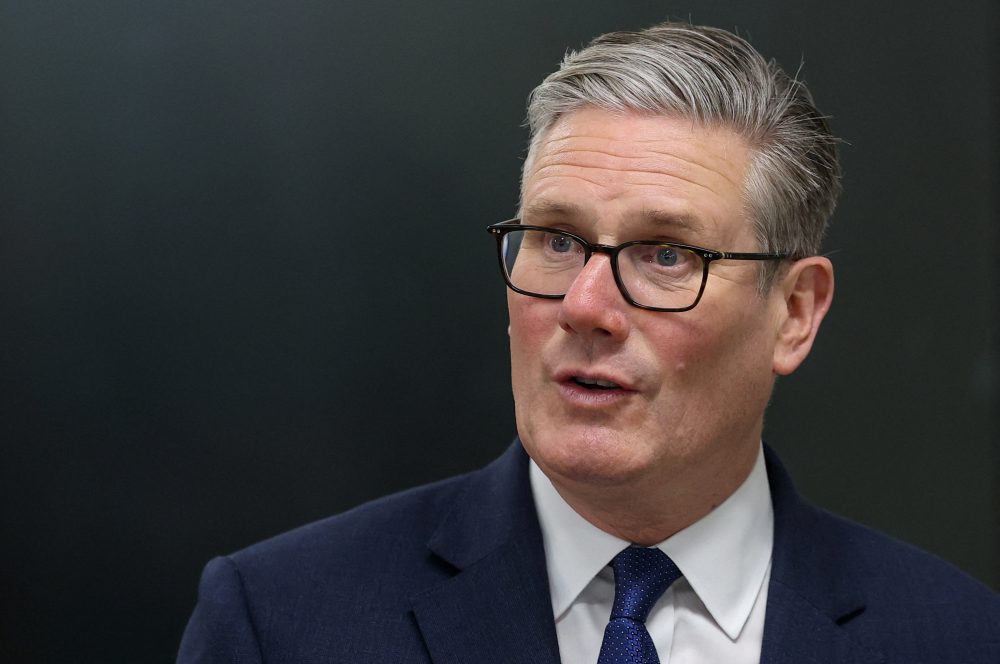
    During the previous year, in the president’s initial budget since his White House return, Trump attempted to honor his commitment to dramatically shrink federal government size and influence, reflecting efforts by billionaire Elon Musk’s Department of Government Efficiency.

    While DOGE eliminated federal positions and Vought attempted to recover allocated funds, Congress frequently disagreed with these approaches.

    Trump requested approximately a twenty percent reduction in non-military spending for the current budget cycle ending September 30, but Congress maintained such expenditures at relatively unchanged levels.

    Certain programs Trump aimed to completely eliminate, including assistance for families with utility expenses, received modest funding increases. Other initiatives maintained steady funding levels, such as Community Development Block Grants that states and municipalities utilize for various projects primarily designed to benefit low-income areas through new recreational facilities, infrastructure systems and affordable housing developments.

    Legislative members have also emphasized ensuring the administration utilizes federal resources according to Congressional directives. This year’s spending legislation included what Senator Patty Murray, the senior Democratic member of the Senate Appropriations Committee, characterized as “hundreds upon hundreds of specific funding levels and directives” that the administration must implement.

  • Microsoft Plans $10 Billion Investment in Japan for AI and Cybersecurity

    Microsoft Plans $10 Billion Investment in Japan for AI and Cybersecurity

    TOKYO – Tech giant Microsoft announced Friday it plans to pour 1.6 trillion yen, equivalent to $10 billion, into Japan from 2026 through 2029 to build up artificial intelligence capabilities and enhance cybersecurity collaboration with Japanese officials.

    The massive financial commitment also encompasses preparing 1 million engineers and developers through training programs by 2030, according to Microsoft’s announcement made during Vice Chair and President Brad Smith’s Tokyo visit. Company officials stated the initiative supports Prime Minister Sanae Takaichi’s strategy to accelerate economic growth using cutting-edge technologies while protecting national security interests.

    The technology company plans to partner with Japanese businesses like SoftBank and Sakura Internet to boost AI computing power within Japan’s borders, enabling corporations and government entities to maintain sensitive information domestically while utilizing Microsoft Azure cloud services. Additionally, Microsoft will enhance collaboration with Japanese security agencies on cyber threat intelligence sharing and crime prevention efforts.

    According to Microsoft’s internal research, Japan’s artificial intelligence usage has surged since 2024, with approximately 20% of working-age citizens now utilizing generative AI applications.

    Government projections indicate Japan could face a shortage exceeding 3 million AI and robotics professionals by 2040.

  • President Trump Issues New Threats Against Iranian Infrastructure

    President Trump Issues New Threats Against Iranian Infrastructure

    President Donald Trump issued fresh warnings against Iran Thursday evening, threatening to target the nation’s bridges and electrical grid as part of escalating military action against the country’s infrastructure.

    In a social media post, Trump declared that the American military “hasn’t even started destroying what’s left in Iran. Bridges next, then Electric Power Plants.”

    The president’s message indicated that Iranian officials “knows what has to be done, and has to be done, FAST!”

    During a televised address Wednesday, Trump had already suggested the conflict might intensify if Iran refuses to accept Washington’s demands, warning that energy and petroleum facilities could become targets. The president has previously given varying timeframes and objectives regarding the ongoing military action.


    International legal scholars raised alarm Thursday, with dozens of experts in the United States releasing a public statement warning that American attacks on Iran could constitute war crimes.

    The Geneva Conventions of 1949, which govern humanitarian rules during warfare, specifically ban assaults on infrastructure vital to civilian populations.

    These international agreements and their additional protocols require warring parties to differentiate between “civilian objects and military objectives,” explicitly forbidding strikes against civilian targets.

    “We are going to hit them extremely hard over the next two to three weeks. We are going to bring them back to the Stone Ages, where they belong,” Trump declared during his Wednesday speech.

    Although Trump suggested Washington was close to achieving its objectives in Iran, he provided no specific timeline for concluding the military campaign.

    The conflict commenced February 28 when American and Israeli forces launched coordinated strikes against Iran. Tehran retaliated by conducting its own offensive operations against Israel and Gulf nations hosting American military installations. Combined U.S.-Israeli operations in Iran and Israeli strikes in Lebanon have resulted in thousands of casualties and displaced millions of people.

    The military action has also driven up petroleum prices and created instability in international financial markets. Trump’s contradictory statements have failed to calm anxiety about America’s most significant military engagement since the 2003 Iraq invasion.

  • Security Council Set to Vote on Strait of Hormuz Shipping Protection

    Security Council Set to Vote on Strait of Hormuz Shipping Protection

    The United Nations Security Council has scheduled a Saturday morning vote on a resolution aimed at safeguarding commercial vessels traveling through the Strait of Hormuz, according to diplomatic sources who confirmed the meeting was postponed from Friday due to a UN holiday.

    The proposed measure, drafted by Bahrain as the current Security Council chair, would permit “all defensive means necessary” to ensure safe passage for commercial shipping through the strategically vital waterway.

    Oil markets have experienced significant price increases following US and Israeli military actions against Iran in late February, sparking a conflict that has persisted for over a month and effectively shut down the crucial shipping route.

    During Thursday’s Security Council session, Bahrain’s Foreign Minister Abdullatif bin Rashid Al Zayani expressed hope for a Friday vote, stating “God willing” and emphasizing Bahrain’s expectation of a “unified position from this esteemed council.”

    However, China’s UN representative Fu Cong voiced strong opposition to any force authorization during Thursday morning’s proceedings. Fu Cong warned that such action would amount to “legitimizing the unlawful and indiscriminate use of force, which would inevitably lead to further escalation of the situation and lead to serious consequences.”

    The Gulf nation has received backing from fellow Arab states and Washington in pushing for the resolution, previously removing explicit language about binding enforcement to address concerns from Russia and China.

    The current draft, as reviewed by Reuters, authorizes protective measures “for a period of at least six months … and until such time as the council decides otherwise.”

    A preliminary approval process known as the silence procedure was attempted until Thursday noon, but China, France and Russia broke the silence, according to Western diplomatic sources. Despite this setback, diplomats confirmed the text has been finalized and is ready for an official vote.

    For passage, the resolution needs support from at least nine of the 15 Security Council members and cannot face vetoes from any of the five permanent members: Britain, China, France, Russia and the United States.

    Al Zayani characterized Iran’s actions as an “unlawful and unjustified attempt” to control international shipping lanes in the Strait of Hormuz, arguing the situation threatens worldwide interests and demands a “decisive response.”

    The Arab League’s Secretary-General Ahmed Aboul Gheit announced the organization’s support for Bahrain’s resolution efforts during Security Council proceedings.

    Britain organized a Thursday meeting with more than 40 nations focused on reopening the Strait of Hormuz and ensuring secure transit, while also endorsing Bahrain’s diplomatic initiative.

    President Donald Trump pledged Wednesday to maintain military operations but offered no specific strategy for reopening the waterway. This announcement further elevated oil prices as markets worried about reduced US involvement in protecting commercial shipping through the region.

  • Federal Report Reveals 49 Standards Violations at Nation’s Largest Migrant Detention Center

    Federal Report Reveals 49 Standards Violations at Nation’s Largest Migrant Detention Center

    A federal oversight inspection has uncovered dozens of standards violations at the nation’s largest immigration detention center, according to a report released this week.

    Immigration and Customs Enforcement’s detention oversight office conducted a three-day examination in February at Camp East Montana, a $1.2 billion facility in El Paso, Texas. The congressionally required review identified 49 separate violations of established detention protocols.

    The inspection team documented what they termed “deficiencies,” which the report describes as “any violation of detention standards, policies, or operational procedures, as applicable.”

    The violations broke down into several concerning categories: 22 infractions involved improper “use of force and restraints,” while 11 related to “facility security and control” issues. An additional five violations concerned “medical care” standards at the detention center.

    The facility has drawn intense scrutiny from immigration advocacy organizations who oppose the Trump administration’s hardline immigration enforcement policies. These groups argue the government’s approach violates constitutional protections and creates dangerous conditions for minority communities, while also raising alarms about potential racial profiling practices.

    The Trump administration defends its immigration strategy as necessary for enhancing national security and preventing unauthorized border crossings.

    ICE detention centers nationwide have come under increasing examination due to concerning trends in detainee deaths. Federal records show at least 14 immigrants died while in ICE custody between January 2026 and late March. This follows 31 deaths during the previous year, marking a 20-year peak in detention facility fatalities.

    Camp East Montana has experienced at least two deaths among the 2026 total, according to agency data.

    Texas Democratic Representative Veronica Escobar toured the facility in late 2025 and reported disturbing conditions. Following her visit, Escobar described detainees facing “foul-tasting drinking water, rotten food and inadequate healthcare.”

  • US Sends Chinese Drug Suspect Back to China, State Media Reports

    US Sends Chinese Drug Suspect Back to China, State Media Reports

    BEIJING, April 3 – A Chinese citizen wanted in connection with narcotics offenses has been transferred back to China by United States authorities, according to a report from China’s official news agency Xinhua on Friday.

    Chinese law enforcement officials confirmed the repatriation of the suspect, who had been residing in the United States while facing drug-related criminal charges in China.

    The transfer represents ongoing cooperation between U.S. and Chinese authorities in returning fugitives wanted for criminal activities.

  • Delaware Blue Hens Baseball Takes On New Mexico State This Weekend

    Delaware Blue Hens Baseball Takes On New Mexico State This Weekend

    The University of Delaware Blue Hens baseball squad will begin a weekend series matchup against New Mexico State, a team from Conference USA.

    The Blue Hens are preparing to take on the Aggies in what is expected to be an exciting series of games over the weekend.

    This series represents an opportunity for Delaware to compete against an out-of-conference opponent from the CUSA league.

  • Ottawa Defeats Buffalo 4-1, Delays Sabres’ Historic Playoff Clinch

    Ottawa Defeats Buffalo 4-1, Delays Sabres’ Historic Playoff Clinch

    OTTAWA, Ontario — The Buffalo Sabres will have to wait at least one more game to make hockey history after falling 4-1 to the Ottawa Senators on Thursday night, postponing their chance to end an NHL-record 14-season absence from the playoffs.

    The loss extends Buffalo’s wait to conclude what stands as the second-longest active championship drought among North America’s four major professional sports leagues, trailing only the New York Jets’ 15-year playoff absence.

    Lars Eller provided the decisive moment when he redirected a point shot from defenseman Artem Zub past Buffalo goaltender Ukko-Pekka Luukkonen at the 5:55 mark of the final period, snapping a 1-1 deadlock.

    The scoring began when Buffalo’s Mattias Samuelsson fired a long wrist shot into the net 8:49 into the second period. Ottawa responded as Dylan Cozens evened the score with 4:42 remaining in the middle frame, tipping in his 26th goal of the campaign.

    Ridly Greig and Shane Pinto each found the empty net late in the game to seal Ottawa’s victory.

    Between the pipes, Linus Ullmark turned away 21 shots for the Senators, who currently hold the second wild-card position in the Eastern Conference and began a five-game home stretch. Luukkonen made 20 saves in the losing effort for Buffalo.

    Ottawa faced defensive challenges as Tyler Kleven departed in the opening period due to an upper-body injury and could not return. The Senators continue to deal with a depleted blue line, already missing Thomas Chabot, Jake Sanderson, Nick Jensen and several other defenders.

    The game featured a first-period scuffle between Ottawa’s Brady Tkachuk and Logan Stanley.

    Buffalo’s next opportunity comes Saturday night when they visit Washington, while Ottawa will host Minnesota on Saturday.

  • Cuba Announces Release of Over 2,000 Inmates Amid U.S. Pressure

    Cuba Announces Release of Over 2,000 Inmates Amid U.S. Pressure

    HAVANA (AP) — Cuban officials announced Thursday they will free 2,010 inmates from the nation’s prisons, describing the mass release as occurring during a period when the Trump administration maintains intense economic pressure on the Caribbean island through a restrictive oil embargo.

    Officials characterized the pardons as a “humanitarian gesture” connected to Holy Week observances, making no reference to escalating tensions with the United States.

    According to the government, those receiving pardons include both Cuban nationals and foreign prisoners, encompassing women, elderly inmates, and younger individuals. Officials did not specify the timing of the releases, the conditions attached, or detail the offenses for which these individuals were originally convicted.

    The government provided no information about whether any pardoned individuals were demonstrators who had been convicted and sentenced on charges of terrorism, contempt, or public disorder.

    While Cuba’s leadership maintains it does not detain political prisoners, the advocacy organization Prisoners Defended documented 1,214 individuals incarcerated for political activities in Cuba as of February.

    Cuban officials stated the decision “was based on a careful analysis of the characteristics of the crimes committed by those sanctioned, their good behavior in prison, having served a significant portion of their sentence, and their health status,” according to a statement published in state media.

    The prisoner release occurs during a time when the Trump administration has intensified economic pressure on Cuba’s leadership, implementing an oil embargo for several months that has triggered power outages and caused hardship for ordinary citizens.

    Cuba has a history of freeing inmates during significant periods.

    In January of the previous year, Cuban authorities released 553 prisoners during discussions with the Vatican, occurring one day after the Biden administration declared its intention to remove the U.S. classification of the island as a state sponsor of terrorism.

    The previous month, Cuba freed 51 individuals from the nation’s correctional facilities in an unplanned action that officials attributed to goodwill and strong Vatican relationships.

    Thursday’s announcement represents the fifth prisoner release since 2011, with the government stating it has freed over 11,000 individuals during this period.

    The declaration follows by months the U.S. removal of former Venezuelan President Nicolas Maduro and pressure on that country’s leadership to implement significant reforms, including freeing politically detained prisoners and enacting amnesty legislation.

  • NC Supreme Court Dismisses 30-Year School Funding Lawsuit

    NC Supreme Court Dismisses 30-Year School Funding Lawsuit

    RALEIGH, N.C. — North Carolina’s highest court ended a three-decade legal fight over school funding Thursday, delivering a decision that ensures state lawmakers, not judges, will continue controlling education spending decisions.

    In a narrow 4-3 vote driven by the court’s Republican majority, justices overturned a significant 2022 decision made when Democrats controlled the bench. That earlier ruling had granted a lower court judge authority to direct state tax dollars toward addressing persistent educational inequalities.

    A year later, a trial judge determined North Carolina owed $678 million as part of a comprehensive eight-year plan worth billions. The plan aimed to boost teacher pay and recruitment, expand early childhood programs, and provide additional support for students with disabilities.

    Chief Justice Paul Newby explained in Thursday’s opinion that what began as a limited legal challenge regarding one county’s school spending had transformed into “a full-scale, facial assault on the entire educational system enacted by the General Assembly.” Newby argued judicial involvement had overstepped appropriate boundaries.

    “When the case expanded the trial court’s authority to hear the case likewise ceased,” Newby stated while ordering the school funding case dismissed.

    The ruling comes more than two years after justices heard arguments in the case. Republican legislators, who maintain control of the General Assembly, will no longer face court-ordered requirements to implement the remedial plan while crafting state budgets, including this year’s spending plan that remains months overdue.

    Democratic Governor Josh Stein must now depend on legislative persuasion and veto threats to advance his preferred education programs. Stein served as the state’s attorney general when the 2022 ruling was issued.

    “The Supreme Court simply ignored its own established precedent, enabling the General Assembly to continue to deprive another generation of North Carolina students of the education promised by our constitution,” Stein said Thursday.

    Three justices opposed Thursday’s majority decision, including two Democrats and one Republican.

    Democratic Associate Justice Anita Earls criticized the ruling as focusing more on procedural concerns than student welfare.

    “Allowing the state to escape judicial scrutiny for constitutional rights violations through its behavior during litigation quickly turns constitutional rights into words on paper — morally compelling but functionally useless,” Earls wrote in her dissent.

    Focus now shifts to developing the next state education budget as the General Assembly prepares to reconvene this month. Education represents nearly 40% of North Carolina’s annual $30 billion operating budget.

    Republican Senate leader Phil Berger celebrated the decision, stating in a press release that “liberal education special interests have improperly tried to hijack North Carolina’s constitutional funding process in order to impose their policy preferences via judicial fiat. Today’s decision confirms that the proper pathway for policymaking is the legislative process.”

    GOP critics have highlighted taxpayer-funded private school vouchers as evidence that more resources could benefit public school students.

    The legal battle originated in 1994 when several low-income school districts and student families filed suit, claiming the state violated North Carolina’s constitution by failing to provide sufficient education funding.

    The case became known as “Leandro,” named after one of the original student plaintiffs.

    Previous state Supreme Court decisions in 1997 and 2004 established that the constitution guarantees all children an “opportunity to receive a sound basic education,” while finding the state inadequately prepared to meet this requirement. Many argue this fundamental problem persists today.

    “The people paying the price for our leaders’ failure are not abstractions. They are the generations of children in rural communities, past and present, who waited for 30 years for a promise never fulfilled,” said Tamika Walker Kelly, president of the North Carolina Association of Educators.

    The court’s 2022 Democratic majority had concluded that earlier Supreme Court rulings, combined with the constitution’s education guarantee and years of legislative inaction, created exceptional circumstances allowing the late Judge David Lee to mandate spending without specific legislative authorization.

  • Charleston Open: Top Seed Jessica Pegula Survives Another Three-Set Battle

    Charleston Open: Top Seed Jessica Pegula Survives Another Three-Set Battle

    Defending champion Jessica Pegula is finding her title defense at the Charleston Open anything but easy, as the tournament’s top seed survived yet another grueling three-set battle on Thursday.

    Following Wednesday’s exhausting three-set victory against Kazakhstan’s Yulia Putintseva, Pegula once again found herself in deep trouble before rallying to defeat Italy’s 14th-seeded Elisabetta Cocciaretto 1-6, 6-1, 7-6 (1). Thursday’s match clocked in at just over two hours, which was actually more than an hour shorter than her previous encounter.

    The Italian player seized early control of the decisive third set, jumping ahead 4-1 and appearing to have Pegula on the ropes. However, the determined American showed her championship mettle by successfully defending her serve twice while breaking Cocciaretto’s serve to level the set. Pegula then held serve without dropping a point to force a tiebreaker, where she dominated to secure victory. Despite struggling with her break point conversion, managing just 3 of 14 opportunities, Pegula delivered when it mattered most with the crucial break in the final set.

    Pegula’s next challenge will be seventh-seeded Russian Diana Shnaider, who dominated ninth-seeded Canadian Leylah Fernandez 6-3, 6-0. Other notable winners included third-seeded Belinda Bencic, who defeated Czech player Sara Bejlek 7-6 (4), 6-2, and fifth-seeded Madison Keys, who overcame Hungary’s Anna Bondar 6-2, 7-5.

    The day also showcased compelling all-American matchups. McCartney Kessler managed to edge seventh-seeded Peyton Stearns 6-0, 3-6, 6-4, while 18-year-old fourth seed Iva Jovic eliminated 16th-seeded Sofia Kenin 7-5, 7-5. Ukraine’s Yuliia Starodubtseva dominated Mexico’s Renata Zarazua 6-1, 6-0, setting up a Friday quarterfinal clash with Kessler. Meanwhile, Jovic will face eighth-seeded Russian Anna Kalinskaya, who defeated Spain’s Paula Badosa 6-4, 6-2.

    In other tournament action at the Copa Colsanitas in Bogota, Colombia, both the second and third seeds suffered surprising second-round defeats. Vavara Lapchenko upset second-seeded Spanish player Jessica Bouzas Maneiro 6-0, 2-6, 7-5, while Argentine Jazmin Ortenzi, currently ranked 206th globally, shocked third-seeded Colombian home favorite Camila Osorio 7-6 (4), 7-6 (5). Colombian Emiliana Arango also advanced by defeating Spain’s Guiomar Maristany Zuleta De Reales 7-5, 6-2.

    Top-seeded Marie Bouzkova from the Czech Republic had an abbreviated day after winning the opening set 6-4 against Belgian opponent Hanne Vandewinkel, who was forced to retire from the match.

  • Chinese Services Sector Expansion Slows After February Peak

    Chinese Services Sector Expansion Slows After February Peak

    China’s services sector experienced a notable deceleration in March after reaching its strongest performance in nearly three years during February, according to new data released Friday by a private research firm.

    The RatingDog China General Services index, produced by S&P Global, dropped to 52.1 in March compared to February’s reading of 56.7. Despite the decline, the figure remained above 50, indicating continued growth rather than contraction in the sector.

    These findings differed from government data published earlier this week, which indicated services activity increased in March. The discrepancy stems from the surveys examining different business segments.

    The world’s second-largest economy began 2024 with strong momentum, benefiting from increased exports related to artificial intelligence technology, accelerated manufacturing production, and improved consumer spending and business investment.

    However, ongoing tensions in the Middle East have created uncertainty in international commerce and energy markets, potentially affecting China’s economic trajectory.

    ING’s chief economist for Greater China, Lynn Song, noted in recent analysis that China appears well-equipped to handle immediate disruptions from Middle Eastern conflicts. Song cautioned that “if higher energy prices and shipping disruptions persist or worsen, we could see pressure build in the months ahead.”

    The March survey revealed that new customer orders grew at their weakest rate since April 2025, while international orders declined after showing improvement the previous month.

    Employment in the services sector contracted at the steepest pace in half a year, with companies attributing staff reductions to employee departures, retirements, vacant positions, and organizational changes.

    Operating expenses for services companies continued climbing in March, with the cost index registering 50.7 compared to February’s 50.9. Higher fuel, materials, and wage expenses drove the increases.

    The relatively modest cost pressures enabled many service businesses to reduce their prices in efforts to boost sales volumes.

    While companies maintained optimistic expectations for the coming year, confidence levels decreased slightly from February’s survey results.

    The combined index measuring both manufacturing and services activity fell to 51.5 in March from the previous month’s 55.4 reading.

  • Route 13 Southbound Lane Closure Continues Through Early Morning Hours

    Route 13 Southbound Lane Closure Continues Through Early Morning Hours

    Motorists traveling on southbound US Route 13 should expect delays due to ongoing construction work that has closed the right lane between New Sweden Street and Interstate 495.

    The lane restriction is scheduled to remain in place until 5:00 AM, according to Delaware Department of Transportation officials.

    Drivers are advised to use caution when traveling through the work zone and allow extra time for their commute during the overnight hours.

  • Route 40 Eastbound Lane Closure at Wellington Drive Due to Construction

    Route 40 Eastbound Lane Closure at Wellington Drive Due to Construction

    Drivers using US Route 40 eastbound should expect delays this morning as construction crews have shut down the right lane near Wellington Drive.

    According to DelDOT traffic information, the lane restriction is in effect due to ongoing construction work in the area. The closure is expected to last until 6:00 AM.

    Motorists are advised to use caution when traveling through the work zone and allow extra time for their commute. Traffic may be slower than usual as vehicles merge from the closed right lane into the remaining open lanes.

  • Royals Rookie Benched After Sleeping Through Alarm Before Game

    Royals Rookie Benched After Sleeping Through Alarm Before Game

    KANSAS CITY, Mo. — A costly mistake by Kansas City Royals rookie Carter Jensen led to his removal from Thursday’s starting lineup against the Minnesota Twins when the young catcher failed to wake up on time.

    The 22-year-old Jensen admitted to reporters that he simply slept through his alarm clock. “I didn’t wake up to my alarm. Slept through it,” Jensen explained to The Kansas City Star and other media outlets. “Don’t really have an excuse — nor should I. It sucks. It happens. I feel like I let teammates down, coaches down. Just learn from it and just know it won’t happen again.”

    While Jensen did make it to the ballpark, his late arrival prevented him from completing the necessary pregame preparation to start behind the plate. He was able to enter the contest during the final inning of Kansas City’s 5-1 defeat.

    The scheduling mishap forced Salvador Perez, who had been slated to serve as the team’s designated hitter, to take over catching duties for the first eight frames of the game.

    Royals first baseman Vinnie Pasquantino expressed initial concern for his teammate’s wellbeing when Jensen couldn’t be reached. “First and foremost, I’m glad Carter’s OK,” Pasquantino shared with reporters. “I mean, that was kind of the initial thought when you’re trying to get a hold of his parents and everything like that — just make sure he’s OK.”

    However, Pasquantino also emphasized that the rookie must use this incident as a learning opportunity. “There are some things that cannot happen, and that’s one of them,” Pasquantino stated. “So he’s going to have to wear it on the chin — same way anybody would have to. It can’t happen, and hopefully it doesn’t happen again. But it’s one of those things that you just can’t afford mistakes like that in this game. Just got to move forward the best that he can. I know he feels really bad.”

    Despite the disappointment, Pasquantino indicated the team remains supportive of Jensen while acknowledging the seriousness of the situation. “I know it was not his favorite drive to the field this morning, but it wasn’t our favorite morning either, trying to figure out what was going on. He’ll learn from it, grow a little bit. We’re here for him, though. It’s not like anybody’s mad at him. Things happen. But you’ve got to learn from mistakes like that — and maybe get another alarm clock or something.”

  • Security Council to Vote on Modified Plan to Reopen Key Oil Shipping Route

    Security Council to Vote on Modified Plan to Reopen Key Oil Shipping Route

    The United Nations Security Council is preparing for a Friday vote on a modified resolution designed to secure passage through the Strait of Hormuz, after the original proposal faced significant revisions following pushback from China and Russia regarding the use of military force to reopen the vital shipping lane that Iran has effectively blocked.

    According to the revised draft obtained Thursday by The Associated Press, the resolution now permits only defensive measures—not offensive actions—to guarantee safe vessel passage through the strait. This waterway typically handles one-fifth of global oil shipments, and Iran’s blockade during ongoing hostilities has caused energy prices to spike worldwide.

    The original resolution proposed by Bahrain would have permitted nations to employ “all necessary means”—diplomatic language that encompasses potential military intervention—throughout “the Strait of Hormuz, the Gulf and the Gulf of Oman” to maintain safe passage and prevent navigation interference.

    Three permanent Security Council members with veto power—Russia, China, and France—had voiced concerns about approving military force. While the updated draft removes references to offensive military operations, these nations’ positions on the modifications remain unclear, making Friday’s vote particularly significant.

    The current proposal permits countries to employ “all defensive means necessary and commensurate with the circumstances in the Strait of Hormuz and adjacent waters” to maintain passage and prevent interference with international shipping “for a period of at least six months.”

    The resolution states that nations operating independently or through “multinational naval partnerships” may implement defensive measures after providing advance notice to the Security Council.

    This development follows President Donald Trump’s Wednesday announcement that the United States and Israel would continue “extremely hard” bombardment of Iran over the coming two to three weeks, though he provided no clear timeline for ending the conflict. Iran has maintained retaliatory strikes throughout the region, and its control over the strait has created challenges for Trump and the international community as rising energy costs impact the global economy.

    Prior to Bahrain’s release of the final draft, Russian UN Ambassador Vassily Nebenzia stated the proposal “does not solve the puzzle.” He emphasized that ending hostilities would provide the real solution.

    Chinese UN Ambassador Fu Cong criticized the original draft’s force authorization, describing it as “unlawful and indiscriminate.” During Thursday’s council session, he cautioned that such measures “would inevitably lead to further escalation of the situation and lead to serious consequences.” He called on the council “to proceed with caution” while actively pursuing de-escalation and diplomatic dialogue.

    French UN Ambassador Jérôme Bonnafont similarly advocated for de-escalation, stating to the council that “defensive measures that avoid any broad use of force need to be promoted.” He subsequently suggested the revised draft emphasizing defense could be acceptable.

    On March 11, the Security Council passed a Bahrain-sponsored resolution denouncing Iran’s “egregious attacks” against Gulf states and demanding Tehran immediately cease its strikes, which began after the US and Israel initiated military action on February 28.

    That measure passed 13-0 with Russia and China abstaining, and also criticized Iran’s Strait of Hormuz actions as threatening international peace and security while demanding an immediate halt to all shipping blockade activities.

  • Amazon Implements 3.5% Fee on Sellers Due to Rising Fuel Costs from Iran Conflict

    Amazon Implements 3.5% Fee on Sellers Due to Rising Fuel Costs from Iran Conflict

    The online retail giant Amazon will begin implementing a 3.5% fuel and logistics fee for third-party merchants using its platform beginning April 17, as energy costs continue climbing due to the Iran conflict.

    The temporary fee will affect numerous sellers who utilize Amazon’s fulfillment services, the company confirmed to The Associated Press via email Thursday.

    “Elevated costs in fuel and logistics have increased the cost of operating across the industry,” Amazon stated in their email response.

    The Seattle-headquartered corporation explained it has been absorbing these cost increases until now, but like other major shipping companies, when expenses stay high, it introduces temporary fees to help offset some of these costs. The company emphasized its charge is “meaningfully” below surcharges imposed by other major shipping providers.

    “We remain committed to our selling partners’ success and to maintaining broad selection and low prices for customers,” Amazon stated.

    The fuel and logistics fee will impact sellers in the United States and Canada who use Amazon’s Fulfillment by Amazon service. Beginning May 2, the surcharge will also affect merchants using Buy with Prime and Multi-Channel Fulfillment services.

    Amazon becomes part of an expanding group of shipping companies implementing surcharges to offset climbing energy expenses as the Iran conflict continues.

    Both United Parcel Service and FedEx have raised their fuel surcharges. The United States Postal Service announced last week it would impose an 8% fuel surcharge affecting packages shipped beginning April 26. The postal service said this surcharge will stay active until January 17, 2027.

  • Wedding Weight Loss: Indian Brides Turn to Diabetes Drugs Before Big Day

    Wedding Weight Loss: Indian Brides Turn to Diabetes Drugs Before Big Day

    Couples preparing for marriage in India are turning to weight-loss medications as a quick solution to shed pounds before their wedding ceremonies, creating a new market for diabetes drugs repurposed for cosmetic use.

    Medical facilities across India are capitalizing on this trend by offering specialized treatment plans. New Delhi’s Klarity Skin Clinic promotes a “Mounjaro bride” service, while other wellness centers have incorporated weight-loss injections into comprehensive pre-wedding makeover packages that traditionally focused on skincare and hair styling.

    Through social media marketing, Klarity advertises “guided nutrition, Mounjaro and smart workouts” designed to help future brides prepare for their wedding day. The clinic declined to provide comments when contacted.

    Medical professionals across the country report a surge in requests from engaged individuals seeking prescription weight-loss medications before their ceremonies. Eight physicians interviewed confirmed they’ve received numerous inquiries from brides-to-be and some grooms about obtaining these drugs. Most specifically request Eli Lilly’s Mounjaro, which became the first GLP-1 medication available in India for treating both diabetes and obesity. Doctors note it has gained more popularity than Novo Nordisk’s competing drug Wegovy.

    “Over the last few months, over 20% of the queries we’ve received for obesity injections are from to-be brides, who also openly give us a timeline on how soon they are getting married,” explained Rajat Goel, a bariatric surgeon working at Hindivine Healthcare in New Delhi.

    Goel emphasized that he only provides prescriptions to patients who meet medical criteria, refusing to prescribe the medications purely for appearance-related reasons.

    Indian wedding celebrations represent major cultural events for families with sufficient resources, deeply rooted in tradition and social customs. Family-arranged marriages remain common, often accompanied by expectations regarding physical attractiveness and economic standing.

    A 26-year-old Mumbai finance professional named Aditi sought medical consultation in November for a weight-loss prescription after traditional diet and exercise methods proved insufficient for her goals.

    “When I see the result, I feel happy,” Aditi shared regarding her 22-pound weight reduction using Mounjaro before her February wedding ceremony. “If I am not happy, I don’t feel confident. I did not want to feel that way at the time of the wedding.”

    Aditi represents one of six brides and one groom who discussed their pre-wedding weight-loss drug usage, though all requested anonymity due to social stigma. They described feeling pressured by society to achieve a specific appearance for their wedding day, with most discontinuing the injections shortly after their ceremonies.

    Both Novo and Lilly introduced their obesity medications to the Indian market during the previous year. Industry analysts project this market will reach approximately $852 million by 2030. Mounjaro sales experienced significant growth following its launch, becoming the top-selling medication in the world’s most populated country.

    Indian pharmaceutical companies began producing less expensive versions of Novo’s medication last month after the patent protection for semaglutide, the drug’s active component, expired, making treatment more accessible to consumers.

    These medications are designed for adults meeting obesity classifications or those who are overweight with related health conditions including diabetes, high blood pressure, or sleep disorders.

    “Mounjaro has been approved by regulators for specific medical indications and is intended to be used only under the supervision of a qualified healthcare professional,” Lilly stated in their official response.

    The most affordable Mounjaro injection pen costs approximately $140 monthly in India, while the strongest dosage reaches about $275 per month.

    Novo, which recently reduced Ozempic and Wegovy prices for the second time, currently sells the lowest Wegovy dosage for roughly $61 monthly and the highest concentration for approximately $175.

    Novo emphasized that it discourages self-medication with semaglutide or any usage outside approved medical guidelines.

    Health experts predict India could have more than 440 million overweight or obese residents by 2050, representing one of the globe’s largest concentrations, according to research published in The Lancet.

    Akshitha, who married in Hyderabad last year, credited the medications with helping her lose 33 pounds, bringing her weight to 167 pounds before her wedding. She explained that a family physician recommended trying the injections when she expressed concerns about her weight.

    “There’s so much chaos before the wedding, with all the planning and preparation. I knew I would not get time to go to the gym and be on a diet. That’s when these drugs looked like a better option,” she explained, adding she might consider using them again following a future pregnancy.

    As local pharmaceutical companies introduce cheaper weight-loss medications to the market, India’s drug regulatory authority has expressed concerns about improper usage and increased oversight of unauthorized sales and marketing.

    “We understand the curiosity, but this cannot be a quick fix,” stated Dr. Swati Pradhan, who founded the obesity and metabolic wellness clinic Live Light.

    Dr. Pradhan reported prescribing the injections to only select engaged women who qualified medically and demonstrated additional health concerns, while requiring lifestyle modifications for lasting results.

    For Priya, a 27-year-old technology worker from Bengaluru, weight-loss medications became her response to body-shaming from potential grooms’ families.

    “I’ve had men and their families reject my proposal because of my weight. I was told I was fat,” Priya revealed.

    She initially used Novo’s oral semaglutide, which received approval in India for diabetes treatment, as an off-label weight-loss solution and lost more than 26 pounds before transitioning to injectable Mounjaro.

    Her search for a marriage partner continues.

  • Cuba to Release Over 2,000 Inmates in Second Amnesty This Year

    Cuba to Release Over 2,000 Inmates in Second Amnesty This Year

    HAVANA – The Cuban government declared Thursday its intention to release 2,010 inmates from correctional facilities across the Caribbean island nation, as reported by government-controlled media outlets.

    This prisoner release represents the second amnesty announcement Cuba has made this year while diplomatic discussions with the United States remain ongoing.

    The official government publication Granma described the prisoner release as a “humanitarian and sovereign gesture.”

  • White House Reportedly Weighing Departure of Key Trump Administration Officials

    White House Reportedly Weighing Departure of Key Trump Administration Officials

    The Trump administration is reportedly considering potential departures of several key officials, including FBI Director Kash Patel, according to a Thursday report from The Atlantic.

    Sources with knowledge of White House planning told the publication that discussions are also underway regarding Army Secretary Daniel Driscoll and Labor Secretary Lori Chavez-DeRemer potentially leaving their positions.

    According to The Atlantic’s reporting, the timeline for any such moves remains unclear, and President Donald Trump has not reached final decisions on the matter.

    Reuters was unable to independently confirm the details of the report at the time of publication.

  • Construction Work Causes Lane Closures on Delaware Street Until Early Morning

    Construction Work Causes Lane Closures on Delaware Street Until Early Morning

    Motorists traveling through a key intersection should plan for possible delays as construction crews continue work that requires periodic lane restrictions.

    The intersection of Delaware Street and Ferry Cutoff Street is experiencing intermittent lane closures as part of ongoing construction activities. These temporary traffic restrictions are expected to remain in effect until 5 AM.

    Drivers are advised to allow extra travel time and consider alternate routes if possible while crews complete the necessary work in the area.

  • Route 13 Construction Causes Lane Closures Between Bayview and Shannon

    Route 13 Construction Causes Lane Closures Between Bayview and Shannon

    Drivers traveling on US Route 13 should expect delays overnight due to construction activities affecting southbound traffic lanes.

    The Delaware Department of Transportation is conducting work along a stretch of the highway between Bayview Road and Shannon Boulevard that will result in periodic lane restrictions.

    According to DelDOT, the construction-related lane closures will remain in effect until 4:00 AM, with traffic patterns returning to normal after that time.

    Motorists are advised to allow extra travel time and exercise caution when driving through the work zone area.

  • Delaware State Police Seek Public Help Finding Sex Offenders

    Delaware State Police Seek Public Help Finding Sex Offenders

    Delaware State Police are reaching out to the community for assistance in tracking down multiple sex offenders who have violated registration requirements.

    The Sex Offender Apprehension and Registration Unit (SOAR) has released public notifications regarding both wanted and homeless sex offenders throughout the state.

    Authorities are actively searching for several individuals who have either failed to register or update their current address information as required by law. The wanted sex offenders include Arthur Baugh, Stefan Ewell, Charles A. Fulton, Deangelo Hoskins, and John A. Martz.

    Anyone with information about the whereabouts of these individuals is urged to contact authorities at (302) 739-5882. Tips can also be submitted anonymously through Delaware Crime Stoppers at (800) 847-3333.

    Police emphasize that the individuals listed represent only a partial list of currently wanted sex offenders. The complete registry can be accessed through the Delaware Sex Offender Registry website.

    Additionally, SOAR has issued notifications about homeless sex offenders, including Samuel Bishop, Eric Green, and Jesse Kincaid. These individuals are not wanted for registration violations but have recently reported being homeless.

    If community members have information indicating that any of the listed homeless individuals are residing at a specific address, they should contact the same phone numbers provided for wanted offenders.

    The homeless sex offender notifications are part of ongoing public safety efforts to keep communities informed about registered offenders in their area.

  • Timberwolves Star Edwards Loses Shot at NBA Awards Due to Injury Absence

    Timberwolves Star Edwards Loses Shot at NBA Awards Due to Injury Absence

    DETROIT — Minnesota Timberwolves star Anthony Edwards has lost his chance at NBA postseason recognition after the team benched him Thursday evening against the Detroit Pistons due to a knee problem and illness.

    The talented guard has appeared in 59 contests this season, though only 58 qualify under league standards, leaving him short of the required 65-game threshold with six regular season matchups remaining for Minnesota.

    Edwards sat out the Detroit contest just one game after his return from a two-week absence, where he contributed 17 points in 23 minutes during a victory over Dallas. His comeback against the Mavericks followed a six-game stretch on the sidelines due to his troublesome right knee.

    The accomplished player, who has earned four All-Star selections and two all-league honors, placed seventh in MVP consideration during both of the previous two campaigns.

    Despite posting a personal-best average of 29.3 points per contest this season, Edwards will fall short of the 70-plus game mark he achieved in each of his initial five NBA seasons.

  • German High-Speed Train Evacuated After Passenger Makes Attack Threats

    German High-Speed Train Evacuated After Passenger Makes Attack Threats

    German federal police took a suspect into custody Thursday evening following threatening behavior aboard a high-speed passenger train, according to law enforcement officials. Multiple travelers sustained minor injuries during the incident when explosive devices were detonated.

    The passenger rail service was traveling between Cologne and Frankfurt Thursday night when authorities ordered an emergency evacuation in Siegburg, located near Cologne. Federal police officers subdued and detained the individual, and investigators discovered a blade concealed in his bag, the German news agency dpa confirmed.

    According to law enforcement, the individual had barricaded himself inside one of the train’s restrooms. The German publication Bild reported that the explosive devices were hurled into a passenger walkway. Authorities confirmed that multiple individuals received minor cuts and scrapes during the incident.

    Officials have not yet released details about the detained individual’s identity or background.

  • Former Trump Defense Attorney Todd Blanche Named Acting U.S. Attorney General

    Former Trump Defense Attorney Todd Blanche Named Acting U.S. Attorney General

    President Donald Trump has elevated Todd Blanche, his former criminal defense attorney, from deputy attorney general to acting head of the Justice Department in a Thursday announcement.

    The 51-year-old lawyer gained national recognition during the four years between Trump’s presidential terms by representing him in several high-profile criminal proceedings.

    Blanche, who previously worked as a federal prosecutor and law firm partner, spearheaded Trump’s legal defense across multiple cases, including the Manhattan hush money trial that resulted in 34 felony convictions, as well as two federal cases initiated by special counsel Jack Smith that were later dropped.

    In a social media statement, Trump described Blanche as “a very talented and respected Legal Mind.”

    In his previous role as deputy attorney general, Blanche held the department’s number-two position.

    Serving under Attorney General Pam Bondi, he handled daily departmental operations and emerged as one of its primary spokespersons and public representatives. His responsibilities included supervising the disclosure of Jeffrey Epstein government documents and making regular television news appearances.

    A closer examination of Blanche’s professional background reveals his path to leading the Justice Department:

    The Denver-area native earned his law degree from Brooklyn Law School through evening classes while simultaneously working as a paralegal at Manhattan’s U.S. attorney’s office, graduating with honors. He obtained his bachelor’s degree from American University in Washington, D.C.

    Following law school, Blanche clerked for federal judges Denny Chin and Joseph Bianco, who now serve on the 2nd U.S. Circuit Court of Appeals, before spending eight years as a federal prosecutor in the same Manhattan office where he had worked as a paralegal.

    During his prosecutorial career, he spent two years leading the office’s violent crimes unit as co-chief, supervising approximately 24 prosecutors handling murder, kidnapping, and other serious violent crime cases.

    In 2014, Blanche transitioned to private practice, joining WilmerHale’s Manhattan location. Three years later, in September 2017, he moved to Cadwalader, Wickersham & Taft LLP as a partner specializing in white collar defense and investigations.

    Foreshadowing his future work with Trump, Blanche successfully defended Paul Manafort, Trump’s former campaign manager, securing dismissal of a mortgage fraud case in 2019 in the same New York courthouse where Trump would later face trial.

    Blanche’s defense strategy centered on arguing that the Manhattan district attorney’s case too closely resembled federal charges that had already sent Manafort to prison, constituting double jeopardy.

    In 2023, Blanche departed Cadwalader to join Trump’s legal team, informing colleagues of his decision to represent the former president just before Trump’s arraignment in the hush money case.

    In his resignation email, he stated: “I have been asked to represent Trump in the recently charged DA case, and after much thought/consideration, I have decided it is the best thing for me to do and an opportunity I should not pass up.”

    Even following his conviction, Trump was impressed by Blanche’s aggressive approach, his readiness to challenge witnesses and judges, and his composure during media appearances.

    Trump subsequently appointed both Blanche and fellow defense attorney Emil Bove to senior Justice Department positions in his new administration, while nominating Bove for a judgeship on the 3rd U.S. Circuit Court of Appeals last summer.

    Beyond the hush money proceedings, Blanche defended Trump in both special counsel cases: the Washington-based 2020 election interference case and the Florida case involving allegations of retaining classified documents at Mar-a-Lago.

    In both matters, Blanche’s defense team successfully implemented a strategy focused primarily on postponing proceedings beyond the 2024 presidential election. Following Trump’s electoral victory, Smith moved to dismiss both cases, citing established Justice Department guidelines prohibiting the indictment or prosecution of sitting presidents.

    Just ten days before Trump’s return to the presidency, Blanche appeared alongside him via video from Mar-a-Lago as a Manhattan judge imposed no punishment in the hush-money case.

    “The majority of the American people also agree that this case should not have been brought,” Blanche told the judge, referencing the election outcome as public vindication.

    “The American voters got a chance to see and decide for themselves whether this was the kind of case that should’ve been brought,” Blanche said. “And they decided.”

  • Defense Secretary Allows Troops to Carry Personal Guns on Military Bases

    Defense Secretary Allows Troops to Carry Personal Guns on Military Bases

    Defense Secretary Pete Hegseth announced Thursday that military personnel will now be permitted to carry their personal firearms on military installations for self-protection, marking a significant departure from decades-old policy.

    Through a video message shared on X, Hegseth revealed he is issuing a directive instructing base commanders to approve requests from service members seeking to carry their privately owned guns “with the presumption that it is necessary for personal protection.”

    The new policy requires commanders to provide detailed written justification for any rejected requests.

    “Effectively, our bases across the country were gun-free zones,” Hegseth stated. “Unless you’re training or unless you are a military policeman, you couldn’t carry, you couldn’t bring your own firearm for your own personal protection onto post.”

    The policy shift follows a series of violent incidents at military installations nationwide. Past tragedies have sparked debate about why armed service members cannot access weapons for protection, ranging from individual conflicts to mass casualty events like the 2009 Fort Hood shooting in Texas where an Army psychiatrist killed 13 people.

    Hegseth referenced recent incidents, including last year’s shooting at Fort Stewart in Georgia that wounded five soldiers. In that case, an Army sergeant used his personal handgun before fellow soldiers subdued and arrested him.

    “In these instances, minutes are a lifetime,” Hegseth explained. “And our service members have the courage and training to make those precious, short minutes count.”

    Current Defense Department regulations have long forbidden military members from bringing personal weapons onto installations without senior commander approval, with stringent storage requirements.

    Under existing rules, personnel must formally retrieve their firearms from secure storage for approved activities like hunting or target practice on base, then immediately return them afterward. Military police typically remain the only armed personnel on installations, except during training exercises or at designated shooting facilities where service weapons may be used without live ammunition.

    Tanya Schardt from the Brady gun violence prevention organization criticized the change, noting that Defense Department leadership and military officials have historically opposed loosening current restrictions, which originated during President George H.W. Bush’s administration.

    “Our military installations are among the most guarded, protected properties in the world, and they’ve never been ‘gun-free zones,’” Schardt stated. “If there is a problem with violent crime on these installations, then the Secretary of Defense has an obligation to alert the American people and describe how he’s working to prevent that crime.”

  • Feds Challenge Three States Over Prediction Market Oversight

    Feds Challenge Three States Over Prediction Market Oversight

    Federal authorities filed legal action Thursday against three states that have moved to shut down prediction market platforms, sparking a jurisdictional battle over who controls these emerging financial instruments.

    Connecticut, Arizona and Illinois have all issued orders demanding companies like Kalshi and Polymarket halt operations, claiming these platforms violate state gambling prohibitions. Arizona escalated the dispute last month by bringing criminal charges against Kalshi, alleging violations of both gambling statutes and laws prohibiting election wagering.

    The Commodity Futures Trading Commission argues in its lawsuit that federal law gives it sole authority to oversee these market operators, not individual states.

    CFTC Chairman Michael S. Selig defended the agency’s position in a statement, saying “The CFTC will continue to safeguard its exclusive regulatory authority over these markets and defend market participants against overzealous state regulators.” Selig added that Congress previously “rejected such a fragmented patchwork of state regulations” due to concerns about increased fraud risk and inadequate consumer safeguards.

    The Trump administration recently backed the prediction market companies in this ongoing legal fight, which could influence future sports betting regulations.

    Connecticut’s top prosecutor pushed back against the federal challenge Thursday, with Attorney General William Tong claiming the administration is “recycling industry arguments” that courts nationwide have already dismissed.

    “These contracts are plainly unlicensed illegal gambling under time-worn state law, and we will aggressively defend Connecticut’s commonsense consumer protection laws,” Tong stated.

  • Federal Agents Arrest 8 in $50M California Healthcare Fraud Bust

    Federal Agents Arrest 8 in $50M California Healthcare Fraud Bust

    Federal authorities detained eight individuals Thursday in connection with healthcare fraud schemes worth $50 million across the Los Angeles region.

    According to the U.S. Attorney’s Office, five cases focused on hospice facilities in Glendale, Artesia, Tarzana and Simi Valley that allegedly submitted Medicare bills for patients who weren’t terminally ill and didn’t meet hospice care requirements. Two additional arrests occurred in Idaho and Los Angeles for allegedly defrauding a West Coast labor union’s healthcare programs. An eighth person was taken into custody in Los Angeles for allegedly falsifying immigration medical paperwork.

    The current administration has targeted California, particularly the Los Angeles region, as part of its nationwide anti-fraud campaign, claiming the Democratic-controlled state isn’t doing enough to prevent improper spending.

    During a press conference announcing the charges, First Assistant U.S. Attorney Bill Essayli, appointed by Trump, described California as the “kingdom of fraud.”

    Governor Gavin Newsom’s office responded that the state has already taken aggressive action against hospice fraud, pointing out that Newsom enacted legislation in 2021 to halt new hospice licensing due to fraud concerns. The office also noted that the state has canceled over 280 hospice licenses within two years and currently has 300 providers under investigation.

    “Glad the federal government is finally stepping up to do their part,” Newsom posted on X.

    The administration has spotlighted fraud nationwide across federal benefit programs including Medicare and Medicaid. In March, President Donald Trump issued an executive order establishing an anti-fraud task force headed by Vice President JD Vance, which held its inaugural meeting last week. While most efforts have concentrated on Democratic-led states, Republican-controlled Florida was also requested to provide additional information about their methods for identifying, preventing and addressing Medicaid fraud.

    “We are enforcing a zero-tolerance policy for criminals who defraud American taxpayers,” Essayli stated in announcing the California charges.

    Dr. Mehmet Oz announced during a press conference that federal officials “took out” 221 hospices over the past 10 weeks. The Centers for Medicare and Medicaid Services, which Oz oversees, did not immediately respond to requests for additional details about those actions. CMS certifies hospice providers to accept patients with government-subsidized health insurance.

    “We’re going to review every single hospice in California,” Oz declared.

    In January, Oz posted a social media video outside an Armenian bakery in Los Angeles, claiming that approximately $3.5 billion in hospice and home care fraud had occurred in the city and “quite a bit of it” was operated by “the Russian Armenian mafia.” This prompted a civil rights complaint from Newsom’s office, which accused Oz of targeting Armenians with “baseless and racially charged allegations.”

    Oz’s agency also revealed plans for a new, publicly accessible hospice scoring system using care metrics to better identify potentially fraudulent facilities.

    The most significant Medicare fraud case announced Thursday involved an Artesia-based hospice facility whose owner filed over $9 million in fraudulent hospice claims to Medicare and received more than $8.5 million in payments, according to prosecutors.

    The owner compensated beneficiaries and marketers for referring supposed hospice patients to her business. One couple reported they were each offered $300 monthly to enroll in hospice care despite not requiring it, and they received unnecessary items including nutritional shakes, over-the-counter vitamins and wheelchairs, prosecutors stated.

    Another individual charged in a separate hospice fraud case is currently incarcerated in Seattle after being convicted in a previous hospice fraud case in December 2024. Her husband was arrested as a co-defendant Thursday morning.

    Authorities also filed charges against a Los Angeles nurse who used a Tarzana hospice center to submit more than $3.8 million in claims, receiving approximately $3.4 million from Medicare. She remains at large.

    Court dates have not been scheduled and it was not immediately known whether any of those arrested have obtained legal counsel.

  • Salisbury University Golf Team Claims Third Place at Pennsylvania Tournament

    Salisbury University Golf Team Claims Third Place at Pennsylvania Tournament

    The Salisbury University men’s golf squad delivered another strong performance Thursday, earning a bronze medal finish at the Elizabethtown Spring Invitational held at Hershey Country Club in Pennsylvania.

    The Sea Gulls tied for third place at the tournament, marking yet another podium appearance for the team this season. The competition took place on Thursday afternoon at the prestigious Hershey venue.

    This latest achievement continues Salisbury’s successful run in collegiate golf tournaments, demonstrating the team’s consistent competitive performance throughout the spring season.

  • Salisbury University Women’s Tennis Falls Short Against Washington College 4-3

    Salisbury University Women’s Tennis Falls Short Against Washington College 4-3

    CHESTERTOWN, Md. – Salisbury University’s women’s tennis squad started strong but ultimately succumbed to Washington College’s superior roster depth, losing 4-3 to the Shorewomen during Thursday’s competition at the Johnson Fitness Center.

    The Sea Gulls jumped ahead early in the match but were unable to sustain their momentum against Washington College’s well-rounded team performance throughout the afternoon contest.

  • Myanmar Military Leader Seeks Presidential Role in Parliamentary Vote

    Myanmar Military Leader Seeks Presidential Role in Parliamentary Vote

    Myanmar’s military commander Min Aung Hlaing is poised for a parliamentary vote Friday that would install him as the nation’s president, cementing his authority five years following his military takeover of the democratically elected government.

    The anticipated shift from military general to civilian leader comes after a heavily skewed election that saw an army-supported political party claim victory, which opposition voices and international leaders condemned as fraudulent theater designed to mask continued military control under democratic pretenses.

    The 69-year-old military leader was the architect behind the 2021 military takeover that removed Nobel Peace Prize recipient Aung San Suu Kyi’s administration and resulted in her detention, triggering mass demonstrations that evolved into countrywide armed opposition to military rule.

    Parliamentary members from the Union Solidarity and Development Party, which secured 81% of contested positions, are anticipated to unite with the military’s designated legislators in supporting the former top military commander among three nominated candidates, with legislative proceedings beginning at 10 a.m. local time.

    Min Aung Hlaing’s presidential ambitions — a role that experts believe he has pursued for years — remained secret until recent days and came alongside news of significant changes in Myanmar’s military leadership structure, which he has commanded since 2011.

    This past Monday, while receiving his parliamentary nomination for president, Min Aung Hlaing selected Ye Win Oo, a former intelligence director known for unwavering allegiance to the general, as his replacement to head the armed forces.

    The military transition and Min Aung Hlaing’s anticipated presidency represent what experts view as a calculated move to strengthen his authority over Myanmar while leading what appears to be a civilian administration, benefiting an armed forces that has directly governed the nation for five out of the last six decades.

    “He has long harboured the ambition to trade his title of commander-in-chief for president and it appears his dreams are now becoming a reality,” said Aung Kyaw Soe, an independent Myanmar analyst.

    Despite these political maneuvers, the internal conflict that has devastated Myanmar throughout most of the previous five years continues intensely, with anti-military groups — including survivors from Suu Kyi’s political organization and established ethnic minority forces — creating a unified coalition this week to challenge the military.

    “Our vision and strategic objectives are to completely dismantle all forms of dictatorship, including the military dictatorship, and to collectively initiate a new political landscape,” the Steering Council for the Emergence of a Federal Democratic Union said in a statement on Monday.

    Opposition forces may encounter heightened military action along with greater attention from bordering nations that might attempt to strengthen ties with the emerging government, according to analysts.

    “Amidst global oil and fuel shortages and economic crises, maintaining organisational stability could become difficult,” analyst Sai Kyi Zin Soe said of the opposition.

    “As these hardships grow, it may become even harder to build mutual understanding and trust between groups, reach firmer agreements, and sustain cooperation.”

  • Legal Scholars Warn U.S. Iran Strikes Could Violate International Law

    Legal Scholars Warn U.S. Iran Strikes Could Violate International Law

    More than 100 international law professors from prestigious American universities have released a formal letter expressing grave concerns that U.S. military operations against Iran could constitute violations of international law.

    The legal scholars, representing institutions including Harvard, Yale, Stanford and the University of California, issued their statement Thursday following President Trump’s renewed threats this week to target Iran’s electrical grid and water treatment facilities.

    In a Wednesday television address, Trump indicated the conflict could intensify unless Iran accepts Washington’s demands, suggesting potential attacks on the country’s energy sector and oil production capabilities.

    The academics’ letter, published through the Just Security policy publication, states that actions by American forces and remarks from top U.S. officials “raise serious concerns about violations of international human rights law and international humanitarian law, including potential war crimes.”

    The letter specifically highlighted Trump’s mid-March statement suggesting the U.S. might launch attacks on Iran “just for fun,” as well as Defense Secretary Pete Hegseth’s early March remarks claiming America doesn’t operate under “stupid rules of engagement.”

    The legal experts expressed particular alarm about military strikes affecting educational institutions, medical facilities, and residential areas, pointing to an attack on a school that occurred on the conflict’s opening day.

    Military officials announced in March they had upgraded their investigation into a devastating February 28 strike on an Iranian girls’ school after media coverage indicated the inquiry found U.S. forces were probably responsible. Iranian Red Crescent officials report 175 fatalities from that incident.

    During Wednesday’s remarks, Trump issued additional threats against Iran, stating: “We are going to hit them extremely hard over the next two to three weeks. We are going to bring them back to the Stone Ages, where they belong.”

    A prominent Muslim advocacy organization in the United States has criticized Trump’s language throughout the conflict, describing his threat to bomb Iran “back to the Stone Ages” as “dehumanizing.”

    The current hostilities commenced February 28 when American and Israeli forces launched coordinated attacks against Iran. Tehran retaliated with its own strikes targeting Israel and Gulf nations hosting U.S. military installations. Combined U.S.-Israeli operations in Iran and Israeli attacks in Lebanon have resulted in thousands of deaths and displaced millions of people.

  • Australia Intensifies Social Media Age Ban Enforcement as World Watches

    Australia Intensifies Social Media Age Ban Enforcement as World Watches

    Australia’s groundbreaking social media age restriction has captured international attention, with lawmakers from Spain to Malaysia considering similar measures since the ban on users under 16 took effect in December.

    The worldwide interest appears to have prompted Prime Minister Anthony Albanese’s administration to strengthen enforcement efforts this week, moving away from what officials had previously described as productive industry collaboration just two months earlier, according to technology policy analysts.

    As the government takes a more assertive approach with platforms like Instagram and TikTok, Albanese’s center-left administration welcomes the international attention from at least eight countries expressing interest in comparable restrictions, while working to address reports that many teenagers continue using these platforms, experts note.

    INTERNATIONAL PRESSURE MOUNTS

    “The whole world’s watching Australia in this experiment, and therefore it looks like weak government to back down or pretend that the failures in reasonable efforts aren’t happening,” explained Jeannie Paterson, co-founder of the Centre for Artificial Intelligence and Digital Ethics, who frequently provides government counsel on technology matters.

    A representative for Communications Minister Anika Wells stated that global attention had not influenced her tougher position, refusing additional comment.

    Following the ban’s implementation, officials announced in mid-January that social media companies had shut down 4.7 million accounts suspected of belonging to minors, leading industry observers to anticipate a potential one-year grace period for enforcement.

    Government officials from Britain, Canada, and several U.S. lawmakers have reached out to Australian authorities regarding the social media restriction – a measure strongly supported by parents but opposed by the multi-trillion-dollar technology sector required to implement it.

    However, these positive developments have been overshadowed by continued reports of minors maintaining social media presence.

    On Tuesday, the government announced investigations into Meta’s Instagram and Facebook, TikTok, Alphabet’s YouTube, and Snapchat for potential law violations, collecting evidence for possible legal proceedings.

    The eSafety regulator had previously indicated enforcement actions would only occur in cases of widespread non-compliance.

    According to the regulator’s first detailed compliance assessment, nearly one-third of parents reported their under-16 child maintained at least one social media account. Among these cases, two-thirds said the platform never requested the child’s age.

    Angela Flannery, former general counsel for the government’s Communications Department who now provides private sector guidance, noted, “The government is quite heartened generally by the number of other jurisdictions that are looking at imposing restrictions on the under-16s globally.”

    However, considering Tuesday’s “disheartening” compliance findings, Flannery added, “They probably want to be seen to be taking action to keep encouraging other jurisdictions to enforce or to enact similar bans.”

    Meta and Snap expressed commitment to ban compliance, TikTok refused comment, and Alphabet did not respond to requests regarding the government action.

    U.S. COURT DECISIONS PROVIDE SUPPORT

    The eSafety assessment revealed that cyberbullying and image-based abuse complaints – issues the government claimed the ban would address – remained unchanged, while parents reported inability to inform platforms about their underage children’s continued accounts. Minors failing age verification were being encouraged to retake tests until successful, the regulator found.

    The restriction requires platforms to implement “reasonable steps” preventing under-16 users from maintaining accounts or face penalties up to A$49.5 million ($34 million).

    Communications Minister Wells attributed the problem not to parent or child non-compliance but to Big Tech undermining government policy.

    Recent U.S. court decisions likely encouraged Australia’s platform pursuit, according to sources familiar with the ban’s implementation, including last week’s trial verdict requiring Meta to pay $375 million in penalties for safety failures enabling child exploitation on Facebook, Instagram and WhatsApp, plus another ruling finding Meta and Google negligent for creating social media platforms harmful to young people.

    “The court cases in New Mexico and California have helped the court of public opinion,” said Julian Sefton-Green, a Deakin University new media professor advising the commissioner’s two-year ban impact study.

    “They’re jury decisions, that social media is liable for the well-being of young people, so I think the government’s going to take heart from that.”

    Rob Nicholls, a University of Sydney regulation researcher, suggested the lawsuits might encourage platform redesigns complying with Australian restrictions by prioritizing minor protection.

    “The effect of that design change will be to reduce access for under-16s,” he explained. “If you’ve got to do it to avoid litigation in the States, you may as well do the same thing around the world.”

  • Artemis II Crew Captures Stunning Earth Photos While Heading to Moon

    Artemis II Crew Captures Stunning Earth Photos While Heading to Moon

    NASA’s four-person Artemis II crew concluded their initial day in space on Thursday by experimenting with photography equipment designed to document Earth’s gradual disappearance as they venture toward lunar orbit.

    Speaking to Houston’s mission control while capturing images of his home planet using an iPhone, Commander Reid Wiseman described the challenge: “It’s like walking out back at your house, trying to take a picture of the moon. That’s what it feels like right now trying to take a picture of Earth.”

    Located over 40,000 miles from Earth, where our planet looks like a diminishing illuminated sphere, Wiseman explained that photographing from such a vast distance created difficulties when adjusting exposure controls on both his GoPro camera and iPhone.

    Mission Specialist Christina Koch shared with ground control her observations of “the beauty that we’re seeing.”

    “You can actually make out the coastline of the continent, you can make out rivers because of the sunglare, you can see high thunderclouds … and you can see the South Pole lit up. It’s just phenomenal,” she said.

    The expedition has encountered minor technical difficulties, including malfunctions with the spacecraft’s restroom facilities and initial troubles with Wiseman’s attempts to access Microsoft Outlook for email communication. Both issues have since been resolved.

    The Artemis II team, which departed from Florida at 6:35 p.m. ET on Wednesday, carries multiple photographic devices aboard their Orion spacecraft for documenting their space journey. Their equipment includes compact GoPro action cameras, iPhones, and professional Nikon cameras—a trusted brand NASA astronauts have utilized on the International Space Station for many years.

    The choice to provide the crew with iPhones came from NASA Administrator Jared Isaacman, a wealthy space traveler who participated in two commercial SpaceX Dragon flights and employed these devices during his own missions, according to NASA representatives.

    While NASA hasn’t yet published any crew-captured photographs, the agency plans to share images later during more significant mission milestones. One anticipated shot is an “Earthrise” photograph, reminiscent of the iconic image captured by Apollo 8 astronaut William Anders in 1968 as his vessel circled the moon.

    On their sixth day, the astronauts will reach approximately 252,000 miles from Earth—the farthest distance humans have ever traveled—where our planet will appear no bigger than a basketball beyond the moon’s dark far side.

    The team is approaching a crucial orbital departure point that will propel them from Earth’s orbit onto a moon-bound path starting at 7:49 p.m. ET Thursday. This critical mission phase, called trans-lunar injection, combines the Orion service module’s propulsion system with orbital physics.

    Throughout their opening day in space, the astronauts accomplished the first of numerous test goals, including a proximity operations exercise to assess Orion’s navigation capabilities.

    Shortly following their successful launch, Koch notified Houston mission control about a red warning light indicating trouble with Orion’s restroom, located in a compact area within the crew compartment—itself only marginally larger than a minivan’s interior. Engineering teams resolved the problem after completing a proximity operations evaluation, NASA reported.

    Space toilets are typically challenging to operate but remain crucial for extended missions, with designs differing significantly between spacecraft.

    Both the ISS and Orion utilize a $24 million Universal Waste Management System, employing suction to gather waste, converting urine into drinking water, and packaging solid waste in containers that are later ejected into space.

    The restroom features a custom-designed funnel and tube for urine collection plus a seat for solid waste. Both components can operate simultaneously, incorporating suggestions from female astronauts, NASA’s website indicates.

    In comparison, Apollo mission astronauts from the 1960s and 1970s relied on basic collection bags attached to their bodies, storing waste in onboard storage areas or abandoning them on the lunar surface.

    Orion’s toilet design more closely matches traditional bathroom fixtures and remains separated from the main cabin by a small privacy door.

    “It’s the one place we can go during the mission where we can actually feel like we’re alone for a moment,” Artemis II astronaut Jeremy Hansen of the Canadian Space Agency explained in a video last year.

  • Salisbury University Women’s Golf Team Claims First Tournament Victory

    Salisbury University Women’s Golf Team Claims First Tournament Victory

    HERSHEY, Pa. – Just days after Salisbury University’s men’s golf team achieved their breakthrough victory, the women’s golf squad has made their own piece of history by claiming their inaugural tournament championship.

    The Sea Gulls dominated the field at the Elizabethtown Spring Invitational held Thursday at Hershey Country Club, marking a milestone moment for the program as they secured their first-ever tournament title.

    The victory represents a significant achievement for Salisbury’s women’s golf program and continues a successful week for Sea Gulls athletics, with both golf teams now having broken through to claim their respective first tournament victories.

  • California Botanist Seeks Rare Desert Plant Seeds for Preservation Vault

    California Botanist Seeks Rare Desert Plant Seeds for Preservation Vault

    A California researcher has dedicated more than a decade and a half to an ambitious conservation mission in one of America’s most extreme environments.

    Botanist Naomi Fraga has spent over 15 years pursuing seeds from the endangered Death Valley sage, working to secure specimens for preservation in a specialized storage facility that houses native California plant species.

    The challenging quest takes place in the harsh desert landscape of Death Valley, where the rare sage species grows in extremely limited numbers. Fraga’s work represents a crucial effort to protect biodiversity by banking seeds from plants that face potential extinction.

    The seed vault serves as an insurance policy for California’s native flora, allowing scientists to preserve genetic material that could be vital for future restoration efforts or research. The Death Valley sage represents just one of many rare species that conservationists are racing to protect before they disappear forever.

  • Family Claims Oklahoma College Basketball Player Denied Medical Care Before Death

    Family Claims Oklahoma College Basketball Player Denied Medical Care Before Death

    Family lawyers for a junior college basketball player from Oklahoma who passed away following a head injury sustained during competition are claiming the young athlete did not receive adequate medical attention before being allowed to return to play.

    Twenty-year-old Ethan Dietz passed away on November 25 following a head injury he sustained during a basketball contest in Texas three days prior. Dietz was enrolled at Connors State College located in Warner, Oklahoma.

    Following Dietz’s passing, the educational institution released limited information regarding the circumstances of his injury and the medical response provided. When contacted Thursday, a representative from the junior college, which enrolls approximately 3,000 students, declined to address inquiries about the medical treatment Dietz received following his injury.

    “Connors State College’s top priority at this time remains caring for Ethan’s family, the team and the CSC community as they continue to mourn this heartbreaking loss,” the statement said. “The college is unaware of any active or pending litigation related to this matter and is unable to comment on any potential claim.”

    In the weeks following Dietz’s passing, the institution announced that Bill Muse, who had served as both the men’s basketball head coach and athletics director at CSC for many years, would be leaving his position citing “personal reasons.”

    Family attorney Michael Holden claimed in his statement that Dietz was not given immediate medical assessment and was allowed to continue participating in the game following his injury.

    According to Holden, Dietz traveled back with his teammates on the two-hour bus journey home and was subsequently hospitalized after experiencing seizures while in his dormitory room. The legal team indicated they are conducting an investigation into the circumstances surrounding the death but have not yet initiated legal proceedings.

    Attempts to reach the Oklahoma Medical Examiner’s Office by phone and email on Thursday were unsuccessful. Holden’s statement referenced a coroner’s examination that determined the cause of death to be blunt force trauma to the head along with bleeding between the skull and brain.

    The 6-foot-8 forward from Conway, Arkansas, was scoring an average of 11 points per game across eight contests during the previous season.

    In the statement provided through Holden, Krystal Dietz expressed that her son aspired to play Division I basketball.

    “He grinded year-round to better himself for the upcoming season,” Dietz said. “He had the discipline, dedication, and work ethic required to see that kind of dream through, had he only been given the time.”

  • Rubio Claims China Targeting Panama Ships in Canal Port Dispute

    Rubio Claims China Targeting Panama Ships in Canal Port Dispute

    Secretary of State Marco Rubio leveled accusations against China on Thursday, claiming the nation is engaging in “bullying” tactics by temporarily detaining numerous Panama-flagged vessels in Chinese ports following Panama’s takeover of two vital Panama Canal terminals from a Hong Kong company subsidiary earlier this year.

    Beijing has rejected these claims. Panama finds itself caught between competing U.S. and Chinese interests after President Donald Trump previously alleged that China controls the Panama Canal. The Trump administration views this crucial shipping waterway as vital to both economic and defense interests, with Trump repeatedly discussing plans to regain control of the canal.

    “China’s decision to detain or otherwise impede Panama-flagged vessels engaged in lawful trade destabilizes supply chains, raises costs, and erodes confidence in the global trading system,” Rubio said on social media. “The United States stands with Panama against any retaliatory actions against its sovereignty and will always support our partners in the face of bullying.”

    Data from Tokyo MOU, an Asia-Pacific port control organization with 22 member nations, reveals that in March, 92 of 124 ships detained in Chinese ports for inspection carried Panama flags – representing nearly 75% of all detentions. These vessels were typically held for periods ranging from one to ten days before release.

    This represents a significant increase from earlier months, when Panama-flagged ships comprised just over 40% of detentions in February (19 of 45 ships) and approximately 30% in January (23 of 71 ships).

    Chinese embassy spokesperson Liu Pengyu dismissed the allegations, stating that America’s “repeated wrongful allegations only reveal its attempt to take control of the canal.” His statement did not acknowledge the increased detention rates of Panama-flagged vessels.

    These developments follow Panama’s supreme court decision in January declaring the concession agreement held by a CK Hutchison Holdings subsidiary for the Balboa and Cristóbal terminals as unconstitutional.

    Washington has pressured Panama and other regional nations to limit China’s influence throughout the Western Hemisphere, an area Trump has identified as a priority focus. The current administration has taken more assertive action in Latin America than previous U.S. governments have in recent decades, including the dramatic military operation that resulted in Venezuelan leader Nicolás Maduro’s capture in January.

    The Federal Maritime Commission in Washington continues monitoring Panama-flagged ships experiencing delays or detentions in Chinese ports.

    “Secretary Rubio’s statement highlights the disruptive effects of the government of China’s actions against Panama-flagged vessels,” said Laura DiBella, chair of the commission. She said the commission “is not aware of any other country in recent history conducting vessel safety inspections and detentions in a punitive manner.”

    Panama’s leadership announced that APM Terminals, part of Denmark’s A.P. Moller-Maersk group, would temporarily manage the terminals during the contract transition period. DiBella noted that China’s Ministry of Transport had requested high-level meetings with Maersk officials in Beijing.

    Panamanian officials have attempted to downplay the broader geopolitical implications surrounding the ship detentions. Government representatives did not respond to requests for comment regarding Rubio’s statements, though they have previously denied any connection between the detentions and China-Panama canal disagreements.

    In March, Panama’s foreign minister, Javier Martínez, acknowledged the detention increase but characterized them as “part of routine maritime industry practices, because detentions also occur in other ports and to other flags.”

    “We want to maintain a respectful relationship with China,” he added.

    Following the January supreme court ruling, Chinese Foreign Ministry spokesperson Guo Jiakun stated that China would “take all measures necessary to firmly protect the legitimate and lawful rights and interests of Chinese companies.”

    José Digeronimo, former president of the Panama Maritime Chamber, warned that actions targeting these ships could have a “huge impact” on Panama, which ranks among the world’s leading ship registry nations. These registrations generate approximately $100 million annually for the government.

    Digeronimo likened ship registries to passport selection for vessel owners, who choose registration locations that “allow you to travel to the greatest number of countries without restrictions.” He warned that harassment from Chinese authorities could jeopardize this system.

    “If the world’s main exporter starts imposing restrictions for using the Panamanian flag, the last thing you’ll want is to have the Panamanian one,” Digeronimo said.

  • Wisconsin Mosque Leader Detained by ICE, Supporters Claim Retaliation

    Wisconsin Mosque Leader Detained by ICE, Supporters Claim Retaliation

    Federal immigration authorities have detained the leader of Wisconsin’s biggest mosque, triggering claims from community supporters and local officials that his arrest stems from his vocal opposition to Israeli policies.

    Salah Sarsour, who leads the Islamic Society of Milwaukee and holds permanent legal residency status, was apprehended Monday when approximately ten ICE officers encircled his vehicle outside his Milwaukee residence, the mosque organization reported.

    Community advocates demanded his immediate freedom during a Thursday rally. Legal representatives stated authorities justified his detention by labeling him a foreign policy security risk, an allegation his defense team strongly disputes.

    His lawyers contend the 53-year-old Palestinian native faces targeting due to his public statements against Israel and a juvenile conviction from Israeli military tribunals, which critics argue lack proper legal protections and disproportionately convict Palestinians. Israeli officials dispute these characterizations. The charges involved allegedly hurling stones at Israeli security personnel, defense attorney Munjed Ahmad explained.

    “Our government should not be doing the bidding of a foreign government,” Ahmad said of Israel. “There’s no question in my mind is that this is to stifle the discourse on the Palestinian narrative.”

    Legal counsel emphasized that Sarsour, originally from the Israeli-controlled West Bank territory, maintains a clean criminal history throughout his three-decade American residency. They noted federal authorities have been aware of his Israeli conviction since his 1993 arrival in the United States.

    ICE and Department of Homeland Security officials did not respond to requests for comment Thursday.

    Defense attorneys drew parallels between Sarsour’s situation and Mahmoud Khalil’s case, a former Columbia University student activist facing removal proceedings after being designated a foreign policy security concern.

    Sarsour has led Wisconsin’s largest Islamic organization as board president for five years. His legal team confirms he possesses a green card and resides in the Milwaukee suburbs. His spouse and four grown children hold American citizenship.

    During a packed press briefing, energetic supporters chanted demands for Sarsour’s freedom while sharing stories of his community assistance efforts. Multiple attendees recounted his childhood experiences, including claims of harsh treatment during Israeli detention.

    “He was targeted because of one thing, because he dared stand up to the Israeli army,” Othman Atta, one of Sarsour’s attorneys, told the crowd. “And he was not a U.S. citizen.”

    Religious leaders from various faiths praised Sarsour as an important community contributor.

    “This appears to be just the latest example of how this administration seeks to silence opposition and intimidate those who speak and act differently,” said the Rev. Paul D. Erickson, bishop of the Greater Milwaukee Synod of the Evangelical Lutheran Church in America.

    The detention also sparked criticism from political figures, including Milwaukee Mayor Cavalier Johnson, who described the action as “an outrage.”

    “He is a legal permanent resident. There is no substantive evidence he has done anything wrong,” Johnson said Thursday in a post on X. “This is another example of overreach and harm from the U.S. immigration authorities.”

    Sarsour remains confined at an Indiana county detention facility. His legal team has submitted paperwork requesting his release.

    “He is ready to fight tooth and nail to make sure that he’s not drug through the mud,” Ahmad said. “He wants to stay in this country.”

  • Wembanyama Sidelined with Ankle Injury After 41-Point Performance

    Wembanyama Sidelined with Ankle Injury After 41-Point Performance

    San Antonio Spurs center Victor Wembanyama will be absent from Thursday evening’s matchup against the Los Angeles Clippers after suffering a right ankle injury.

    The French sensation’s absence comes just 24 hours after he delivered a spectacular performance against the Golden State Warriors, recording 41 points, 18 rebounds, and three blocks in San Antonio’s decisive 127-113 road win.

    Following that impressive showing, Wembanyama expressed his strong desire to capture the league’s Most Valuable Player Award, while he’s already viewed as a leading candidate for Defensive Player of the Year recognition.

    “I do care deeply about it,” Wembanyama shared with media regarding his MVP aspirations. “I think that of the greats that are in the Hall of Fame — or the best of all time — they have fought and grabbed everything they could grab early on in their career. If I want to make my spot among the greats, I got to try to not miss any occasion to put my name up there.”

    The young center has appeared in 61 games this season but still needs to reach the 65-game minimum to qualify for major league honors. Following Thursday’s missed contest, he must participate in at least four of the Spurs’ remaining five regular season matchups to maintain his award eligibility.

    The 22-year-old is posting impressive numbers this season, contributing 24.7 points, 11.5 rebounds, and 3.1 blocks per contest while connecting on 117 three-point attempts.

    San Antonio enters the game with a 58-18 record after winning their last 10 games, positioning them just two games behind the defending champion Oklahoma Thunder for the Western Conference’s top playoff seed.

  • Trump Announces New Drug Tariffs, Revises Metal Duties One Year After Trade Policy Shift

    Trump Announces New Drug Tariffs, Revises Metal Duties One Year After Trade Policy Shift

    WASHINGTON – President Donald Trump has implemented sweeping new tariffs on pharmaceutical imports and modified existing metal duties as his administration moves forward from last year’s failed global tariff strategy.

    The president announced 100% tariffs on specific branded drug imports Thursday, while simultaneously restructuring duties on steel, aluminum and copper products. These measures arrive precisely one year after Trump’s previous comprehensive tariff program collapsed.

    The pharmaceutical tariffs stem from a national security review of drug imports. Under the new policy, foreign manufacturers of patented medications must negotiate pricing agreements with the federal government and pledge to relocate production to American soil to completely avoid tariffs.

    Companies that only relocate some manufacturing operations to the United States will face 20% tariffs, while those refusing both requirements will encounter the full 100% duty rate, according to administration officials.

    However, the pharmaceutical tariffs include exceptions. Trade agreements with the European Union, Japan, South Korea and Switzerland will limit branded drug tariffs to 15%. Additionally, the United States and Britain reached a separate agreement guaranteeing zero tariffs on British-manufactured pharmaceuticals for three years minimum while Britain establishes U.S. production facilities.

    Large pharmaceutical companies will have 120 days to meet compliance requirements before facing the 100% tariff rates, while smaller manufacturers receive 180 days, administration officials stated.

    Regarding metals, Trump’s separate proclamation reduced tariff rates to 25% on numerous derivative products containing steel, aluminum and copper, while eliminating duties entirely on items with minimal metal content.

    The 50% duty on raw steel, aluminum and copper imports remains unchanged. However, the administration will now calculate this rate based on U.S. sales prices rather than declared import values, which officials claim were frequently understated.

    These metal tariff modifications aim to streamline what officials described as an overly complex system that created difficulties for importers trying to assess metal content values across thousands of products, ranging from farm equipment components to kitchen sinks and railway materials.

    Items containing less than 15% metal content by weight, such as dental floss dispensers with small steel cutting blades, will no longer face these tariffs. The administration also announced reduced duties of 15% instead of 50% on certain metal-heavy industrial and electrical grid equipment through 2027 to support infrastructure and data center construction.

    The metal tariff changes take effect Monday after midnight, according to the order.

    These announcements coincide with the first anniversary of Trump’s “Liberation Day” declaration of “reciprocal tariffs” ranging from 10% to 50% on imports from all trading partners, including some uninhabited territories. Those tariffs, implemented under the International Emergency Economic Powers Act, triggered months of Chinese retaliation, international trade negotiations and legal challenges from importers.

    The Supreme Court ruled the IEEPA-based tariffs illegal in February, leading to a lower court directive requiring U.S. Customs and Border Protection to develop a refund plan for approximately $166 billion in collected tariffs.

    U.S. Trade Representative Jamieson Greer defended the IEEPA tariffs Thursday as a “reset button” for a dysfunctional global trading system. Greer credited the tariffs with encouraging companies to construct new American factories and compelling trading partners to offer concessions for U.S. exports.

    “The best is yet to come as President Trump’s tariff program incentivizes domestic production, raises workers’ wages, and reinforces our critical supply chains,” Greer stated.

    The U.S. Chamber of Commerce criticized the new measures, arguing that Trump’s higher tariffs over the past year have already increased prices and created cost pressures across multiple industries. The organization warned the latest announcements could trigger additional price increases.

    “A new, complex tariff scheme on pharmaceuticals will raise healthcare costs for American families,” said Neil Bradley, the Chamber’s policy chief.

    “Changes to metals tariffs will likewise raise prices for consumers and add pressure to manufacturing, construction, and energy — industries that are already reeling from higher input costs and ongoing supply-chain challenges,” Bradley added.

    However, Steel Manufacturers Association president Philip Bell commended the administration for “right-sizing” the metals derivatives list and updating valuation methods to ensure tariffs “remain precisely targeted to support the revitalization of the American steel industry without undermining broader economic goals.”

  • Russian Sailor Returns Home After 8 Months Detained Following Houthi Ship Attack

    Russian Sailor Returns Home After 8 Months Detained Following Houthi Ship Attack

    A Russian sailor who spent approximately eight months in detention after surviving an attack by Yemeni Houthi rebels on his vessel has returned to his homeland following medical care in Sanaa, according to Yemen’s foreign ministry on Thursday.

    Russian media reports identify the sailor as Aleksei Galaktionov, who served as crew aboard a Greek-operated cargo vessel that Houthi forces destroyed in July 2025. The mariner sustained injuries during the assault.

    “The Russian citizen was transported on a United Nations aircraft, in coordination with the U.N. envoy,” the foreign ministry stated through the Houthi-controlled news agency, noting that his release occurred after completing his medical treatment.

    Officials indicated the arrangement came about through discussions with Russian authorities and Iranian representatives.

    The remaining ship crew members gained their freedom in December, according to sources from the vessel’s operating company and maritime security officials who spoke with Reuters.

    The Iranian-backed Houthis destroyed the Liberian-registered Eternity C, which carried 22 crew members and three security personnel, using maritime drones and rocket-propelled grenades during attacks spanning two days.

    Houthi forces have targeted over 100 vessels in what they described as support operations for Palestinians amid the Gaza conflict. The group ceased their maritime attacks following a ceasefire announcement last October.

  • UMES Baseball Falls to Knights 7-3 in Series Opening Loss

    UMES Baseball Falls to Knights 7-3 in Series Opening Loss

    The University of Maryland Eastern Shore Hawks baseball team suffered a 7-3 defeat to the Knights in the opening game of their series.

    Jonathan Gonzalez Perez provided a bright spot for the Hawks despite the loss, collecting multiple hits for the ninth time this season. His performance leads the team in multi-hit games for the current campaign.

    The Hawks will look to bounce back in the remaining games of the series after falling behind early in the matchup against the Knights.

  • Traffic Alert: Route 9 Blocked at Dukes Farm Road Following Vehicle Accident

    Traffic Alert: Route 9 Blocked at Dukes Farm Road Following Vehicle Accident

    A vehicle accident has prompted the closure of Route 9 at Dukes Farm Road, according to Delaware Department of Transportation officials.

    The roadway remains impassable as emergency personnel work at the crash site. Motorists traveling in the area should plan for delays and consider using alternative routes.

    DelDOT has not yet released information about the severity of the collision or when the roadway is expected to reopen to traffic.

    This is a developing situation and updates will be provided as more information becomes available from transportation authorities.

  • RAW FARM Issues Voluntary Cheese Recall Following FDA Advisory

    RAW FARM Issues Voluntary Cheese Recall Following FDA Advisory

    A California-based dairy company has initiated a voluntary product recall following a request from federal health officials.

    RAW FARM announced it is pulling certain cheese batches from distribution after the Food and Drug Administration issued an advisory regarding the products. The federal agency’s initial notice did not specify particular batch numbers or expiration dates for the affected items.

    The dairy producer stated it is recalling the identified cheese batches as well as any products manufactured before those specific production dates. The company is cooperating fully with the FDA’s request for the voluntary removal of these items from the market.

    Federal health officials have not yet released additional details about the specific reasons behind the recall advisory or the potential health concerns that prompted the action.

  • Trump Signs Order Imposing Up to 100% Tariffs on Certain Prescription Drugs

    Trump Signs Order Imposing Up to 100% Tariffs on Certain Prescription Drugs

    President Donald Trump issued an executive order Thursday that threatens to impose tariffs reaching 100% on certain patented medications from pharmaceutical companies that fail to negotiate pricing agreements with his administration over the next several months.

    Under the new policy, pharmaceutical companies that agree to “most favored nation” pricing arrangements and actively construct manufacturing facilities in America for patented drugs and their components will face zero tariffs. Companies building U.S. facilities but lacking pricing agreements will encounter 20% tariffs initially, escalating to 100% within four years.

    A senior administration official explained during a media briefing that companies have time to negotiate before facing maximum tariffs — 120 days for larger corporations and 180 days for smaller ones. The official, who spoke anonymously ahead of the order’s release, declined to name specific companies or medications at risk but mentioned that the administration has already negotiated 17 pricing agreements with major drugmakers, with 13 contracts finalized.

    In his executive order, Trump justified the measures as essential “to address the threatened impairment of the national security posed by imports of pharmaceuticals and pharmaceutical ingredients.” The announcement coincided with the first anniversary of Trump’s “Liberation Day,” when he implemented broad import taxes on nearly all trading partners, causing significant stock market volatility. The Supreme Court overturned those Liberation Day tariffs in February.

    Industry representatives expressed concern about the newly announced tariffs. PhRMA CEO Stephen J. Ubl warned that taxes “on cutting-edge medicines will increase costs and could jeopardize billions in U.S. investments.” He emphasized America’s substantial biopharmaceutical manufacturing presence and noted that imported medicines “overwhelmingly come from reliable U.S. allies.”

    Since beginning his second term, Trump has implemented numerous import taxes on trading partners and consistently promised substantial levies on foreign-produced medications. However, the administration has leveraged tariff threats to secure agreements with major corporations including Pfizer, Eli Lilly and Bristol Myers Squibb throughout the past year, obtaining commitments for reduced pricing on new medications.

    Several countries have established trade frameworks with the United States to limit pharmaceutical tariffs. The European Union, Japan, Korea and Switzerland will face 15% U.S. tariffs on patented drugs, matching previously established rates for most goods. The United Kingdom will encounter 10% tariffs, which Thursday’s order specified would “then reduce to zero” under future trade agreements. Britain previously announced it secured zero tariff rates for all exported medicines to America for at least three years.

    Trump also updated his 50% tariffs on imported steel, aluminum and copper Thursday. Beginning Monday, tariff calculations for these metals will use the “full customs value” that American customers pay when purchasing foreign metal, which administration officials claim will prevent importers from avoiding higher payments.

    Products manufactured entirely from steel, aluminum and copper will continue facing 50% tariffs from most countries. The administration is modifying how tariffs apply to derivative metals or finished products containing some of these materials without being entirely composed of them.

    For products where metal comprises less than 15% of total weight, such as perfume bottle caps, only country-specific tariffs will apply, officials explained Thursday. Products with higher metal content, like predominantly steel washing machines, will face 25% tariffs on their complete value.

    Thursday’s orders demonstrate Trump’s continued use of sectoral duties. The president invoked Section 232 of the 1962 Trade Expansion Act for these levies, the same authority used for import taxes on automobiles, lumber and kitchen cabinets. Experts anticipate additional product-specific import taxes ahead.

    This approach follows a Supreme Court ruling that eliminated tariffs Trump imposed using different legislation — the 1977 International Emergency Economic Powers Act — which allowed immediate tariffs on any country at virtually any level.

    While the February 20 court decision significantly impacted Trump’s economic strategy, the president retains multiple options for aggressive import taxation. Beyond sectoral levies, Trump implemented a 10% tariff on all imports using separate legal authority hours after the Supreme Court ruling, though this duty expires after 150 days. Approximately two dozen states have already challenged these new tariffs.

    Trump maintains his steep import taxes are essential to recover wealth “stolen” from America. He argues they will reduce the nation’s longstanding trade deficit and restore domestic manufacturing. However, Trump has also employed tariffs for personal grievances or responding to political opposition. Disrupting global supply chains has proven expensive for businesses and households already facing rising costs.

  • Delaware State University Celebrates Aviation Heroes at Special Event

    Delaware State University Celebrates Aviation Heroes at Special Event

    Delaware State University recently organized a special event to honor the legendary Tuskegee Airmen while showcasing aviation opportunities to the community.

    The university held a commemoration ceremony dedicated to the historic African American military aviators, combined with an aviation exposition that highlighted careers and opportunities in the aerospace industry.

    The Tuskegee Airmen were groundbreaking African American pilots who served with distinction during World War II, breaking racial barriers while defending the nation. Their legacy continues to inspire new generations of aviators and aerospace professionals.

    The event at DSU provided attendees with educational opportunities about aviation history and modern aerospace careers, connecting the heroic past of the Tuskegee Airmen with future possibilities in the field.

  • Trump Announces Major Drug Tariffs on First Anniversary of ‘Liberation Day’

    Trump Announces Major Drug Tariffs on First Anniversary of ‘Liberation Day’

    President Donald Trump issued an executive order Thursday establishing substantial tariffs on patented medications, potentially reaching 100% for pharmaceutical companies that fail to negotiate pricing agreements with his administration within the coming months.

    Under the new framework, pharmaceutical manufacturers that execute “most favored nation” pricing agreements and actively construct U.S. facilities for domestic production of patented medications and their components will face zero tariffs. Companies building domestic facilities without pricing agreements will encounter 20% tariffs initially, escalating to 100% over four years.

    A senior administration official briefing reporters indicated companies have several months to negotiate before maximum tariffs take effect — 120 days for larger corporations and 180 days for smaller ones. The official, who requested anonymity while previewing the executive order, declined to name specific companies or medications facing potential tariff increases but mentioned the administration has already secured 17 pricing agreements with major pharmaceutical companies, with 13 formally signed.

    Trump justified the measures in his executive order as necessary “to address the threatened impairment of the national security posed by imports of pharmaceuticals and pharmaceutical ingredients.” The announcement coincided with the first anniversary of Trump’s “Liberation Day,” when he introduced comprehensive import taxes on nearly all countries worldwide, triggering significant stock market volatility. The Supreme Court overturned those Liberation Day tariffs in February.

    Industry representatives expressed concern about the new tariff announcement. PhRMA CEO Stephen J. Ubl warned that taxes “on cutting-edge medicines will increase costs and could jeopardize billions in U.S. investments.” He emphasized America’s existing substantial biopharmaceutical manufacturing presence and noted that imported medicines “overwhelmingly come from reliable U.S. allies.”

    Since beginning his second term, Trump has implemented numerous import taxes on trading partners and repeatedly promised substantial levies on foreign-produced medications. However, the administration has leveraged tariff threats to negotiate agreements with major corporations including Pfizer, Eli Lilly and Bristol Myers Squibb over the past year, securing commitments for reduced pricing on new medications.

    Several countries have established trade frameworks with the U.S. to limit drug tariffs. The European Union, Japan, Korea and Switzerland will face 15% U.S. tariffs on patented pharmaceuticals, matching previously negotiated rates for most products, while the United Kingdom receives 10% rates that “will reduce to zero” under future trade agreements. Britain previously announced securing 0% tariff rates for all British medicines exported to America for at least three years.

    Trump also announced modifications to his 50% tariffs on imported steel, aluminum and copper Thursday. Beginning Monday, tariff calculations on these metals will use the “full customs value” of what U.S. customers pay for foreign metal purchases, which administration officials claim will prevent importers from avoiding higher payments.

    Products manufactured entirely from steel, aluminum and copper will maintain 50% tariffs for most countries. The administration is adjusting tariff calculations for derivative metals or finished products containing some metals but not made entirely from them.

    Products with metal content below 15% of total weight, such as perfume bottle caps, will only face country-specific tariffs, officials explained Thursday. Products with higher metal content, like predominantly steel washing machines, will incur 25% tariffs on their complete value.

    Thursday’s orders demonstrate Trump’s continued use of sectoral duties. The president invoked Section 232 of the 1962 Trade Expansion Act for these levies, the same authority used for import taxes on automobiles, lumber and kitchen cabinets. Many anticipate additional product-specific import taxes ahead.

    This approach follows a Supreme Court ruling that struck down tariffs Trump imposed using the 1977 International Emergency Economic Powers Act to immediately impose tariffs on any country at virtually any level.

    While the February 20 court decision significantly impacted Trump’s economic agenda, the president retains multiple options for aggressive import taxation. Beyond sectoral levies, Trump imposed a 10% tariff on all imports using separate legal authority hours after the Supreme Court ruling, though this duty expires after 150 days. Approximately two dozen states have already challenged these new tariffs.

    Trump maintains his steep import taxes are essential to recover wealth “stolen” from the U.S. He argues they will reduce America’s longstanding trade deficit and restore domestic manufacturing. However, Trump has also employed tariffs for personal grievances or responding to political opposition. Disrupting global supply chains has proven expensive for businesses and households already facing rising prices.

  • Wisconsin University System President Battles Board’s Push to Remove Him

    Wisconsin University System President Battles Board’s Push to Remove Him

    MADISON, Wis. — The leader of Wisconsin’s massive university system, serving 165,000 students, is pushing back against the board of regents’ unexpected move to oust him from his position.

    Jay Rothman, who has headed the Universities of Wisconsin since 2022, is refusing demands to step down or face termination, according to correspondence he sent to board members that The Associated Press obtained Thursday.

    The university system president manages the entire network, encompassing the prominent Madison campus, 12 additional universities, and various satellite locations. Rothman answers to an 18-member board of regents, while campus chancellors and vice presidents report directly to him. He also manages administrative staff and operations across the system.

    Rothman serves as the eighth leader of the UW System, established by state lawmakers in 1971.

    The board’s desire to remove Rothman caught many off guard. Information about the situation surfaced through two letters Rothman wrote to regents following private meetings. No board member had previously voiced concerns about Rothman’s job performance in public forums. According to Rothman, regents have failed to explain their motivations for seeking his departure.

    “When I asked you to articulate reasons for the Board’s conclusion and apparent lack of confidence in me, you merely noted that each Regent has his or her own perspective on the matter,” Rothman stated in a March 26 correspondence to the board’s leader. “You did not provide any tangible reasons for the Board’s determination.”

    All 18 board members were contacted by the AP Thursday, but none responded to inquiries or offered statements.

    Questions remain about whether the board possesses authority to terminate the president without justification. University representatives are researching legal parameters governing such actions.

    In his communication to the board’s head, Rothman emphasized he had not been “provided any substantive reason or reasons for the Board’s finding of no confidence in my leadership.”

    Given this lack of explanation, Rothman declared, “I am not prepared, as a matter of principle, to submit my resignation.”

    Board members convened in private session Wednesday to address personnel issues. However, the meeting’s focus on Rothman’s status remained unknown until his letters became public Thursday.

    In correspondence sent Wednesday to two regents, Rothman revealed they warned him of potential weekend termination proceedings if he refused to resign voluntarily.

    Before joining the university system, Rothman built his career in law, eventually becoming chairman and chief executive of Milwaukee’s Foley & Lardner firm. The practice employs 1,100 lawyers across 22 national offices.

    Regent Karen Walsh, who headed the presidential search effort, praised him in 2022 as a “servant leader” skilled at building consensus. She declined comment when reached Thursday.

    Rothman earned his undergraduate degree from Milwaukee’s Marquette University and obtained his law degree from Harvard University.

    His presidency has been characterized by efforts to secure additional state funding while facing federal reductions, managing campus free speech debates during pro-Palestinian demonstrations, and addressing enrollment declines that resulted in eight branch campus shutdowns.

    In 2023, Rothman considered stepping down when regents initially rejected an agreement he negotiated with Wisconsin’s Republican-led Legislature regarding diversity, equity and inclusion programs. The board subsequently reversed course and approved the arrangement.

    This leadership dispute emerges as the system prepares to find a new chancellor for its flagship Madison location. Current Chancellor Jennifer Mnookin is departing to assume the presidency at Columbia University.

  • Major Oil Companies Compete for Gulf of Mexico Deepwater Field Ownership

    Major Oil Companies Compete for Gulf of Mexico Deepwater Field Ownership

    Multiple international energy corporations are competing to acquire controlling interest in a highly productive offshore oil operation in the Gulf of Mexico, according to industry insiders familiar with the bidding process.

    Companies including Shell, TotalEnergies, and BP have expressed interest in purchasing majority ownership of the Shenandoah deepwater drilling site, sources revealed. Spain-based Repsol and Chevron are also considering participation in the acquisition process.

    The current owners of the Shenandoah operation recently launched a formal sale procedure, making 51% of the project available to prospective purchasers. Beacon Offshore Energy, which operates the field and receives backing from Blackstone, along with HEQ Deepwater, owned by Quantum Capital Group and Houston Energy, are the selling parties. The remaining ownership belongs to Navitas Petroleum of Israel.

    Industry sources anticipate that preliminary offers will be submitted within the coming weeks. Additional participants from Middle Eastern and Asian energy sectors may also enter the competition process.

    The final purchase price will vary based on several factors, including the actual percentage sold and fluctuations in crude oil markets, according to sources who requested anonymity due to the confidential nature of negotiations.

    When contacted for comment, representatives from Total, Repsol, BP, Beacon, Quantum, Blackstone and Shell declined to provide statements. An HEQ spokesperson also refused to comment. Chevron’s response was more measured: “Chevron regularly evaluates its business opportunities and portfolio. We do not disclose our business development strategies,” a company spokesperson said.

    The Shenandoah site represents an ultra-deepwater operation, with petroleum and natural gas reserves located approximately 30,000 feet below the ocean surface. Such drilling operations present significant technical difficulties due to extreme pressure conditions reaching 20,000 pounds per square inch, though industry specialists consider these locations among the most promising in the Gulf region.

    Production at Shenandoah commenced in July, with Beacon announcing in October that four initial wells were meeting production targets of 100,000 barrels daily.

    The attractiveness of American oil and gas properties has increased due to ongoing Middle Eastern conflicts, which have elevated crude prices while positioning these assets safely away from conflict zones with global distribution capabilities, one source explained.

  • Ukraine’s Kharkiv Hit by All-Day Russian Drone Assault, Child Among Injured

    Ukraine’s Kharkiv Hit by All-Day Russian Drone Assault, Child Among Injured

    Ukrainian officials reported that Russian military forces conducted continuous drone attacks against Kharkiv throughout Thursday, striking Ukraine’s second-largest city and wounding at least two civilians.

    Throughout the day and into the evening hours, Kharkiv Mayor Ihor Terekhov provided updates via Telegram, documenting attacks across four separate districts within the city. A city official confirmed that drone strikes hit at least 20 locations.

    According to the mayor, several of the drone impacts sparked fires throughout the city, and an evening assault wounded two individuals, including an 8-year-old girl.

    In southern Ukraine, Zaporizhzhia faced a separate Russian assault that struck a multi-story residential building and a local business, regional governor Ivan Fedorov reported. Officials said no casualties occurred in that attack.

    Across the border in Russia’s Belgorod Region, Governor Vyacheslav Gladkov reported that drone strikes injured 13 people in multiple locations, with 11 of those casualties occurring in Shebekino village, located near the Ukrainian border.

  • NFL Star Cornerback Stephon Gilmore Calls It Quits After 13-Year Career

    NFL Star Cornerback Stephon Gilmore Calls It Quits After 13-Year Career

    Five-time Pro Bowl cornerback Stephon Gilmore has officially called it quits, announcing his retirement Thursday after a distinguished 13-year NFL career.

    The 35-year-old defensive back, who earned NFL Defensive Player of the Year recognition during his career, sat out the entire 2025 season before making his retirement official.

    “I have had an incredible 13 years in the League, and I cannot wait to see what this next chapter holds,” Gilmore wrote in his announcement on Instagram.

    Throughout his professional career spanning 180 games with 173 starts, Gilmore recorded impressive statistics including 32 career interceptions, eight forced fumbles, and 617 total tackles while suiting up for six different franchises.

    The cornerback’s career began with the Buffalo Bills from 2012 through 2016, followed by his most successful stint with the New England Patriots from 2017 to 2020. His final four seasons saw him play for a different team each year.

    Gilmore reached his peak performance during the 2019 campaign with New England, when he topped the league with six interceptions, including two returned for touchdowns, while also deflecting 20 passes for the second consecutive year.

    During New England’s championship run in the 2018 playoffs, Gilmore contributed two crucial interceptions that helped propel the Patriots to their Super Bowl victory. He earned first-team All-Pro recognition in both 2018 and 2019.

    His career concluded with stops at the Carolina Panthers in 2021, Indianapolis Colts in 2022, Dallas Cowboys in 2023, and Minnesota Vikings in 2024.

    The Rock Hill, South Carolina native played his college ball at the University of South Carolina from 2009 through 2011, where he intercepted eight passes for the Gamecocks before becoming the 10th overall selection in the 2012 NFL Draft by Buffalo.

  • Interior Department Plans Staff Cuts Through Early Retirement Program

    Interior Department Plans Staff Cuts Through Early Retirement Program

    The U.S. Department of the Interior announced Thursday it will implement new voluntary departure programs for its workforce as part of broader efficiency improvements across the agency.

    The department revealed plans to launch a deferred resignation initiative alongside voluntary early retirement options, though officials did not specify how many workers would be affected or which divisions would be targeted by these measures.

    Department representatives were unavailable for further details when contacted.

    This workforce reduction strategy supports President Donald Trump’s wider initiative to decrease the federal government’s overall size.

    The department also outlined plans to reassign more National Parks Service staff to positions that directly interact with visitors while updating various operational procedures, including permit processing systems.

    Interior Secretary Doug Burgum emphasized the benefits of these changes in Thursday’s announcement. “By modernizing our operations we’re strengthening our ability to carry out Interior’s mission and deliver world-class service for the American people,” Burgum stated.

  • Beloved PB&J Sandwich Celebrates 125 Years as America’s Favorite

    Beloved PB&J Sandwich Celebrates 125 Years as America’s Favorite

    Few foods can match the widespread appeal, dependability, and cherished status of the classic peanut butter and jelly sandwich. This budget-friendly handheld meal is now celebrating a remarkable milestone – 125 years since its creation.

    Surprisingly, this simple sandwich that has become synonymous with lunch boxes and quick meals actually traces its origins back to the refined world of afternoon high tea, a far cry from its current reputation as an everyday comfort food.

  • Early Spring Field Work Advances Across Delmarva as Planting Begins

    Early Spring Field Work Advances Across Delmarva as Planting Begins

    Listen to the Evening Delmarva Farm Report Update — April 2, 2026

    DELMARVA — Early spring field work is pushing ahead across Delmarva as soil conditions continue to improve. Growers from Kent County down through the Maryland Eastern Shore report they’re getting into fields for pre-plant fertilizer applications and seedbed prep.

    Some corn planting has started in warmer, well-drained fields, though most producers are holding off another 1-2 weeks. The extended forecast shows a rain system moving through Sunday into Sunday night, which will likely pause field work early next week.

    Markets

    Corn futures closed mixed Thursday. May corn finished at $5.28/bu, down $0.02. July soybeans settled at $11.14, up $0.06. July wheat closed at $5.92, down $0.04 on the session.

    Local cash prices on Delmarva show #2 yellow corn bringing $4.85 at Dover elevators. Soybeans are running $10.60 for #1s. Soft red winter wheat is fetching $5.40/bu.

    Forecast

    Patchy fog is expected Thursday evening as temperatures drop to 53°F. Tonight will see areas of fog with lows around 43°F. Friday brings widespread fog early, then partly sunny skies with highs reaching 72°F. Winds will stay light from the south at 5-10 mph. Saturday looks mostly sunny before rain chances arrive Saturday night and continue through Sunday.

    This article is based on the Delmarva Farm Report Update Evening Edition, April 2, 2026. Hosted by Tom Bradley.

  • Starbucks Finalizes Partnership Deal to Dramatically Expand in China Market

    Starbucks Finalizes Partnership Deal to Dramatically Expand in China Market

    The Seattle coffee giant Starbucks has finalized a major partnership agreement with Chinese investment firm Boyu Capital, transferring majority ownership of its China business operations, the company revealed on Thursday.

    Originally outlined last November, this strategic partnership is designed to accelerate Starbucks’ expansion efforts in China, the world’s second-largest economy, where domestic competitors such as Luckin and Cotti have been capturing market share through competitive pricing strategies.

    Under the completed agreement, investment funds managed by Boyu Capital will control a 60% ownership stake in Starbucks’ Chinese retail locations. Starbucks will maintain the remaining 40% while continuing to provide brand licensing and intellectual property rights to the joint venture. Notably, Boyu’s founding team includes a grandson of former Chinese President Jiang Zemin.

    Molly Liu, who serves as chief executive officer of Starbucks China, explained in a company statement that this partnership will enable “hyper-localization” of the Starbucks brand throughout the Chinese market.

    The coffee chain currently operates roughly 8,000 locations across China. Through this new partnership with Boyu, Starbucks has set an ambitious target to more than double that presence, aiming to reach 20,000 stores in the country.

  • Colorado Court Orders New Sentencing for Ex-Clerk in Voting Machine Case

    Colorado Court Orders New Sentencing for Ex-Clerk in Voting Machine Case

    A Colorado appellate court has mandated a new sentencing hearing for Tina Peters, the former county clerk who received a nine-year prison term for interfering with voting equipment while investigating alleged fraud in the 2020 presidential election.

    The three-judge panel on Thursday maintained Peters’ conviction on all seven criminal charges, including attempting to influence a public servant and dereliction of duty, but determined that the trial judge inappropriately factored in her constitutionally protected statements about election irregularities when determining her punishment.

    Peters, a Republican, has gained support from former President Donald Trump, who has characterized her as a political prisoner and has pressured Colorado officials and Democratic Governor Jared Polis to secure her release. Polis indicated last month he might consider granting clemency in her case.

    The appeals court criticized trial judge Matthew Barrett for allowing Peters’ beliefs about election fraud to influence her sentencing, noting that Barrett had labeled her a “charlatan” who continued to peddle “snake oil that’s been proven to be junk time and time again” during the 2024 proceedings.

    “The trial court’s comments about Peters’s belief in the existence of 2020 election fraud went beyond relevant considerations for her sentencing. Her offense was not her belief, however misguided the trial court deemed it to be, in the existence of such election fraud; it was her deceitful actions in her attempt to gather evidence of such fraud,” the appellate panel stated in their decision.

    Peters faced criminal charges in 2022 after a security breach occurred in her office, resulting in voting machine passwords appearing on a conservative website. She has consistently maintained her innocence throughout the legal proceedings.

    The court provided no guidance regarding what Peters’ new sentence should be, and she remains incarcerated while awaiting the resentencing hearing.

    Although Trump issued a federal pardon for Peters in December, the appeals court noted that presidential pardoning authority does not extend to state-level criminal offenses. Peters’ legal representatives, Peter Ticktin and John Case, have not yet responded to media inquiries about the ruling.

  • Delaware State University Scientists Advance Strawberry Disease Research

    Delaware State University Scientists Advance Strawberry Disease Research

    Scientists at Delaware State University have achieved a significant breakthrough in agricultural research, uncovering new insights into how strawberries develop resistance to diseases.

    The research findings from DSU could have important implications for strawberry cultivation and crop protection strategies. This discovery adds to the university’s growing reputation in agricultural science and plant research.

    The study represents another step forward in understanding plant disease resistance mechanisms, which could benefit both commercial growers and the broader agricultural community.

  • Judge Dismisses Blake Lively’s Sexual Harassment Lawsuit Against Co-Star

    Judge Dismisses Blake Lively’s Sexual Harassment Lawsuit Against Co-Star

    A Manhattan federal judge has dismissed the sexual harassment allegations that actress Blake Lively filed against her “It Ends With Us” co-star Justin Baldoni, though two retaliation claims from her lawsuit will proceed.

    Judge Lewis J. Liman issued the written decision on Thursday, addressing the lawsuit Lively filed in December that included sexual harassment among more than a dozen accusations against Baldoni.

    The legal battle became more complicated when Baldoni and Wayfarer Studios filed their own lawsuit against Lively and her spouse, Ryan Reynolds of “Deadpool” fame, claiming defamation and extortion. However, the judge threw out Baldoni’s counter-claims last June.

    The romantic drama “It Ends With Us,” based on Colleen Hoover’s popular 2016 novel that explores themes of domestic violence, hit theaters in August 2024 and performed better than anticipated at the box office, earning $50 million in its opening weekend. Despite its commercial success, the film’s premiere was overshadowed by rumors of tension between the two lead actors.

    Lively gained recognition through her role in 2005’s “The Sisterhood of the Traveling Pants” and became widely known for portraying Serena van der Woodsen on “Gossip Girl” from 2007 to 2012. She has since appeared in major films such as “The Town” and “The Shallows.”

    Baldoni became well-known for his performance in the television series “Jane the Virgin,” later transitioning to directing with 2019’s “Five Feet Apart.” He also authored “Man Enough,” which examines and questions conventional masculine stereotypes.

  • Pentagon Chief Hegseth Removes Army’s Top General Amid Iran Conflict

    Pentagon Chief Hegseth Removes Army’s Top General Amid Iran Conflict

    WASHINGTON — The Pentagon confirmed Thursday that Defense Secretary Pete Hegseth has requested the resignation of the Army’s highest-ranking uniformed leader, Gen. Randy George, during ongoing military operations against Iran.

    An unnamed Pentagon source, speaking confidentially about the sensitive personnel decision, verified that George has been directed to pursue early retirement from his position as Army chief of staff, a role he has occupied since August 2023.

    This dismissal of George represents another addition to the extensive list of over a dozen high-ranking military officials who have been terminated by Hegseth since assuming his position last year.

    The development was initially disclosed by CBS News.

    George brings extensive military credentials as a West Point graduate and infantry specialist who participated in combat operations during the original Gulf War and later deployments to Iraq and Afghanistan. His career included serving as the principal military advisor to Defense Secretary Lloyd Austin between 2021 and 2022 under the Biden presidency, prior to advancing to senior Army leadership positions.

    George managed to survive Hegseth’s first wave of dismissals in February, which eliminated several top military commanders, including Adm. Lisa Franchetti, who led the Navy’s uniformed personnel, and Gen. Jim Silfe, the Air Force’s second-in-command. President Donald Trump simultaneously dismissed Gen. Charles “C.Q.” Brown from his role as Chairman of the Joint Chiefs of Staff.

    Following that initial purge, over a dozen additional senior military generals and admirals have either accepted early retirement or faced removal from their positions.

    The departures included George’s second-in-command, Vice Chief of Staff Gen. James Mingus, who held the position for under two years before Trump unexpectedly selected Lt. Gen. Christopher LaNeve as his replacement. LaNeve had been functioning as Hegseth’s principal military advisor after being transferred from his command of the Eighth Army in South Korea, where he served less than twelve months.

  • Global Markets Tumble as Oil Prices Surge 11% Amid Middle East Tensions

    Global Markets Tumble as Oil Prices Surge 11% Amid Middle East Tensions

    Financial markets worldwide experienced significant turbulence Thursday, with oil prices jumping dramatically and stock markets declining after President Donald Trump suggested the conflict with Iran would continue, dashing hopes for a quick resolution to the Strait of Hormuz closure.

    Crude oil prices skyrocketed, with U.S. oil climbing 11% while global markets struggled. The volatility reflects ongoing uncertainty about when the critical shipping route might reopen.

    Market analyst Jamie McGeever noted that employment data scheduled for Friday could reveal additional economic challenges. The upcoming nonfarm payrolls report is anticipated to show modest job growth of 60,000 positions, with unemployment holding steady at 4.4%.

    However, beneath these seemingly stable numbers lie concerning trends. Job creation has essentially stalled over the past six months, with employment gains averaging near zero. This stagnation comes at a particularly challenging time as the Middle East conflict continues to pressure the economy.

    Thursday’s trading session exemplified how expectations about the Strait of Hormuz reopening continue to drive market sentiment. Trump’s Wednesday remarks indicating no immediate ceasefire or resolution sent stocks tumbling and oil soaring. Some of these movements reversed slightly Thursday following news that Iran and Oman would collaborate on monitoring shipping traffic through the strait, raising hopes for eventual reopening. The conflict has now entered its sixth week.

    Adding to market concerns, private credit markets faced additional stress as Blue Owl announced withdrawal restrictions on two of its funds following unprecedented redemption requests. This development has intensified worries about asset valuations and potential risks within the private lending sector.

    The restriction on investor withdrawals represents the latest example of investors seeking to exit private credit investments, only to face limitations. Such moves typically heighten rather than calm investor concerns and are likely to attract increased regulatory scrutiny.

    Thursday’s market performance showed mixed results across regions. Asian markets suffered significant declines, with Japan falling 2% and South Korea dropping 5%. European markets outside the UK posted modest losses, while Wall Street showed mixed performance. The FTSE 100 managed a 0.7% gain.

    Within U.S. sectors, real estate led gains with a 1.5% increase, while technology advanced 0.7%. Consumer discretionary stocks declined 1.5%. Individual stock movements included Intel rising 5% and Tesla falling 5%.

    Currency markets saw the dollar strengthen broadly, while the Indian rupee surged 2% for its best single-day performance since 2013 following central bank measures to limit foreign exchange speculation.

    In commodities, Brent crude jumped 7% to $108 per barrel, while West Texas Intermediate crude’s 11% surge to $111 represented its largest dollar gain in five years. Gold declined 2%.

    Looking ahead to Friday’s trading, many global markets will remain closed, though U.S. bond markets will operate until noon. Investors will focus on Middle East developments, energy market movements, and the release of March employment data and manufacturing surveys.

  • Ukraine Offers Naval Tech to Help Keep Middle East Shipping Lane Open

    Ukraine Offers Naval Tech to Help Keep Middle East Shipping Lane Open

    Ukrainian President Volodymyr Zelenskyy proposed Thursday that his nation could share its naval defense knowledge with countries working to maintain open shipping routes through the Strait of Hormuz during Middle East tensions.

    During his evening video message, Zelenskyy revealed that Foreign Minister Andrii Sybiha participated in an online conference focused on ensuring the Strait of Hormuz remains accessible, with representatives from approximately 40 nations attending.

    “Ukraine has relevant expertise concerning sea waterways, concerning the defence and reopening of maritime traffic,” he said.

    “If (our) partners are ready to act we will consider how we can strengthen them, how we can apply our expertise, knowledge and technological potential.”

    The Ukrainian leader did not elaborate on specific assistance plans.

    Throughout four years of conflict, Ukrainian military forces have created innovative maritime technologies, including unmanned naval vessels, allowing them to achieve significant victories against Russian naval forces in the Black Sea while preventing Moscow from gaining control of those waters.

    Last week, Zelenskyy began visiting Middle Eastern nations as part of an initiative to share defense technologies Ukraine has created while defending against drone attacks, many of which originated from Iranian designs.

    The president announced he expects to receive an update Friday from Rustem Umerov, Ukraine’s chief negotiator in peace settlement discussions.

    On Wednesday, Zelenskyy revealed that Ukraine has established partnerships with Saudi Arabia, the United Arab Emirates, Qatar, and Jordan, while maintaining communications with Bahrain, Kuwait and Iraq. Government officials are also discussing potential agreements with Turkey and additional nations.

  • UN Security Force in Haiti Confirmed in Four Sexual Abuse Cases

    UN Security Force in Haiti Confirmed in Four Sexual Abuse Cases

    PORT-AU-PRINCE, Haiti – A United Nations document reveals that investigators have confirmed four separate incidents of sexual exploitation and abuse involving personnel from a UN-supported security mission operating in Haiti during the previous year.

    The UN report, which carries a February 16 date, was initially made public by the Ayibo Post news outlet on Friday.

    According to the document, “All the allegations were found to be substantiated by investigations conducted by the Office of the United Nations High Commissioner for Human Rights.” However, the report does not specify what actions were taken against those responsible or provide additional details about the outcomes of these investigations.

  • Illinois Basketball Reaches Final Four with International Talent Pipeline

    Illinois Basketball Reaches Final Four with International Talent Pipeline

    INDIANAPOLIS — The University of Illinois basketball team’s path to Saturday’s Final Four matchup against UConn tells a unique story of international recruitment and strategic trust in overseas talent.

    Head coach Brad Underwood built his championship-contending roster by placing faith in assistant coach Geoff Alexander’s ability to identify and recruit what they call the “Balkan Bloc” — a collection of European players who now form the core of the Fighting Illini’s success.

    The strategy paid off dramatically, with four of Illinois’ leading six scorers hailing from southeastern Europe. This marks the team’s fifth NCAA Tournament game this season as they prepare for their national semifinal rematch with the University of Connecticut.

    “We knew we needed positional size. We knew we were recruiting shooting. They do it as well as anybody in the world in my opinion,” Underwood explained Thursday. “Geoff has spent many, many trips going over there, developing relationships, and now Orlando (Antigua) comes back and we’ve just invested heavily in doing that. We believe in it.”

    This international approach isn’t new territory for Underwood, who previously utilized similar recruiting strategies at Western Illinois alongside Antigua. The coaching staff has successfully developed overseas talent including Kasparas Jakucionis, who became the 20th overall pick by the Miami Heat in last year’s draft, and Canadian player Will Riley, selected 21st by Utah and later traded to Washington.

    The current roster showcases this international foundation through players like All-American Keaton Wagler, whom Underwood recruited sight unseen based on Alexander’s recommendation, transfer Andrej Stojakovic, and returning hometown player Kylan Boswell.

    Boswell, a Champaign native who transferred back from Arizona, has become a cornerstone of the team’s success. “I think going home has helped. The way he has handled himself. He’s just been elite,” Underwood said of Boswell. “He’s been a joy to coach. He’s been unselfish. He’s been a guy that is all about winning.”

    Freshman David Mirkovic from Montenegro has emerged as a tournament standout, posting 27 and 19 points in the opening victory over Penn. The 19-year-old stands 6-foot-9 and weighs 250 pounds, providing crucial rebounding alongside the team’s twin towers.

    The Ivisic brothers, Zvonimir and Tomislav — nicknamed Z and Tommy by their coach — represent the team’s 7-foot tandem that anchors the frontcourt. “Their chemistry is unbelievable. Their competitiveness is unbelievable. They go at each other all the time,” Underwood observed. “They’re very different people, even though they’re twins, and yet their synergy is really fun to see.”

    The coach credits the twins with helping other international players adjust to American college basketball. “I think for lack of a better word, those two set the tone for the other guys from over there. And just their comfort of being in the States, even though Z wasn’t with us the whole time, they’ve helped ease some of the transition and the challenges that lie for the others.”

    Stojakovic has overcome injury setbacks, including preseason knee problems and an in-season ankle issue that limited him to 21 starts. When Boswell returned from his own hand injury, Stojakovic embraced a bench role and has excelled as a reserve player.

    “The one thing he’s done is he’s accepted defending. He’s accepted rebounding,” Underwood noted. “We all know his offense can come and that he’s a very capable guy there. But now he has just adjusted. I couldn’t have asked for anything more coming off the bench. He’s done that in a way that has helped us grow and play our best basketball.”

  • Federal Judge Dismisses Most Claims in Blake Lively’s Harassment Lawsuit

    Federal Judge Dismisses Most Claims in Blake Lively’s Harassment Lawsuit

    A Manhattan federal judge has thrown out the bulk of actress Blake Lively’s sexual harassment allegations against Justin Baldoni, her co-star and director from the 2024 film “It Ends With Us.”

    U.S. District Judge Lewis Liman issued the ruling on Thursday, concluding more than a year of bitter legal battles surrounding the romantic drama production.

    Judge Liman struck down Lively’s sexual harassment allegations against Baldoni and other parties, determining the court lacked jurisdiction since she had filed under California legislation while the alleged misconduct occurred in different locations.

    However, the judge allowed certain claims to move forward, including a retaliation allegation against Baldoni’s Wayfarer Studios production company, along with contract disputes and aiding and abetting charges against multiple parties.

    Representatives for both Lively and Baldoni have not yet responded to requests for statements regarding the decision.

    The high-profile case has captured Hollywood’s attention, potentially involving celebrities such as Taylor Swift, Gigi Hadid, and Hugh Jackman, who Lively claims may possess information relevant to her allegations.

    Judge Liman had previously scheduled a May 18 trial date, contingent on his determination about which portions of Lively’s case could proceed.

    The 38-year-old actress initiated legal action against Baldoni, Wayfarer Studios, and additional defendants in December 2024, demanding unspecified monetary damages for alleged harassment, defamation, privacy violations, and civil rights infractions under federal and state regulations.

    Lively alleged that the defendants fostered a sexually inappropriate work environment during filming, then conspired to prevent her and others from exposing the toxic conditions they established.

    The 42-year-old Baldoni maintained that he addressed Lively’s complaints immediately upon receiving them and was justified in engaging crisis management professionals after Lively began making public criticisms against him.

    The controversy emerged publicly in December 2024 when Lively submitted a formal complaint to the California Civil Rights Department before filing her lawsuit. The New York Times subsequently published a related piece titled “‘We Can Bury Anyone’: Inside a Hollywood Smear Machine.”

    Baldoni filed counter-defamation suits against Lively and her spouse, actor Ryan Reynolds, claiming they attempted to ruin his professional standing. However, Judge Liman dismissed that case last June, along with Baldoni’s defamation action against the Times.

    “It Ends With Us” featured Lively as a florist who wed a neurosurgeon portrayed by Baldoni. The storyline follows the marriage’s deterioration as Baldoni’s character turns abusive, echoing patterns from Lively’s character’s family history, ultimately leading to separation when she reunites with her former romantic partner who became a chef and restaurant proprietor.

    Despite receiving lukewarm critical reception, the film earned over $351 million in global box office revenue, according to Box Office Mojo data.

  • DelDOT Crews Cleaning Up Litter Along I-495 Near Wilmington Port

    DelDOT Crews Cleaning Up Litter Along I-495 Near Wilmington Port

    Delaware Department of Transportation crews are conducting litter removal operations along a busy stretch of Interstate 495 today.

    The cleanup work is happening between the Port of Wilmington and Claymont, with crews focusing their efforts on the right shoulder of the highway.

    According to DelDOT, the litter removal activities are expected to wrap up by 5 p.m. today.

    Motorists traveling through the area should exercise caution and be aware of the crew presence along the roadway during the cleanup operation.

  • Native American Casinos Fight Back Against Online Prediction Markets

    Native American Casinos Fight Back Against Online Prediction Markets

    Native American casino leaders gathered in San Diego this week with one major concern dominating their annual convention discussions: the explosive rise of online prediction markets.

    During both public sessions and private meetings, tribal officials addressed the rapid expansion of betting platforms such as Polymarket and Kalshi, expressing concerns about threats to their carefully regulated position in America’s gaming landscape.

    The tribal gaming sector brings in over $40 billion annually, with these revenues supporting healthcare, housing, education and essential social programs across Native American communities. Meanwhile, prediction market applications see billions of dollars change hands during major events like the Super Bowl.

    David Bean, who chairs the Indian Gaming Association, has criticized prediction markets for mischaracterizing their services to avoid a carefully established system of federal, state and tribal regulations.

    “This is no innovation,” Bean stated during Wednesday’s press conference. “This is unlawful gambling dressed up as finance.”

    The organization urged Congress to impose stricter controls on prediction markets and revealed plans for a defense fund to back legal challenges against these platforms.

    Companies including Kalshi, Polymarket and Robinhood maintain their users participate in futures trading rather than gambling activities. These firms reject allegations of regulatory avoidance.

    These prediction platforms enable users to bet on outcomes ranging from NCAA tournaments to international conflicts. What began as a specialized tool in political science has surged in both popularity and controversy following the 2024 election cycle.

    Platform operators describe their customers as trading “event contracts” with other users. They contend their services differ fundamentally from gambling and should fall under Commodity Futures Trading Commission oversight, similar to agricultural or petroleum markets.

    While the commission reviews potential new prediction market regulations, the Trump administration has expressed support for these platforms, which currently face legal action from over a dozen states and four tribal governments.

    During the 1970s tribal self-determination movement, Native communities sought economic development tools to address widespread poverty. Bingo halls and card games emerged in community centers and temporary structures across reservations nationwide.

    Brookings Institution fellow Patrice Kunesh explained that tribes, with limited taxation authority, utilized this revenue source to reconstruct their governments following decades of federal oversight.

    “Tribes were asserting sovereignty. That rankled the states,” Kunesh observed.

    Following a 1987 Supreme Court ruling that prevented California from closing card rooms on two reservations, states pushed Congress for gambling regulation authority. This led to the 1988 Indian Gaming Regulatory Act, creating what Kunesh termed a tribal compromise.

    This legislation broadened tribal gaming options, allowing informal bingo operations to evolve into sophisticated casino resorts worth billions. The Act also established strict oversight requirements and mandated state-tribal gaming agreements.

    Tribal gaming has faced competition before. When the 1988 Indian Gaming Regulatory Act passed, commercial casinos operated legally in just two states. That figure has expanded to 27 states, while the industry now competes with legal sports betting in 39 states and growing online casino markets.

    Former National Indian Gaming Commission Chairman Jonodev Chaudhuri notes prediction markets stand out because they rapidly entered online gaming with minimal regulation. He characterized this year’s convention atmosphere as collectively anxious.

    “There’s an intensity in the discussions that is more pointed than I’ve seen perhaps ever in these rooms,” Chaudhuri remarked.

    The Indian Gaming Association indicated studies examining financial impacts are currently underway.

    Four tribal nations have filed federal lawsuits against Kalshi and Robinhood, alleging violations of federal law and state-tribal agreements. In legal responses, these platforms argue they operate financial markets rather than casinos or sportsbooks and don’t conduct business on tribal territory.

    The Ho-Chunk Nation, one of Wisconsin’s 11 federally recognized tribes with exclusive gaming rights under state compact, joins these legal challengers. Ho-Chunk President Jon Greendeer described the battle as David versus Goliath, with tribal social services at stake.

    “We’re taking on somebody who makes more money on one event than we do in an entire year,” Greendeer stated.

    The Indian Gaming Association has submitted supporting briefs in the expanding litigation against prediction platforms while preparing resources for potential legal action. Congressional appeals face uncertainty given Trump administration support for the prediction market sector.

    “We’re seeing some hesitancy from lawmakers who don’t want to upset the big boss,” Bean commented.

    According to National Indian Gaming Commission data, tribal gaming enterprises achieved record revenues of nearly $44 billion in 2024.

    Less than half of America’s 576 federally recognized tribes operate gaming facilities. Many tribal casinos, especially in remote locations, generate only enough income for basic government functions and social programs.

    Kunesh notes that Indian Gaming Regulatory Act compliance costs significantly reduce tribal revenues. The law also enables states to negotiate revenue-sharing arrangements with tribes, typically in exchange for some market exclusivity.

    “People think tribes are making money hand over fist. That’s a terrible misunderstanding,” Kunesh emphasized.

  • Kentucky Overrides Governor’s Veto on Roundup Lawsuit Protection Law

    Kentucky Overrides Governor’s Veto on Roundup Lawsuit Protection Law

    Kentucky’s Republican-controlled legislature has successfully overridden Democratic Governor Andy Beshear’s veto to pass legislation that may shield international chemical company Bayer from state-level legal action claiming the company didn’t adequately warn users that its popular herbicide could lead to cancer.

    Wednesday’s veto override by Kentucky’s General Assembly occurs just weeks ahead of U.S. Supreme Court oral arguments in a case that might establish nationwide protection from such liability claims. This development also coincides with Bayer’s request for a Missouri court to approve a $7.25 billion settlement agreement that could resolve tens of thousands of lawsuits claiming its Roundup herbicide triggered non-Hodgkin lymphoma.

    The coordinated efforts across state legislatures and court systems underscore what has emerged as a critical financial concern for the German-based corporation, which is also recognized for its pharmaceutical products. The issue has also exposed differing perspectives within President Donald Trump’s supporter base and the Make America Healthy Again movement.

    Here’s an overview of the legislation and legal battles involving Bayer:

    Monsanto introduced Roundup herbicide in 1974 featuring glyphosate as its primary active component. The product rapidly became among the most extensively utilized herbicides in farming. Roundup is engineered for use alongside genetically modified seeds that can withstand the herbicide’s lethal effects, enabling farmers to increase production while preserving soil through reduced tillage.

    Bayer incorporated Roundup into its product line when it purchased Missouri-headquartered Monsanto in 2018. Along with the acquisition came an increasing volume of legal claims alleging glyphosate triggers a cancer type called non-Hodgkin lymphoma. Approximately 200,000 Roundup-related legal claims have been filed against Bayer.

    The corporation challenges the cancer-causing allegations. However, Bayer has stated the litigation expenses are jeopardizing its capacity to maintain sales of glyphosate-based products in American agricultural markets. The company has already eliminated glyphosate from its updated Roundup versions intended for home use.

    While certain research links glyphosate to cancer, the U.S. Environmental Protection Agency has determined it is unlikely to cause cancer in humans when applied according to instructions. The federally approved Roundup label contains no cancer warnings.

    Most lawsuits center on allegations that Roundup’s producer failed to alert customers about potential cancer risks.

    Bayer has partnered with an agricultural organization coalition called Modern Ag Alliance to attempt preventing similar future claims. They have supported legislation in various states stating that federally approved pesticide labels adequately fulfill any state law requirements to warn customers.

    North Dakota and Georgia were the initial states to implement this legal protection last year. Kentucky joined as the third state when legislators voted to overturn Beshear’s veto.

    “Farmers need clear, consistent rules to plan for the future and keep their operations profitable,” Elizabeth Burns-Thompson, executive director of Modern Ag Alliance, said while praising the Kentucky law.

    Beshear, a former state attorney general, pointed out that numerous other products already display warning labels, including cosmetics, personal hygiene items and household cleaning products.

    However, the Kentucky legislation “would allow dangerous pesticides to be sold without having labels warning of the risks of using them. It flies in the face of making America healthy,” Beshear said in his veto message.

    The Supreme Court will hear arguments April 27 regarding a Missouri case where a jury awarded $1.25 million to a man who developed non-Hodgkin lymphoma after applying Roundup in a St. Louis community garden. Jurors found Monsanto responsible for inadequate risk warnings.

    Bayer argues federal pesticide regulations supersede failure-to-warn claims under state laws, since states cannot mandate additional labeling requirements.

    Trump’s administration has supported Bayer, changing the stance of former President Joe Biden’s administration and creating tension with some Make America Healthy Again agenda supporters who oppose granting companies legal immunity from such claims.

    The case has attracted significant attention. Agricultural groups, business associations, healthcare organizations, plaintiffs’ lawyers and state officials have collectively submitted approximately 30 separate legal briefs urging the high court to rule either for or against Bayer’s claim of federal legal protection.

    Among these is a group of former EPA officials who argue state lawsuits should proceed. Roundup’s manufacturer never requested EPA to include cancer warnings on its labels, so the absence of such labeling “cannot be understood as an implicit rejection of such a warning” and should not prevent failure-to-warn lawsuits, their court filing states.

    A St. Louis Circuit Court judge granted preliminary approval last month to a proposed settlement designed to resolve most pending and future failure-to-warn claims involving Roundup. This initiated a notification period allowing people to opt out of the settlement by June 4.

    The proposed agreement requires Bayer to make yearly payments into a special fund for up to 21 years, totaling as much as $7.25 billion. Individual compensation amounts would differ based on Roundup usage patterns, age at diagnosis and non-Hodgkin lymphoma severity.

    An agricultural, industrial or turf worker with extended Roundup exposure would receive an average of $165,000 if diagnosed with an aggressive form of the disease before age 60, according to the proposed settlement. Individuals diagnosed at age 78 or older would receive an average of $10,000.

    The settlement would reduce risks from an eventual Supreme Court decision. Patients would be guaranteed settlement payments even if the Supreme Court favors Bayer. Additionally, Bayer would be shielded from potentially higher costs if the high court rules against it.