Online trading platform eToro exceeded Wall Street’s profit projections for the first quarter on Tuesday, powered by an impressive boost in commodities trading volume.
The retail trading company’s stock jumped 6.5% in premarket activity, adding to a 10% gain for the year through Monday’s close.
Financial markets experienced significant turbulence during the opening three months of 2026, as rising Middle East conflicts fueled inflation worries and spooked investors, creating volatility throughout various investment categories.
Uncertain market conditions typically generate increased revenue for trading platforms as investors actively adjust their holdings to protect against potential losses.
The platform’s net trading revenue from stocks, commodities and foreign exchange jumped 71% to reach $166 million during the first quarter compared to the same period last year.
Commodities trading represented approximately 60% of the company’s trading fees during the three-month period ending March 31, with trading volumes increasing nearly four times compared to the previous year.
The company also expanded its services by launching around-the-clock trading for commodities, stocks and market indices during the quarter.
CEO Yoni Assia stated: “Looking ahead, we continue to enhance our global product offering, deepen our investment in on-chain technologies, and grow our suite of AI-driven tools, which we believe will fundamentally reshape how retail investors engage with the markets and unlock new opportunities for growth.”
eToro reported adjusted quarterly earnings of $86 million, equivalent to 91 cents per share, compared to $67 million or 77 cents per share during the same quarter last year. Financial analysts had projected earnings of 73 cents per share, based on data from LSEG.
In the previous month, eToro acquired cryptocurrency wallet company Zengo, expanding its digital currency services.
The head of automotive giant Stellantis announced Tuesday that collaborative alliances will serve as a cornerstone of the company’s upcoming strategic direction, speaking ahead of next week’s unveiling of a new long-term business plan.
During remarks at the Financial Times’ Future of the Car Summit, Chief Executive Antonio Filosa explained that the automaker has discovered the strength of working with partners and noted that “they will be embedded in our strategy going forward.”
The announcement comes after Stellantis revealed plans last week to begin collaborative vehicle manufacturing in Europe alongside Chinese company Leapmotor, expanding their existing relationship from distribution activities into actual production operations.
When discussing potential future opportunities, Filosa indicated there could be additional ventures, stating “There are many things that can be done (beyond Leapmotor).”
Security officials in eastern Libya report they have successfully rescued 120 migrants from human trafficking facilities and sent them back to their home countries, while also discovering three bodies along the Mediterranean coastline.
The Ajdabiya security directorate released details showing that an Egyptian migrant who had fled captivity and was discovered wandering exhausted in the coastal community of Bishr provided crucial information that guided law enforcement to where the other victims were being detained.
According to the official statement issued late Monday, the Egyptian escapee had been confined alongside fellow Egyptians and migrants from various other countries “inside a den used to torture migrants and blackmail their families.”
Libya has served as a major pathway for migrants escaping war and economic hardship seeking passage to Europe through perilous journeys across desert terrain and Mediterranean waters since Muammar Gaddafi’s government fell during a NATO-supported rebellion in 2011.
The nation’s oil-based economy also attracts desperate migrants looking for employment opportunities, but widespread security problems across the vast territory leave these individuals exposed to exploitation and violence.
The rescue mission to liberate the imprisoned migrants spanned nearly two weeks, according to the Ajdabiya security directorate.
While in captivity, the victims had been “forced to plead for help under whippings and beatings, while their suffering is documented in videos sent to their families to extort money from them,” officials stated.
The remains of two migrants from Bangladesh and one from Egypt were discovered along the coastline in Bishr, situated approximately 122 kilometers (76 miles) west of Ajdabiya, authorities reported. A vessel was also located on the beach.
Officials released photographs that appeared to show rescued migrants seated on floors following their recovery from the traffickers, along with images of identification documents, marine engines, blue water storage containers and wooden boats in various stages of completion.
Authorities indicated they also dismantled a small boat manufacturing operation and have issued arrest orders for human traffickers who remain at large.
The rescued migrants have been returned to their countries of origin, though specific details about the deportation process were not disclosed.
Student demonstrators took to the streets of India’s capital on Tuesday following the government’s decision to void a critical medical school entrance examination after officials found evidence that test questions had been compromised.
The National Eligibility cum Entrance Test, administered on May 3 to approximately 2.3 million aspiring medical students nationwide, was officially canceled by India’s federal National Testing Agency on Tuesday. Agency officials stated the examination’s integrity had been compromised and announced plans to schedule a replacement test.
Members of the National Students’ Union of India, affiliated with the opposition Congress party, gathered in New Delhi to voice their outrage over the situation. Video footage captured protesters shouting demands for justice, with some attempting to breach police barriers set up around the demonstration area.
Union President Vinod Jakhar called for the “strictest possible action” against individuals responsible for the security breach and demanded Education Minister Dharmendra Pradhan step down from his position. Jakhar stated the protesters had lost confidence in the current government’s ability to handle the situation properly.
This marks the second time in recent years that the medical entrance examination has faced similar security issues. In 2024, test questions were also compromised in certain regions of India, though officials chose not to invalidate and reschedule the exam at that time.
VIENNA – The Eurovision Song Contest launched Tuesday evening in Vienna under a cloud of political tension, as Israel’s participation sparked boycotts from five nations over the ongoing Gaza conflict.
What has traditionally served as a lighthearted celebration of pop music and theatrical performances for seven decades now finds itself at the center of international controversy stemming from Israel’s military campaign in Gaza following the Hamas attack on October 7, 2023.
Public broadcasting networks from Spain, the Netherlands, Ireland, Iceland and Slovenia have withdrawn from this year’s competition, reducing participation to just 35 entries – the fewest since 2003. The boycotts are also expected to significantly decrease viewership from last year’s 166 million viewers, which exceeded the Super Bowl’s 128 million audience.
Demonstrators numbering approximately 500 gathered for the first planned protest Tuesday afternoon, with tension clearly visible throughout the Austrian capital ahead of the 9 p.m. semi-final broadcast.
Vienna’s Social Democratic Mayor Michael Ludwig responded forcefully to earlier pro-Palestinian demonstrations, declaring: “We won’t let ourselves be terrorised into silence.” His comments came after protesters disrupted a concert where he was speaking by blowing whistles.
“Unfortunately we will need large security measures because of people like you, for example. That will incur great expense, but we will nevertheless hold a festival of togetherness, I can promise you that,” Ludwig stated.
Shoura Hashemi, co-director of Amnesty International Austria, criticized Ludwig’s response on social media, calling his remarks toward peaceful demonstrators “unbearable, false, divisive” and demanding an apology.
Austrian government officials have shown strong support for Israel, while pro-Palestinian demonstrations remain relatively small. Additional protests are scheduled throughout the week, with organizers expecting up to 3,000 participants total.
Law enforcement officials warn that unplanned demonstrations could emerge, particularly during Saturday’s finale. However, cold weather with rain and temperatures staying below 64 degrees Fahrenheit may limit crowd sizes.
Irish broadcaster RTE referenced their December statement calling participation “unconscionable” when explaining their absence from the competition.
The conflict began when at least 1,200 people, primarily civilians, were killed during the October 7 Hamas attack. Israel’s subsequent military response has resulted in more than 72,000 Palestinian deaths, mostly civilians, while devastating much of Gaza.
Last year’s Israeli representative was Yuval Raphael, who survived the October attack and finished second thanks to strong public voting support.
This year’s Israeli contestant, Noam Bettam, carries no apparent political messaging but received an official warning Saturday for posting videos encouraging viewers to vote for him the maximum 10 times permitted.
Contest Director Martin Green expressed hope that boycotting nations would eventually return to the competition.
“They are members of our family, right? We miss them,” Green told reporters, adding: “We remain in dialogue to see if we can find pathways for them back.”
Motorists traveling south on Route 13 (North DuPont Highway) are experiencing traffic delays due to construction work near Hessler Boulevard.
Delaware Department of Transportation officials report that the right lane is currently blocked for ongoing construction activities. The lane closure is scheduled to remain in effect until 3:00 PM today.
Drivers are advised to allow extra travel time and use caution when passing through the work zone. Traffic is being directed around the construction area using the remaining available lanes.
Delaware Department of Transportation officials are alerting drivers to expect delays on Nassau Road this afternoon due to construction activity.
The right lane of Nassau Road traveling southbound is currently blocked between New Road and Coastal Highway (State Route 1) northbound while crews perform construction work in the area.
According to DelDOT, the lane restriction will continue through 6 PM today. Motorists are advised to use caution when traveling through the work zone and consider alternate routes if possible to avoid potential traffic backups.
Delaware Department of Transportation officials are alerting drivers to a temporary shoulder closure on Meadowbrook Lane that will impact traffic through this evening.
The northbound shoulder of Meadowbrook Lane is currently closed between Old Shawnee Road and Evergreen Lane (Route 618) as crews conduct construction activities in the area.
According to DelDOT, the shoulder closure is expected to remain in effect until 6:00 PM today. Motorists traveling through the area should exercise caution and be prepared for potential delays as traffic may be restricted to fewer lanes during the construction period.
Drivers are encouraged to seek alternate routes if possible or allow extra travel time when passing through the construction zone.
Motorists traveling on Meadowbrook Lane northbound should be aware of construction-related lane restrictions in effect today.
DelDOT reports that the shoulder is currently closed along the northbound direction of Meadowbrook Lane between Old Shawnee Road and Evergreen Lane, also known as Route 618.
The shoulder closure is the result of ongoing construction work in the area and is expected to remain in place until 6 PM today.
Drivers are advised to use caution when traveling through the work zone and allow extra time for their commute.
New Castle County police have taken a suspect into custody in connection with a shooting incident that took place at a Newark apartment complex earlier this year.
Law enforcement officers were dispatched to the Village of Barrets Run Apartments on North Barrett Lane during the early morning hours of March 15, 2026, following reports of gunfire in the area. The call came in around 4:03 a.m., prompting a response to the 700 block of the residential complex.
When police arrived at the scene, they made contact with two victims – one adult and one juvenile – who reported the shooting incident to investigators.
The New Castle County Division of Police has not released additional details about the circumstances surrounding the arrest or the identity of the suspect at this time.
Motorists traveling through the Lewis area should plan for potential delays on Janice Road this afternoon due to ongoing construction activity.
DelDOT reports that one lane of southbound Janice Road is currently closed to traffic in the stretch between Nassau Commons Boulevard and Siham Road. The lane restriction is in effect to accommodate construction crews working in the area.
The closure is expected to remain active until 5 PM today. Drivers are advised to allow extra travel time and consider alternate routes if possible to avoid potential backups in the construction zone.
Traffic information and updates on road conditions throughout Delaware are available through DelDOT’s traffic monitoring system.
Drivers using northbound Route 113 in the Bridgeville area are dealing with lane restrictions today as construction work forces the closure of the right shoulder.
The Delaware Department of Transportation reports that the right shoulder on DuPont Boulevard northbound is currently shut down between West North Street and Bridgeville Road (State Route 18) while crews complete construction activities.
The shoulder closure is expected to remain in effect until 4 PM today. Motorists are advised to use caution when traveling through the work zone and to expect possible delays during the afternoon commute.
NAIROBI, Kenya — At Tuesday’s Africa Forward Summit, French President Emmanuel Macron unveiled massive new investment commitments while emphasizing that respect for sovereignty would define France’s evolving relationship with African nations.
The French leader detailed investment plans totaling 23 billion euros ($27 billion) targeting multiple African sectors such as energy, artificial intelligence, and agriculture. According to Macron, French businesses will contribute 14 billion euros ($16.4 billion) of this total, while African organizations will provide the remaining 9 billion euros ($10.5 billion).
Macron described the summit as representing a fundamental change in how the European country relates financially to African nations, particularly those with colonial histories tied to France.
Kenyan President William Ruto, whose country jointly hosted the gathering with France, emphasized sovereignty repeatedly throughout his address on the summit’s concluding day. He stressed that Africa had moved beyond European dependence toward relationships built on mutual respect between equal partners.
“New partnerships between the African nations and France must not be built on dependency but on sovereign equality, not on aid or charity but on mutually beneficial investment, and not on extraction or exploitation but on win-win engagements,” Ruto stated.
The conference, scheduled to conclude Tuesday with a declaration expected to receive signatures from all 30 participating heads of state and government, occurs during heightened tensions between France and several former colonies, particularly in West Africa.
For decades, France maintained what critics called Françafrique—a colonial-era system of economic, political and military influence that included stationing thousands of troops throughout regions under its former control.
Following sustained criticism from leaders and opposition movements in Mali, Niger and Burkina Faso, who characterized France’s approach as condescending and heavy-handed, the country has pulled back most of its military presence. The troop withdrawal from Senegal concluded in July.
Macron pledged that Paris would honor each African nation’s independence, stating that “sovereignty and autonomy is shared, and your success is our success.”
The French president outlined his country’s revised approach as centered on collaborative goals, noting that “the days of offering assistance are behind us.”
“I’d like to focus on co-investment,” he explained.
Macron praised the strong unity displayed by African leaders as “an image of a united continent with a shared agenda.”
LONDON — The political future of British Prime Minister Keir Starmer appears increasingly uncertain following devastating losses for his Labour Party in recent local elections.
The electoral setbacks may represent the breaking point for a leader already facing criticism over his controversial choice to name Peter Mandelson as Britain’s envoy to Washington, given the seasoned politician’s connections to Jeffrey Epstein.
Multiple Labour members of Parliament are demanding Starmer’s resignation and calling for a leadership race to select his replacement, who would assume the role of prime minister.
Despite the mounting pressure, Starmer maintains he will remain in his position, and no official leadership challenge has been initiated.
Though no obvious favorite has emerged to succeed Starmer, several prominent figures are being discussed for the position:
At 43, Health Secretary Wes Streeting has earned recognition as among the administration’s most effective speakers and has spearheaded efforts to reform Britain’s struggling National Health Service, a cornerstone government promise.
Speculation about his prime ministerial ambitions intensified last year when Starmer’s supporters reportedly informed British news outlets that the prime minister would resist any leadership challenges, with much of the conjecture focusing on Streeting.
The lawmaker, who entered Parliament in 2015, firmly rejected suggestions he was scheming against Starmer, dismissing such claims as “nonsense.”
Former deputy prime minister Angela Rayner has distinguished herself through her unique background and personal journey. Raised in public housing, she became a teenage mother and left education at 16.
The 46-year-old Rayner worked extensively with labor organizations before winning her parliamentary seat in 2015 and represents the party’s progressive wing. She quickly advanced through Labour’s leadership hierarchy during their opposition years and secured the deputy leadership in 2020.
While Rayner commands substantial party backing, she was compelled to leave government last year after acknowledging insufficient tax payments on a property transaction. She continues to await results from an official investigation into that matter.
Following the controversy surrounding Epstein-related documents and Mandelson, Rayner spearheaded a parliamentary uprising that forced the government to transfer authority to Parliament’s Intelligence and Security Committee for determining which materials should be made public.
Former Cabinet member Andy Burnham, who serves as the well-regarded center-left mayor of Greater Manchester, has been viewed as a potential challenger to Starmer. However, his leadership chances suffered when Labour prevented him from running as their parliamentary candidate in a February special election.
According to established tradition, the prime minister must hold a seat in Parliament. Burnham’s allies prefer postponing any leadership competition to allow him time to regain Commons membership through a special election.
The 56-year-old Burnham held significant positions in earlier Labour administrations, including culture secretary and health secretary roles.
Energy Secretary Ed Miliband previously led the Labour Party, though his five-year tenure as opposition leader concluded with the party’s 2015 electoral loss. While the 56-year-old Miliband has publicly dismissed interest in resuming the position, he remains among the Cabinet’s most seasoned members.
Home Secretary Shabana Mahmood, 45, manages one of government’s most challenging portfolios, supervising immigration policy and public safety matters. Her efforts to strengthen border security and combat illegal immigration have earned favor among Labour’s more conservative members.
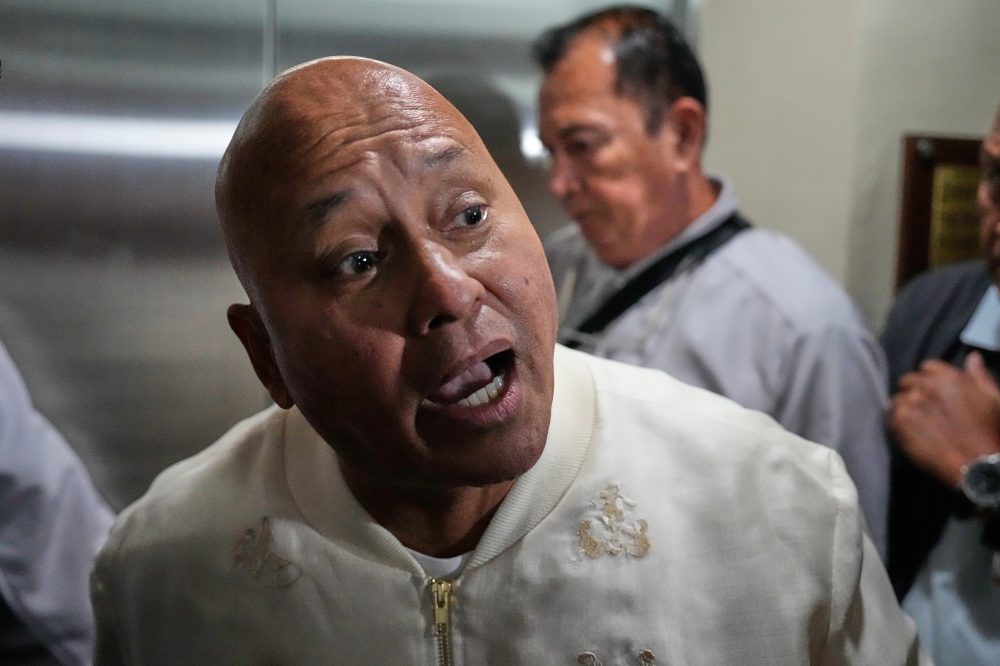
MANILA, Philippines — A former Philippine police chief turned senator declared Tuesday that he will resist any efforts to transfer him to the International Criminal Court for prosecution, denying he ever supported unlawful killings during his time leading the nation’s police.
The ICC in The Hague made public Monday an arrest warrant for Senator Ronald dela Rosa, who previously served as the country’s top police official and implemented former President Rodrigo Duterte’s violent anti-narcotics operations that resulted in thousands of deaths among primarily low-level drug suspects.
The warrant, initially issued in November, accuses dela Rosa of committing murder as a crime against humanity involving “no less than 32 persons” during the period from July 2016 through late April 2018 in the Philippines.
“If there are charges I must address, I will confront them in our domestic courts rather than before international authorities,” dela Rosa stated to journalists at the Senate, which placed him under “protective custody” Monday following his return after being absent for several months.
“I will pursue every available legal option,” he declared, making a direct appeal to President Ferdinand Marcos Jr.: “Don’t bring me to The Hague.”
Following his 2016 presidential victory, Duterte appointed dela Rosa, a trusted supporter, to lead the national police, which carried out the harsh anti-drug initiative.
Dela Rosa previously commanded police forces in Davao, the southern city where Duterte served as mayor for many years and established his reputation for aggressive crime-fighting tactics.
“My responsibility was to oversee the anti-drug campaign, and that campaign was never intended to eliminate people,” dela Rosa explained when questioned about the extensive casualties.
“When police officers faced life-threatening situations, naturally they had to protect themselves,” dela Rosa stated.
Duterte’s presidency concluded in mid-2022. He was taken into custody in March of last year and is currently held by the ICC in the Netherlands, where he awaits trial for alleged crimes against humanity related to multiple deaths during his enforcement campaigns.
In 2019, Duterte removed the Philippines from ICC membership, which human rights advocates claim was an attempt to avoid accountability. However, the court maintained it still has authority over offenses committed while the Philippines remained a member nation.
When questioned about whether the Philippines would execute the ICC’s arrest order for dela Rosa, government representatives indicated they were prepared and might transfer him to the international court’s authority, similar to Duterte, under Philippine legislation designed to address crimes against humanity including genocide.
“We are obligated to ensure that all individuals who should be held accountable face responsibility,” Communications Undersecretary Claire Castro stated during a press conference.
Dela Rosa cannot claim immunity from arrest while participating in official sessions or remaining within the Senate premises because the alleged crimes were severe and carry lengthy prison sentences, Castro explained.
Law enforcement has stationed nearly 350 officers around the Senate building, raising alarm among dela Rosa and supporting senators, though officials emphasized they were positioned to maintain order rather than assist in any potential arrest of the senator.
Online auction platform eBay turned down a massive $56 billion acquisition proposal from GameStop on Tuesday, expressing skepticism about the video game retailer’s ability to finance such an enormous transaction while highlighting its own successful business transformation initiatives.
The dismissal may pave the way for an aggressive takeover attempt, as GameStop’s chief executive Ryan Cohen indicated last week his willingness to bypass eBay’s board and present the proposal straight to company shareholders.
Market experts and investors have questioned the feasibility of the mixed cash-and-stock proposal from the $12 billion gaming company seeking to acquire a business worth nearly four times its own market capitalization. eBay’s share price has remained $20 under the proposed $125 per share offer price.
The takeover attempt has also frustrated certain GameStop stakeholders. Michael Burry, the investor made famous by “The Big Short,” divested his entire position in GameStop following the bid announcement.
Describing the acquisition strategy as “pedestrian,” Burry, who previously compared GameStop CEO Ryan Cohen to investment legend Warren Buffett, expressed concerns about increased debt obligations and the dilution of shareholder value.
Cohen aims to implement his successful expense-reduction strategies from GameStop to enhance eBay’s profit margins, while leveraging GameStop’s approximately 1,600 retail locations across the United States to create a brick-and-mortar presence that could help eBay compete more effectively against Amazon.
The GameStop leader has highlighted potential debt funding of $20 billion through TD Securities and GameStop’s capacity to issue additional shares to support the transaction financing.
Motorists traveling through a section of Blackbird Station Road are experiencing periodic lane restrictions today as construction crews continue their work in the area.
The Delaware Department of Transportation reports that drivers should anticipate intermittent lane closures along Blackbird Station Road in the stretch between Cart Road and Mill Lane. These temporary restrictions are expected to remain in effect until 5 p.m. this evening.
Commuters and residents are advised to allow extra travel time when using this route and to exercise caution when approaching the construction zone. Drivers should be prepared for possible delays and consider alternate routes if available.
The head of artificial intelligence company OpenAI will face questioning in a California courtroom Tuesday and Wednesday as part of a high-profile legal dispute with tech billionaire Elon Musk, court officials announced.
Sam Altman’s testimony comes during the third week of proceedings that could reshape the future of OpenAI and its executive team. The company has secured hundreds of billions in funding from major technology firms and investors as it builds infrastructure for what could become a trillion-dollar public stock offering.
At the heart of the dispute is Musk’s claim that Altman and the artificial intelligence company misled him into contributing $38 million to what he understood would remain a nonprofit organization dedicated to helping humanity. Instead, Musk argues, the company shifted to a profit-driven business model. OpenAI counters that Musk was aware of plans to become profitable but demanded control over the organization.
The high-profile confrontation has captured attention across the technology industry and beyond, with courtroom testimony often examining the character and management approaches of both men. On Monday, former OpenAI chief scientist Ilya Sutskever told the court he spent approximately one year collecting information for the company’s board showing Altman had demonstrated a “consistent pattern of lying.”
Multiple important witnesses have already appeared before the court, including current and former company leaders. These include President Greg Brockman, former technology executive Mira Murati, and Shivon Zilis, a previous board member who has four children with Musk.
Musk, who wants both Altman and Brockman removed from their positions, has testified that OpenAI originated as his concept before leadership took control of it. He stated his financial contributions were “specifically meant to be for a charity.”
The Tesla founder also acknowledged being aware of early conversations about transforming OpenAI into a profit-making entity, but said Altman assured him the organization would maintain its nonprofit status.
WASHINGTON, May 12 – Nebraska voters will choose their party nominees Tuesday for a congressional seat that could play a crucial role in determining control of the U.S. House of Representatives.
The race for Nebraska’s 2nd Congressional District, which covers the Omaha metropolitan area, has drawn significant attention as Democrats see it as one of their strongest chances to flip a Republican-held seat outside of redrawn districts.
While both Nebraska and West Virginia are conducting primary elections Tuesday, the Democratic contest in Nebraska’s 2nd district stands out as the evening’s most closely watched race.
Two leading contenders have emerged in the competitive Democratic primary: Denise Powell, who helped establish the political action committee Women Who Run Nebraska, and state Senator John Cavanaugh.
Powell is positioning herself as a centrist candidate capable of preserving Nebraska’s “blue dot” status. Despite President Donald Trump carrying the state overall by more than 20 percentage points in 2024 and winning two of three congressional districts by large margins, this particular district remains competitive.
Cavanaugh, who represents the progressive wing of the party, has criticized Powell by labeling her “Dark Money Denise.” Should Cavanaugh prevail, Nebraska’s Republican governor would name his successor in the state legislature, potentially strengthening the GOP majority and possibly enabling passage of more restrictive abortion legislation, according to some Democratic concerns.
Supporters of Cavanaugh have dismissed this argument as “MAGA Republican” misinformation, asserting that Democrats are well-positioned to gain ground in upcoming state legislative contests.
On the Republican side, Omaha city councilman Brinker Harding faces no opposition for his party’s nomination. Campaign finance records show Harding has collected $1.3 million in contributions and maintains more available funds than both Democratic candidates combined.
The district’s competitive nature was demonstrated in 2024 when Democrat Kamala Harris captured it at the presidential level by fewer than 5 percentage points. This seat represents one of only three districts Harris won that currently have Republican representation. With no incumbent seeking reelection following Bacon’s departure, Democrats view it as a prime pickup opportunity.
The stakes extend beyond this single race, as Republicans currently maintain a slim 217-212 advantage in the House of Representatives, where the chamber’s only independent member votes with the Republican caucus. Five seats remain vacant due to deaths and resignations.
To seize House control for Trump’s final two years in office, Democrats must gain a net total of three seats in November’s midterm elections. Historically, the president’s party tends to lose congressional seats during midterms, though Trump has encouraged Republican-controlled states to redraw their electoral maps to maintain congressional control.
This presidential directive has sparked a nationwide redistricting battle between the parties, with both sides working to create electoral advantages in states including Texas, California, Florida, Louisiana and Tennessee.
Southern states under Republican leadership have also revised their maps following a recent Supreme Court decision that weakened Section 2 of the Voting Rights Act. This ruling puts previously protected majority-minority districts throughout the South at risk.
Tuesday’s primary also features an unusual Senate race dynamic. Republican Senator Pete Ricketts is anticipated to secure his party’s nomination easily. His main November challenger, Dan Osborn, is campaigning as an independent candidate. Osborn’s previous Senate bid against Republican Senator Deb Fischer in 2024 resulted in a loss of less than 7 percentage points, a performance that significantly exceeded Harris’s statewide showing.
A Democratic primary will also occur, despite the state party’s decision not to officially support a candidate, believing Osborn has the strongest chance of defeating Ricketts.
William Forbes, who describes himself as an anti-abortion Trump supporter, entered the Democratic primary race in March. Democratic officials have characterized Forbes as “running to trick voters.”
Cindy Burbank also launched her campaign in March. Her campaign website describes Forbes as a “fake” Democrat whose candidacy would divide Democratic votes to benefit Ricketts’ reelection bid. While encouraging primary voters to support her, Burbank also states that Osborn “deserves a fair shot against Ricketts,” indicating she might withdraw if she wins the Democratic nomination to ensure a direct contest between Osborn and Ricketts.
Motorists traveling on northbound Interstate 95 are experiencing delays this morning following a vehicle accident near the Chapman Road overpass.
According to the Delaware Department of Transportation, the crash has resulted in the closure of both the left shoulder and left merge lane in the northbound direction. Traffic officials have not yet provided an estimated time for when the affected lanes will reopen.
Drivers are advised to expect delays in the area and consider alternate routes if possible while emergency crews and transportation workers clear the scene.
No information has been released regarding injuries or the number of vehicles involved in the incident.
Delaware Department of Transportation crews are working in the median strip of northbound Route 13, causing traffic delays for drivers in the area.
The mowing operations are taking place along the stretch of highway between Martin Luther King Boulevard and West Denneys Road. DelDOT says the maintenance work is scheduled to continue until 1 p.m. today.
Motorists traveling through the area should expect slower-moving traffic and plan for additional travel time while the crews complete their work.
A nonprofit organization has filed legal action to halt President Trump’s renovation of the Reflecting Pool, which has exceeded its original budget by significant amounts. The lawsuit targets the Trump administration’s alleged procedural violations during the project’s development.
The organization claims the administration did not adhere to required protocols when moving forward with the renovation work. The project’s costs have ballooned far beyond initial projections, prompting concerns about fiscal responsibility and proper oversight of the federal undertaking.
Maryland’s Democratic Governor Wes Moore has stated he would permit his teenage son to undergo gender transition surgery if the 14-year-old requested it. The governor, who political observers are eyeing as a possible contender for the 2028 presidential race, shared these views during a podcast appearance with host Patrick Bet-David.
Bet-David seemed surprised by Moore’s response during the interview. The governor’s position on transgender medical procedures for minors comes at a time when political experts believe the Democratic Party’s stance on transgender issues may have contributed to voter losses in the recent presidential election.
French parliament members are scheduled to vote this week on controversial legislation that would permit physician-assisted suicide for citizens seeking to end their lives with medical assistance. The practice has gained acceptance throughout much of Western Europe, with Switzerland leading the way as the first country to legalize such procedures.
Religious leaders and pro-life organizations across France are calling on citizens to contact their elected officials to oppose the measure. Critics of the proposed law argue that elderly individuals and people with disabilities would become vulnerable targets under the legislation.
The devastating impact of Russia’s invasion has sparked an unexpected spiritual awakening throughout Ukraine, according to new reports from religious organizations. The Slavic Gospel Association indicates that the hardships and suffering brought by warfare have led countless Ukrainians to seek comfort and meaning through Christian faith.
Since the conflict began, more than 100 new Evangelical congregations have established themselves across the war-torn nation, representing a remarkable growth in religious communities during one of the country’s darkest periods.
Igor Bandura from the Ukrainian Baptist Union highlighted the dramatic increase in religious conversions, stating that “Over 13,000 people have been baptized — significantly more than before the war.”
These religious communities have become essential pillars of support for a nation under siege, providing both spiritual guidance and practical assistance to those affected by the ongoing conflict.
SRN News has launched a daily audio program that focuses on religious developments worldwide. The program, called “Global Landscape,” runs for two minutes each day and covers major faith-related news stories from across the globe.
The audio feature is designed to give audiences quick updates on important religious developments, changes in various faith communities, and major events where religion intersects with world affairs. The program aims to keep listeners current on how faith issues are impacting communities internationally.
SRN News produces the segment as part of its regular programming lineup, offering audiences a focused look at religious news that might not receive extensive coverage in mainstream media outlets.
Traditional Catholic leaders are expressing alarm over what they view as changing Vatican positions regarding LGBTQ Catholics during Pope Leo’s papacy. A Vatican task force recently published findings that included perspectives from two homosexual married Catholics who criticized the church’s longstanding positions on human sexuality. During a recent in-flight press briefing, Pope Leo indicated that the church’s focus on social justice, equality and freedom should take precedence over sexual morality teachings. Religious watchers suggest the pontiff may sideline sexuality-related matters going forward.
Following more than twelve months of testimony, President Trump’s Religious Liberty Commission is finalizing its policy suggestions. Commission members have outlined their priorities for the final document, including expanding opportunities for faith expression in educational institutions and government facilities. Additional proposals involve increasing government funding access for faith-based organizations and creating religious exemptions from various regulations and educational curricula. The commission’s leader has consistently maintained that “there is no separation of church and state.”
Following a decade of legal and cultural wins, LGBTQ rights groups are facing significant pushback. Recent years have brought considerable opposition, particularly regarding transgender issues affecting minors. Multiple states have prohibited biological males from participating in women’s athletics, while others have restricted gender transition procedures for children. Nine states are considering measures that would challenge legal same-sex marriage recognition, with most urging the Supreme Court to reconsider its 2015 marriage equality ruling. While these proposals lack legal authority, they could prompt fresh constitutional challenges.
Abraham Foxman, the influential longtime leader of the Anti-Defamation League who championed Jewish-American interests for nearly thirty years, has passed away at 86. During his 28-year tenure leading the ADL until his 2015 retirement, Foxman advised presidents, diplomats, business executives and public figures. He frequently confronted prominent individuals over antisemitic comments or portrayals while accepting subsequent apologies on behalf of the Jewish community. The organization issued a statement expressing that it “deeply mourns the loss of our longtime national director.”
Following a recent two-day gospel festival in Japan, Will Graham, the grandson of renowned evangelist Billy Graham, is preparing to address a massive crowd of 50,000 people at a stadium event in South Korea this weekend. The large-scale gathering is scheduled to occur in Uijeongbu (wee-jong-boo), and represents the culmination of extensive preparation work conducted by area churches over several months. Graham has expressed his belief that Asia is on the verge of experiencing a significant spiritual revival, which has led him to increase his ministry presence in the region recently.
A Spanish traveler who was removed from a cruise ship experiencing a hantavirus outbreak has now tested positive for the disease, according to an announcement from Spain’s health ministry on Tuesday.
Health officials from the World Health Organization have verified a total of 11 infections, with three fatalities among those aboard the vessel.
The newly confirmed patient remains isolated at a military medical facility in Madrid following their evacuation.
This individual was placed in the same medical center as 13 other Spanish citizens who were brought back on Sunday, all of whom received negative test results for the virus.
WHO Director-General Tedros Adhanom Ghebreyesus stated while in Madrid that every one of the 11 verified infections involves either passengers or crew members from the MV Hondius cruise vessel, with three fatalities recorded.
Medical authorities have identified nine of the total cases as infections caused by the Andes virus strain.
British Prime Minister Keir Starmer is clinging to power as mounting pressure builds for his resignation following devastating local election defeats for his Labour Party.
Numerous Labour Party members of Parliament are demanding Starmer step down from leadership. A potential resignation could occur following Tuesday’s Cabinet meeting if his ministers inform him he has insufficient party backing.
Starmer suffered a significant setback when a junior minister became the first government official to resign from his administration. Despite the pressure, Starmer remains determined to continue in his role.
Health Secretary Wes Streeting, widely rumored to be positioning himself for a potential leadership bid against Starmer, remained silent as he departed the Cabinet meeting at Downing Street.
“Wes Streeting, do you want the job, or not?” someone shouted from the street. “Are you measuring the curtains?”
Streeting was among top officials who avoided answering numerous questions shouted by reporters gathered outside.
Business Secretary Peter Kyle expressed backing for the beleaguered Prime Minister, telling media that Starmer demonstrates “really steadfast leadership” as he exited the Cabinet meeting.
Kyle indicated the meeting focused on economic matters and societal challenges. He mentioned traveling to Brussels to strengthen UK-European Union relations, which aligns with goals Starmer outlined Monday in a speech designed to regain public confidence.
A government official stated that no formal leadership challenge against Starmer has been initiated.
“The prime minister talked about the challenges we faced as a country, the crisis in the Middle East and the impact on the cost of living here,” Science, Innovation and Technology Secretary Liz Kendall told reporters after leaving the Cabinet meeting.
“This government will do what we were elected to do, which is serve the British people. The prime minister has my full support in this,” Kendall stated.
“There is a process to challenge the leader. Nobody has made that challenge,” she added.
Treasury chief Rachel Reeves canceled her scheduled appearance at a London risk summit following the Cabinet meeting. Treasury minister Lucy Rigby will replace her at the event.
Housing Secretary Steve Reed encouraged Labour colleagues to rally behind Starmer amid resignation calls, posting on social media during the Cabinet session.
“This is not a game,” Reed wrote on X. “This instability has consequences for people’s lives. The people who will be hurt most will be those that elected us less than two years ago. We must unite behind the Prime Minister.”
Starmer reinforced his determination to remain in office Tuesday despite growing demands for his departure.
The Prime Minister acknowledged to Cabinet ministers his responsibility for the severe losses his center-left Labour Party experienced in last week’s nationwide local elections, while declaring his intention to continue fighting.
Starmer noted that procedures exist for removing a leader, but none have been activated.
“The country expects us to get on with governing,” he stated. “That is what I am doing and what we must do.”
Starmer lost his first government member Tuesday as pressure mounted for his resignation following electoral defeats.
Housing, communities and local government minister Miatta Fahnbulleh resigned and called on Starmer “to do the right thing for the country” by establishing a timeline for his departure.
Fahnbulleh, a junior minister considered to be from the party’s left wing, expressed pride in her service but criticized the government for failing to demonstrate the vision, urgency and reform mandate voters had provided.
The next national election isn’t required until 2029, but British political system permits parties to replace leaders mid-term without calling a general election.
The most straightforward scenario would involve Starmer announcing his resignation plans, which would trigger a Labour leadership contest. Such an announcement might occur if Cabinet members inform him during their regular Tuesday meeting that his party support has eroded too significantly.
Should Starmer refuse to resign, he could face challenges from one or more Labour parliamentarians.
KUALA LUMPUR, Malaysia — Rescue operations continue in Malaysian waters as authorities work to locate 14 Indonesian nationals still unaccounted for following a deadly boat accident that left nearly two dozen survivors.
Officials from Perak state’s maritime division reported that 23 individuals were pulled from the water on Monday when a local fishing crew discovered them floating near Pangkor Island. The maritime office confirmed the victims were likely undocumented immigrants traveling by sea.
According to Perak maritime chief Capt. Mohamad Shukri Khotob, the fishing boat crew immediately requested emergency assistance after discovering the people in distress during pre-dawn hours. He confirmed that search efforts, which launched Monday, will persist until every missing person is found. Officials estimate the vessel was transporting 37 people total.
Mohamad Shukri revealed that investigators believe the group began their journey from Kisaran, Indonesia on May 9, with plans to reach various Malaysian destinations including Penang, Selangor, and Kuala Lumpur.
The surviving passengers have been transferred to marine police for interviews and processing.
Indonesia has historically served as a major source of migrant workers traveling to Malaysia in search of improved employment prospects. Dangerous sea crossings using overcrowded, substandard boats are common among those attempting unauthorized entry, frequently resulting in tragic accidents and fatalities. Malaysian industries, particularly plantation agriculture and construction, rely heavily on Indonesian laborers.
Two decades after transforming online shopping with rapid delivery, Amazon is setting a new standard by launching 30-minute delivery service for customers willing to pay extra fees for immediate needs.
The retail giant, which changed consumer expectations in 2005 by introducing two-day shipping for Prime subscribers, is establishing compact fulfillment centers across numerous American and international cities. These facilities target shoppers who need immediate access to items like cold medicine for illness or fresh ingredients for evening meals.
This ultra-rapid service, branded as Amazon Now, debuted in India last June. The company reports that half-hour delivery options have expanded to metropolitan regions across Brazil, Mexico, Japan, the United Arab Emirates, Britain and America.
These compact distribution centers measure roughly equivalent to a CVS pharmacy location. Each facility maintains approximately 3,500 items available for express delivery, featuring alcoholic beverages, baby supplies, pet products, fresh meat, over-the-counter drugs, games and electronic accessories.
“We know that customers love speed and always have,” Beryl Tomay, Amazon’s head of transportation, told The Associated Press on Monday. “What we see customers doing, when we offer faster speeds, are they purchase more from Amazon. And Amazon becomes more top of mind for that or other types of items as well.”
Within America, the corporation initially piloted Amazon Now in Seattle, where company headquarters operates, along with Philadelphia. Atlanta residents and Dallas-Fort Worth metropolitan area shoppers currently enjoy access to the program. The platform has launched or expects deployment before year’s end in Houston, Denver, Minneapolis, New York, Phoenix, Oklahoma City, Orlando, Florida, plus numerous additional metropolitan areas, according to Amazon.
Pricing for Amazon Now begins at $3.99 for Prime subscribers, who pay yearly fees of $139, while non-members face charges of $13.99. Orders totaling less than $15 incur an additional $1.99 handling charge, the company stated.
Amazon’s emphasis on delivery velocity emerges as certain consumers question rushed shipping practices, considering potential environmental consequences and worker welfare concerns related to high-speed order fulfillment.
Relentless speed focus enabled Amazon to construct its logistics and e-commerce dominance. Following its establishment of two-day delivery as standard practice, Amazon introduced one-day and same-day options for Prime customers. This spring, the corporation launched 90,000 products available within one to three hours for additional costs.
These streamlined micro-facilities designed for 30-minute order processing represent another advancement in Amazon’s delivery evolution.
Just a few employees handle orders from product aisles within these 5,000- to 10,000-square-foot locations, contrasting with massive fulfillment warehouses storing millions of products where Amazon utilizes combined human staff and robotic systems for order selection and packaging.
Amazon customizes product selections for individual locations while employing artificial intelligence and advanced technology to examine customer purchasing patterns, timing and frequency. Top American purchases include cleaning products, dental care items, mouthwash, plumbing tools, tropical fruits and wireless audio devices, Amazon reported.
Amazon’s push for instant satisfaction directly challenges on-demand food delivery services including Instacart, Uber Eats, DoorDash and Grubhub, which lack the e-commerce giant’s operational scale, according to independent retail analyst Bruce Winder.
“What Amazon brings is their prowess in supply chain,” Winder said.
These competitor companies dismiss Amazon as a competitive threat, highlighting their ability to deliver hundreds of thousands of products through partnerships with diverse merchants and restaurants.
“DoorDash has a mission to empower grocers and retailers and augment their existing footprint, not to replace them,” DoorDash spokesperson Ali Musa said in an emailed statement. “We win only when they win, which is how we can offer over half a million grocery and retail items in under an hour across the country.”
Amazon engages in competition with Walmart to become the leading retailer providing sub-hour delivery to online customers.
Walmart Express Delivery charges an extra $10 beyond standard shipping fees, offering shoppers access to over 100,000 products guaranteed within one hour. Many customers receive items under 30 minutes, Walmart CEO John Furner informed analysts in February.
Previous companies have attempted 30-minute delivery promises, but the industry shows numerous failed efforts to achieve such speed targets.
The COVID-19 pandemic spawned multiple companies promising 10- to 15-minute grocery delivery from neighborhood micro-warehouses, according to Sucharita Kodali, an analyst at market research firm Forrester Research.
However, escalating operational expenses, minimal customer retention and depleted investment funding caused most ventures to collapse before pandemic conclusion, analysts noted.
Domino’s introduced a 1984 guarantee offering free pizzas for deliveries exceeding 30 minutes. The company modified this “30 minutes or it’s free” policy after two years, providing only $3 discounts for delayed orders.
While the promotion increased Domino’s market position, it ultimately damaged company reputation. The guarantee ended in December 1993 following multiple accidents and legal cases involving drivers speeding to meet deadlines.
Brad Jashinsky, a retail analyst at information technology research and consulting firm Gartner, believes Amazon should learn from the pizza company’s experience.
“You get in trouble when you start overpromising something like that,” he said.
Amazon will avoid time guarantees, instead providing customers selecting 30-minute delivery with order progress updates, Tomay explained.
“There’s no rushing either in our building workers or the gig workers,” she said.
Kodali believes Amazon requires multiple simultaneous orders from identical or neighboring apartment complexes for cost-effective 30-minute service operation.
While consumers value rapid delivery of essential products like bathroom tissue and batteries, retailers and logistics professionals observe some online shoppers, particularly Generation Z members, selecting slower shipping for non-urgent purchases.
Amazon has offered customers options to decline one- or two-day delivery, receiving consolidated orders on single days with minimal packaging. Combining deliveries reduces boxes, shipping materials and fuel consumption, analysts reported.
“The millennials who came to age in an era that was on fast delivery came to expect it de facto, whereas … Gen Z is more accepting of a slower speed than previous generations before them,” said Darby Meegan, a general manager at Flexport, a supply chain and logistics company that fulfills orders for thousands of online merchants.
Amazon leadership reports encouraging initial Amazon Now results in India, where Prime members tripled 30-minute delivery requests after service adoption.
Amazon Now attracts increasing repeat American customers, Tomay noted.
“It’s in early days and time will tell,” she said. “I think that it will be interesting to see how it evolves.”
The streaming entertainment powerhouse Netflix revealed Tuesday that it has pumped more than $135 billion into film and television content creation during the past ten years, highlighting the company’s massive influence on the entertainment industry and the explosive growth of streaming services.
According to the company’s announcement, this enormous investment generated economic ripple effects worth more than $325 billion globally while supporting over 425,000 production jobs during the same timeframe.
The California-based streaming service, headquartered in Los Gatos, has grown into one of the planet’s biggest video platforms, boasting more than 325 million paying subscribers by the close of 2025. The company revolutionized home entertainment viewing and has produced original content that has significantly shaped modern pop culture.
Netflix co-CEO Ted Sarandos explained the announcement’s significance: “Today we’re launching the Netflix Effect — a comprehensive look at the economic, cultural and social impact of our films and series, and how it ripples out across economies, industries and everyday life, day after day, week after week.”
The streaming service has secured licensing agreements for content from over 3,000 different companies, including government-funded broadcasters, according to the company’s statement.
International programming has seen remarkable growth on the platform, with non-English content now accounting for more than one-third of total viewing time, a dramatic increase from less than ten percent a decade earlier. Global hits including “Money Heist,” “Squid Game,” and “KPop Demon Hunters” have attracted massive international viewership despite originating outside the United States.
This announcement comes shortly after Netflix chairman and co-founder Reed Hastings announced his departure from the company last month. The timing coincides with Netflix’s search for fresh growth opportunities in areas like gaming and live entertainment, while the company faces challenges from declining sales growth.
Federal Bureau of Investigation agents have started conducting interviews with CIA personnel, both current and former employees, as part of an ongoing Justice Department investigation targeting former CIA Director John Brennan, according to five sources with knowledge of the matter.
The questioning took place last week when FBI agents from the Miami field office traveled to CIA headquarters in McLean, Virginia, to conduct the interviews. Sources indicate these interviews are planned to continue over the next several weeks.
For several months, the U.S. Attorney’s Office for the Southern District of Florida has been pursuing this investigation into Brennan. Federal prosecutors are examining whether he provided false testimony to Congress in 2023 when discussing a 2017 intelligence report that analyzed Russian interference in the 2016 presidential election.
The primary findings of that intelligence assessment, which examined Russia’s cyber operations and influence campaigns designed to support Trump’s candidacy against Hillary Clinton, have since been validated by the Justice Department, a bipartisan Senate committee, and an internal CIA review.
However, President Trump, who has consistently labeled the Russia investigation a “hoax,” has encouraged prosecutors to investigate individuals he believes were responsible for initiating the probe, with Brennan among those targets.
According to a source with knowledge of the Brennan investigation, FBI agents have interviewed approximately twelve current and former CIA officers who contributed to the 2017 assessment.
The CIA personnel are being questioned about Brennan’s involvement in creating the assessment and how much influence a disputed dossier containing unverified allegations about Trump’s connections to Russia had on the report’s findings.
The document, called the Steele dossier after its creator, former British intelligence operative Christopher Steele, was financed by Trump’s political adversaries and contained scandalous rumors about supposed connections between his 2016 campaign and Moscow, allegations Trump firmly rejected.
The dossier received brief mention in the assessment, and a summary of its claims was included as an appendix to the classified version of the report. Brennan has stated that the CIA was against incorporating the dossier into the report and that the classified summary was only added as part of a compromise agreement with the FBI.
Reuters had previously reported that the FBI was anticipated to interview intelligence personnel as part of its Brennan investigation. Both the CIA and Justice Department have refused to provide comment. Brennan’s attorney also declined to comment.
In correspondence to the chief federal judge in Miami, Brennan’s legal representative revealed that prosecutors had informed his client he is considered a target of the investigation. The lawyer accused prosecutors of “judge shopping” by attempting to direct the case to a Trump-appointed judge in Fort Pierce, Florida, who had previously dismissed criminal charges against Trump.
Sources familiar with the investigation anticipate that any potential charges would ultimately need to be filed in Washington, D.C., since that is where Brennan’s congressional testimony occurred.
Republican Representative Jim Jordan of Ohio, who chairs the House Judiciary Committee, made a referral to the DOJ in October, claiming Brennan lied during his 2023 congressional testimony, partly by stating the CIA was “not involved at all” with the Steele dossier.
Attorney General Todd Blanche helped supervise the Justice Department’s Brennan investigation when the office was under Pam Bondi’s leadership. Trump dismissed Bondi in April due to growing White House dissatisfaction with the speed and results of her team’s investigations.
Last month, the Justice Department replaced the experienced Miami prosecutor who had been directing the Brennan investigation. The department then appointed Joe DiGenova, a former federal prosecutor who became a conservative legal commentator and Brennan critic, to supervise the probe and a related effort examining whether previous Trump investigations constituted a conspiracy against the president.
Prosecutors initially sent several subpoenas for witnesses in the Brennan investigation to appear before a federal grand jury in Washington, indicating a more aggressive investigative approach. In an uncommon action, those subpoenas were retracted in mid-April shortly after being issued, according to two sources familiar with the investigation.
DiGenova’s appointment has created anxiety among current and former CIA employees who fear he will target anyone in the intelligence community whom Trump believes participated in politically motivated investigations, two sources reported.
Tesla’s ambitious robotaxi expansion into Dallas and Houston has hit significant roadblocks, according to recent testing by Reuters journalists who experienced extensive delays and service limitations in both Texas cities.
While some investors viewed last month’s announcement of the service expansion as progress toward CEO Elon Musk’s goal of transforming Tesla into an artificial intelligence and autonomous driving leader, real-world testing revealed the technology still faces major challenges.
During a recent Monday afternoon test in Dallas, a Reuters journalist spent almost two hours completing what should have been a 20-minute journey from Southern Methodist University to Dallas City Hall – a distance of roughly 5 miles via major highway.
The testing began at 4:55 p.m. when the reporter attempted to book a ride through Tesla’s robotaxi application, which functions similarly to Uber. Instead of finding available vehicles, the app displayed a “high service demand” notification. Meanwhile, Uber showed an 8-minute wait for a 22-minute trip to the same destination.
For the following 30 minutes, repeated booking attempts resulted in either the high-demand warning or “no rides available nearby” messages. After 36 minutes of searching, a vehicle finally appeared with a 19-minute estimated wait time.
Tesla’s massive $1.6 trillion market valuation – exceeding five times that of any competing automaker – largely depends on investor confidence that the company will soon deploy widespread robotaxi fleets. Musk has claimed Tesla’s autonomous driving capabilities “work anywhere” and has criticized the more methodical strategy used by Alphabet’s Waymo, which conducts detailed mapping and comprehensive testing before launching in new markets.
In July, Musk projected that Tesla robotaxis would reach half of America’s population by late 2025. However, the service currently operates only in Dallas, Houston, and Austin, where Tesla began its initial robotaxi pilot program in June of last year.
Several analysts noted following Tesla’s April 22 first-quarter earnings announcement that robotaxi expansion was proceeding more slowly than anticipated. During that earnings call, Musk stated the company was adopting a “cautious approach” to prevent injuries or deaths.
Once the Dallas reporter was finally picked up, the vehicle avoided North Central Expressway – the primary route to downtown – instead taking nearly 35 minutes traveling on local streets. The car ultimately dropped the passenger at a parking area requiring a 15-minute walk to City Hall.
When the rider contacted support through the vehicle’s system, an agent explained the area was “restricted,” despite being within the Dallas service zone Tesla had promoted on social media the previous month. “We’re still in the beta version,” the agent acknowledged.
Additional downtown trips revealed similar problems. The app consistently showed drop-off locations requiring approximately 15-minute walks to reach actual destinations. During one trip to a downtown farmers’ market, the robotaxi deposited the reporter across a freeway, suggesting he walk beneath overpasses littered with debris and reeking of urine.
On another journey, the robotaxi repeatedly failed to execute a left turn, missing the maneuver four times. The intersection, located near a freeway exit ramp with “do not enter” signage, appeared to confuse the vehicle’s systems. Instead of turning left, the car continued straight and made right turns to circle the block, but kept missing the required left turn.
After the reporter contacted a remote operator about the situation, the vehicle eventually completed the turn successfully.
In Houston, Tesla operates robotaxis within a limited suburban zone on the city’s northwest side. Another Reuters reporter testing the service on a weeknight managed to secure one ride. When attempting a second trip, the same vehicle appeared 13 minutes away, but the app subsequently canceled the ride.
Despite trying for an additional 30 minutes, no vehicles became available, forcing the reporter to use Uber instead.
Even in Austin, where Tesla’s service has operated for nearly a year, customers frequently encounter wait times exceeding 30 minutes.
According to a recent presentation by Austin city officials, Tesla operates approximately 50 vehicles in the city, compared to Waymo’s fleet of more than 250 vehicles in Austin.
Some Austin Tesla robotaxis still include human safety monitors seated in the front passenger area. While Tesla reports increasing the number of fully autonomous vehicles in Austin, the company hasn’t provided specific numbers.
A Reuters reporter in Austin conducted three weeks of monitoring in April, checking Tesla robotaxi wait times eight times daily from morning through evening. Wait times exceeded 15 minutes approximately half the time and reached at least 25 minutes in more than 25% of checks. No vehicles were available at all in 27% of instances.
Austin Police Lieutenant William White, who supervises autonomous vehicle safety for the city, reports that Tesla has experienced no major crashes and received no traffic citations in Austin.
Since August, Tesla has filed 15 crash reports in Austin with the U.S. National Highway Traffic Safety Administration, as required for autonomous vehicle operators even for minor incidents. Most involved no injuries, though one resulted in a hospital visit.
Unlike other autonomous vehicle companies, Tesla has requested that regulators redact all crash details.
White describes Tesla as generally cooperative with city inquiries but notes one concern: Tesla robotaxis consistently ignore posted speed limits. During test rides last year, he observed vehicles regularly traveling 5 mph above speed limits.
White said company representatives told him it was safer for vehicles to match traffic flow. White responded to Tesla: “At no time would we ever advocate that you program your vehicles to speed.”
Tesla did not respond to requests for comment regarding this story.
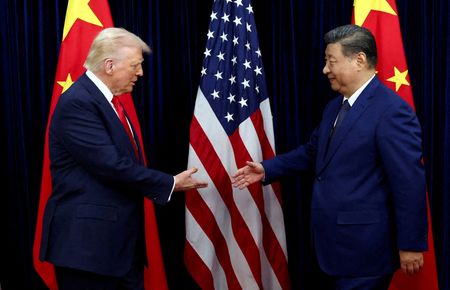
A powerful group of American business leaders will join President Donald Trump during his diplomatic meetings with Chinese President Xi Jinping on May 14-15, as major corporations look to break through business barriers in the world’s second-largest economy.
The delegation features over a dozen chief executives and senior leaders from prominent companies including Tesla, BlackRock, Illumina, Mastercard, and Visa, according to a White House official who spoke Monday.
This business contingent differs significantly from Trump’s 2017 China visit, which emphasized ceremony and trade agreements. Sources familiar with the planning process, who requested anonymity, indicate this smaller group focuses on companies with specific business challenges requiring resolution in China.
“Besides Boeing and Cargill being linked to purchase agreements, the others are mainly there to deliver demands on critical input supply,” explained Reva Goujon, a geopolitical strategist at Rhodium Group.
“This could help the US administration’s messaging that to even be able to discuss a board of investment, China needs to be a reliable investment partner and not weaponise supply,” Goujon added.
The corporate executives anticipate the high-level diplomatic discussions will create sufficient political momentum to overcome regulatory obstacles, secure market entry permissions, and open investment pathways, sources revealed. These companies confront broader regulatory and political challenges in China that extend beyond typical commercial negotiations.
When contacted for comment about their summit objectives, none of the participating companies provided responses.
According to one source, companies needed to demonstrate a “tangible ask” with potential for concrete results or agreement during the summit period to qualify for the trip.
However, another source emphasized that American businesses view this summit more as a political catalyst that could accelerate ongoing regulatory conversations in China rather than a platform for major formal announcements.
Meta faces immediate pressure regarding China’s state planning agency’s directive last month to reverse its acquisition of artificial intelligence company Manus, valued at over $2 billion. This order reflects Beijing’s increased examination of American investments in Chinese startups developing advanced technologies.
Tesla confronts potential restrictions on Chinese exports of solar manufacturing equipment to America, which could impact the company’s factory construction and expansion plans for increased domestic production.
Reuters previously reported in March that Tesla sought to purchase $2.9 billion worth of solar panel manufacturing equipment from Chinese suppliers, including Suzhou Maxwell Technologies, which required export permission from China’s commerce ministry.
Additionally, Tesla is pursuing Chinese regulatory permission to expand its Full Self-Driving assistance technology throughout China’s automotive market, the world’s largest.
Tesla CEO Elon Musk has previously recognized challenges created by technology restrictions from both American and Chinese governments, while expressing confidence about obtaining Chinese approval this year.
BlackRock CEO Larry Fink arrives in Beijing as his company leads a consortium facing examination over a proposed $23-billion purchase of port facilities, including two near the Panama Canal, from Hong Kong-based CK Hutchison.
Beijing has criticized this transaction amid Washington’s efforts to limit Chinese control over the strategically important waterway.
Technology company Coherent, which manufactures optical components, must navigate Beijing’s export restrictions on indium and related materials essential for advanced optical chip production.
Illumina joins the delegation as the American gene-sequencing company works to restore its operations after Beijing removed an export prohibition imposed on the firm last year.
Despite this progress, Illumina remains listed on China’s “unreliable entity” roster amid escalating American-Chinese tensions regarding biotechnology security and supply chain dependencies.
Payment processing leaders Mastercard and Visa hope to leverage the summit to strengthen their positions within China’s strictly controlled payments industry, according to the two sources.
One source indicated Mastercard desires American government support for increased ownership in its Chinese joint venture.
Mastercard achieved a milestone in 2023 as the first foreign payment network approved to process domestic yuan bank card transactions in China through its partnership with local company NetsUnion.
Another source revealed that Visa, which has not yet secured China’s domestic bank card processing authorization like competitors Mastercard and American Express, seeks to enter this valuable market with complete 100% ownership of a future joint venture license.
Citigroup CEO Jane Fraser and Goldman Sachs CEO David Solomon are also participating as Wall Street institutions continue pursuing deeper access to China’s capital markets.
Citigroup awaits approval for a fully owned securities brokerage license in China following its exit from a previous joint venture arrangement.
The bank also faces legal challenges with Zhejiang-based fuel company Haiyue Energy Group, which filed suit against Citibank over freezing a $27-million payment connected to American sanctions.
Agricultural agreements may emerge from the summit, potentially expanding Beijing’s grain and meat purchases from America, though market analysts don’t anticipate significant new soybean orders beyond last October’s agreement.
ByteDance’s popular social media app TikTok appeared before the European Union’s highest court Tuesday in a final effort to overturn its classification as a “gatekeeper” under new digital regulations that impose stricter requirements on major tech companies.
The hearing at the EU Court of Justice in Luxembourg marks the first legal challenge to the Digital Markets Act’s gatekeeper designations, with potential implications for Europe’s broader efforts to regulate Big Tech companies and promote competition.
European regulators classified TikTok as a gatekeeper in September 2023, placing it alongside tech giants including Google (Alphabet), Meta Platforms, Apple, Amazon, Microsoft and Booking.com – all companies with more than 45 million monthly users in Europe.
A lower court had previously rejected TikTok’s initial challenge in 2024, determining the platform satisfied the requirements for gatekeeper status under the new law.
The Digital Markets Act establishes demanding obligations designed to limit Big Tech’s influence, with potential penalties reaching 10% of a company’s yearly revenue for violations.
During Tuesday’s proceedings, TikTok’s legal team contended the lower court incorrectly determined the company met all three gatekeeper criteria: substantial market influence, serving as an essential gateway between businesses and users, and maintaining a dominant market position.
“ByteDance showed not only that its market cap is overwhelmingly derived from its Asian businesses but also they had no connection to Europe, face different competitive dynamics and operate in a distinct regulatory, linguistic and cultural environment,” stated TikTok attorney Bill Batchelor before the 15-judge panel.
Batchelor emphasized that approximately 70% to 80% of TikTok users simultaneously engage with other social media platforms, including Meta’s Facebook and Instagram, Snapchat, and X, indicating users aren’t confined to TikTok’s ecosystem.
“We refer to this as ‘multihoming.’ That means businesses can reach the same end users via multiple other platforms,” Batchelor explained.
However, a European Commission attorney rejected TikTok’s reasoning.
“Lock-in can occur even when some degree of multihoming exists. For example, there may be specific user groups that depend on TikTok,” Commission lawyer Mislav Mataija told the court.
The court’s decision is expected within the coming months. Meta Platforms has also filed a separate challenge regarding its gatekeeper designation for Messenger and Marketplace services.
Good morning, Delmarva! We’re starting this Tuesday with absolutely beautiful weather across the peninsula. Expect plenty of sunshine today with comfortable temperatures reaching a pleasant 69 degrees. Light northwest winds around 5 mph will keep things feeling fresh and enjoyable – perfect weather for any outdoor activities you’ve been planning!
Tonight looks equally nice as we’ll see mostly clear skies with temperatures dropping to a comfortable 52 degrees. It’s shaping up to be a great evening for a walk or some time on the porch.
Wednesday brings even warmer conditions as we climb to 77 degrees under mostly sunny skies – truly gorgeous spring weather! However, I do need to give you a heads up about Wednesday night. We’re tracking the possibility of showers and thunderstorms moving into the area, so if you have evening plans, you might want to have a backup indoor option ready.
Enjoy this beautiful Tuesday, Delmarva! Stay safe, stay informed, and I’ll see you back here tomorrow with your updated forecast.
Motorists traveling through the intersection of US 40 and Church Road should expect periodic lane restrictions as construction work continues in the area.
According to DelDOT, drivers will encounter intermittent lane closures at this intersection, with the construction activity scheduled to wrap up by 6 AM.
Officials advise drivers to allow extra travel time and exercise caution when passing through the work zone.
Residents in isolated communities across the United States may soon lose their only connection to commercial air travel as a crucial federal subsidy program faces severe budget reductions.
The Essential Air Service program, which provides financial support to airlines serving small and rural markets, could see its funding slashed by half. This dramatic reduction would eliminate flight options for communities that already struggle with limited transportation access.
The situation is exemplified by places like Provincetown, Massachusetts, where resident Joe Castellana faces a stark choice. While his Cape Cod home sits just 120 miles from Boston, the journey can take several hours by car, particularly during busy summer months. Commercial flights offer a 20-minute alternative, but these services often disappear during off-season periods.
Provincetown’s battle to maintain consistent air service throughout the year illustrates the broader challenges facing remote locations nationwide. Without federal assistance, many airlines find these routes financially unsustainable.
The potential funding cuts would force residents in affected areas to rely entirely on ground transportation, adding hours to trips that could otherwise be completed in minutes. This transportation gap could impact everything from business travel to medical appointments and family visits.
Rural aviation advocates warn that losing these connections could further isolate communities already facing economic and demographic challenges.
Three passionate teenage bird enthusiasts recently took on one of the most demanding challenges in the birding world during New Jersey’s premier avian competition.
The high school students, who go by the team name The Pete Dunnelins, participated in the 43rd annual World Series of Birding, where competitors race against time to spot and identify as many different bird species as they can find throughout New Jersey in just 24 hours.
Among the team members are 16-year-old Otys Train and 17-year-old Jack Trojan, who were photographed searching for various bird species at High Point State Park in New Jersey on May 9th during the intense competition.
The event challenges participants to travel across New Jersey’s diverse habitats and ecosystems, from coastal areas to forests and wetlands, in their quest to document the greatest variety of bird species within the strict time limit.
This annual competition draws birding enthusiasts from across the region who test their knowledge, endurance, and strategic planning skills in what many consider the ultimate test of birding expertise.
WASHINGTON (AP) — Congressional lawmakers will question Defense Secretary Pete Hegseth on Tuesday regarding the ongoing Iran conflict, with several Republicans joining Democrats in expressing doubts about the war’s duration and absence of formal congressional authorization.
House and Senate defense spending subcommittees have scheduled consecutive hearings to examine the Trump administration’s proposed 2027 military budget, which seeks an unprecedented $1.5 trillion in funding. However, lawmakers are anticipated to focus heavily on the management of a conflict that has reached an apparent deadlock, while rising gasoline prices create political challenges for GOP members ahead of midterm elections.
President Trump continues to deal with economic consequences from Iran’s effective shutdown of the Strait of Hormuz, a crucial maritime route that typically handles one-fifth of global oil transport. American military forces have responded by blocking Iranian harbors, leading to armed exchanges where U.S. personnel have defended against attacks on naval vessels and damaged Iranian oil tankers.
Speaking on Monday, Trump described the current ceasefire as being on “massive life support” and rejected Iran’s most recent diplomatic offer, reiterating his position that Tehran must substantially curtail its nuclear activities.
“I would call it the weakest right now after reading that piece of garbage they sent us,” Trump said.
The Republican commander-in-chief also announced plans to temporarily eliminate the federal gasoline tax to ease the burden of escalating fuel costs on American consumers. He has maintained that these higher expenses are justified to prevent Iranian nuclear weapons development.
Tuesday’s congressional sessions will provide a largely different group of legislators the opportunity to either challenge or support Hegseth alongside Gen. Dan Caine, chairman of the Joint Chiefs of Staff, regarding war strategy and implementation.
Among those participating is Maine’s Sen. Susan Collins, a Republican facing an uncertain reelection campaign this year. Collins sided with Democratic colleagues in a recent attempt to end the hostilities, stating her desire for a clear plan to conclude the military engagement.
Sen. Lisa Murkowski of Alaska, another GOP member serving on the Senate defense appropriations subcommittee, has opposed previous unsuccessful war powers measures while advocating for proper congressional authorization to establish clear objectives and boundaries for the conflict.
Two weeks prior, Hegseth and Caine endured extensive questioning during House and Senate Armed Services committee sessions, which largely reflected predictable partisan positions.
During those earlier appearances, Hegseth claimed the ceasefire had suspended a 60-day congressional approval timeline mandated by the 1973 War Powers Act. The United States and Israel initiated military action on February 28, with the temporary truce beginning April 8.
Democratic lawmakers challenged Hegseth’s interpretation and are likely to raise similar objections Tuesday. However, he can expect support from friendly Republican colleagues, including Senate subcommittee chairman Sen. Mitch McConnell of Kentucky and Sen. Lindsey Graham of South Carolina, who has emerged as Congress’s most vocal advocate for the Iran military operation.
Hegseth and Caine plan to present details of the proposed defense spending package while emphasizing requirements for additional unmanned aircraft, naval vessels, and missile defense capabilities that have been depleted during the ongoing conflict.
LONDON — British Prime Minister Keir Starmer is refusing to step down from his position on Tuesday, pushing back against mounting pressure following his party’s disappointing electoral performance.
During a meeting with his Cabinet, Starmer acknowledged his accountability for the significant defeats his Labour Party experienced in the recent local elections held throughout the United Kingdom, while declaring his intention to continue leading.
The Prime Minister emphasized that formal procedures exist for removing a party leader, and those mechanisms have not been activated.
“The country expects us to get on with governing,” he said. “That is what I am doing and what we must do.”
The political pressure intensified Tuesday when Starmer’s administration suffered its first resignation. Miatta Fahnbulleh, who served as minister for housing, communities and local government, announced her departure and called on Starmer “to do the right thing for the country” by establishing a timeline for his exit.
Fahnbulleh, a junior minister aligned with the party’s progressive wing, expressed pride in her government service while criticizing the administration’s performance. She argued the government has failed to deliver on the transformational vision, urgency and reform mandate that voters provided.
“Nor have we governed as a Labour Party clear about our values and strong in our convictions,” she said.
LONDON – British Prime Minister Keir Starmer stood firm against mounting pressure to step down Tuesday, informing his cabinet ministers that he intends to continue leading the government despite two days of political turmoil and increasing demands for his resignation following devastating election results.
During a cabinet meeting, Starmer – who has held the position for under two years – reiterated his stance that while he accepts accountability for one of the Labour Party’s most crushing electoral defeats, no formal process has been initiated to challenge his leadership.
“The past 48 hours have been destabilising for government and that has a real economic cost for our country and for families,” Starmer addressed his ministers, according to statements from his Downing Street office.
“The country expects us to get on with governing. That is what I am doing and what we must do as a Cabinet.”
Financial markets showed a modest positive response to Starmer’s remarks, with British government bonds experiencing slight gains, though they continued to trade lower overall for the day.
Starmer’s determined stance contrasts sharply with sentiment within much of his Labour Party.
Tuesday saw a junior minister step down, following the earlier departure of several ministerial assistants from the government. Over 80 Labour members of parliament have openly demanded he establish a timeline for his resignation to allow the party to transition to new leadership in an organized fashion.
On Monday, Starmer attempted to strengthen his position by pledging to pursue more decisive and urgent action in addressing Britain’s numerous challenges.
He had argued that the British public would not forgive the center-left Labour Party for engaging in a leadership battle, particularly just two years after securing a commanding parliamentary majority that was expected to end the political instability that has plagued the nation since the Brexit vote a decade ago.
BEIRUT/JERUSALEM – An intensifying unmanned aircraft conflict between Hezbollah and Israeli military forces in southern Lebanon is threatening to derail ongoing diplomatic efforts aimed at establishing regional peace, as Washington and Tehran continue negotiations over broader Middle East stability.
The Iranian-supported militant organization has dramatically escalated its use of inexpensive First Person View kamikaze drones in recent weeks, fundamentally altering the nature of hostilities that commenced when Hezbollah began launching attacks against Israel on March 2, following the start of U.S.-Israeli military operations against Iran.
These fiber-optic cable-controlled unmanned vehicles can bypass Israel’s sophisticated electronic jamming systems, allowing them to strike Israeli forces positioned throughout southern Lebanon during an unstable ceasefire that took effect April 16, one week after the broader regional conflict paused.
Hezbollah has released video documentation of more than 45 FPV drone strikes, with 28 occurring during the nearly four-week period since the ceasefire halted Israeli bombardments of Lebanon’s capital, though Israel reported targeting a Hezbollah leader there Thursday.
The temporary peace agreement has resulted in Israeli ground troops maintaining control over a buffer zone extending up to six miles from the border, creating concentrated targets in territory familiar to Hezbollah operatives and leaving forces exposed to such precision attacks.
Video evidence from before the ceasefire showed unmanned aircraft striking stationary targets and military vehicles including tanks and construction equipment, with Israel reporting no fatalities. However, since the truce began, Hezbollah has shifted focus toward targeting soldier groups, conducting five documented attacks that resulted in three Israeli military deaths and one contractor fatality according to Israeli reports.
Israel has responded with at least two lethal FPV drone operations against Hezbollah personnel in April, releasing their own aerial footage allegedly showing militant fighters at close range.
The tactical deployment of FPV attack drones originated years ago thousands of miles away in Ukraine, where battlefield positions are protected with defensive netting against Russian drone assaults, and Ukrainian operators are monitoring Hezbollah’s techniques.
“They are amateurs, but they are learning,” stated Dmytro Putiata, a drone warfare specialist with Ukraine’s Unmanned Systems Brigades.
REGIONAL IMPLICATIONS
Iranian officials and Pakistani mediators maintain that any U.S.-Iranian peace framework must include cessation of Israeli military operations in Lebanon to prevent escalation that could restart the broader regional conflict.
U.S.-facilitated direct negotiations between Lebanon’s government and Israel are scheduled to resume Thursday and Friday, though advancement has been limited. Israel demands Lebanon disarm Hezbollah, a requirement that risks renewed violence in a nation that endured civil war from 1975 to 1990.
Youssef el-Zein, Hezbollah’s media relations chief, indicated the organization believes continued Israeli military losses from FPV drone operations could compel an Israeli withdrawal more effectively than diplomatic talks, which Hezbollah rejects.
Israeli forces currently operating in southern Lebanon represent “an opportunity, and not a threat,” as they become easier targets, el-Zein explained.
“We know the enemy’s supremacy, but we also know their points of weakness. We are taking advantage of the points of weakness to create that balance,” el-Zein told journalists.
A Hezbollah military commander revealed that a dedicated drone unit collaborates with the group’s acquisition team to obtain components from multiple markets. These parts undergo inspection for potential Israeli tampering, according to a Lebanese military source familiar with Hezbollah’s drone operations. The organization has maintained heightened vigilance since Israel sabotaged and detonated thousands of their communication devices in 2024.
Hezbollah’s initial FPV video documents an attack from March 22, three weeks into the conflict. The first footage revealing drone components, including explosive warheads, dates to April 11.
“The drones shown in the imagery all show systems assembled from parts commonly made by Chinese enterprises and sold freely on the online marketplaces,” explained Konrad Iturbe, a Spanish-based drone specialist with experience operating and modifying commercial quadcopters.
TECHNICAL CAPABILITIES
A standard drone costs under $400, according to both the Hezbollah commander and an Israeli drone expert. Reuters confirmed attack locations across Lebanon’s entire border region, demonstrating widespread deployment capabilities.
The April 11 footage showed a Russian PG-7L high-explosive anti-tank warhead mounted on the aircraft, according to an unnamed Ukrainian drone operator and a foreign security official monitoring Hezbollah’s unmanned systems. While Hezbollah already possessed these warheads, adapting them for drone use created extended-range precision weapons, the foreign official noted.
When questioned about potential Russian drone expertise assistance, el-Zein stated the group relies on internal specialists.
Established in 1982 with Iranian Revolutionary Guards Corps support, Hezbollah possesses tens of thousands of rockets and precision missiles. The organization began developing drone capabilities in 2004 and deployed them during conflicts in 2006 and 2024.
The Ukrainian drone operator assessed that Hezbollah pilots appeared to have received several weeks of training. The April 11 footage’s spool was consistent with containers holding approximately six miles of fiber-optic cable connecting aircraft and operator – a connection the Hezbollah commander described as crucial.
“The objective is that Israeli radar systems cannot detect them, effectively blinding the enemy,” the commander stated.
ISRAELI COUNTERMEASURES
Israeli Prime Minister Benjamin Netanyahu has acknowledged the drone threat as problematic. “A few weeks ago, I ordered the establishment of a special project to thwart the drone threat… It will take time, but we are on it,” Netanyahu said May 3.
Israeli military forces report nearly daily explosive drone launches against their positions in southern Lebanon. Israel’s Army Radio indicates up to 40 troops have been injured in these attacks.
An Israeli defense official explained that the aircraft are difficult to detect and neutralize due to their small size and “low and slow” flight patterns executed by Hezbollah crews with intimate terrain knowledge.
ALMA, an Israeli research organization, noted that Hezbollah’s ceasefire-period attacks predominantly utilized drones, with video distribution creating “significant psychological impact.”
Israeli critics argue solutions should already exist. The defense official, speaking anonymously about sensitive matters, said no immediate fix was available.
Israel’s defense establishment has studied the Ukrainian drone threat for over a year, the official said. New defensive measures could be implemented within weeks to months.
While advanced technological solutions undergo development, low-tech approaches like protective netting will be deployed, and rifle enhancements are expected to improve drone neutralization capabilities, the defense official indicated.
Israeli forces have also utilized their Iron Dome missile interception system and enhanced radar detection, according to a senior military official. A newly developed drone interception system tested by the Air Force in April failed, the official reported.
Both officials agreed that targeting Hezbollah drone crews represents the most effective defense. Israel published video April 13 showing a target covering his face as a drone approached, and another April 29 targeting a fighter on a motorcycle. Israel has not released images of its own drone operations.
Iturbe observed that some Hezbollah pilots have progressed from simpler fixed-angle flying to diving, accelerating and striking vehicles from above.
“Lesson clearly learned here,” he noted.
However, Hezbollah videos show drones primarily targeting armored vehicles rather than personnel, with limited consecutive strikes on single targets or secondary drone or surveillance footage.
“Individual clips of vehicles being struck are great for political videos, but do not necessarily translate into military effect,” forensic imagery analyst William Goodhind observed.
BEIJING, May 12 – As President Donald Trump prepares to travel to Beijing this week for discussions with Chinese President Xi Jinping, American officials anticipate potential agreements involving energy and agricultural trade.
Trade barriers have significantly affected commerce between the two nations.
Below are the current import fees China has placed on American products:
• Crude oil faces a 20% fee, combining China’s 10% targeted levy on American crude oil implemented in February with an additional 10% charge applied to all American imports.
• Liquefied natural gas is subject to a 25% fee, which includes a 15% charge on American LNG from February plus the 10% broad import fee.
• Propane and ethane carry an 11% total fee, incorporating China’s existing 1% import charge on these products and the 10% fee on all American goods.
• Coal faces fees ranging from 28% to 31%, depending on the coal’s volatile content. This includes China’s standard 3% to 6% import charge, a 15% retaliatory fee on American coal from February, and the 10% general import levy.
• Soybeans are charged 13% total, combining the 10% fee on all American imports with a 3% most-favored-nation rate for soybean imports.
• Beef encounters fees between 22% and 77%, including a 12% most-favored-nation rate and the 10% general American import fee. When imports surpass quota limits, an additional 55% charge applies under a system Beijing established in December to protect its domestic cattle sector.
MANILA – The Philippine House of Representatives has launched a second impeachment effort against Vice President Sara Duterte, just over a year after the first attempt was dismissed due to constitutional issues.
The renewed charges target Duterte, who is the daughter of former President Rodrigo Duterte, for allegedly misappropriating government money, acquiring wealth without explanation, and making threats against President Ferdinand Marcos Jr., his wife, and a previous House Speaker.
Duterte has rejected all charges against her. Her legal team has called the accusations “defective” and labeled the impeachment process a “fishing expedition.”
Senate Trial Process
According to Philippine law, after the House approves impeachment charges, the matter goes to the Senate, where senators act as jurors in a trial overseen by the Senate president. However, the path forward may face complications.
In 2025, senators took the rare action of sending a Duterte impeachment case back to the House over constitutional questions. Previous impeachment efforts have also stalled when officials stepped down before completion, including the 2001 trial of then-President Joseph Estrada, which ended when prosecutors abandoned the proceedings.
Changed Political Dynamics
Legislators proceeded with the new complaint only after waiting for a mandatory one-year pause on filing similar charges to expire, removing a key legal barrier that blocked the previous case. This timing has increased the likelihood of a complete Senate trial.
However, the political environment has transformed significantly.
Before the House vote, Duterte supporters in the Senate orchestrated a leadership change that placed Alan Peter Cayetano, a strong Duterte family supporter, in the Senate president role. This means he will oversee any impeachment trial.
The political maneuvering was highlighted by Senator Ronald dela Rosa’s unexpected return to Senate sessions after months of absence, arriving specifically to cast the crucial vote supporting Cayetano, who previously ran alongside Duterte’s father.
Dela Rosa, another close Duterte associate, had been absent from public duties since November while facing legal challenges connected to an International Criminal Court probe into the anti-drug campaign he led as police chief.
University of the Philippines political science professor Jean Encinas-Franco explained that Senate leadership could significantly impact the proceedings’ direction.
“If you are the Senate President or a senator belonging to the majority, you will have the political space to manoeuvre the proceedings of impeachment in a way that will favour whoever your patron is,” she stated.
Conviction Prospects Uncertain
Whether Duterte’s critics can secure enough votes for conviction remains unknown.
Impeachment supporters claim the evidence is substantial and could lead to a guilty finding. However, recent changes in Senate leadership and political alliances have created uncertainty, with Duterte supporters appearing to wield considerable power in the chamber.
Political experts note that loyalties in Philippine politics shift frequently, and senators may adjust their stances considering the 2028 presidential race, which Sara Duterte has announced she will enter.
President’s Response
President Marcos has maintained distance from the impeachment initiative, stating that the process falls under Congressional authority, though the case has developed amid growing tensions between him and Duterte.
A Marcos administration communications official on Tuesday avoided directly supporting an impeachment trial but indicated that accusations should undergo proper legal review.
The official emphasized that accountability applies to everyone, and hearings are necessary to determine the facts.
Impeachment History
Duterte joins a small group of high-level Philippine officials who have faced impeachment, including former President Joseph Estrada, an ombudsman, former Supreme Court Chief Justice Renato Corona, and a former elections commission chairman.
Corona was the only official successfully convicted. The ombudsman and elections chief resigned following their impeachments, while Estrada’s 2001 trial collapsed when prosecutors withdrew.
Conviction Requirements
Removing an impeached official requires approval from two-thirds of the Senate, meaning at least 16 of the 24 senators must vote to convict.
A conviction would force Duterte from office and could bar her from future public positions, potentially derailing any presidential ambitions.
Should the vice president be removed, the president would nominate a replacement from Congress members, requiring majority approval from both legislative chambers voting independently.
Authorities in Germany have opened an investigation following the fatal shooting of a federal police special forces officer during a training exercise on Monday evening.
The incident occurred at a military training facility located in Putlos, a town in northern Germany, according to a police statement released Tuesday.
Preliminary evidence points to the shooting being accidental in nature, officials said in their announcement of the investigation.
The victim was a member of Germany’s federal police special operations unit who was participating in a shooting exercise when the fatal incident took place.
Rural communities across the United States may soon lose their only air transportation links as a key federal subsidy program faces significant budget reductions.
The Essential Air Service program, which provides financial support to airlines serving smaller markets, could see its funding slashed by as much as half under proposed budget changes. This federal initiative helps maintain flight connections between remote areas and major cities where driving might take several hours.
Without these subsidies, many airlines would likely abandon routes to smaller airports due to low passenger volumes and high operational costs. The potential cuts would force residents in affected areas to rely solely on ground transportation, turning quick 20-minute flights into lengthy multi-hour drives.
Communities that depend on these federally-supported flights could find themselves completely isolated from commercial aviation networks, impacting everything from business travel to medical emergencies that require rapid transportation to urban centers.
Charitable organizations nationwide are grappling with a survival crisis stemming from federal budget reductions and policy shifts under the current administration, according to a recent study. The research indicates that certain nonprofit entities may be compelled to cease operations completely.
The findings highlight the severe financial strain facing the nonprofit sector as organizations struggle to maintain their missions amid reduced government support and other administrative policy changes that have impacted their funding streams.
FRANKFURT, May 12 – German financial regulator BaFin issued a warning Tuesday about escalating cybersecurity threats linked to artificial intelligence developments, announcing plans for a specialized inspection unit to monitor financial institutions.
The rollout of Anthropic’s Mythos technology has sparked intense interest across the global banking sector, with institutions rushing to access and evaluate the system while regulators work to assess the cybersecurity implications and institutional preparedness.
BaFin President Mark Branson highlighted the speed at which modern AI systems can detect system weaknesses, stating: “These new AI models can identify many vulnerabilities in both new and existing IT systems with remarkable speed.”
Branson added that these advanced systems “will be able to exploit the vulnerabilities they find ever more rapidly.”
The regulator’s chief emphasized that financial institutions must prioritize cybersecurity improvements, describing such measures as “an urgent and essential investment.”
Cybersecurity professionals consider Mythos a major concern for banking operations and older technology infrastructure, leading to multiple regulatory alerts and policy recommendations. Several American financial institutions have already received access to test the Mythos platform.
The newly established inspection team will focus on streamlined technology assessments rather than comprehensive reviews, according to Branson.
“Such ‘IT spotlight’ inspections take far less time than fully-fledged reviews. We can therefore complete more of them and thus respond more effectively to current developments and incidents,” Branson explained.
LUXEMBOURG – Meta Platforms suffered a significant legal setback on Tuesday when Europe’s highest court upheld an Italian regulatory directive requiring the social media giant to pay news publishers for utilizing excerpts from their articles.
The Court of Justice of the European Union, based in Luxembourg, ruled in favor of Italy’s telecommunications regulatory authority, AGCOM, in a decision that highlights the growing legal tensions between news organizations and technology companies over content usage and artificial intelligence training data.
The European court stated that “The Court finds that a right to fair compensation for publishers is consistent with EU law, provided that remuneration constitutes consideration for authorising their publications to be used online.”
This legal dispute emerged when Meta contested AGCOM’s authority to establish payment requirements for online platforms that utilize press content. The tech company maintained that such national regulations conflict with publisher rights already established under European Union copyright laws.
The conflict represents part of a broader intellectual property struggle between content creators and technology firms, with similar lawsuits targeting companies like OpenAI and Anthropic over alleged copyright violations in their use of published materials for artificial intelligence development.
An Italian court had previously referred the matter to the CJEU for clarification on the regulatory framework. The case is officially designated as C-797/23 Meta Platforms Ireland (Fair compensation).
Following the Los Angeles Lakers’ playoff elimination on Monday night, superstar LeBron James declined to commit to any specific plans regarding his basketball career moving forward.
Oklahoma City Thunder defeated the Lakers 115-110 on the road, completing a clean sweep of their Western Conference semifinal matchup. James contributed 24 points and led all players with 12 rebounds in the losing effort.
At 41 years old, James has now concluded his historic 23rd NBA campaign and faces unrestricted free agency as the league’s all-time scoring champion.
Following Monday’s elimination, James expressed uncertainty about his path ahead. “What my future (holds), I don’t know, obviously,” he stated. “I mean, this is obviously still fresh from obviously losing and I don’t know. I mean, I don’t know what the future holds for me obviously as it stands right now tonight.”
The veteran star indicated he plans to take time for reflection with his loved ones before announcing any decisions. “I got a lot of time to sit back like I think I said last year after we lost, I think to Minnesota, to go back and recalibrate with my family and talk with them and spend some time with them and then when the time comes, I’ll obviously you guys will know what I decide to do.”
Despite his age, James earned selection to his 22nd straight All-Star Game while adapting to a different role than usual this season. Luka Doncic served as the Lakers’ primary scoring option, topping the NBA with 33.5 points per game. Austin Reaves finished second on the team with 23.3 points per contest, while James averaged 20.9 points per game.
James also recorded 7.2 assists and 6.1 rebounds per game during the regular season.
Both Doncic and Reaves dealt with significant injury issues. Doncic missed the entire postseason due to a hamstring problem, while Reaves was sidelined for the final five regular season contests and first four playoff games because of oblique injuries.
Throughout the playoffs, James posted averages of 23.2 points, 7.3 assists and 6.7 rebounds per game.
Despite the disappointing finish, James expressed satisfaction with his individual performance and adaptation to new circumstances. “Obviously we fell a little short, but I’m not looking at my year as a disappointment, that’s for damn sure,” James commented. “I was put in some positions I never played in my career before, actually in my life. I’ve never been a third option in my life.”
James praised his ability to excel in an unfamiliar supporting role before resuming leadership duties when circumstances required it. “So, to be able to thrive in that role for that period of time and then have to step back into the role that I’ve been accustomed with over my career or my life playing this sport and be able to thrive under that and then just my teammates allowing me to lead them under extreme circumstances, I thought that was pretty cool for me at this stage of my career.”
Reaves, 27, also faces an important career decision. The guard holds a $14.9 million player option that he’s anticipated to decline in favor of unrestricted free agency.
Following Monday’s defeat, Reaves reflected on the season’s challenges and his team’s resilience. “It’s been fun. It’s been a joy. It’s been a grind,” Reaves said. “A lot of things didn’t go our way this season and there were a lot of opportunities for us to quit, and you know, that’s not who we got in the locker room or the organization. Everybody stuck together.”
Reaves emphasized his team’s determination despite adversity. “I’ve been around the NBA for five years now. I know a lot of teams would have given up (due to late-season injuries), and that wasn’t the case with this team.”
DELMARVA – The United States Ambassador to Israel disclosed Tuesday that Israel deployed Iron Dome missile defense systems along with military personnel to the United Arab Emirates during Iran-related conflicts.
Ambassador Mike Huckabee’s revelation highlights the deepening military cooperation between Israel and the UAE, two nations that share concerns about Iranian threats, while a fragile ceasefire continues to hold. The strategic Strait of Hormuz remains under Tehran’s influence, and US-Iran diplomatic talks have stalled, creating potential for renewed hostilities.
Speaking at the Tel Aviv Conference in Israel, Huckabee, who previously served as Arkansas governor and sought the presidency, praised the partnership that emerged from diplomatic agreements.
“I’d like to say a word of appreciation for United Arab Emirates, the first Abraham accord member,” Huckabee stated during his conference appearance. “Just look at the benefits. Israel just sent them Iron Dome batteries and personnel to help operate them.”
The UAE, consisting of seven emirates along the Arabian Peninsula, established formal diplomatic ties with Israel in 2020.
UAE officials have not yet responded to requests for comment regarding Huckabee’s statements.
The ambassador expressed confidence that more regional nations would join the Abraham Accords, the landmark 2020 agreement that also brought Bahrain into formal relations with Israel.
Nevertheless, numerous Arab nations remain angry over Israel’s extensive military operations following Hamas’s 2023 assault, which devastated Gaza and targeted Iranian-backed groups throughout the Middle East. Israeli forces currently occupy portions of both Lebanon and Syria.
“The Gulf states now understood they will have to make a choice — is it more likely they will be attacked by Iran or Israel?” Huckabee questioned. “They see that Israel helped us and Iran attacked us. Israel is not trying to take over your land, and is not sending missiles to you.”
KYIV, Ukraine — Ukrainian anti-corruption authorities have officially designated the former chief of staff to President Volodymyr Zelenskyy as a suspect in a significant financial crimes investigation.
The National Anti-Corruption Bureau of Ukraine and the Specialized Anti-Corruption Prosecutor’s Office revealed Monday evening that Andriy Yermak faces suspicion in a purported money-laundering operation involving 460 million hryvnia, equivalent to approximately $10.5 million.
Authorities stated through a Telegram post that their inquiry remains active.
This development falls one level below filing formal criminal charges against Yermak, who stepped down from his position in November. He had served as Ukraine’s primary representative in discussions with the United States and departed amid a controversy that created the most serious challenge to Zelenskyy’s administration since Russia launched its comprehensive military assault.
The probe creates significant political embarrassment for the Ukrainian president as he advocates for his nation’s European Union membership, an endeavor expected to span several years. Widespread corruption remains among the primary barriers hindering Ukraine’s EU acceptance.
Yermak had been among Zelenskyy’s most trusted advisors, with the president repeatedly refusing demands to dismiss him, and wielded considerable influence within the administration.
While Zelenskyy has remained silent regarding the anti-corruption agencies’ declaration, his spokesperson Dmytro Lytvyn stated “the investigation is ongoing, it’s early to draw conclusions.”
According to investigators, Yermak allegedly participated in washing illicit funds through building developments in the vicinity of Kyiv, Ukraine’s capital city. Authorities conducted a search of his residence in November. No additional suspects have been identified.
A determination regarding potential formal charges against Yermak may require several more months.
When Yermak announced his departure, Zelenskyy described the move as restructuring the presidential administration and expressed gratitude for Yermak’s contributions to peace negotiations.
PESHAWAR, Pakistan (AP) — An explosive device attached to a rickshaw detonated Tuesday at a marketplace in northwestern Pakistan, claiming the lives of at least nine individuals and injuring over 24 others, according to law enforcement officials. The incident marks another escalation in ongoing regional violence near the Afghanistan border.
The deadly blast occurred in the Lakki Marwat district within Khyber Pakhtunkhwa province, confirmed local police commander Azmat Ullah. Among the fatalities were two traffic enforcement officers and one woman, Ullah reported.
While no organization has yet taken credit for the bombing, investigators are expected to focus on the Pakistani Taliban, formally called Tehrik-e-Taliban Pakistan or TTP. This militant organization operates independently from but maintains ties with Afghanistan’s ruling Taliban and has stepped up attacks on Pakistani security personnel in recent years.
Tuesday’s bombing follows closely after a devastating assault just days earlier that claimed 15 police officers’ lives through a combination suicide bombing and armed attack on a security installation in the neighboring Bannu district. That incident prompted Pakistani officials to formally protest to a high-ranking Afghan diplomatic representative.
Pakistani officials attributed Saturday’s deadly assault to TTP forces.
For years, Pakistan has maintained that Afghanistan’s Taliban leadership provides safe haven for TTP fighters. Afghan authorities have consistently rejected these accusations, insisting they prevent militants from using their territory to stage cross-border attacks.
The frequency of militant attacks within Pakistan has increased dramatically in recent years, creating diplomatic friction between the neighboring nations.
Both the TTP and similar extremist organizations have become increasingly aggressive since the Afghan Taliban regained control of Kabul in 2021.
Cross-border tensions have remained high between Pakistan and Afghanistan, with violent confrontations resulting in hundreds of casualties since late February. Chinese mediators facilitated peace negotiations between both countries in early April, though intermittent border skirmishes persist at reduced levels compared to earlier periods.
BANGKOK (AP) — The maritime industry depends on a thick, tar-like substance called bunker fuel to power cargo vessels worldwide. The ongoing Iran conflict has blocked the Strait of Hormuz, severely limiting access to this essential fuel that keeps global shipping operations running, particularly affecting Asia’s largest maritime refueling center.
This heavy, crude fuel represents the lowest grade of petroleum products — thicker and more contaminated than refined oils used in cars and aircraft — and settles at the bottom of storage tanks due to its density.
However, this fuel is crucial for transporting approximately 80% of internationally traded merchandise that travels by ocean, and industry analysts warn that bunker fuel shortages will drive up shipping expenses, elevate retail prices, and damage business profits across the globe.
Asia will experience these problems initially, given its heavy dependence on Middle Eastern petroleum. Singapore, which serves as the world’s primary bunker fuel supply center, is experiencing declining stockpiles and rapidly increasing costs.
Maritime companies are attempting to adjust to this energy crisis by reducing ship speeds and modifying routes to minimize expenses temporarily while developing strategies to obtain vessels capable of using alternative energy sources.
However, some businesses may not endure this emergency response much longer, according to Henning Gloystein from Eurasia Group consulting, who cautioned that the economic damage will extend beyond Asia through international supply networks.
Asia, experiencing the earliest and most severe effects of the energy crisis, has implemented different types of “energy triage” to manage the situation, expanding coal usage, purchasing additional Russian crude oil, and reconsidering nuclear energy development plans.
Nevertheless, Asia is preparing for additional consequences as energy stockpiles decrease and government financial support disappears.
According to United Nations statistics, over half of worldwide ocean-based commerce passed through Asian ports during 2024, meaning developments there will affect the entire planet.
However, the extended disruption from major heavy crude oil suppliers needed for bunker fuel production, including Iraq and Kuwait, will create supply shortages, according to Natalia Katona from commodity website OilPrice.
“We just see the price in Singapore going up, up, up,” Katona said.
Prior to the conflict, Singapore’s bunker fuel prices averaged approximately $500 per metric ton ($450 per U.S. ton). By early May, costs had risen to over $800 ($725 per U.S. ton).
Maritime companies are currently bearing most of these increased expenses, according to June Goh, a petroleum analyst with Sparta Commodities market intelligence firm, though this situation may soon “pass on to the customers.”
The European Federation for Transport and Environment estimates the Iran war costs the global shipping sector 340 million euros (approximately $400 million) daily.
“Bunker fuel shortages tend to feed through to shipping costs more quickly than many other cost pressures,” said Oliver Miloschewsky of risk consultancy firm Aon.
While individual product impacts might seem small, the combined effect of elevated shipping expenses “can ripple across supply chains and ultimately influence consumer prices across a broad range of sectors,” he said.
Singapore residents are experiencing these effects in additional ways as local ferry services raise ticket prices and luxury cruise operators add fuel surcharges.
According to Miloschewsky, shipping companies have few options to address this situation. They can either pay increased fuel costs or adopt fuel conservation strategies like reducing speed or canceling trips.
Clarksons Research industry group reported that average speeds for bulk carriers and container vessels have decreased globally by approximately 2% since the conflict started on February 28.
Elevated prices are also generating increased interest in environmentally friendly fuels, according to Håkan Agnevall from marine and energy technology company Wartsila.
The positive aspect is that technology for producing lower-emission fuels already exists, he explained. The negative aspect is that production hasn’t reached commercial scale and cleaner fuels typically cost more.
Although U.S. President Donald Trump disrupted initiatives to move global shipping away from fossil fuels in 2025, Agnevall suggested the current crisis might encourage forward-thinking companies and nations to restart their transition toward cleaner alternatives.
Increasing fossil fuel costs are reducing the price difference. “That improves the business case for green fuels,” he said.
The Caravel Group operates Fleet Management Limited, one of the world’s largest ship management companies, supervising over 120 shipbuilding projects.
Approximately one-third of vessels under the company’s construction management will be “dual fuel capable,” allowing them to operate on both traditional bunker fuel and alternatives like liquified natural gas, CEO Angad Banga explained to The Associated Press.
Ship owners are prepared to pay extra for vessels that can alternate between fuel types because “in a volatile environment optionality has a measurable economic value,” he said.
Alternative fuels currently lack the flexibility of conventional fuel systems, Banga noted. While over 890 LNG-powered vessels operate worldwide, insufficient supporting infrastructure has created operational bottlenecks.
However, the industry is advancing and bunker fuel restrictions are generating even greater interest in LNG-capable ships, he said, “that progress is real.”
BRUSSELS, May 12 – European Commission President Ursula von der Leyen announced Tuesday that the European Union is developing new rules to restrict social media companies’ operations as part of an effort to safeguard young users.
Speaking in Copenhagen, von der Leyen stated that harm to young people from social media platforms isn’t accidental “but the result of business models that treat our children’s attention as a commodity.”
The EU leader said her organization is focusing enforcement efforts on major platforms including TikTok, X, and Meta’s Instagram and Facebook properties.
“We are taking action against TikTok and its addictive design, endless scrolling, autoplay and push notifications. The same applies to Meta, because we believe Instagram and Facebook are failing to enforce their own minimum age of 13,” von der Leyen explained.
European officials have also initiated legal action against X regarding its Grok artificial intelligence system, which they say has been used to generate inappropriate sexual content involving women and minors.
Von der Leyen indicated that later this year, the Commission plans to address “addictive and harmful design practices” including “attention capture, complex contracts, subscription traps.”
The EU chief also supported implementing strict age restrictions that would prevent younger teenagers from accessing social media platforms entirely.
“The question is not whether young people should have access to social media, the question is whether social media should have access to young people,” she stated.
A German hydrogen technology company has put a halt to new hiring in costly markets as part of sweeping cost-reduction efforts following a significant increase in quarterly losses, the firm announced Tuesday.
Thyssenkrupp Nucera’s financial struggles deepened during the second quarter due to escalating expenses related to hydrogen projects and the cancellation of a pilot program in the United States.
During a company earnings call, Chief Financial Officer Stefan Hahn explained that the cost-cutting initiatives are projected to generate approximately 25 million euros ($29 million) in yearly savings by fiscal year 2026/27. These measures include the employment freeze and cutting work hours in Germany, which equals roughly 40 full-time positions.
The company is also pursuing an additional 15 million euros in annual cost reductions by relocating certain operations to regions with lower expenses and consolidating research, development, and hydrogen product operations.
“Overall, the programme is well underway and will not only mitigate the current market softness, but also enhance our structural efficiency and competitiveness going forward,” Hahn said.
Financial results showed the company posted a net loss of 64 million euros ($75 million) during the second quarter, falling short of analyst projections that had estimated a 32 million euro loss.
Despite the disappointing earnings, which the company had previewed the previous week, Thyssenkrupp Nucera reported improved cash flow performance with 9 million euros in positive free cash flow, a turnaround from the 5 million euro outflow recorded in the same period last year.
Japanese electronics manufacturer Panasonic Holdings announced Tuesday that its battery manufacturing division is projected to see dramatic profit growth over the next three years, rebounding from recent financial setbacks.
The company’s energy division, which produces batteries for electric vehicle maker Tesla, is forecasted to generate operating profits of 171 billion yen (equivalent to $1.09 billion) by March 2027. This represents a significant jump from the 69.8 billion yen recorded in the fiscal year that recently concluded.
The battery unit faced challenges during the January through March period, recording losses of 3.8 billion yen. These financial difficulties stemmed from several factors including U.S. trade tariffs, expenses related to launching operations at the company’s Kansas manufacturing facility, and reduced sales volume at a production plant in Japan.
A federal court in Australia has mandated that mining company Fortescue pay A$150 million ($108 million) in damages to an Indigenous community for cultural harm resulting from unauthorized iron ore extraction on their ancestral territory.
This ruling represents one of Australia’s most substantial financial awards ever issued under native title legislation that acknowledges Indigenous peoples’ rights and connections to specific land areas.
Federal Court Justice Stephen Burley determined that the mining company, established by billionaire Andrew Forrest, inflicted “significant damage” on the cultural heritage of the Yindjibarndi people in Western Australia.
According to Burley’s findings, Fortescue’s Solomon Hub Project, the company’s primary iron ore extraction facility in Western Australia, had “completely destroyed” 124 heritage sites that the company had previously identified, while numerous additional sites suffered substantial harm.
Investment powerhouse Carlyle Group and Yum China Holdings are leading a competitive bidding process to purchase Jardine Matheson’s restaurant operations that manage KFC and Pizza Hut franchises throughout Hong Kong, Taiwan and several other Asian territories, according to sources familiar with the transaction.
The acquisition, potentially valued at approximately $400 million, has drawn additional interest from Taiwan-based food corporation Uni-President along with several other private equity companies, sources revealed while requesting anonymity due to the confidential nature of the negotiations.
Initial non-binding proposals for Jardine Restaurant Group are expected to be submitted this week, according to three individuals with knowledge of the process.
Based in Hong Kong, the restaurant division manages approximately 1,000 KFC and Pizza Hut locations while providing employment for roughly 25,000 workers across Hong Kong, Macau, Myanmar, Taiwan and Vietnam.
The company’s portfolio also includes PHD, a pizza delivery brand operating in Hong Kong. The combined restaurant operations generate between $35 million and $40 million in earnings before interest, taxes, depreciation and amortization, sources indicated.
A representative for Jardines refused to provide comment on the matter.
Carlyle similarly declined to offer remarks, while Yum China and Uni-President did not respond immediately to requests for statements.
International quick-service restaurant brands with Asian operations have experienced significant growth driven by urban development, younger demographics, and increased consumer preference for affordable, convenient meal options. This growth has attracted substantial investment from regional strategic buyers and private equity investors throughout the last ten years.
The Asia-Pacific fast food industry reached a market value of roughly $270 billion in 2024 and is projected to grow to $465 billion by 2033, according to a ResearchandMarkets.com analysis published last year.
However, consumer expenditure in Hong Kong has remained weak, as noted in Jardines’ 2025 annual report, citing deflationary economic pressures that have negatively impacted the restaurant division’s performance.
Both Carlyle and Yum bring extensive experience in the fast-food sector. Carlyle completed a transaction in December to purchase 100% ownership of KFC Korea. The firm was also involved in a consortium that acquired majority control of McDonald’s China operations in 2017, later selling its position back to the American fast-food company in 2023 for substantial profits.
Yum China, which separated from Yum Brands Inc in 2016, manages KFC and Pizza Hut restaurants throughout mainland China and receives backing from private equity firm Primavera Capital and Jack Ma’s Ant Group.
Should a transaction be completed, industry sources expect the business to be valued at a high single-digit to low-teen multiple of core earnings. Jardines remains flexible regarding whether to sell individual markets or the entire operation, depending on proposal terms, one source noted.
The divestiture aligns with Jardines’ strategy to redirect capital toward its primary business segments.
The company finalized a $4.2 billion privatization transaction for luxury hotel operator Mandarin Oriental in January.
Reuters previously reported in April that Jardines’ DFI Retail division was engaged in discussions with CK Hutchison regarding a potential merger of their Hong Kong supermarket operations.
Those negotiations have since reached an impasse, according to two sources.
A DFI representative declined to comment, while CK Hutchison did not respond immediately to requests for statements.
LONDON, May 12 – The extended military confrontation between the United States and Iran is creating widespread economic disruption around the world, challenging the stability of international financial systems in multiple ways.
Asian markets are experiencing some of the most severe impacts, with regional currencies plummeting since U.S. and Israeli forces launched attacks against Iran in February. The region faces particular vulnerability because approximately 80% of oil transported through the Strait of Hormuz typically heads to Asian destinations.
Indonesia’s rupiah reached an all-time low on Tuesday, joining other Asian oil-importing nations like India and the Philippines, whose currencies have also dropped to unprecedented levels. For several weeks, central banks across the region have been stepping into currency markets either directly or through state-controlled banks, searching for additional tools to address the crisis. South Korea, Thailand, and Malaysia are also experiencing currency pressures.
“Central banks will be reluctant to sell down reserves,” explained Mitul Kotecha, who leads Asian foreign exchange and rates strategy at Barclays. “As such, we’re probably going to see more creative measures to support their respective currencies.”
Japan faces particularly acute challenges as the conflict adds new stress to the yen, which was already weakened by the country’s low interest rate policies and concerns about Prime Minister Sanae Takaichi’s debt-financed economic growth strategy. Since Japan relies on Middle Eastern sources for roughly 95% of its oil imports, the currency remains extremely vulnerable to rising energy costs. Government officials have stepped in as the yen approached 160 per dollar to discourage speculation.
“With oil prices spiking higher, traders naturally attacked the yen, since this is a low-yielding currency, but also one whose fundamentals is most adversely affected by high oil prices,” noted Thierry Wizman, a global foreign exchange and rates strategist with Macquarie Group.
Market experts believe intervention efforts are unlikely to stop the yen’s decline unless the conflict subsides and interest rates increase quickly.
The global food supply faces new threats just as price instability was beginning to calm following the 2022 disruptions caused by Russia’s invasion of Ukraine. A new wave of problems appears imminent as the Middle Eastern conflict restricts fertilizer availability and drives up energy costs – issues that could worsen if the El Nino weather pattern returns. The Baltic shipping index has climbed to its highest point since 2023.
Developing nations, where food represents a larger portion of inflation calculations, will likely face the most severe consequences.
“Elevated food prices are a problem across the world, but particularly in economies where food makes up a large share of the inflation basket or food supplies are reliant on imports,” said James Pomeroy, a global economist with HSBC.
American consumers are experiencing direct impacts at gas stations, where average prices have climbed from approximately $3 to more than $4.50 per gallon, according to AAA data. These fuel costs are being closely monitored as they could influence President Trump’s approach to potential negotiations before November’s midterm elections.
“If that continues to go up and we head towards $5, there’s going to be a lot of unrest domestically, and that might force Trump to change tack again on the war with Iran,” said Guy Miller, chief market strategist at Zurich Insurance Group.
The energy crisis is driving up costs for household items manufactured from oil or natural gas, including toothpaste and laundry detergent. Market analysts are tracking rising inflation expectations that might prompt central banks to increase interest rates. The European Central Bank’s Consumer Expectations Survey revealed that one-year inflation expectations surged to 4.0% in March from 2.5% in April.
Aviation companies are confronting their most serious challenge since the 2020 COVID-19 pandemic forced global lockdowns. Jet fuel costs have increased nearly 84% since the conflict began, with shortages expected if hostilities continue. Spirit Airlines, an ultra-low cost carrier, shut down operations this month, blaming rising fuel expenses for its collapse.
While some airlines suggest supply disruption risks may be decreasing, the sector continues to underperform. European airline stocks have fallen roughly 14% this year, contrasting with a 3% gain in broader markets.
Major bond markets initially stabilized after early conflict-related selling forced traders to adjust rate forecasts. However, new vulnerabilities are appearing that analysts warn could escalate. Britain faces additional political risks that are intensifying pressure on its government bond market.
The crucial U.S. Treasury market shows 10-year yields near 4.40%, approximately 40 basis points higher than pre-war levels. Rising U.S. yields also threaten to pressure emerging markets that base their borrowing costs on Treasury rates.
“There is a danger zone for equity markets and credit markets if we get yields above the 4.5% level on 10-year Treasuries,” Miller explained. “That has tended to be disruptive.”
Third-seeded American tennis player Coco Gauff pulled off a dramatic comeback Monday at the Italian Open in Rome, rescuing herself from a match point before defeating 18-year-old compatriot Iva Jovic 5-7, 7-5, 6-2 in their Round of 16 clash.
Jovic appeared poised for victory when she broke Gauff’s serve in the second set and stepped up to serve for the match leading 5-3. The teenager reached match point at 40-30, but Gauff managed to stay alive by claiming the next point. After battling through three deuces, Gauff secured the game and began her remarkable turnaround.
The momentum shifted further in Gauff’s favor when the less experienced Jovic required medical attention for a finger injury during a timeout. Gauff capitalized on the situation, forcing a decisive third set that she controlled completely, capturing the final four games consecutively to seal her advancement.
“Honestly on that match point my head was almost to the locker room, to be honest. I was (thinking), ‘Well, I’m going to hear a lot about this one,’” Gauff said with a smile post-match. “Then after, I don’t know, I was able to get through it. I think she maybe dropped a little bit her level when she had the lead. It was able to help me get back into the match.”
Gauff’s victory came through aggressive return play, as she converted eight of 13 break point chances while also capitalizing on Jovic’s 10 double faults throughout the encounter.
In the quarterfinals, Gauff will square off against eighth-seeded Russian Mirra Andreeva, who advanced with a straight-sets triumph over Belgium’s 21st-seeded Elise Mertens, 6-3, 6-3.
Other notable Round of 16 results saw fourth-seeded Polish star Iga Swiatek dominate 15th-seeded Naomi Osaka of Japan 6-2, 6-1. Osaka struggled significantly in the opening set, committing 20 unforced errors that gave Swiatek complete control of the match.
Swiatek’s next challenge will come from fifth-seeded American Jessica Pegula, who advanced by defeating Austria’s Anastasia Potapova 7-6 (6), 6-2.
A compelling quarterfinal matchup will feature two former Rome titlists as second-seeded Elena Rybakina of Kazakhstan and seventh-seeded Elina Svitolina of Ukraine both won in straight sets to set up their encounter.
Rybakina dispatched Czech player Karolina Pliskova in just 58 minutes with a commanding 6-0, 6-2 performance, while Svitolina defeated another Czech competitor, Nikola Bartunkova, 6-2, 6-3.
“We know each other well,” Rybakina said of Svitolina, whom she leads 4-3 overall in their career head-to-head. “I will try to do my best. I’ll try to serve well, stay aggressive as always, recover and hopefully it’s going to go my way.”
The final quarterfinal pairing emerged from a pair of surprising upsets. Unseeded Latvian Jelena Ostapenko overwhelmed 22nd-seeded Russian Anna Kalinskaya 6-1, 6-2, while Romanian 26th seed Sorana Cirstea eliminated Czech 13th seed Linda Noskova 6-2, 6-4.
The Oklahoma City Thunder punched their ticket to the Western Conference finals Monday night with a nail-biting 115-110 victory over the Los Angeles Lakers, wrapping up a dominant four-game sweep that may have marked the end of LeBron James’ tenure in Los Angeles.
Leading the charge for Oklahoma City was Shai Gilgeous-Alexander, who put up 35 points in the series-clinching performance. The Thunder received strong support from Ajay Mitchell, who contributed 28 points, while Chet Holmgren chipped in 16 points and nine rebounds. Jared McCain rounded out the scoring effort with 13 points as Oklahoma City extended their perfect playoff record to 8-0.
“I mean, we’ve done our job so far,” Gilgeous-Alexander said. “That’s all it really means. Gone out there, we’ve executed, we played at a high level, and been able to win eight tough games against really good opponents. That’s all it really means and nothing’s guaranteed.”
The defending NBA champions will now await their next opponent, either the Minnesota Timberwolves or San Antonio Spurs. Oklahoma City shot an impressive 51.9% from the field while holding Los Angeles to 50.7% shooting. The Thunder dominated the season series against the Lakers, winning all eight matchups including regular season contests.
For Los Angeles, Austin Reaves led the scoring with 27 points while Rui Hachimura contributed 25 points and five rebounds. The Lakers now face an uncertain offseason with potential major roster changes on the horizon.
“For the things that we set out to do and build our championship habits and build our championship communication, I thought we were darn close to doing that,” Lakers coach JJ Redick said. “It doesn’t mean you’re going to win a championship, but I take a lot of pride in our players and what they all individually went through, what we collectively went through, and what we turned out to be.”
The 41-year-old James finished with 24 points and 12 rebounds in what could be his final appearance as a Laker. After 23 seasons in the NBA, James is set to become an unrestricted free agent this summer.
“I don’t know what the future holds for me obviously as it stands right now tonight,” James said. “I got a lot of time to sit back like I think I said last year after we lost.”
Jaxson Hayes provided additional scoring for the Lakers with 18 points. Los Angeles played the entire playoff series without Luka Doncic, who suffered a hamstring injury during an April 2 game against Oklahoma City.
The game’s decisive moments came in the final seconds when Gilgeous-Alexander knocked down two free throws with 12.2 seconds left to give the Thunder a 113-110 advantage. Reaves had a chance to tie the game with a three-point attempt at the 8.3-second mark but came up short. Mitchell sealed the victory by converting two free throws with 6.4 seconds remaining.
The contest featured several momentum swings throughout the evening. Los Angeles overcame a 12-point third-quarter deficit with a 22-9 run, taking a 76-75 lead with 2:03 left in the period after Reaves scored seven straight points. The Lakers carried an 84-80 advantage into the final quarter.
Early in the fourth quarter, the Lakers built a 92-87 lead before Mitchell sparked an 8-0 Thunder run, capping it with a three-point play to put Oklahoma City ahead 95-92 with 6:14 on the clock.
The final minute was filled with dramatic plays as Hachimura connected on a four-point play, followed by a three-point play from Marcus Smart that gave Los Angeles a 110-109 edge with 40.9 seconds left. Holmgren answered with a crucial dunk to restore the Thunder’s lead at 111-110 with 32.8 seconds remaining.
James missed a potential go-ahead floater over Isaiah Hartenstein with 20.3 seconds left, and both Reaves and Smart were unable to connect on late three-point attempts that could have changed the outcome.
“They threw a lot of (defensive looks) at us,” Oklahoma City coach Mark Daigneault said of the Lakers, “and I think we’re a better team at the end of the series than we were at the beginning, and that’s a credit to them.”
Following the Los Angeles Lakers’ crushing 115-110 defeat to the Oklahoma City Thunder on Monday evening, basketball legend LeBron James remains uncertain about his professional future after contributing 24 points in what could potentially be his final NBA appearance.
The NBA’s all-time leading scorer is following his familiar pattern from previous offseasons by avoiding any immediate declarations about his plans following the Lakers’ postseason elimination.
James left all possibilities open, neither confirming retirement nor guaranteeing his return to Los Angeles, while also staying silent on potential moves to other franchises as he considers an historic 24th campaign in the league.
“I don’t know what the future holds for me, obviously, as it stands right now tonight,” the 41-year-old superstar explained. “I’ve got a lot of time now. I think I said it last year after we lost to Minnesota. I’ll go back and recalibrate with my family and talk with them and spend some time with them, and then obviously when the time comes, you guys will know what I decide to do.”
James’ historic 23rd campaign concluded with the devastating defeat, marking a complete four-game elimination by the reigning NBA champions. The Lakers entered postseason play missing key contributors due to injuries, yet James guided the team to a surprising first-round victory over Houston before encountering the league’s top-performing squad.
Thunder star player Shai Gilgeous-Alexander expressed admiration for James’ continued excellence despite his advanced age in basketball terms.
“It’s amazing what he’s doing out there at this age,” Gilgeous-Alexander commented. “It’s very impressive. It’s hard to put it to words. He’s not very old in the grand scheme of life, but for the NBA, he’s pretty old, and he doesn’t seem like it out there. He was a force. He was the top of the scouting report all series. His size gave us issues at times. He was impressive out there. I’m not sure we’ll see anything like that again, his longevity and his greatness.”
Despite holding every major longevity record in professional basketball, James has consistently avoided setting definitive timelines for his career conclusion.
He reiterated his standard approach of making decisions during the offseason while consulting with his family over the coming months.
“Nobody has any idea what the future holds, and I don’t either,” James stated. “I’ll take time to recalibrate and look over the season and see what’s best for my future, and when I get to that point, everyone will know.”
Throughout his 23rd season, James demonstrated minimal decline in his performance, maintaining elite-level versatility during the Lakers’ productive regular season campaign.
Health issues created his primary challenges: a back condition sidelined him for training camp and the season’s opening 14 contests, while additional injuries cost him eight more regular season games, preventing his inclusion on All-NBA teams for the 22nd straight year.
With teammates winning the scoring championship and emerging as elite offensive threats, James embraced a secondary role as the team’s third scoring option, which proved effective for the organization.
His season average of 20.9 points represented his lowest output since his debut year, primarily due to decreased three-point shooting efficiency at 31.7%, while his 33.2 minutes per contest marked a career low. Nevertheless, he contributed 7.2 assists and 6.1 rebounds while delivering consistent performances and elevating his play when needed most.
“It was so many different seasons in one season with our ballclub,” James reflected. “Obviously injuries played a big part in it, but as far as our identity, I thought it was super-resilient.”
James earned his 22nd All-Star selection and established a new record as the oldest player to achieve a triple-double during the season. He also surpassed Robert Parish’s mark for most regular season appearances in league history during late March.
Los Angeles gained momentum during the regular season’s final stretch, capturing 16 victories in 18 games entering April and generating optimism about potentially challenging top teams in the playoffs. However, major injuries to key players derailed those hopes by sidelining both contributors indefinitely.
James responded to the setback by resuming primary offensive responsibilities for the Lakers. Despite widespread predictions of early playoff elimination, James and his available teammates shocked observers by defeating the fifth-seeded Houston Rockets in six games, advancing Los Angeles to just their second conference semifinal since 2020.
“For our group to have the moment that we had when Luka goes down with the hamstring and AR goes down with the oblique and we’re staring down the barrel of a playoff series with Houston, I thought our guys responded and were just super-resilient,” James said. “To win that series was big-time for the group that went out there.”
Multiple factors could influence James’ decision to continue his career in Los Angeles.
He has spent recent seasons playing alongside his eldest son Bronny James, who serves as a reserve guard for the Lakers. The pair shared meaningful playoff minutes this season, fulfilling another of LeBron’s personal aspirations.
His family has established roots in Southern California, and despite his sons’ independence, James frequently discusses his desire to support his 11-year-old daughter Zhuri’s competitive volleyball career.
Additionally, the Lakers’ strong finish suggests they could compete among the NBA’s elite teams with full health for their core players, including one expected to sign a significant contract extension this summer.
James must evaluate whether the Lakers can realistically pursue a championship next season, though finding a legitimate title contender at this career stage would prove challenging given the apparent superiority of teams like Oklahoma City and San Antonio.
For now, James plans to step away from basketball’s demanding schedule that has enabled his unprecedented career longevity, and if he chooses not to return, he appears satisfied with his final season’s conclusion.
“I left everything I could on the floor,” James concluded. “I control what I can control, and I can leave the floor saying even though I hate losing, I was locked in on what we needed to do.”
LONDON — British Prime Minister Keir Starmer finds himself fighting to keep his position after his Labour Party experienced devastating losses in recent local elections that, if replicated nationally, would result in the party being voted out of office entirely.
Although Labour secured an overwhelming electoral triumph in July 2024, the party’s approval ratings have plummeted, with much of the criticism directed at Starmer personally.
Multiple factors have contributed to this decline, including strategic policy errors, what critics see as a lack of clear direction, Britain’s economic difficulties, and concerns about his decision-making abilities — particularly his choice to name Peter Mandelson as Britain’s ambassador to the United States despite Mandelson’s connections to convicted sex offender Jeffrey Epstein.
While the next nationwide British election isn’t required until 2029, the UK political system permits parties to replace their leaders during their term without calling a general election.
Numerous Labour members believe the only path to restoring the government’s standing and countering challenges from both conservative and progressive opponents is for Starmer to step down immediately.
“We have to change and we have to do it quickly,” stated Labour lawmaker Catherine West. “We have to lay out a timetable and we have to turn this ship around.”
However, replacing a leader presents significant challenges. Labour, in contrast to the primary opposition Conservative Party, lacks a tradition of removing its leaders. Several pathways exist for Starmer’s departure, though some are more feasible than others.
The most direct approach would involve Starmer declaring his intent to step down, which would initiate a leadership election within Labour. Such a resignation might occur if Cabinet members inform Starmer he has lost party support, or if government officials resign in protest.
Should Starmer choose to resign, the Cabinet and Labour’s governing committee would likely select a temporary leader to serve as prime minister, presumably someone not seeking the permanent Labour leadership position. Deputy Prime Minister David Lammy could serve in this capacity.
According to Labour’s procedures, leadership candidates must secure backing from one-fifth of the party’s House of Commons members — currently requiring 81 supporters.
Candidates meeting this requirement must then obtain endorsement from 5% of local constituency organizations, or from at least three affiliated groups such as labor unions and cooperative organizations.
Party members and affiliates would then select the leader through a ranking system. Victory requires the first candidate to achieve more than 50% support.
King Charles III would subsequently invite the winner to become prime minister and establish a new government.
Starmer has maintained he will not resign, arguing such action would “plunge the country into chaos.”
If Starmer refuses to step down, he could face challenges from fellow Labour parliamentarians.
West became the first to act, announcing Saturday her intention to seek the party leadership if the Cabinet failed to remove Starmer by Monday. West admitted she lacks the necessary 81 colleagues’ support to trigger a leadership contest, with her action appearing designed to pressure more prominent potential candidates to act.
Unlike the Conservative Party, which has historically removed leaders including Margaret Thatcher in 1990 and Boris Johnson in 2022, Labour lacks this precedent. No Labour prime minister has ever been forced out, though Tony Blair announced his resignation plans in 2007 following a series of minor resignations.
Potential challengers would need to satisfy the eligibility requirements mentioned above, but Starmer would automatically appear on the ballot.
Those believed to have leadership aspirations include Health Secretary Wes Streeting and former deputy prime minister Angela Rayner, who resigned last year after admitting insufficient tax payments on a property purchase. An investigation into that matter continues.
Andy Burnham, Greater Manchester’s well-regarded mayor, is widely viewed as among the strongest potential candidates. However, he currently cannot run because he’s not in Parliament. Earlier this year, Labour leadership prevented him from competing in a special parliamentary election.
Nevertheless, if Starmer signals his intention to retire — perhaps at Labour’s September annual conference — arrangements could be made for Burnham’s return to the House of Commons. A Labour member in a secure seat could resign, creating another opportunity for Burnham. However, winning such a special election presents challenges, given recent local election outcomes.
Following Sunday’s 4-3 defeat in Anaheim that leveled their Western Conference semifinal matchup at two games apiece, the Vegas Golden Knights maintained their composure and confidence as they prepare for Tuesday’s pivotal Game 5 showdown with the Ducks in Las Vegas.
The Pacific Division champions have solid reasons for their positive outlook. Vegas faced identical circumstances during their opening round against the Utah Mammoth, where they responded to a 2-2 series tie by capturing a thrilling 5-4 double-overtime victory in Game 5 on Brett Howden’s short-handed goal, ultimately claiming the series in six games.
That triumph contributed to Vegas’s impressive 5-2 all-time record in Game 5 contests when best-of-seven series are deadlocked 2-2. The 2023 Stanley Cup champions boast a flawless 5-0 series record when they emerge victorious in Game 5 under those circumstances.
“They’ve been through so much as a team,” Vegas coach John Tortorella said Monday. “Gone through all the processes, all the things you go through in a playoff series. So they’re experienced at it.”
Howden, who leads the team with seven playoff goals, expressed optimism about their prospects. “We’re feeling good about our game, and we feel like we have another step, too, so looking forward to (Tuesday) night,” he said.
After dominating Game 3 with a 6-2 victory, the Golden Knights weren’t content with merely earning a road split and reclaiming home-ice advantage.
“I think going in you’re not looking to split,” Howden explained. “Not satisfied with just getting the one win after winning the first game. We were really looking to win the next game, but that’s the way it went, and now we’ve got a best-of-three series and we’ve got home ice.”
When asked about his team’s performance through the first four games, Tortorella acknowledged room for improvement.
“I think our game’s growing, yes, but it’s going to have to grow some more,” Tortorella stated. “It’s not complicated. It’s big plays … guys stepping up at certain times. The stakes are high now when you’re getting to the short strokes of the series.”
Vegas received encouraging news from Sunday’s loss when Tomas Hertl ended a lengthy 29-game scoring slump that stretched back to March 4. Hertl, who recorded 24 goals and 34 assists during the regular season, finally found the back of the net.
“You know with goal-scorers, an empty-netter, 6-on-5, it doesn’t matter,” Tortorella observed. “Hopefully it releases him a little bit. He’s been close for quite a while. He bangs one in and hopefully that will help him as we move forward.”
On the Anaheim side, Cutter Gauthier delivered a breakthrough performance. The winger, who paced the team with 41 goals and 69 points in the regular season, had been scoreless in the Vegas series until contributing three assists in Game 4.
“In the first three games, I wasn’t getting enough shots,” Gauthier reflected. “Getting in the middle of the ice is always a big emphasis, trying to get in front of guys, get in front of the goalie and stir some things up. Fortunately, the guys were able to bury it when I made a couple passes.”
The Ducks, who converted 8-of-16 power-play opportunities in their first-round victory over Edmonton, broke an 0-for-11 slump against Vegas by scoring twice with the man advantage in Game 4. Beckett Sennecke netted a power-play goal for an early 1-0 Anaheim lead, while Alex Killorn added another power-play marker in the second period to give the Ducks a 3-2 advantage they never relinquished.
Anaheim also outmuscled Vegas with a 34-27 advantage in hits during the physical battle and forced 14 turnovers by the Golden Knights.
“It’s playoff hockey, and it was a man’s game,” Ducks coach Joel Quenneville said simply.
Anaheim forward Troy Terry praised his team’s resilience. “It was probably the first time where we were really backs against the wall. No matter what the situation’s been, I’ve loved how we’ve responded,” Terry noted.
European lawmakers announced Tuesday they have struck a preliminary agreement designed to bolster the continent’s pharmaceutical supply chain by ramping up domestic drug manufacturing and decreasing reliance on foreign suppliers.
The proposed legislation focuses on vital medications including antibiotics, insulin and vaccines, with goals of expanding manufacturing capabilities across European Union member nations.
The agreement comes as the European Union faces mounting pressure to secure reliable access to essential medications, particularly as American pricing strategies continue to create turbulence in the global pharmaceutical industry.
Before these new regulations can take effect, both the European Parliament and European Council must give their final approval to the proposed measures.
Last month, European Medicines Agency Director Emer Cooke called on regional officials throughout the EU to strengthen their collaborative efforts in securing drug access for patients across the bloc.
An explosion at a marketplace in northwestern Pakistan resulted in seven fatalities on Tuesday, according to a senior law enforcement official.
The deadly incident occurred in Lakki Marwat, where the blast claimed the lives of two police officers and five civilians, authorities confirmed.
The explosion took place in the market area of the northwestern Pakistani town, though details about the cause of the blast have not yet been released by officials.
PYONGYANG, North Korea – In a nation historically plagued by famine and nuclear tensions, residents of North Korea’s capital are now confronting an entirely different challenge: finding somewhere to park their cars.
Pyongyang is witnessing an unprecedented explosion in private vehicle ownership, leading to the country’s first traffic jams and forcing officials to construct new parking facilities and electric vehicle charging stations, according to three recent visitors and satellite analysis conducted by Reuters.
The emergence of automobile culture in one of the globe’s most sanctioned and economically isolated countries is remarkable. Evidence appears throughout the city – hotel parking areas overflow with vehicles that spill onto neighboring streets, cars crowd around the Gold Lane bowling center and Rakrang Market shopping area. North Korean leader Kim Jong Un acknowledged this development in April when he toured an automotive service facility, examining various vehicles that were deliberately covered with silver tarps to hide their brands.
While official trade records don’t reflect this automotive surge due to United Nations sanctions prohibiting car exports to North Korea, Chinese customs information reveals skyrocketing shipments of related products like tires, mirrors, and lubricants, indicating rising demand for automotive components as more North Koreans begin driving.
This automotive revolution follows recent modifications to North Korean legislation that officially recognized private vehicle ownership within the last two years, permitting licensed drivers to purchase one car per family through government-approved dealerships. Vehicle ownership remains primarily limited to elite citizens and the entrepreneurial class called donju, according to regional experts.
Reuters investigated how Pyongyang’s emerging automobile obsession is changing the city and China’s role – as the world’s largest car exporter – in meeting this demand. Journalists analyzed numerous satellite photographs and confirmed social media posts displaying increased traffic and foreign vehicles in North Korea, while interviewing more than ten sources including business leaders, diplomatic officials, and recent country visitors.
Peter Ward, a research fellow at Seoul’s Sejong Institute think tank, explained that North Korea’s automotive policies represent part of a wider effort to bring private economic activities under government oversight. Kim has permitted personal car ownership because it directs consumer spending through state enterprises – vehicles sold by government dealers, serviced by state providers, and refueled at government gas stations.
“It thus stimulates consumption, and also regularizes what previously was a burgeoning black-market trade,” Ward told Reuters.
North Koreans’ driving enthusiasm is transforming more than Pyongyang’s street appearance. Some experts believe it’s also increasing reliance on China, North Korea’s primary trading partner and the source of most vehicles now filling its streets.
China’s foreign ministry informed Reuters that China and North Korea maintain friendly neighborly relations with normal trade exchanges. The ministry avoided directly addressing Chinese vehicle flows to North Korea but stated China requires companies to conduct trade “lawfully and compliantly.”
North Korea’s Beijing embassy and its United Nations mission in New York did not respond to inquiries about the country’s vehicle surge.
Pyongyang license plates were historically blue or black, signifying state or military ownership. However, yellow plates designated for private cars are becoming commonplace, two recent visitors reported.
Aram Pan, a Singapore photographer operating a North Korea-focused Instagram account, said he was amazed to encounter a traffic jam in Pyongyang during October, his 20th country visit.
“Main roads have become bottleneck points simply because there are now too many cars,” he said. “I definitely saw over a hundred yellow-plated cars.”
Most vehicles Pan observed were Chinese brands, he noted.
A foreign business person who regularly visits North Korea reported that central Pyongyang parking has become challenging, with many spaces informally managed by attendants collecting fees. In October, state media showed Kim touring a new hospital featuring an underground parking garage – a feature the businessman described as unusual in the capital.
Electric vehicle infrastructure remains limited, but charging stations for electric taxis have started appearing, according to the businessman and a diplomat.
The exact number of private cars on North Korean roads remains unclear. However, five-digit license plates have recently emerged. One video and one image posted on Chinese social media since March by foreigners in North Korea, verified by Reuters, display vehicles with yellow plates and registration numbers in the 10,000s.
Jung Chang-hyun, a North Korea analyst and director of Seoul’s Korean Peace and Economy Institute think tank, told Reuters the total private car count in North Korea could exceed 20,000 within the next year.
United Nations sanctions targeting North Korea’s nuclear and missile programs have prohibited vehicle supplies to the country since December 2017. Officially, China exported only two vehicles to North Korea last year, customs data indicate, compared to more than 3,200 in the year the ban began.
However, Chinese exports of automotive-related products to North Korea have increased dramatically compared to pre-pandemic levels. New tire shipments for passenger cars reached nearly 193,000 units in 2025, rising 88% from pre-COVID averages, while rear-view mirror exports nearly quadrupled. Lubricating oil and grease shipments increased more than 150%.
Vehicles continue entering North Korea through unofficial channels along the 1,400-kilometer Chinese border, multiple sources told Reuters. This occurs despite a Chinese smuggling crackdown in recent months, according to two individuals.
Lu Ming, a used-car dealer in China’s northeastern Jilin province, explained that vehicles bound for North Korea change ownership multiple times before border crossing, with a small group of experienced smugglers managing final delivery. Lu said some cars he has sold have reached North Korea but he doesn’t trade directly with importers. Once a car leaves his lot, he said, he cannot control its resale or final user.
Video and photo content posted on social media between late 2024 and early 2026 by nearly a dozen Pyongyang residents and visitors, verified by Reuters, show foreign-brand vehicles at service centers and on city streets. The cars include models from Chinese manufacturers Changan, Chery and Geely, plus European brands like BMW and Audi.
“In the past, you could point to a particular brand” as most popular in North Korea, said Joung Eun-lee, a researcher at the Korea Institute for National Unification, a South Korean government-funded think tank. “But recently, the variety has become so wide that it is difficult to identify a single dominant one.”
Prices range from $5,000 to $30,000 for various new and used, gasoline and electric models, Joung said, citing border region trader information. She shared photographs with Reuters taken from the Chinese side last year, showing more than 30 vehicles parked along the North Korean border in Hyesan city, one of several entry points.
Audi and BMW told Reuters they conduct no business activities in North Korea and their importers and dealers are contractually required to comply with sanctions. Both German manufacturers said they were unaware of their vehicles operating in Pyongyang. Audi added it has no control over used cars in private ownership.
Changan, Chery and Geely did not respond to requests for comment about their vehicles’ presence in North Korea and their sanctions compliance measures.
On Pyongyang’s increasingly crowded streets, the cumulative impact of all imported cars is unmistakable.
“It’s crazy how dense traffic has become,” said the foreign businessman. “Yellow plates are everywhere.”
AMSTERDAM – Aircraft carrying 28 passengers from the cruise vessel MV Hondius touched down in the Netherlands early Tuesday morning, following a deadly hantavirus outbreak aboard the ship that has claimed three lives.
The two flights arrived at Eindhoven Airport just after midnight, transporting eight Dutch citizens home. Passengers from other nations will travel onward to their respective countries from the Netherlands, according to officials.
In a separate development, Radboudumc hospital in Nijmegen has placed 12 medical staff members under preventive isolation for six weeks. The quarantine was implemented after personnel handled blood and urine samples without following updated safety protocols when treating a Hondius passenger who was admitted May 7 with hantavirus infection.
Hospital officials emphasized that the risk of transmission remains minimal and patient services continue without disruption.
“We will carefully investigate the course of events to learn from this so that it can be prevented in the future,” stated Bertine Lahuis, chair of the hospital’s executive board.
The Hondius departed for the Netherlands Monday night with 25 crew members, plus medical personnel including a doctor and nurse. All passengers have left the vessel, and ship operator Oceanwide Expeditions expects arrival by May 17.
The outbreak has resulted in three fatalities – a Dutch couple and a German citizen. Hantavirus typically spreads through contact with infected wild rodents, though person-to-person transmission can occur in rare instances involving close contact.
World Health Organization officials reported Monday that seven cases of the Andes strain have been confirmed, with two additional suspected infections. These include one person who died before testing could be completed and another individual on the remote South Atlantic island of Tristan da Cunha, where testing capabilities are unavailable.
Among the confirmed cases is a French passenger who tested positive after the ship docked in the Canary Islands Sunday. French Prime Minister Sebastien Lecornu provided an update Monday on her condition.
“Our compatriot who tested positive for Hantavirus is still in intensive care in a stable condition,” he reported.
Spanish health authorities announced Monday evening that one of 14 Spanish nationals under quarantine at a Madrid military hospital has tested positive for the virus. The patient shows no symptoms, and additional testing is underway before final confirmation, according to the Spanish Health Ministry.
The Baltimore Orioles turned a potential no-hitter into a dramatic victory, defeating the New York Yankees 3-2 on Monday night in the series opener at Camden Yards.
Coby Mayo delivered the game-winning blow with a three-run homer in the seventh inning, connecting on reliever Brent Headrick’s third offering after Ryan Weathers had kept Baltimore hitless through six-plus innings.
The Orioles managed just three hits total but secured their second consecutive win, marking only their fourth victory during a challenging 12-game stretch. The triumph provided some redemption after Baltimore suffered a four-game sweep at the hands of New York earlier this month.
New York’s offense came from Ben Rice’s two-run homer, but the Yankees dropped their fourth straight contest. Weathers carried his no-hit effort into the seventh before Adley Rutschman broke it up with a leadoff single. Following a groundout and walk to Tyler O’Neill, Weathers was pulled from the game.
Diamondbacks 1, Rangers 0
Michael Soroka delivered 6 1/3 strong innings while Geraldo Perdomo drove in the game’s lone run with a first-inning double as Arizona blanked Texas in Arlington.
Soroka (5-2) surrendered just three singles in his winning effort. Paul Sewald closed out the ninth for his ninth save of the season. Perdomo and Nolan Arenado each collected two hits for Arizona, which extended its winning streak to three games.
Jakob Junis (0-1) allowed the decisive run in the opening frame while making an emergency start for Nathan Eovaldi, who was scratched due to left side tightness. Texas saw its two-game win streak come to an end.
Giants 9, Dodgers 3
Rafael Devers contributed two hits, two RBIs and three runs while Heliot Ramos and Willy Adames each delivered two-run hits as San Francisco spoiled Mookie Betts’ return from injury with a victory in Los Angeles.
Betts, who had been sidelined five weeks with a strained right oblique, went 1-for-5 with a strikeout as Los Angeles dropped its third consecutive game.
Giants reliever Matt Gage (3-1) was perfect against all five batters he faced. Max Muncy contributed a home run and single for the Dodgers. Alex Vesia (1-1) allowed three runs while recording just one out.
Guardians 7, Angels 2
Daniel Schneemann, Travis Bazzana and Brayan Rocchio each contributed two RBIs as Cleveland opened its three-game series with a commanding victory over Los Angeles at home.
Guardians starter Joey Cantillo (3-1) threw six scoreless innings, allowing five hits. David Fry went 2-for-3 with a double, run and RBI while Kyle Manzardo finished 2-for-4 with a double and two runs for Cleveland, which drew 10 walks in the contest.
Nolan Schanuel and Jo Adell each recorded two hits for the Angels. Starting pitcher Brent Suter (1-2) surrendered two runs on two hits over 1 2/3 innings.
Rays 8, Blue Jays 5
Jonathan Aranda launched a solo homer and drove in three runs as Tampa Bay opened its three-game series with a victory over Toronto.
Richie Palacios contributed three hits and three RBIs for Tampa Bay, which improved to 4-0 against Toronto this season. Drew Rasmussen (3-1) worked six innings, yielding three runs and four hits. Bryan Baker threw a perfect ninth inning to record his 11th save.
Toronto’s Andres Gimenez achieved a career-high five RBIs with a pair of home runs. Kevin Gausman (2-3) reached his 2,000th career strikeout milestone but was tagged for seven runs (six earned) and 10 hits across 4 2/3 innings.
Mariners 3, Astros 1
George Kirby recorded a season-high seven strikeouts while Julio Rodriguez went deep as Seattle captured the opening game of its four-game series in Houston.
Kirby (5-2) maintained his outstanding track record against the Astros. Coming into his 11th career regular-season appearance against Houston with a 5-1 record and 2.17 ERA, Kirby worked just five innings but continued his dominance over the division rival.
Astros right-hander Peter Lambert (2-3) equaled his career-high seven innings for the second straight outing.
French defense contractors Thales and ArianeGroup announced this month they have completed the inaugural test launch of their new long-range rocket launcher system, the FLP-t 150.
The companies released a joint statement confirming the successful trial, saying “This first flight test validates the studies and underscores the value this first complete system offered.”
According to the announcement, the new rocket launcher system is capable of striking targets at distances exceeding 150 kilometers, or approximately 93 miles.
The successful test comes as France continues to expand its military capabilities amid growing global security concerns. Last month, French officials announced plans to increase defense spending by an additional 36 billion euros, equivalent to about $39 billion, through 2030.
This significant budget increase is part of France’s updated military planning legislation, which aims to expand the country’s nuclear weapons capabilities while also increasing missile and drone inventories.
France is moving forward with these defense investments despite facing one of the largest budget deficits in the eurozone. Officials cite increasing security threats from ongoing conflicts in Ukraine and the Middle East, as well as questions about future U.S. involvement in NATO under President Donald Trump’s leadership.
ArianeGroup, which partnered on the rocket launcher project, is jointly owned by aerospace companies Airbus and Safran.
FRANKFURT – German pharmaceutical and agricultural company Bayer announced Tuesday that its first-quarter operating profits climbed 9%, significantly exceeding Wall Street forecasts thanks to strong performance from its soybean seed operations.
The company’s adjusted earnings before interest, taxes, depreciation and amortization reached 4.45 billion euros, equivalent to $5.23 billion. This figure substantially beat the average analyst projection of 3.93 billion euros that had been compiled on Bayer’s corporate website.
The agricultural division, known as Crop Science, saw particularly impressive growth with profits surging 17.9% to reach 3.0 billion euros. Much of this increase stemmed from settling a soybean licensing conflict with industry competitor Corteva earlier this year.
Additionally, Bayer reaffirmed its currency-adjusted financial projections for 2026 results, indicating confidence in continued growth.
India’s technology sector took a significant hit on Tuesday, May 12, as the Nifty IT index plummeted 3.6% to reach its lowest point in three years, marking the weakest performance since May 2023. The decline was driven by disappointing earnings forecasts and growing concerns about reduced demand for conventional IT services.
Financial analysts from HSBC released a report Tuesday indicating that fourth-quarter financial results and fiscal 2027 projections from India’s leading technology companies fell short of market expectations. The analysts suggested that increased global investment in artificial intelligence technology could be “crowding out” spending on traditional IT services.
The HSBC assessment followed OpenAI’s announcement just one day earlier about launching a new venture supported by more than $4 billion in funding, designed to assist organizations in building and implementing AI solutions.
This market turbulence echoes similar disruptions from February, when global technology stocks experienced significant losses after Anthropic introduced new AI tools that intensified worries about artificial intelligence-related disruption in the data and professional services sectors.
Tuesday’s market session saw major Indian technology companies suffer substantial losses, with shares of Tata Consultancy Services, Infosys, HCL Technologies, and Wipro declining between 2.5% and 4%.
Six workers were hospitalized Monday evening after a blaze erupted at a Mexican oil refinery operated by the country’s state-owned petroleum company, Pemex officials announced.
The fire broke out in a cooling tower at the Salina Cruz refinery located in Oaxaca, according to company statements released late Monday. Pemex officials confirmed that crews successfully extinguished the flames and brought the situation under control.
Company representatives stated that the six individuals who sustained injuries during the incident were transported to local medical facilities for treatment. Officials emphasized that residents living in areas surrounding the refinery face no danger from the fire.
FRANKFURT, Germany – German energy giant Siemens Energy announced Tuesday it will speed up its existing stock repurchase program following strong financial performance in the second quarter.
The company reported a substantial 42% surge in pre-tax free cash flow, driven largely by growing demand for data center infrastructure needed to support artificial intelligence technology.
As a result of this improved financial position, Siemens Energy revealed plans to repurchase up to 3 billion euros worth of its own stock during 2026. This represents a significant increase from the 2 billion euros the company had previously scheduled to buy back in the current fiscal year.
The announcement comes after the company shared preliminary quarterly results last month, which included an upgraded forecast for the remainder of its fiscal year.
While the timeline for stock purchases has been accelerated, company officials noted that the total value of the buyback program remains at 6 billion euros, the same amount announced when the initiative was first revealed in November.
ST. PAUL, Minn. — Colorado Avalanche superstar Nathan MacKinnon left the ice with blood pouring from his nose Monday night after a puck fired by his own teammate Devon Toews struck him directly in the face during the closing minutes of the second period in Game 4 of their NHL playoff matchup with the Minnesota Wild.
Toews had attempted to clear the puck from near the goal line toward the corner boards, but the wayward shot found MacKinnon’s face instead. The regular season’s top goal scorer dropped to his knees in agony before team medical staff rushed over with a towel to stem the bleeding and escort him from the rink.
The injury left blood splattered across the ice and covering the inside of MacKinnon’s face shield as he headed to the locker room just before the second period ended. Despite the gruesome scene, MacKinnon emerged for the final period and even managed to find the back of the net on an empty goal during Colorado’s 5-2 victory.
“If he was going to be able to get out there, he was going to be out there,” coach Jared Bednar said. “I just felt for him because I just went through that. It doesn’t feel very good.”
Bednar spoke from experience, having required hospitalization last month for facial fractures and damage to his cornea after a puck flew into the coaching area and caught him in the right cheek during a game, forcing him to miss two road contests.
MacKinnon has compiled 12 points on six goals and six assists through eight postseason contests this year for Colorado, which now holds a commanding 3-1 series advantage over Minnesota heading into Wednesday’s Game 5.
CLEVELAND — Donovan Mitchell experienced his most challenging opening half in any playoff contest since becoming a Cleveland Cavalier in September 2022.
The All-Star shooting guard made up for it with what ranks among the greatest 24-minute performances in NBA postseason history on Monday evening.
Following a meager four-point showing in the opening half, Mitchell exploded for 39 points after intermission, matching the NBA playoff record for points scored in a single half as Cleveland mounted a comeback to defeat Detroit 112-103 in the fourth game of their Eastern Conference semifinal matchup.
“It’s pretty impressive. I’m not sure I’ve seen in the playoffs a turnaround like that where a guy is struggling and just absolutely turns the switch and complete opposite of the first half,” Cavaliers coach Kenny Atkinson said.
Mitchell matched Eric “Sleepy” Floyd’s mark when he converted a free throw with 27.6 seconds left on the clock. He had an opportunity to surpass the record, established in 1987 when Floyd’s Golden State Warriors battled the Los Angeles Lakers in the Western Conference semifinals, but failed to connect on his second free throw attempt.
“Everybody let me know that I missed a free throw to break the record, though,” Mitchell said. “I will say that, but we’re two and two headed to Detroit. That was what we came home to do and that’s all that matters.”
Mitchell remained scoreless until converting a free throw with 4:19 left in the second quarter. He also failed to connect on his initial six field goal attempts before sinking a three-pointer from the left corner with 2:48 remaining in the opening half.
Even with Mitchell’s early difficulties, Cleveland found themselves trailing by just four points, 56-52, at the break. James Harden and Evan Mobley helped keep the Cavaliers competitive during the first two quarters, contributing a combined 26 points.
“I airball the first layup and was missing shots short,” Mitchell said. “Sometimes it’s natural, right? I wasn’t really trying to get in there and force it and then just doubling down on the defensive end, trying to take whoever I’m guarding, take them out of the equation. I’m not tripping, we were down four at half.
“I always tell y’all it’s not just about the scoring, it’s about your overall impact on the game. And for me, it was just like, ‘OK, now I have an opportunity to try to get downhill’ and then started going in.”
Mitchell connected on 12 of 18 field goal attempts during the second half, including three shots from beyond the arc, while making 12 of 13 free throw attempts. Cleveland’s previous franchise high for points in a half belonged to Mitchell with 31 during Game 7 of the team’s opening round series against Orlando in 2024.
Mitchell equaled a franchise record for points in any quarter with 21 during the third period as the Cavaliers took command, outpacing the Pistons 38-21 in that frame. He contributed 15 points during Cleveland’s 24-0 scoring surge that spanned from the final 12 seconds of the first half through the opening six minutes of the third quarter.
The 24-0 scoring streak represented the longest in any NBA playoff contest since Minnesota also recorded 24 consecutive points in Game 6 of their Western Conference semifinal series against Denver in 2024. It also marked the longest such run by Cleveland in a postseason game since detailed statistics began being tracked in 1997-98. The previous franchise playoff high was 19 points straight in an Eastern semifinal series game against Boston.
“Donovan Mitchell was killing us, and that’s pretty much it,” Pistons center Paul Reed said.
This marked Mitchell’s eighth playoff game reaching at least 40 points, with four of those coming as a Cavalier. He has now scored 30 or more points in three consecutive games as the series moves to Detroit for Game 5 on Wednesday with the teams deadlocked at two victories each.
Cleveland continues searching for their first road playoff victory this season and will require at least one away win to reach the Eastern Conference finals for the first time since 2018.
“We’ve had two good games to build off of, but it’s going to be a hostile environment,” Mitchell said. “It’s going to be a lot of fun. And I think I know we’re ready for the challenge.”
Buffalo Bills fans will witness history on September 17, 2026, when their team inaugurates the brand-new Highmark Stadium in a Week 2 Thursday Night Football showdown against the Detroit Lions, the NFL revealed Monday.
Amazon Prime Video will have exclusive streaming rights to the contest, though local Buffalo viewers will be able to watch on a television channel that has yet to be announced.
The state-of-the-art venue comes with a $2.1 billion price tag and features an open-air design with a protective canopy shielding 64% of spectators from the elements, ESPN reports. Players will compete on natural grass equipped with heating technology rather than artificial turf, and fans sitting in the front row along one sideline will enjoy seats positioned 54 feet nearer to the action.
Before the regular season kicks off, the new stadium will host summer activities, including Buffalo’s Blue & Red training camp practice session.
Buffalo’s football team has called their previous venue home since 1973, when it was known as Rich Stadium before receiving the Highmark Stadium designation in 2021. The Bills have successfully captured victory in each of their past four season-opening home contests.
Last season saw Buffalo compile a 12-5 record before falling to Denver in an overtime AFC Divisional Playoff battle, while Detroit concluded their campaign at 9-8 and missed postseason play.
Football fans can expect the complete 2026 NFL schedule to be unveiled Thursday evening at 8 p.m. ET during a special two-hour broadcast on ESPN and NFL Network.
Financial markets continue to swing between optimism and pessimism as diplomatic efforts to resolve the ongoing Middle East conflict remain at an impasse, with recent breakdowns in negotiations pushing oil prices upward and strengthening concerns about rising inflation.
President Donald Trump described ceasefire negotiations with Iran as being “on life support” following Tehran’s rejection of the most recent American proposal to end hostilities. This development has created a cautious atmosphere among investors who believe both nations want to avoid escalating military actions.
Although a temporary ceasefire that began on April 7 initially boosted market confidence, the continued stalemate in discussions between Washington and Tehran is now creating pressure in specific market sectors.
Government bond yields are climbing worldwide as investors prepare for interest rates to remain elevated longer than expected to combat inflation driven by higher energy costs.
European markets are fully anticipating two quarter-point interest rate increases from the European Central Bank through September, with approximately 75% odds of a third hike before year’s end. Meanwhile, traders have completely eliminated expectations for any Federal Reserve rate reductions this year.
These conditions have strengthened the U.S. dollar due to safe-haven buying, though gains remain limited as investors continue hoping for a breakthrough in negotiations soon.
Today’s U.S. inflation report will be closely watched as investors examine how the conflict has affected consumer prices. Germany will also release final April inflation figures after preliminary data showed price increases.
This information may highlight Europe’s continued vulnerability due to its energy dependence, particularly with the critical Strait of Hormuz essentially closed for ten weeks since fighting began.
European stock futures indicate a weaker opening as negative sentiment spreads, with the STOXX 600 index still trading roughly 4% below pre-conflict levels and trailing other global markets that have recovered on artificial intelligence enthusiasm.
Tuesday’s key economic releases include Germany’s April inflation data and May economic sentiment survey, along with the U.S. inflation report.
Delaware State University recently hosted a special pinning ceremony to honor students in their Master of Occupational Therapy program who are set to graduate in 2026.
The ceremonial event recognizes the dedication and academic achievements of future occupational therapists as they prepare to enter the healthcare profession. Pinning ceremonies are traditional events in healthcare education programs that mark significant milestones in students’ academic journeys.
The MOT program at Delaware State University prepares students to become licensed occupational therapists who will help patients recover from injuries, manage disabilities, and improve their daily living skills.
These future healthcare professionals will soon begin their clinical practice, bringing their training and expertise to communities across the region to help improve patients’ quality of life and independence.
Two states are pioneering an innovative strategy to diminish corporate influence and anonymous “dark money” spending in elections, which has flourished since the U.S. Supreme Court’s landmark 2010 Citizens United v. Federal Election Commission decision.
Hawaii’s legislature approved legislation on Friday and forwarded it to Governor Josh Green that would restructure the legal definition of corporations to prevent them from participating in election spending. Meanwhile, volunteers in Montana are collecting petition signatures to place a comparable measure before voters this November.
Advocates argue that citizens oppose corporate and undisclosed money in electoral processes, and these initiatives address that concern. Critics contend that states cannot enact legislation to circumvent Supreme Court precedents they oppose.
Comparable bills have been proposed in at least 14 additional states beyond Hawaii, though none have advanced significantly through their respective legislatures.
The Citizens United case originated when the conservative organization sought to air television advertisements promoting its documentary critical of Hillary Clinton during her 2008 presidential campaign. The Supreme Court’s 2010 decision essentially eliminated restrictions on corporate and union electoral expenditures, provided they avoid direct campaign contributions.
This decision has aided both major political parties. According to OpenSecrets, a campaign finance monitoring organization, outside political expenditures exceeded $4 billion during the 2024 federal elections — nearly 12 times the amount spent in 2008.
A portion of these funds originated from dark money organizations that face no donor disclosure requirements. The Brennan Center for Justice calculated a record $1.9 billion in such spending during 2024, with dark money also influencing various state-level contests.
Justin Levitt, a campaign finance law expert at Loyola Law School, suggested that restricting corporate electoral spending might not substantially alter political funding patterns, emphasizing that wealthy individuals like Elon Musk contribute far larger amounts.
Tom Moore, a former Federal Elections Commission attorney now serving as a senior fellow at the Center for American Progress, believes Americans support overturning the Citizens United ruling. The Washington, D.C.-based organization advocates redefining corporations to prohibit campaign spending while preserving their lobbying rights.
The restrictions would encompass nonprofit organizations engaged in dark money activities as well.
“This is a genuinely new approach to getting Citizens United out of America’s politics that is based on absolutely foundational corporation law,” Moore stated.
Moore indicated that if even one state implements this approach, it would face judicial scrutiny.
Democratic Governor Josh Green of Hawaii has not announced his position on the legislation. He must declare any veto intentions by June 30.
“This is an instance where a small state has a chance to make big waves on the national scene,” said Democratic state Senator Karl Rhoads, who sponsored the bill. “I think we should take advantage of it.”
Hawaii Attorney General Anne Lopez’s office, led by the Democratic official, opposed the measure, citing concerns about the difficulty and expense of court defense.
In Montana, volunteers are collecting signatures to place the corporate redefinition concept — called The Montana Plan — before state voters in November.
Montana’s Supreme Court decided in April that the initiative could move forward despite Republican Attorney General Austin Knudsen’s assertion that it violates single-subject requirements for ballot measures.
“It really resonates with citizens,” said Jeff Mangan, former Montana state commissioner of political practices who leads the ballot campaign. “They probably see it because they live it.”
Bradley Smith, a Republican former Federal Election Commission member, believes Moore’s proposal will likely fail in court.
“The mistake I think supporters of this are making is thinking you can ignore the substance of a Supreme Court ruling by semantic lawyerly tricks,” Smith explained.
Smith argued that lower courts would probably reject measures designed to bypass Supreme Court decisions and would likely dismiss laws that connect general government services to recipient behavior.
Should these measures become law, Smith suggested corporations might exit states rather than limit their political activities.
Loyola’s Levitt expressed uncertainty about the effort’s success but knows who would make the final determination.
“The one thing I am absolutely sure of is if it got the signatures and is passed by the Montana public and is approved by the Montana courts, that the Supreme Court will want a crack at it,” Levitt noted. “There are a lot of steps between here and there.”
OMAHA, Neb. — Democratic voters in Nebraska will decide Tuesday which candidate gets the chance to compete for a crucial congressional seat that plays an outsized role in presidential elections.
The contest centers on Nebraska’s 2nd District around Omaha, where retiring Republican Representative Don Bacon has held office. This district draws national attention because Nebraska splits its electoral votes, unlike most states, creating what political observers call a “blue dot” in an otherwise Republican state.
Since 2008, Democratic presidential candidates have captured this district’s electoral vote three times out of five elections, making it a key battleground every four years.
Tuesday’s Democratic primary features three leading candidates: state Senator John Cavanaugh, activist Denise Powell, and district court clerk Crystal Rhoades. On the Republican side, Omaha City Council member Brinker Harding runs without opposition, having secured former President Donald Trump’s endorsement.
Cavanaugh has faced criticism from multiple directions throughout the campaign season.
Fellow Democrats worry that his congressional victory could backfire for the party. Their concern stems from the fact that Nebraska’s Republican governor would select Cavanaugh’s replacement in the state legislature, potentially giving GOP lawmakers additional power.
This strategic concern has dominated primary discussions more than traditional policy debates.
Critics within his own party focus less on Cavanaugh’s political positions and more on potential consequences of his departure from state government.
Campaign materials from opposing candidates and supporting organizations have saturated local media with warnings about what might happen if Cavanaugh advances. They argue that a Republican replacement could help pass conservative legislation on abortion restrictions and transgender issues.
Some Democrats also fear that additional Republican legislative strength could enable redistricting changes or eliminate Nebraska’s split electoral vote system. State Republicans attempted unsuccessfully in 2024 to switch Nebraska to a winner-take-all electoral system like 48 other states.
A television advertisement from the New Democrat Majority super PAC warns: “Our Blue Dot. We fought hard for it. But if John Cavanaugh goes to Congress, it could all fall down.”
EMILY’s List, which supports female candidates nationwide, has backed Powell’s campaign while describing Cavanaugh’s candidacy as “a gift to MAGA Republicans.”
Republican organizations have distributed materials suggesting Cavanaugh aligns with Trump’s positions, including manipulated images showing the two politicians together.
“Clearly, the Republicans know that I’m the strongest general election candidate,” Cavanaugh responded. “And so they’re trying to hurt me.”
Former Nebraska Democratic Party executive director Paul Landow believes the attacks indicate both parties view Cavanaugh as the most electable candidate in November.
Landow dismissed concerns about the “blue dot” as misleading, pointing out that Republicans already hold a filibuster-proof legislative majority but still struggle to pass controversial measures due to internal opposition. He also noted that Democrats could gain legislative seats in upcoming elections.
“There’s so many things that have to fall into place for this alleged danger to the ‘blue dot,’” Landow explained. “It’s just wild speculation.”
While Democratic candidates share common ground opposing Trump administration policies on immigration, healthcare, and military actions, tensions have escalated as primary day approaches.
Campaign spending data from AdImpact shows candidates and allied groups have invested over $2.6 million in television and digital advertisements since January, with most funding supporting Cavanaugh and Powell.
Cavanaugh’s campaign has spent approximately $375,000 on advertising, while Powell’s campaign invested $345,000. However, outside groups supporting Powell have significantly amplified her message.
Powell helped establish Women Who Run Nebraska, a political action committee supporting progressive female candidates, and brings ten years of Democratic activism experience. Despite never holding elected office, she believes her community connections appeal to independent and third-party voters, who comprise nearly 30% of district residents.
“My name recognition has increased dramatically,” Powell stated, adding that “people are really connecting with my message.”
Rhoades brings two decades of public service experience and a track record of managing successful local Democratic campaigns, including Omaha Mayor John Ewing’s upset victory over a longtime Republican incumbent last year. Although she has raised less money than her competitors, Rhoades has deliberately avoided television advertising in favor of direct voter contact through door-to-door campaigning.
Both Powell and Rhoades have emphasized concerns about Democratic influence declining if Cavanaugh wins the congressional nomination.
Tuesday’s primary winner will enter a challenging general election campaign. Trump carried the district in 2016, and Bacon, despite conflicts with Trump, has successfully defended the House seat through five terms.
The ballot also includes a U.S. Senate race where Republican incumbent Pete Ricketts seeks a full term after his 2023 appointment and 2024 special election victory replacing Ben Sasse.
Ricketts confronts four Republican primary opponents but anticipates facing independent candidate Dan Osborn in the general election. Osborn, an industrial mechanic and military veteran, came within seven points of defeating Republican Senator Deb Fischer in her 2024 reelection campaign. Democratic primary candidates include William Forbes and Cindy Burbank.
In the gubernatorial race, Republican Governor Jim Pillen faces five primary challengers, while former state Senator Lynne Walz competes against frequent candidate Larry Marvin for the Democratic nomination. Marvin has previously sought the U.S. Senate four times since 2012.
The Missouri Supreme Court heard arguments Tuesday regarding a legal challenge to new congressional boundaries, marking one of the earliest redistricting victories for former President Donald Trump. Meanwhile, legislators in Louisiana and South Carolina are deliberating whether to join other Republican-controlled states in redrawing U.S. House maps before November’s midterm elections.
The nationwide redistricting fight that started 10 months ago has grown more intense as Election Day approaches. A recent Supreme Court decision that weakened federal Voting Rights Act protections has given states new grounds to attempt eliminating districts with significant minority populations.
Following Texas, Missouri became the second GOP-led state to respond to Trump’s call for congressional map changes aimed at helping Republicans secure more House seats. The Missouri Supreme Court is examining whether the revised districts meet state constitutional requirements for compactness and if they can stay in effect for this year’s elections despite a petition drive demanding a public vote.
South Carolina Republican lawmakers face a strategic decision about whether redrawing their state’s only Democratic-controlled district could lead to complete Republican dominance or potentially backfire by creating more competitive races for Democrats. State senators must determine whether to consider a redistricting proposal from the House after the legislative session concludes Thursday.
Louisiana is also reviewing congressional redistricting following a Supreme Court decision that struck down a majority-Black district as illegal racial gerrymandering. The state has already delayed its May 16 congressional primaries, with the number of seats Republicans will target during redistricting still uncertain.
Alabama is also preparing to modify its congressional districts for this year’s elections after the U.S. Supreme Court Monday reversed an order requiring the state to use a map containing two predominantly Black districts.
GOP strategists believe they could secure up to 14 additional House seats through new maps already approved in Texas, Missouri, North Carolina, Ohio, Florida and Tennessee. Democrats anticipate gaining six seats from revised maps in California and Utah. The Virginia Supreme Court recently blocked a redistricting attempt that might have created four more winnable Democratic seats.
A South Carolina House committee was scheduled to consider Tuesday whether to advance a congressional redistricting proposal for full chamber debate. The House also appears ready to approve legislation potentially moving the June 9 congressional primaries to August, allowing time for new district implementation, despite some absentee and military ballots already being submitted.
Any redistricting effort must also pass the Senate, where support remains uncertain. Two-thirds of senators must agree before Thursday’s regular General Assembly session ends to permit later legislative action on redistricting.
Trump posted on social media Monday that he was monitoring the redistricting vote closely, encouraging South Carolina senators to “be bold and courageous” and postpone House primaries to enable new district creation.
Despite having a supermajority, several Republican senators doubt the proposed map guarantees GOP victory in the seat held by veteran Democratic U.S. Rep. Jim Clyburn. They worry that relocating enough Democratic voters to other districts could backfire, potentially resulting in a 5-2 or even 4-3 Republican advantage.
Some senators also question the fairness of Republicans controlling all seats in a state where Democratic presidential candidates have received at least 40% of votes in every election this century, regardless of Trump’s endorsement of the new map.
Republican State Sen. Caleb Kleinpeter, who leads Louisiana’s Senate redistricting committee, said his panel plans to vote Tuesday on a U.S. House map, with full Senate consideration expected Thursday.
The committee is reviewing multiple options, including versions that would favor Democrats in just one district or none at all. Kleinpeter indicated that a map eliminating all majority-Black districts would face significant court challenges.
Last Friday, dozens of people urged lawmakers to preserve two majority-Black districts during an exhausting nine-hour hearing featuring civil rights advocates and the only four Black congressmen elected to represent Louisiana since Reconstruction ended.
Missouri’s current U.S. House delegation includes six Republicans and two Democrats under a map the Republican-controlled legislature created following the 2020 census. With Trump’s support, Republican state leaders adopted new boundaries last September designed to improve their chances of capturing an additional seat by targeting a Kansas City district represented by longtime Democratic U.S. Rep. Emanuel Cleaver, the city’s first Black mayor.
The revised House map divides portions of Kansas City among neighboring Republican districts while extending the remainder of Cleaver’s 5th District eastward into heavily Republican rural territory. A state judge in March dismissed claims that the map violates constitutional compactness standards, determining that the new districts are more compact on average, even though the 5th District individually is not. That ruling was appealed to the state Supreme Court.
A second case also argued Tuesday before the state Supreme Court claims the new districts should have been automatically halted in December when opponents submitted over 300,000 petition signatures demanding a statewide referendum.
However, Republican Attorney General Catherine Hanaway and Republican Secretary of State Denny Hoskins argue the new districts can only be suspended if and after Hoskins confirms the petition meets constitutional standards and contains sufficient valid signatures. Hoskins has until August 4, Missouri’s primary election date, to make that determination.
A state judge in March sided with the Republican position while also ruling that plaintiffs lacked standing to sue and had filed prematurely.
CONCORD, N.H. (AP) — Back in the 1970s during her high school years, Lori Guess would eagerly pack her oboe each summer for music camp in Sidney, Maine. She was drawn to the peaceful lakeside setting with its haunting loon calls and the opportunity to bond with fellow musicians.
Now, more than five decades later, Guess continues returning to that same location. When an adult band program launched there in 2013, she enthusiastically joined and even picked up a new instrument — the trumpet.
“I was thrilled because I love this place,” said Guess, 71, of Baltimore, a retired lawyer for the U.S. Department of Defense who plans to return to the New England Adult Music Camp in August. “It is serene, beautiful, a perfect setting. And it’s not all that different from what it was 50-some years ago.”
Across America, adults seeking to reconnect with old friends, sharpen their musical abilities, or simply enjoy personal time after years of supporting their children’s activities can choose from numerous summer music programs. These camps span genres from electronic and folk to rock, jazz, chamber music, and opera.
Many participants find these camps provide a pathway to recapture the memorable musical moments of their younger days while building fresh friendships.
“Emotionally, making music is good for the soul,” said Carole Lieberman, a California-based forensic psychiatrist who has played multiple instruments herself. “It makes you feel creative, allows you to provide the music you like for yourself and can boost your spirits.”
“Cognitively, research demonstrates that learning to play a musical instrument and playing it helps your brain make better neurological connections,” she added. “It can help to ward off dementia.”
For Guess, creating music means entering “that zone” alongside fellow musicians.
“When you’re playing music together, you rise above all the pettiness of life,” she said. “And it’s just the most spiritual thing I can think of.”
These programs accommodate musicians of all skill levels. Camp directories published by organizations like Musical America Worldwide and The Instrumentalist feature listings that clearly indicate beginner, intermediate, and advanced options.
Michigan’s Interlochen Center for the Arts, where Guess participated in band camp during middle school, has expanded to provide various adult summer music programs, including an August weeklong Symphonic Band Camp designed for seasoned players.
Since starting in 1983, the Midsummer Musical Retreat in Walla Walla, Washington, has expanded to feature numerous performance ensembles of different sizes accommodating various skill levels.
Pennsylvania’s Susquehanna University in Selinsgrove hosts the Band Camp for Adult Musicians, where intermediate and advanced players receive instruction from former military musicians and university faculty.
The Pennsylvania camp’s creator drew inspiration from his children’s band camp experiences, according to director Leigh Hurtz.
Currently in its 37th year, the program attracts many retirees who have participated together for decades. Some bring their children and grandchildren along.
“They were lawyers or doctors, or working full-time, mothers,” Hurtz said. “There are also people who sold their tuba for a couch in college so they could have a couch, and 20 years later, it’s like, ‘I need a tuba again!’”
Beyond performances, these camps develop unique customs. Pennsylvania’s program kicks off with a group family dinner. Walla Walla features camper-produced comedy skits. New England organizes campfire gatherings and lobster feasts. Participants typically enjoy additional activities like kayaking, yoga, social hours, or open mic performances either solo or with small groups of fellow campers.
Many camps feature specialized workshops focusing on particular styles or instruments including jazz, percussion circles, klezmer, German band music, and ukulele, plus educational sessions covering performance anxiety and music theory.
Linda Haller, 70, of Laconia, New Hampshire, discovered a local adult community band promoting “music for life” a few years after retiring from her career as an obstetrician-gynecologist. This motivated her to return to clarinet, which she hadn’t touched since high school.
“It hasn’t all come back, but I’m getting to the point where I think I’m playing almost as good as I did back then,” she said. Haller, who also plays piano, said the rhythms and counting came right back to her.
She participated in the Sidney, Maine camp for two summers, advancing from the beginner ensemble to intermediate level. She particularly valued the fellowship with other musicians.
“Returning to an instrument learned in childhood is powerful because it combines memory, discipline and renewed growth,” said Jonathan Alpert, a psychotherapist based in New York.
“It strengthens attention, fine motor coordination, and memory pathways while reducing stress and improving mood,” Alpert said. “But equally important is the emotional experience of reengaging with something that once required patience and repetition.”
Haller’s community ensemble connects to the New Horizons International Music Association, a nonprofit organization that creates musical opportunities for adults, including those with zero previous experience. Since 1991, this organization has established over 200 bands, orchestras, and choruses globally serving 10,000 adult musicians.
The group’s guiding principle, embraced by other adult music programs, states “Your best is good enough.”
New Horizons operates its own camps, including an “American Music Abroad” journey to the Czech Republic, Austria, and Hungary in June, plus another near Cincinnati, Ohio, in July.
These programs enjoy strong popularity, according to Russ Grazier of Portsmouth, New Hampshire, who instructs at New Horizons camps and serves as artistic director for the New England Adult Music Camp.
He observes that ensemble participation among adults over 60 has grown from roughly 150 to 300 people at a regional music and arts center under his leadership. He believes social connection drives this growth.
“And that’s something missing from a lot of people’s lives these days,” Grazier said. “So any time we have an opportunity to have a space outside of the home where we’re connecting with new people and sharing a common interest, it has remarkable benefits for our health and our aging.”
TOKYO (AP) — Markets across Asia showed varied performance in early Tuesday trading as investors balanced enthusiasm from Wall Street’s record-breaking session against concerns over climbing oil costs and potential artificial intelligence market instability.
Tokyo’s main Nikkei 225 index climbed 0.7% to reach 62,881.03, while South Korea’s Kospi fell 1.2% to 7,726.30. Market experts attribute South Korea’s decline to excessive dependence on weakening artificial intelligence expectations.
“Global equities remain dangerously dependent on a tiny cluster of AI leaders, creating a rally structure that looks powerful on the surface but increasingly fragile underneath,” said Stephen Innes, analyst with SPI Asset Management.
Innes suggested South Korea could be among the initial major economies to experience what he termed “the political redistribution phase of the AI boom.”
Other regional markets showed modest movements, with Australia’s S&P/ASX 200 declining 0.3% to 8,676.60. Hong Kong’s Hang Seng index rose 0.2% to 26,467.50, while Shanghai’s Composite index dropped 0.4% to 4,208.00.
Crude oil costs continued their upward trajectory as the Iranian conflict shows no signs of resolution. U.S. benchmark crude increased 91 cents to $98.98 per barrel, while Brent crude, the global standard, rose 90 cents to $105.11 per barrel.
Market anxiety intensified following President Donald Trump’s remarks that the U.S.-Iran ceasefire remained on “life support” after dismissing Iran’s most recent proposal to conclude their conflict. These developments increase pressure surrounding Trump’s scheduled visit to China this week, given China’s position as Iran’s largest purchaser of sanctioned crude oil.
The conflict has already pushed Brent crude prices up from pre-war levels around $70 per barrel and spread inflation throughout the global economy. Military action has blocked the Strait of Hormuz and stranded oil tankers in the Persian Gulf rather than allowing deliveries to worldwide customers.
Despite these challenges, several companies have reported earnings exceeding analyst predictions, indicating the U.S. economy maintains stability even as consumers face pressure from expensive fuel and tariffs.
Wall Street concluded Monday with gains, as the S&P 500 increased 0.2% beyond its previous record high established Friday. The Dow Jones Industrial Average advanced 95 points, or 0.2%, while the Nasdaq composite gained 0.1% to establish its own record high.
Final numbers showed the S&P 500 rising 13.91 points to 7,412.84. The Dow Jones Industrial Average added 95.31 points to reach 49,704.47, and the Nasdaq composite increased 27.05 points to 26,274.13.
Bond market activity showed Treasury yields moving higher, with the 10-year yield climbing to 4.40% from Friday’s close of 4.38%.
Currency markets saw the U.S. dollar strengthen to 157.57 Japanese yen from 157.12 yen. The euro weakened to $1.1761, down from $1.1787.
VIENNA (AP) — The 70th Eurovision Song Contest launches Tuesday with its first semifinal round, though controversy surrounding Israel’s participation casts a shadow over the celebrated musical competition.
Vienna has been decorated with hearts and the event’s “United by Music” theme as performers from 35 nations prepare to vie for Europe’s top musical honor this week. However, five countries — Spain, Ireland, the Netherlands, Slovenia and Iceland — have chosen to skip the competition in protest of Israel being allowed to participate.
Multiple pro-Palestinian rallies are scheduled throughout Eurovision week in Vienna, prompting authorities to implement enhanced security measures. Police officers from throughout Austria have been stationed in the capital, with additional support from German law enforcement.
Security concerns were heightened after a 21-year-old Austrian man pleaded guilty last month to planning an attack on a Taylor Swift concert in Vienna in 2024, admitting he had sworn loyalty to ISIS. Austria’s DSN intelligence chief Sylvia Mayer warned that “the terror threat posed by Islamist terror groups, as well as Iran-affiliated groups, is still at a high level.”
Israeli performer Noam Bettan will compete alongside 14 other acts for votes from television audiences and national panels during Tuesday’s semifinal at Vienna’s Wiener Stadthalle arena. The top 10 performers advance to Saturday’s championship round, joined by 10 qualifiers from Thursday’s second semifinal. The United Kingdom, France, Germany and Italy receive automatic spots as major financial contributors to the contest, while Austria advances as the host nation after winning last year.
Bettan hopes to advance Israel to Saturday’s finale with his ballad “Michelle,” following Israel’s second-place finish in 2025. Similar to last year’s Israeli representative Yuval Raphael, Bettan has rehearsed performing while facing hostile crowd reactions.
Finland enters as the betting favorite with “Liekinheitin” (“Flamethrower”), an energetic collaboration between violinist Linda Lampenius and pop artist Pete Parkkonen.
Tuesday’s semifinal also features Greece’s Akylas performing the crowd-pleasing party-rap number “Ferto” (“Bring It”); Portuguese group Bandidos do Cante with their emotional track “Rosa”; and Senhit representing San Marino with “Superstar,” a celebratory anthem featuring Boy George as a guest performer.
Eurovision has historically served as a platform for friendly — and occasionally sharp — national competition, but recent years have seen increasing difficulty separating entertainment from political tensions. Russia faced expulsion in 2022 following its comprehensive invasion of Ukraine.
Both the 2024 competition in Malmo, Sweden, and last year’s event in Basel, Switzerland, witnessed pro-Palestinian demonstrations demanding Israel’s removal over its military actions against Hamas in Gaza and accusations of improper vote solicitation campaigns.
After organizers refused to exclude Israel, the five boycotting nations announced their withdrawal in December.
The European Broadcasting Union, Eurovision’s governing body, has strengthened voting procedures following vote manipulation allegations, reducing individual voting limits from 20 to 10 votes and implementing stricter monitoring for “suspicious or coordinated voting activity.”
Dean Vuletic, who wrote “Postwar Europe and the Eurovision Song Contest,” remains optimistic about the competition’s resilience.
“We’ll see demonstrations, but we’ll also see a lot of colorful events going on which will really represent what Eurovision is about, which is bringing Europeans together,” he said.
“If you look at the history of Eurovision, it’s gone through so many crises, so many political challenges, so many geopolitical changes in Europe, and it’s always managed to survive.”
OAKLAND, Calif. — A high-stakes courtroom battle between tech billionaire Elon Musk and ChatGPT creator Sam Altman is putting the OpenAI chief executive’s career on the line, with Altman scheduled to testify in his own defense this week.
The federal trial has already produced embarrassing moments for Altman that have gone viral online. Among the most shared pieces of evidence is a 2023 text message exchange during Altman’s brief removal as CEO, where he asked company executive Mira Murati whether things were trending in a positive or negative direction. Her response has become internet gold: “Sam this is very bad.”
The world’s wealthiest individual is pursuing legal action aimed at removing Altman from OpenAI’s leadership for the second time, claiming he abandoned their original vision for the artificial intelligence company. What began as a nonprofit organization primarily backed by Musk’s funding has transformed into a profit-driven enterprise now worth $852 billion.
Regardless of whether Musk prevails in court, the proceedings have intensified examination of Altman’s management during a crucial period for OpenAI as it competes with Musk’s AI company and Anthropic, which was established by seven former OpenAI executives. All three organizations are preparing for public stock offerings expected to rank among the largest in history.
The case’s outcome will be determined by jurors who have listened to testimony about Altman’s character from both former supporters and critics, with potential consequences extending far beyond the courtroom.
“This is not looking good for any of them and I think that that’s a little bit unfortunate for the AI industry at a time when the public perception of AI is quite negative and seems to be getting worse,” said Sarah Kreps, director of Cornell University’s Tech Policy Institute.
Musk’s legal action claims Altman and his key associate Greg Brockman violated their agreement by abandoning the San Francisco-based company’s original charitable mission in favor of profit-seeking activities conducted without Musk’s knowledge.
Just before proceedings began, Musk dropped his request for personal financial compensation and now seeks unspecified monetary damages to support OpenAI’s philanthropic division. In text messages with Brockman discussing a potential settlement, Musk predicted that both executives “will be the most hated men in America” following the trial.
While Musk’s reputation as head of SpaceX, Tesla and other ventures made him recognizable to Bay Area jurors, fewer were familiar with Altman despite knowing about ChatGPT.
During two weeks of testimony in the Oakland federal courthouse, jurors have heard from former OpenAI board members Helen Toner and Tasha McCauley, who explained their 2023 decision to dismiss Altman before being removed themselves when he regained his position.
In recorded testimony last week, Toner described how the dismissal process began when OpenAI co-founder Ilya Sutskever, a prominent AI researcher, approached board members with his concerns about Altman.
“A phrase we used was ‘a pattern of behavior,’ so no one single cause,” Toner said. “The pattern of behavior related to his honesty and candor, his resistance of board oversight.”
Sutskever played a key role in the failed effort to remove Altman but subsequently expressed regret about his involvement. During Monday’s testimony, Sutskever confirmed he authored a 2023 board memo describing Altman as creating division among executives and displaying a “consistent pattern of lying” that undermined trust and workplace effectiveness.
According to Sutskever, Altman’s conduct created conditions that were “not conducive” to achieving the company’s objectives, including its goal of developing artificial general intelligence safely. He explained that he later reversed course and backed Altman’s return because he feared for the future of the organization he helped build and “cared very much about.”
“I felt that, had I not done this, the company would have been destroyed, and I felt that this was a Hail Mary,” he testified.
The legal proceedings also pose risks for Musk, who plans a summer initial public offering for SpaceX that could make him the world’s first trillionaire. Witnesses have included Shivon Zilis, a former OpenAI board member who served as a liaison between Musk and company leadership while failing to reveal that Musk fathered her twin children, according to courtroom testimony.
OpenAI finally began presenting its defense Monday afternoon in the trial’s third week, starting with current board chairman Bret Taylor, who offered a more favorable assessment of Altman’s leadership abilities.
“I think Sam has done a great job as CEO,” Taylor said. “He’s been forthright with me and the other board members.”
Syracuse University professor Shubha Ghosh, who specializes in business and technology law, expressed skepticism about Altman’s long-term prospects as OpenAI’s chief executive, regardless of the trial’s conclusion.
“A lot this of might depend upon a testimony,” he said. “And I don’t know what he’s going to say or how he’s gonna say it. But even like the best case, movie theater type performance, with all the music playing and the angels descending or whatnot, I don’t see him coming off as a fairly strong leader, especially (since) this case has gone this far.”
STUART, Fla. — A Florida courtroom will be the scene of a legal battle Tuesday as Tiger Woods’ defense team fights to keep the golf legend’s prescription medication records private following his DUI arrest in March.
The hearing is scheduled for Tuesday morning in Martin County circuit court, located just north of Palm Beach County. State prosecutors have issued a subpoena demanding access to all prescription drug records for Woods from a Palm Beach pharmacy covering January through the end of March. Woods’ defense lawyer Doug Duncan filed court documents last month arguing that his client has constitutional privacy protections regarding his prescription medications.
Should the judge rule that the medication records are required for the case, Duncan has requested a protective order that would restrict access to only prosecutors, law enforcement personnel, state experts and Woods’ legal team.
The golf superstar has entered a not guilty plea to the DUI charges. According to the sheriff’s department report, officers discovered two pain medication pills in Woods’ possession and observed signs of impairment after his vehicle struck a truck’s trailer and overturned.
The incident occurred on Jupiter Island, where Woods was driving at excessive speeds on a residential beachside road with a posted speed limit of 30 mph when his Land Rover caused $5,000 in damage to the truck, according to the incident report. While Woods consented to a breathalyzer test that detected no alcohol, he declined to take a urine test, officials reported.
Federal economists are bracing for Tuesday’s release of April inflation data that could show consumer prices climbing for the second month in a row, potentially marking the steepest annual price increase in more than two and a half years.
The Labor Department’s Consumer Price Index report is anticipated to reveal not only sustained price growth but also an uptick in core inflation rates, though analysts note this acceleration stems partly from technical adjustments to housing cost measurements following last year’s government shutdown disruption.
This inflation report comes on the heels of last week’s stronger-than-expected jobs data for April. The ongoing conflict involving the U.S., Israel and Iran has pushed crude oil prices upward, immediately impacting costs for gasoline, diesel and aviation fuel. Economic experts predict these energy price shocks will ripple through other sectors in coming months. Market analysts now expect the Federal Reserve to maintain current interest rates through 2027.
Consecutive months of robust inflation figures could create political headaches for President Donald Trump and Republicans as November’s midterm elections approach. Trump secured his 2024 re-election victory largely by pledging to bring down inflation, but public opinion polls show Americans have grown increasingly critical of his economic stewardship, particularly regarding fuel costs.
“People are now realizing that the pitch they got about lowering the cost of goods and services is a fairy tale,” said Brian Bethune, an economics professor at Boston College. “They were basically treading water with their nose just above the surface, now they are being pulled down below the surface. There is no air to breathe.”
Economic forecasters surveyed by Reuters predict the CPI rose 0.6% in April, following March’s sharp 0.9% spike. Projections vary widely, with estimates spanning from 0.4% to 0.9% growth.
The anticipated slowdown from March’s largest monthly increase since June 2022 reflects mostly technical factors, economists explained. Crude oil prices surged past $100 per barrel in March following military strikes against Iran, before retreating to still-elevated levels after an early April ceasefire agreement.
Fuel costs likely drove most of April’s CPI increase, following March’s record-breaking surge in gasoline prices.
Food costs were also expected to accelerate after an unusually flat March reading. Economists project continued food price increases in upcoming months, partly reflecting higher energy expenses and fertilizer supply shortages amid shipping disruptions through the Strait of Hormuz.
Looking at the full 12-month period ending in April, the CPI is forecast to have climbed 3.7%. This would represent the largest year-over-year gain since September 2023, up from March’s 3.3% annual increase.
The Federal Reserve, which uses different inflation measures for its 2% target, maintained its key overnight lending rate between 3.50%-3.75% at last month’s meeting.
Stripping out volatile food and energy costs, core CPI is projected to have increased 0.3% in April, with potential for rounding up to 0.4%. The core index advanced 0.2% in March. The Bureau of Labor Statistics, which produces the CPI report, is expected to implement a one-time correction to rental cost calculations.
The BLS divides its rental survey into six rotating panels, each sampled biannually. However, last year’s 43-day government shutdown prevented October data collection. The agency used a statistical method called carry-forward imputation for rent calculations to fill the data gap, artificially suppressing those indexes.
“The April report will include hard data for that part of the shelter panel, which should lead to a significant catch-up effect,” said Lou Crandall, chief economist at Wrightson ICAP. “We expect that special factor to add roughly a tenth of a percent to the increase in the core this month.”
Core inflation was also expected to receive a boost from healthcare expenses after an unexpected March decline. Core goods prices are anticipated to remain subdued, with most economists saying tariff impacts have likely run their course. The Supreme Court invalidated Trump’s comprehensive tariff program in February.
“It’s unlikely that retailers will pass on savings they are now seeing following the decline in the effective tariff rate in February, after the Supreme Court’s ruling, but the pressure to raise prices further has eased,” said Samuel Tombs, chief U.S. economist at Pantheon Macroeconomics.
Annual core CPI inflation is expected to have reached 2.7% in April, up from March’s 2.6% rate. Some economists questioned the relevance of core inflation measures.
“The problem is that the average person, the working people, they don’t live in core CPI,” said Sung Won Sohn, a finance and economics professor at Loyola Marymount University. “They live in higher gasoline prices, they live in higher grocery prices, and they are getting hurt.”
Israel’s Knesset voted late Monday to establish a specialized military court that will prosecute Palestinian fighters involved in the devastating October 7, 2023 Hamas assault, with lawmakers describing the measure as necessary for national healing.
The Hamas-led attack, spearheaded by elite “Nukhba” commandos, marked the deadliest day in Israeli history and the most severe assault on Jewish people since the Holocaust. The violence claimed at least 1,200 lives, predominantly civilians.
In response, Israel launched a military campaign against Gaza that has resulted in more than 72,000 Palestinian deaths, mainly civilians, while devastating large portions of the territory.
Israeli authorities are currently detaining an estimated 200-300 fighters captured during the initial attack – though exact figures remain classified – who have yet to face formal charges.
The newly authorized military tribunal will operate in Jerusalem with a three-judge panel and may also prosecute additional suspects apprehended in Gaza who are believed to have participated in the attack or mistreated Israeli captives.
The legislation received broad support from 93 of the Knesset’s 120 members, demonstrating unusual political consensus in Israel.
During the October 7 assault, militants breached Gaza’s border barriers and attacked Israeli communities, military installations, highways, and a music festival. Beyond the killings, the attackers seized 251 hostages and transported them to Gaza.
Both ruling coalition and opposition legislators co-authored the bill, designed to guarantee prosecution of all perpetrators under Israeli criminal law for what the legislation characterizes as crimes against the Jewish people, crimes against humanity, and war crimes.
Court sessions will be open to the public, with significant hearings transmitted live. While defendants will appear in person only for crucial proceedings and participate via video for others, attack survivors will receive in-person courtroom access under the new statute.
Ya’ara Mordecai, an international law scholar at Yale Law School, expressed reservations about due process protections within the military court framework and warned of potential risks that atrocity trials could become politicized or symbolic “show trials.”
Knesset member Yulia Malinovsky, who helped draft the legislation, defended the law as guaranteeing fair and legal proceedings.
“They will be sentenced by Israel’s judges, not by the street or by what we all feel,” Malinovsky stated before the vote. “At the end of the day, what makes us great is our spirit, our resilience, ability to cope and withstand this immense pain.”
Israel’s criminal code permits capital punishment for certain charges the militants will likely confront. Any death sentence would automatically trigger a defendant’s appeal under the new law.
Adolf Eichmann, a key architect of the Nazi Holocaust who was captured by Israeli operatives in Argentina, remains the last person executed in Israel when he was hanged in 1962. While military courts in the occupied West Bank possess authority to impose death sentences on Palestinian defendants, they have never exercised this power.
A separate March law making death by hanging the standard penalty for Palestinians convicted in military courts of fatal attacks has faced domestic and international criticism and is anticipated to be overturned by the Supreme Court.
Hamas Gaza spokesperson Hazem Qassem denounced the new legislation, claiming it “serves as a cover for the war crimes committed by Israel in Gaza.”
The International Criminal Court is investigating Israel’s Gaza war conduct and has issued arrest warrants for Prime Minister Benjamin Netanyahu and former Defense Minister Yoav Gallant, along with three Hamas leaders who have all been subsequently killed by Israel.
Israel is also defending against a genocide case at the International Court of Justice. Israeli officials dismiss these allegations as politically driven and maintain that their military operation targets Hamas rather than Palestinian civilians.
Secretary of State Marco Rubio conducted phone conversations with foreign ministers from Australia and Britain on Monday, focusing on Iran and the critical shipping corridor known as the Strait of Hormuz, according to State Department officials.
During his discussions with Australian Foreign Minister Penny Wong and British Foreign Secretary Yvette Cooper, Rubio addressed “Iran and ongoing efforts to restore freedom of navigation in the Strait of Hormuz,” the State Department announced in separate statements following the calls.
The conflict with Iran has essentially shut down the strategic waterway, creating what officials describe as the most significant energy market disruption in recorded history. Prior to hostilities, approximately 20% of the world’s oil and liquefied natural gas shipments traveled through this vital passage.
Tehran has prevented virtually all vessels from transiting the strait except for Iranian ships. Meanwhile, President Donald Trump has established his own blockade targeting Iranian ports.
Trump has consistently criticized Western allies, claiming they have not provided adequate support to the United States in the conflict that commenced when American and Israeli forces struck Iran on February 28.
Iran retaliated with attacks against Israel and Gulf nations that house American military installations. The combined U.S.-Israeli operations against Iran, along with Israeli military actions in Lebanon, have resulted in thousands of casualties and displaced millions of people.
Speaking on Monday, Trump described a ceasefire agreement with Iran that was established over a month ago as being “on life support.”
The United States, Australia, and the United Kingdom have all implemented sanctions targeting Iranian networks and individuals, both before and during the current conflict.
Craig Morton, the veteran quarterback who made NFL history by becoming the first signal-caller to lead two different franchises to Super Bowl appearances, passed away Saturday at his Mill Valley, California home. He was 83 years old.
The Denver Broncos organization announced Morton’s death through his family members on Saturday.
Morton joins an exclusive group of just four quarterbacks who have started the championship game for multiple teams. Unlike the other three members of this club — Peyton Manning, Tom Brady and Kurt Warner — Morton never captured a Super Bowl victory as a starter, though he did earn one championship ring serving in a backup role.
Morton’s initial Super Bowl appearance came during the 1970 season in a mistake-filled Super Bowl V, where the Dallas Cowboys fell to the Baltimore Colts 16-13. Despite the defeat, Morton achieved the milestone of throwing Dallas’s first-ever touchdown pass in a championship contest.
After an unsuccessful period with the New York Giants, Morton found himself facing his former Cowboys teammates seven years later in Super Bowl XII. The veteran quarterback managed just 39 passing yards while throwing four interceptions before coach Red Miller replaced him with Norris Weese in Denver’s 27-10 defeat, beginning the Broncos’ streak of four consecutive Super Bowl losses.
Morton built his reputation on a powerful throwing arm during his standout college years at California, where he played under head coach Marv Levy and assistant coach Bill Walsh before earning induction into the College Football Hall of Fame. The Cowboys selected him fifth overall in the 1965 NFL draft, while Oakland also chose him in the AFL draft’s tenth round.
Upon joining Tom Landry’s Cowboys, Morton found himself behind established starter Don Meredith, appearing in only four contests during his rookie campaign. The following seasons saw Morton competing for playing time with emerging star Roger Staubach during 1970-71, culminating in the Cowboys’ first Super Bowl appearance.
The quarterback competition intensified during the 1971 season, with Morton and Staubach sometimes alternating on consecutive plays. However, Staubach eventually secured the starting position and guided Dallas to Super Bowl victory over Miami, 24-3. Staubach’s Super Bowl MVP performance essentially signaled the conclusion of Morton’s tenure in Dallas.
Dallas traded their veteran backup to New York in 1974, receiving a package that included a draft selection used to acquire Randy White, who later became both a Super Bowl MVP and Pro Football Hall of Fame inductee.
While Morton’s performance declined during his Giants years, he experienced a career revival after Denver acquired him prior to the 1977 campaign — a season that established the Broncos as a legitimate contender.
The experienced quarterback provided the missing element for Miller’s Broncos squad, which featured a formidable defense that earned the nickname “Orange Crush.”
Morton guided Denver to a 12-2 regular season record and postseason victories over Pittsburgh and Oakland. Remarkably, he spent the week hospitalized with a hip injury before leading the crucial playoff triumph against division rival Oakland.
Four years later, working under new head coach Dan Reeves — his former Cowboys teammate — Morton enjoyed his most productive statistical season in 1981, throwing for career-best totals of 3,195 yards and 21 touchdowns.
Morton’s career concluded after starting three games during the strike-affected 1982 season. Denver subsequently acquired John Elway, who would eventually surpass Morton as the franchise’s most celebrated number 7.
Over his 18-year professional career, Morton accumulated 27,908 passing yards with 183 touchdown passes and 187 interceptions. At the time of his retirement following the 1982 season, Morton ranked among the top 20 all-time leaders in both passing yards and touchdown passes.
The Broncos honored Morton’s contributions by inducting him into their Ring of Fame in 1988, alongside teammates Haven Moses and Jim Turner from the memorable 1977 squad.
WASHINGTON — The White House announced Monday evening that President Donald Trump will undergo medical and dental examinations on May 26 at Walter Reed National Military Medical Center, marking his fourth documented healthcare visit since returning to the presidency.
The scheduled appointment comes as routine annual preventive care for Trump, who will celebrate his 80th birthday next month and holds the distinction of being the oldest individual ever elected to the U.S. presidency, according to the White House statement.
Public attention surrounding the president’s wellness has intensified significantly, leading Trump to express regret about previous medical imaging procedures. He stated that last year’s heart and abdominal scans generated unwanted speculation about his physical condition.
Despite frequently criticizing former President Joe Biden over age-related health concerns, Trump has recently emphasized his vitality. During Monday’s Oval Office gathering, he remarked about his well-being. “I feel literally the same,” Trump stated, referring to how he felt five decades ago. “I don’t know why. It’s not because I eat the best foods.”
The president also made light of his fitness routine last week, joking that his daily exercise consists of “like about one minute a day, max.”
Presidential administrations maintain broad authority over medical information disclosure to the public. Following Trump’s April 2025 annual examination, his physician declared the president “fully fit” for his commander-in-chief responsibilities.
Navy Captain Sean Barbabella, Trump’s doctor, noted the president had lost 20 pounds since his 2020 medical evaluation, which had indicated he was approaching obesity levels.
Several months following the April visit, Trump required additional medical attention after experiencing what White House officials characterized as “mild swelling” in his lower extremities. The White House medical team diagnosed chronic venous insufficiency, a typical condition among elderly individuals that causes blood accumulation in leg veins.
During that period, White House press secretary Karoline Leavitt also explained visible bruising on Trump’s hands, which has occasionally been concealed with cosmetics. Leavitt attributed the marks to skin irritation from extensive handshaking and aspirin usage. Trump regularly takes aspirin as a preventive measure against heart attacks and strokes.
Trump subsequently underwent an October medical evaluation that the administration labeled a “semiannual physical,” during which he received his annual influenza vaccination and COVID-19 booster shot. He later disclosed to The Wall Street Journal that he had comprehensive heart and abdominal imaging performed in October for preventive screening purposes.
During his initial presidential term, Trump completed at least four medical examinations while in office, excluding his Walter Reed hospitalization for COVID-19 treatment in October 2020.
The upcoming dental portion of his examination follows two recent visits to a dental practice located near his Florida residence, where the president frequently spends weekends.
The May 26 medical appointment is set to occur approximately 10 days following Trump’s anticipated return from a diplomatic summit in Beijing with Chinese President Xi Jinping.
Virginia Republican Representative Jen Kiggans is facing mounting pressure to step down after endorsing comments made by a radio host who used racially offensive language when discussing House Minority Leader Hakeem Jeffries.
The controversy began during Kiggans’ appearance on “Richmond’s Morning News” when conservative radio host Rich Herrera made inflammatory remarks about Jeffries, the first Black American to lead a congressional party.
“If Hakeem Jeffries wants to be involved in Virginia politics, then I suggest he does what a bunch of New Yorkers are doing. Leave New York, move down here to Virginia. Run for office down here, you can represent us. If not, get your cotton-picking hands off of Virginia,” Herrera stated during the broadcast.
Kiggans, who serves Virginia’s 2nd Congressional District, responded by saying: “That’s right. Ditto, yes, yes to that.”
The phrase “cotton-picking” carries deeply offensive historical connotations tied to America’s slavery era, when enslaved individuals were forced to harvest cotton on plantations.
Following widespread backlash, Kiggans attempted to clarify her position through a statement posted on X, explaining her intent while distancing herself from the host’s word choice.
“The radio host should not have used that language and I do not – and did not – condone it. It was obvious to anyone listening that I was agreeing Hakeem Jeffries should stay out of Virginia,” her statement read.
As of Monday evening, Jeffries had not publicly responded to the incident.
Several prominent Democrats have called for Kiggans’ resignation, including House Minority Whip Katherine Clark and California Governor Gavin Newsom.
Clark condemned the incident on social media, stating: “Now they are using brazenly racist language to attack Black leaders.”
Newsom’s office issued a statement declaring: “Every Republican should be denouncing this racist statement.”
Virginia Democratic state Senator Aaron Rouse expressed his outrage in a formal statement, saying: “I am deeply appalled by anyone who promotes this rhetoric. We are no longer enslaved on plantations. We now hold positions of power our ancestors fought for.”
The incident occurs amid intense political battles in Virginia, where Republicans maintain narrow control of both chambers of Congress heading into this year’s midterm elections.
Virginia has become a key battleground in the ongoing redistricting disputes that began under former President Donald Trump’s administration.
On April 21, Virginia voters initially approved new Democratic-drawn congressional boundaries in a special election that could have shifted four Republican House seats to Democratic control.
However, the state Supreme Court invalidated those results on May 8, siding with Republican challengers who argued that Democratic legislators failed to follow proper procedures when creating and placing the referendum on the ballot.
Virginia Democrats responded Monday by petitioning the U.S. Supreme Court to restore the congressional map they believe will improve their prospects in November’s midterm contests.
An anticipated meeting between President Trump and Chinese President Xi Jinping this week could result in expanded agricultural trade agreements covering grains and meat products, though industry experts don’t foresee substantial new soybean commitments beyond China’s October agreement.
While farming remains one of the less controversial aspects of U.S.-China relations, the specific outcomes from the presidential summit remain unclear with just days remaining, according to government officials, commodity traders, and industry analysts.
The Trump administration is pushing for increased commitments from China regarding soybean and other farm product purchases, according to someone with knowledge of the negotiations.
“They know it’s something that they need. They know it’s something we want to sell. So, whether it’s at the trip or shortly thereafter is to be seen,” a senior U.S. official told reporters during a briefing about the visit, though no specific products were mentioned.
The presidential delegation will include over a dozen corporate leaders and senior executives, including Cargill chairman Brian Sikes, a White House official confirmed.
Nevertheless, commodity traders and market analysts believe any agreement will likely face constraints due to China’s apparent reluctance to purchase additional soybeans—the highest-value crop—beyond their October pledge, citing weak domestic demand and lower-priced Brazilian alternatives.
Market observers are instead anticipating potential agreements for corn, sorghum, and milling wheat, along with beef and poultry products, some of which were discussed during March’s high-level negotiations.
“There’s still some space to strike purchase deals for other major U.S. exports. That could take the form of volume purchase deals for key products like corn and sorghum,” explained Even Rogers Pay, who serves as director at Trivium China, a Beijing consulting firm.
During 2024, prior to Trump’s return to the presidency, China purchased approximately $4.5 billion worth of these alternative products, significantly less than the $12 billion in soybean purchases.
Neither China’s Ministry of Commerce nor its Ministry of Agriculture and Rural Affairs provided immediate responses to comment requests.
China has substantially reduced its dependence on American farm products since Trump’s initial presidency, obtaining about 20% of its soybeans from the U.S. in 2024—the year before his return to office—compared to 41% in 2016.
Last year saw China purchasing only 15% of its soybeans from American producers.
Industry watchers are seeking clarification on how China plans to meet last year’s promise to purchase 25 million metric tons of soybeans annually through 2028, which would represent the largest volume since 2022.
“China hasn’t ever officially confirmed the details of the agreement. It’s also not clear whether the targets apply to calendar years or crop years,” Pay noted.
Any confirmation of renewed Chinese interest in American soybeans would likely boost Chicago soybean futures, which have already reached two-month peaks partly due to expectations of increased Chinese buying.
“When President Trump and Xi meet, we’d be thrilled to see additional purchases from China that would put us closer to the typical amount of exports in a typical year,” said Virginia Houston, government affairs director for the American Soybean Association, though she declined to specify exact volume targets.
The New York Mets plan to bring up promising young outfielder A.J. Ewing from their Triple-A affiliate before Tuesday’s matchup with the Detroit Tigers at home, multiple sources reported Monday.
The 21-year-old has impressed at two minor league levels this season. At Double-A Binghamton earlier this year, Ewing posted a .349 batting average across 18 contests, recording two home runs, seven runs batted in, and 12 stolen bases. After earning advancement to Triple-A Syracuse, he maintained strong performance with a .326 average through 12 games, adding four RBIs and five steals without a home run.
The Mets selected Ewing in the fourth round of the 2023 amateur draft. Throughout his four-year minor league career spanning five different Mets farm teams, he has compiled a .290 batting average while accumulating 101 stolen bases, 15 home runs, and 118 RBIs. His speed particularly stood out last season when he swiped 70 bases. This year, multiple prospect evaluation services recognized his talent, with Baseball America ranking him 83rd among top prospects, MLB.com placing him 97th, and Baseball Prospectus rating him 38th nationally.
Defensively, Ewing has demonstrated versatility by playing all outfield positions during his minor league tenure, though center field has been his primary spot with 150 total games and 145 starts there. He has also gained experience at second base, appearing in 53 games at that position.
The promotion comes at a crucial time for New York, which has endured a disappointing start to the season. Key injuries to Francisco Lindor, Jorge Polanco, and Luis Robert Jr. have contributed to the team’s struggles. As of Monday, the Mets owned baseball’s poorest record at 15-25 and trailed the division-leading Atlanta Braves by 12.5 games in the National League East standings. Their offensive production has been particularly concerning, ranking 29th in both runs scored with 139 and batting average at .222, while posting the league’s worst slugging percentage at .341.
A California mayor has stepped down from office after agreeing to plead guilty to federal charges for secretly working as a propaganda agent for the Chinese government, federal prosecutors announced Monday.
Eileen Wang, 58, who served as mayor of Arcadia, California, resigned from both her city council seat and mayoral position within hours of the charges becoming public. The city, located near Los Angeles, has a large Chinese-American population.
During a brief federal court appearance conducted with a Mandarin interpreter, Wang was released on $25,000 bond while attorneys schedule a future hearing for her formal guilty plea. The charge of acting as an unregistered foreign agent carries a potential 10-year federal prison sentence.
“Individuals in our country who covertly do the bidding of foreign governments undermine our democracy,” stated U.S. Attorney Bill Essayli when announcing the case.
Court documents reveal that Wang admitted to promoting Chinese government propaganda between late 2020 and 2022 while serving on Arcadia’s city council. She helped operate a website called the “U.S. News Center” that appeared to be a legitimate news source for the local Chinese community but actually served as a Beijing government mouthpiece.
Federal prosecutors say Wang followed instructions from Chinese officials to publish pro-China content, including articles that disputed reports of human rights violations against Uyghurs in China’s Xinjiang region. When a Chinese government official praised her work via text message, Wang responded “Thank you leader,” according to court filings.
Wang collaborated with Yaoning “Mike” Sun, 65, whom she previously described as her fiancé and campaign finance adviser. Sun received a four-year prison sentence in February after pleading guilty to similar charges in October 2025.
The case also involves John Chen, described by prosecutors as a high-ranking Chinese Communist Party intelligence official who had personal meetings with Chinese President Xi Jinping. Chen was sentenced to 20 months in prison in November 2024 for related charges.
Wang’s legal team issued a statement saying she “apologizes and is sorry for the mistakes she has made in her personal life.”
City Manager Dominic Lazzaretto clarified that the federal charges relate to “conduct that ceased after Ms. Wang was sworn into office in December 2022” and emphasized that “no city finances, staff or decision-making processes were involved.”