
Medical researchers are adapting an innovative cancer treatment to potentially combat HIV by enhancing patients’ natural immune defenses.
Scientists announced Tuesday that a single treatment using these enhanced immune cells successfully controlled HIV in two individuals – maintaining suppression for almost one year in the first patient and nearly two years in the second – all while they remained off their standard HIV medications.
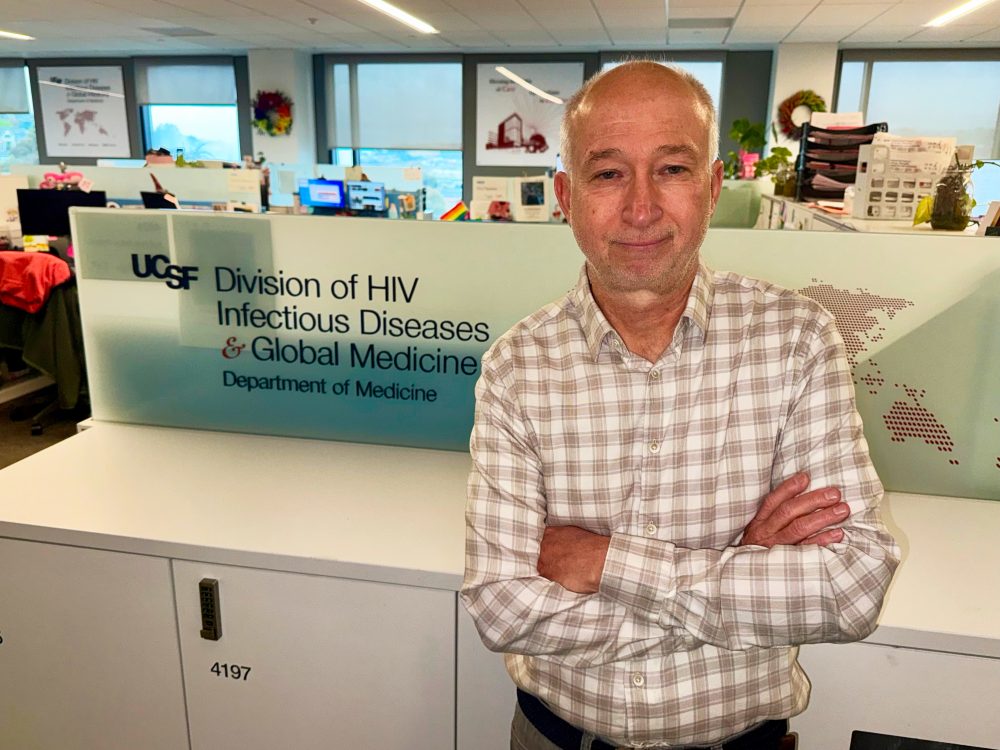
Dr. Steven Deeks from the University of California, San Francisco, who spearheaded the research, emphasized that more extensive and extended studies will be necessary to determine whether CAR-T cell therapy could provide lasting benefits for HIV patients.
“We find the fact that two people have had such a really sustained response provocative,” he said. “There is a real need for a one-and-done, safe and scalable cure … and this is one of the strategies that we’re pursuing.”
The findings were shared at the American Society of Gene and Cell Therapy conference in Boston.
Approximately 40 million individuals worldwide are currently living with HIV. Modern medications have transformed the AIDS-causing virus from a rapidly fatal condition into a controllable chronic illness, frequently reducing viral loads to undetectable amounts. However, this only works when patients can access and consistently take their medications. The virus remains dormant in bodily reservoirs and quickly returns when treatment stops.
Scientists have spent years searching for an elusive cure, investigating leads such as uncommon genetic variations that provide natural HIV resistance, and studying cases where a small number of HIV patients with specific cancers achieved cure or extended remission following stem cell transplants – a procedure too dangerous for most individuals.
The CAR-T treatment process involves extracting T cells (immune system fighters) from a patient’s bloodstream, genetically modifying them into “living drugs,” then reintroducing them to the patient. This approach is already successfully treating certain cancers and is under investigation for additional conditions.
Scientists at nonprofit drug developer Caring Cross designed CAR-T cells with two special capabilities for HIV treatment. These cells are programmed to more effectively locate and destroy HIV-infected cells while being engineered with defenses against the virus they’re meant to combat.
According to Caring Cross executive director Boro Dropulić, this protective enhancement should allow the cells to multiply sufficiently to maintain HIV suppression.
Deeks’ preliminary trial tested various dosing approaches in participants who discontinued their HIV medications on the same day they received CAR-T cells. No severe adverse reactions occurred. The initial three participants showed no improvement and returned to standard treatments.
Six additional participants received mild chemotherapy to create room for the new T cells. The two successful responders experienced HIV levels dropping to undetectable amounts, with only occasional slight increases when the CAR-T cells apparently resumed their work. A third participant had temporary improvement before returning to regular HIV therapy.
All three of these patients had begun their initial HIV treatment shortly after becoming infected, Deeks noted. This pattern makes sense since individuals treated early typically have less HIV hiding in their bodies and stronger immune systems.
Dr. Hans-Peter Kiem, a gene therapy specialist at Seattle’s Fred Hutchinson Cancer Center who wasn’t involved in the study, commented: “This is certainly very fascinating that they’ve had this positive response.” However, he warned that additional research will be required to confirm CAR-T’s effectiveness.
The approach is promising because it’s “boosting what our body, our immune system, can already do,” explained Andrea Gramatica, vice president for research at amfAR, The Foundation for AIDS Research, which supports efforts to develop more accessible versions.