
KATHMANDU, March 2 — The Himalayan nation of Nepal prepares for a crucial general election Thursday, following massive anti-corruption demonstrations that forced out the previous administration just months ago.
This landlocked country nestled in the mountains has struggled with governmental turmoil spanning multiple decades, witnessing 32 different administrations assume power since 1990 — remarkably, not a single one managed to serve out a complete five-year tenure.
The following timeline illustrates Nepal’s tumultuous political landscape:
ROYAL RULE ERA
Various royal dynasties governed Nepal until 1951, when the nation transitioned to parliamentary democratic rule.
Ten years afterward, King Mahendra dissolved the constitution and outlawed all political organizations. King Birendra, his successor, maintained absolute authority until 1990, when popular pressure transformed the absolute monarchy into a constitutional system.
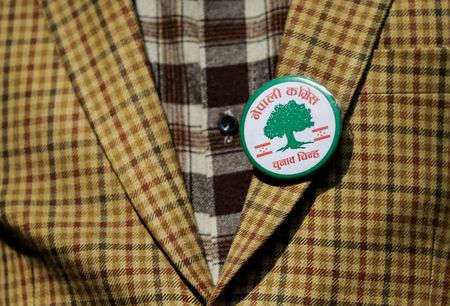
During the 1991 and 1999 electoral cycles, the moderate Nepali Congress — the nation’s most established political organization — secured decisive majorities needed for governance, yet failed to complete either full term due to both internal divisions and conflicts between parties.
Political chaos ensued. A shocking 2001 royal palace attack claimed the lives of King Birendra and eight additional family members, carried out by Crown Prince Dipendra, who subsequently took his own life, official investigations determined.
Frustrated by unreliable political leaders and facing a strengthening Maoist rebellion in rural areas, King Birendra’s replacement, Gyanendra, seized direct control in 2005, but mass street demonstrations forced his removal within twelve months.
The Nepali Congress led a coalition government starting in 2006, maintaining power for two years.
REPUBLICAN TRANSFORMATION
During 2008, a specialized assembly controlled by former Maoist insurgents, who had entered legitimate politics through a peace agreement, decided to eliminate the 239-year monarchy.
The Communist Party of Nepal branch led by the former insurgents then assumed control, yet the republican transition failed to bring governmental stability.
Fifteen administrative changes have occurred subsequently, with authority rotating among the ex-Maoist rebel organization, the centrist Communist Party of Nepal (Unified Marxist Leninist), and the Nepali Congress.
A fresh constitution took effect in 2015, following more than seven years of work by two separate constitutional conventions. However, this development also proved insufficient for creating lasting governments.
The fragmented political environment created widespread citizen disengagement, strengthening public beliefs that Nepal’s dishonest political establishment showed little concern for average people — who rank among the world’s most economically disadvantaged.
This past September, a brewing digital anti-corruption campaign erupted into youth-driven street demonstrations that removed the administration headed by Prime Minister K.P. Sharma Oli from the Communist Party of Nepal (UML).
Former Chief Justice Sushila Karki subsequently assumed temporary leadership responsibilities to supervise this week’s general election.