
DUBAI, United Arab Emirates (AP) — Military operations across the Middle East intensified Monday as Iranian-backed forces launched missile attacks against Israeli and Arab targets, while American and Israeli aircraft continued devastating strikes against Iranian positions amid escalating threats and warnings of additional U.S. military losses.
During the ongoing American and Israeli bombing campaign, senior Iranian security official Ali Larijani declared defiantly on X that “we will not negotiate with the United States.”
Iraqi pro-Iranian militia forces took credit for a drone assault on American personnel stationed at Baghdad’s airport, following their previous day’s attack on a U.S. installation in northern Irbil, while Cyprus reported that attackers targeted a British military facility on the island nation.
Combined Israeli and American forces struck Iranian missile installations and naval assets, reporting the destruction of the Iranian navy’s command center and numerous vessels. Iranian officials report more than 200 fatalities since the bombardment began.
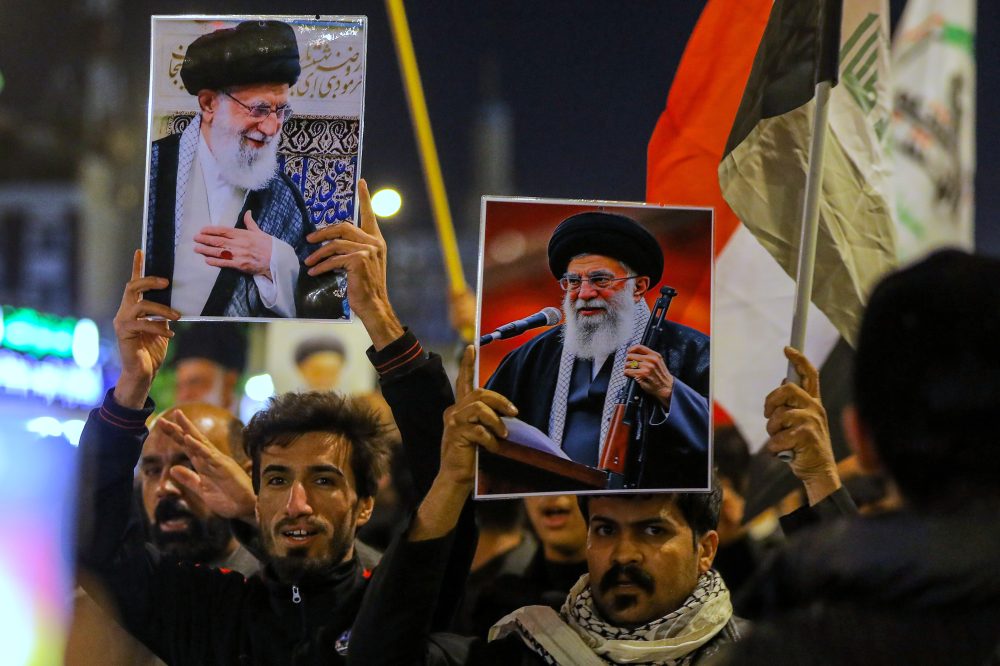
During continued attacks, Hezbollah announced it launched rockets from Lebanese territory into Israel early Monday, citing retaliation for Iranian Supreme Leader Ali Khamenei’s death and “repeated Israeli aggressions,” marking the militant organization’s first claimed strike in over twelve months. Israeli forces reported intercepting one projectile while others landed in uninhabited areas, with no casualties or property damage reported.
Israeli forces responded with strikes against Beirut, warning residents in approximately 50 eastern and southern Lebanese communities to evacuate before potential additional attacks, prompting mass civilian displacement.
Iranian forces have maintained missile bombardments against Israeli and Arab territories in a retaliatory campaign following Saturday’s joint American-Israeli operation that eliminated Khamenei and numerous senior Iranian officials.
Persian Gulf nations have threatened potential retaliation against Iran following strikes that damaged critical infrastructure and killed at least five non-combatants, while U.S. President Donald Trump pledged Washington would “avenge” three American service members killed in Kuwait.
“Sadly, there will likely be more before it ends,” Trump said. “That’s the way it is.”
Trump has encouraged Iranians to “take over” their government and, despite indicating openness to discussions with new Iranian leadership after Khamenei’s death, suggested Sunday that military action would continue indefinitely.
“Combat operations continue at this time in full-force, and they will continue until all of our objectives are achieved,” he said in a video message. “We have very strong objectives,” he added, without elaborating.
Military officials confirmed that B-2 stealth aircraft attacked Iranian ballistic missile complexes using 2,000-pound ordnance. Trump announced via social media that nine Iranian naval vessels were destroyed and the Iranian navy’s command structure was “largely destroyed.”
Indicating potential broader international involvement, Britain, France and Germany announced readiness to collaborate with American efforts to halt Iranian attacks, while Gulf Arab nations declared they maintained the option to respond to Iranian strikes.
Saturday’s attacks marked the second coordinated American-Israeli military action against Iran within eight months. During June’s 12-day conflict, Israeli and American forces significantly degraded Iran’s air defense systems, military command structure and nuclear capabilities. However, Khamenei’s death, ending his three-decade rule, creates an authority gap that heightens regional instability risks.