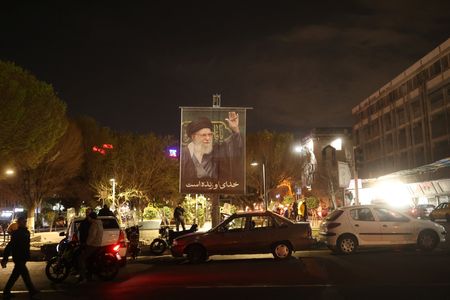

The death of Iran’s Supreme Leader Ayatollah Ali Khamenei has thrown the Islamic Republic into unprecedented turmoil, creating the nation’s most serious crisis since the 1979 revolution. The country now grapples with active warfare within its borders, an uncertain leadership transition, and growing domestic pressures.
However, five regional experts and officials warn against expecting Iran’s government to quickly fall apart. They explain that Iran’s political structure was intentionally designed to distribute power among religious institutions, security forces, and various power networks rather than depending on one person.
Danny Citrinowicz from the Atlantic Council explained, “The Iranian system is bigger than one man – removing Khamenei could harden the regime rather than weaken it.”
Ali Hashem, who researches at Royal Holloway, University of London, emphasized this point: “Iran was built to survive the loss of a leader. The danger is not a vacuum. It’s whether war and pressure push the system past the point where that resilience holds.”
The powerful Islamic Revolutionary Guards Corps (IRGC) sits at the heart of this durability, widely considered Iran’s actual power center. The future balance of control depends on whether the Guards become weakened by military defeats and internal conflicts, or instead become more entrenched while adopting a tougher, security-focused governing style.
Alex Vatanka from the Middle East Institute posed the crucial question: “The real question is whether Khamenei’s death takes the air out of the IRGC – the force that actually runs Iran – or whether they close ranks and harden. If rank-and-file officials decide there is no future here, I’m not sure even the Guards can keep the regime together.”
Regional sources indicate the Guards are unlikely to change their core ideology since their mission centers on defending the revolution. However, they could adapt their tactics if the system’s survival requires it.
One regional official noted, “They may evolve into a less hardline force…there are pragmatic mid-level members open to reducing tensions with the United States if necessary for the system’s survival.” This flexible pragmatism positions the IRGC as both the system’s protector and its most important indicator.
Jonathan Panikoff, formerly a U.S. deputy national intelligence officer for the Near East, believes Washington and Israel are pursuing a strategy designed not just to weaken Iran’s military response abilities, but to destabilize the government by eliminating senior leaders and testing lower-level loyalty.
He said this approach’s effectiveness would ultimately depend on whether security forces step back or switch sides if public protests return.
In the immediate period following Khamenei’s death, officials say Tehran’s main focus is demonstrating stability. Iran’s command structure remains operational despite significant pressure. While missile forces, air defenses, and top military leaders have been targeted, the system has managed to withstand these attacks so far.
Officials identify three critical challenges Iran now confronts: whether its security apparatus can maintain control under attack; whether the troubled leadership can select a successor or shift to a new governing approach; and whether an unsettled population might push the crisis toward deeper political breakdown.
Ali Larijani, a seasoned Iranian politician serving as secretary of Iran’s Supreme National Security Council, announced Sunday that a temporary leadership council would manage the transition period following Khamenei’s death.
Leaders like Larijani and Mohammad Baqer Qalibaf, who serves as parliament speaker, are viewed as potential transitional figures, representing a security-focused yet pragmatic approach.
Iran faces a succession process it has only experienced once before, and under much more stable circumstances. The constitution gives this responsibility to the Assembly of Experts, consisting of 88 clerical members. However, analysts suggest wartime conditions might force a more improvised solution – either a rapidly chosen successor or temporary collective leadership dominated by security officials.
Analysts say Khamenei worked to influence this outcome before his death. After a 12-day conflict with Israel in June that targeted him and his close associates, he identified preferred successors and ensured critical military positions had backup commanders ready.
His preferred candidates included judiciary chief Gholam-Hossein Mohseni-Ejei and Hassan Khomeini, a moderate cleric who is the grandson of the Islamic Republic’s founding leader.
Officials suggest the clerical assembly might postpone selecting Khamenei’s replacement due to concerns about assassination risks.
Israel indicates its military campaign will continue. Two sources familiar with the operations say Israel plans to keep targeting political and security institutions connected to Iran’s government, along with ballistic missile systems and launchers, attempting to weaken the state and create conditions for regime change.
One source revealed Israel wants the campaign to persist at least until Iran’s missile capabilities are eliminated, though they worry it might end early if Washington negotiates an agreement with Tehran.
Israeli Foreign Ministry spokesperson Oren Marmorstein told Reuters in Tel Aviv: “The objective is very clear: to remove an existential threat to the State of Israel. That threat is the Iranian regime. We have no quarrel with the Iranian people.”
A senior official with direct access to joint Israeli-U.S. military planning said it’s premature to predict Iran’s future political structure, noting the campaign remains in early stages with outcomes depending on ground developments.
The official stated Iranians must control their own future, adding this might become easier once the U.S. and Israel achieve “air supremacy” over Iran.
Continuing the pace and strength of attacks was viewed as essential for exploiting divisions within Iran and the IRGC after senior leaders’ deaths, the official added, though declined to detail what command breakdown might involve.
The conflict has created additional dangers. With foreign military forces operating in Iranian airspace and the state’s enforcement capabilities under pressure, analysts warn unrest could worsen if major anti-government demonstrations return, potentially causing security force defections and elevating civilian reform advocates.