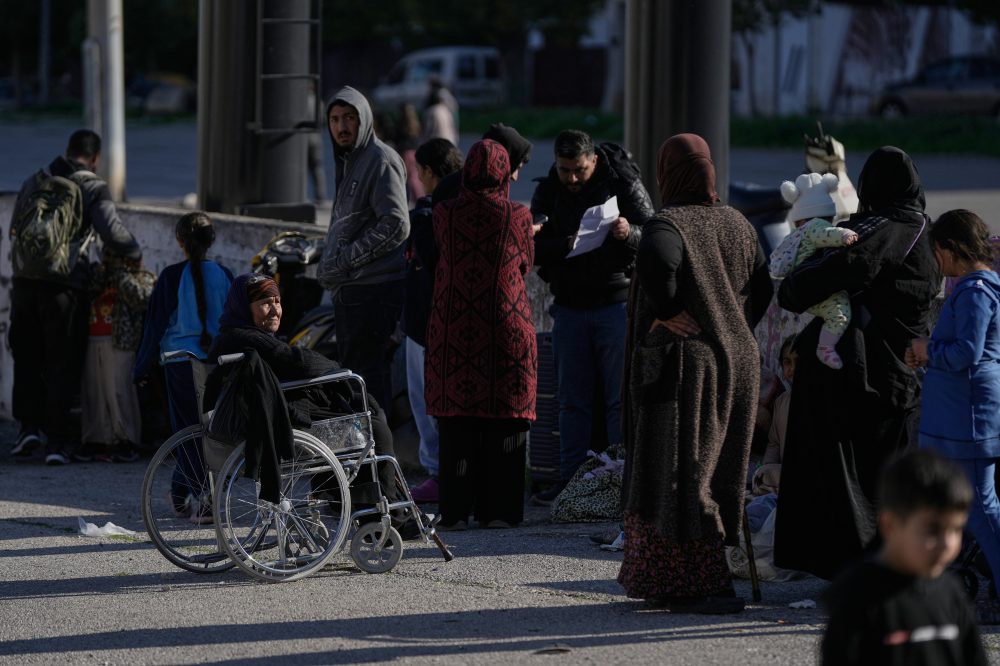

BEIRUT — Lebanese residents evacuated from southern regions and Beirut’s southern neighborhoods on Monday, finding safety in makeshift shelters at schools throughout the capital after renewed deadly violence between Israel and the Iranian-backed militant organization Hezbollah.
According to Lebanon’s Health Ministry, no fewer than 31 individuals lost their lives while 149 others sustained injuries during nighttime attacks across Beirut’s suburbs and southern Lebanese territories.
Lebanon’s administration on Monday harshly criticized Hezbollah’s choice to join Iran’s conflict against Israel and the United States, declaring the organization’s military operations unlawful and insisting it surrender its arsenal.
Traffic congestion plagued roadways through the night and into Monday as residents escaped what represented Israel’s most devastating bombardment of Lebanon in over twelve months, occurring just hours after Hezbollah launched cross-border missiles for the first time in more than a year.
Inside a public school quickly transformed into emergency housing, displaced families brought mattresses, plastic containers, and bundles of personal items. Additional families waited on sidewalks with their possessions, while some men smoked cigarettes as they anticipated available space indoors.
Community volunteers moved among the crowds, recording names as families occupied classrooms and assembled in the school’s outdoor areas.
Hussein Abu Ali, who escaped from a southern Beirut neighborhood with his spouse and kids, recounted when the attacks occurred.
“My son began shaking and crying,” he said. “Where are you supposed to go? I stepped outside, then back in because I was afraid of shooting in the air. I gathered my children and went down to the street.”
Nadia Al-Salman, forced to leave the southern community of Majdal Zoun, stated they “left our homes not out of fear or terror of the United States, but to fulfill our religious and legal duty to protect ourselves.”
“They do not intimidate or frighten us, and they will not make us retreat even an inch from the path of resistance,” she added.
Throughout the most recent Israel-Hezbollah conflict in 2024, over one million Lebanese citizens were forced from their homes at its peak. Many remain unable to return to southern residences, where border communities continue lying in devastation.
Hezbollah fired rockets toward Israel one day following the militant Palestinian organization Hamas’s assault on southern Israel on Oct. 7, 2023, which sparked the Gaza conflict. Following months of limited confrontations, the situation intensified into comprehensive warfare in September 2024 before a U.S.-mediated ceasefire temporarily ended hostilities two months afterward.
Following that truce, Israel has maintained almost daily bombardments in Lebanon, claiming its goal involves preventing Hezbollah’s reconstruction efforts.
Monday’s violence also represented the first occasion in over twelve months that Hezbollah acknowledged responsibility for attacking Israel. The organization released a statement claiming the bombardments occurred as retaliation for Iran’s Supreme Leader Ali Khamenei’s assassination and for “repeated Israeli aggressions,” characterizing it as “a legitimate defensive response.”
However, Lebanon’s administration declared Hezbollah’s military operations unlawful and insisted the organization surrender its weapons. Prime Minister Nawaf Salam announced following an urgent Cabinet session Monday that exclusively the state should determine war and peace matters.
He stated that Hezbollah’s military actions were prohibited moving forward and urged security forces to prevent missile or drone launches from Lebanon while detaining those responsible for the attacks. This represented the most severe position Lebanon’s government has adopted regarding Hezbollah, which maintains a political wing with parliamentary representation alongside its armed militants.
Israeli military officials overnight warned approximately 50 communities throughout southern and eastern Lebanon to evacuate. Military spokesperson Brig. Gen. Effie Defrin stated Israel maintains “all options on the table,” including possible ground operations in Lebanon and warned that “Hezbollah will pay a very heavy price.”
He reported Israel has mobilized more than 100,000 reserve forces since the conflict with Iran commenced Saturday.