
WASHINGTON — Iran’s emerging leadership has indicated readiness for diplomatic discussions with the United States following a significant U.S.-Israeli military operation that resulted in the death of the country’s supreme leader and other top-ranking officials, according to a senior White House official speaking Sunday.
The administration official, requesting anonymity due to the sensitive nature of ongoing discussions, revealed that President Donald Trump expressed he is “eventually” prepared for dialogue while emphasizing that current military actions “continues unabated.” The official did not identify who comprises Iran’s potential new leadership or specify how their diplomatic interest was communicated.
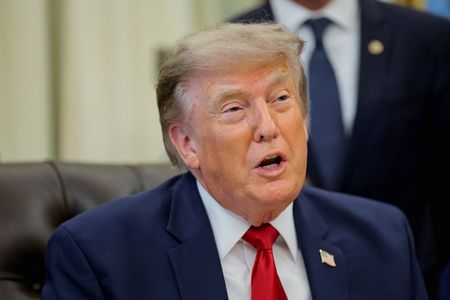
Speaking to The Atlantic on Sunday, Trump confirmed his intention to engage with Iran’s new governing structure. “They want to talk, and I have agreed to talk, so I will be talking to them,” he stated, refusing to provide details about when such conversations might occur.
This diplomatic possibility emerges alongside fresh information regarding the extensive preparation behind the coordinated U.S.-Israeli assault and specific Iranian targets that were struck.
According to U.S. Central Command, B-2 stealth aircraft targeted Iran’s ballistic missile installations using 2,000-pound munitions. This strategy echoes the military’s June approach when Trump authorized B-2 bombers to strike three critical Iranian nuclear facilities.
During last week’s State of the Union address, Trump asserted that Iran had been developing ballistic missiles capable of reaching American territory — a rationale he reiterated Saturday while announcing the Iranian bombardment had commenced.
Iran has not confirmed efforts to construct or pursue intercontinental ballistic missile capabilities. However, the U.S. Defense Intelligence Agency stated in a public report last year that Iran could potentially develop an operationally effective intercontinental ballistic missile by 2035 “should Tehran decide to pursue the capability.”
Prior to the attacks, the CIA spent months monitoring the whereabouts of senior Iranian officials, including Supreme Leader Ayatollah Ali Khamenei, according to someone with knowledge of the operation.
This intelligence was provided to Israeli counterparts, and strike timing was partially adjusted based on information about Iranian leaders’ locations, according to the source, who lacked authorization for public comment and requested anonymity.
The intelligence collaboration between the U.S. and Israel demonstrates the extensive preparation underlying the strikes, which extended into a second day Sunday after Khamenei’s death created uncertainty about the Islamic Republic’s future and heightened regional conflict risks.
The New York Times previously reported on the CIA’s pre-strike activities during the Israeli-U.S. operations.
Senator Tom Cotton, who chairs the Senate Intelligence Committee, refused to discuss specifics Sunday when questioned on CBS’ “Face the Nation” about intelligence sharing with Israel. However, he noted that monitoring the supreme leader’s movements and those of other hostile nation leaders “is obviously one of the highest priorities of our intelligence community.”
“Clearly, this operation is driven by intelligence collected by Israel and the United States that has once again proven that our nations have capabilities that no other nation on Earth has,” stated Cotton, R-Ark.
The U.S. routinely exchanges intelligence with allies including Israel. These partnerships and the precision of resulting intelligence often prove essential not only for military operation success but also for public backing.
Virginia Senator Mark Warner, the committee’s ranking Democrat, told The Associated Press that historically, “our working relationship with the Mossad and Israel is really strong.” Mossad represents Israel’s intelligence service.
Warner expressed significant concerns about the strikes’ justification, Trump’s long-range conflict strategy, and potential dangers facing U.S. military personnel. The military reported Sunday that three American soldiers died and five sustained serious injuries during the Iran operation.
“No tears will be shed over their leadership being eliminated but always the question is: OK, what next?” Warner remarked.