
Iranian officials are working urgently to select a new Supreme Leader following the death of Ayatollah Ali Khamenei, who led the nation for nearly four decades before being killed in an unexpected joint U.S.-Israeli attack.
This marks just the second occasion since Iran’s 1979 Islamic Revolution that the country must choose a new supreme leader. Candidates being considered span from hardline figures favoring continued confrontation with Western nations to reform-minded individuals supporting diplomatic solutions.
The supreme leader holds ultimate authority over all critical decisions in Iran, including matters of war and peace, as well as the nation’s controversial nuclear activities.
Currently, a temporary leadership group consisting of President Masoud Pezeshkian, hardline judicial leader Gholamhossein Mohseni Ejei, and prominent Shiite religious figure Ayatollah Ali Reza Arafi is steering Iran through what many consider its most significant crisis in recent decades. Foreign Minister Abbas Araghchi announced Sunday that officials expect to name a new supreme leader within the coming days.
The selection process falls to the Assembly of Experts, an 88-member body required by law to promptly designate a replacement. This assembly comprises Shiite religious leaders who win public elections after the Guardian Council, Iran’s constitutional oversight body, approves their candidacy.
Given Khamenei’s substantial influence over both religious institutions, analysts believe the next leader is unlikely to represent a dramatic shift in direction.
Among the leading possibilities is Khamenei’s son, a mid-ranking Shiite cleric widely viewed as a potential heir. While he maintains strong connections to Iran’s paramilitary Revolutionary Guard, he has no governmental experience. His appointment could create complications, given the Islamic Republic’s historical opposition to inherited leadership and its claims of offering a more equitable system.
Arafi, who sits on the interim governing council, received Khamenei’s personal endorsement for Guardian Council membership in 2019 before winning election to the Assembly of Experts three years later. The senior religious leader oversees an extensive network of Islamic schools.
Former President Hassan Rouhani, considered a moderate voice, led Iran from 2013 through 2021 and negotiated the significant nuclear deal with President Obama’s administration that President Trump later abandoned. Rouhani maintained Assembly of Experts membership until 2024, when he claimed officials prevented his reelection bid. He condemned this action as limiting Iranian citizens’ political involvement.
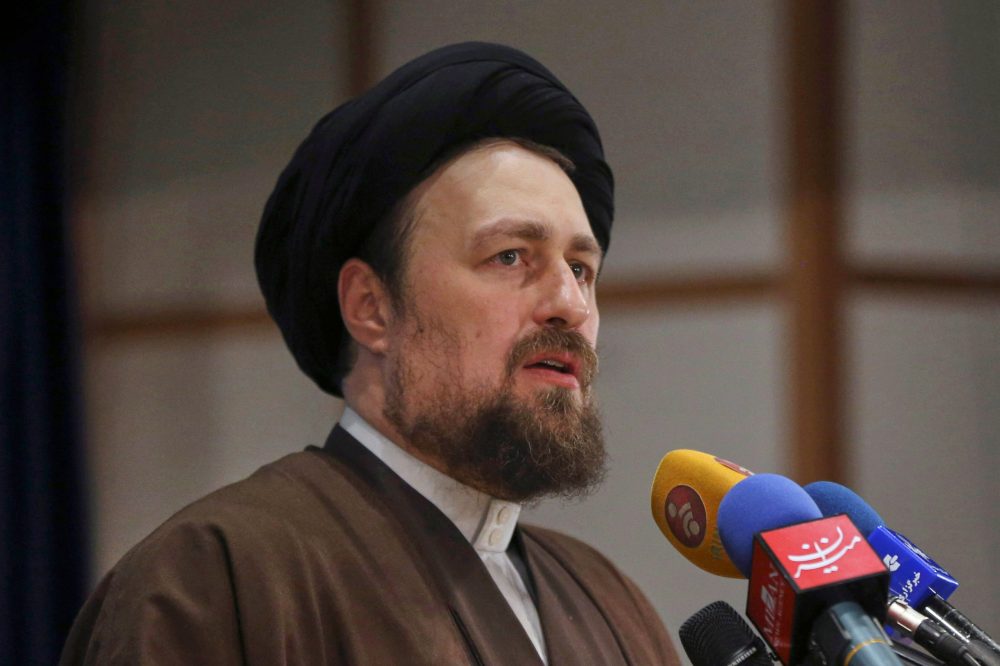
Hassan Khomeini represents the most notable descendant of Islamic Republic founder Ayatollah Ruhollah Khomeini. Though also viewed as relatively moderate, he lacks government experience and currently works at his grandfather’s memorial site in Tehran.
Senior cleric Mirbagheri enjoys support among hardline factions and serves on the Assembly of Experts. He maintained close relationships with the late Ayatollah Mohammad Taghi Mesbah Yazdi, another hardline figure who argued Iran should retain the option to develop “special weapons,” widely understood as nuclear weapons.
During the COVID-19 outbreak, Mirbagheri criticized school closures as part of a “conspiracy.” He currently directs the Islamic Cultural Center in Qom, Iran’s primary center for religious education.