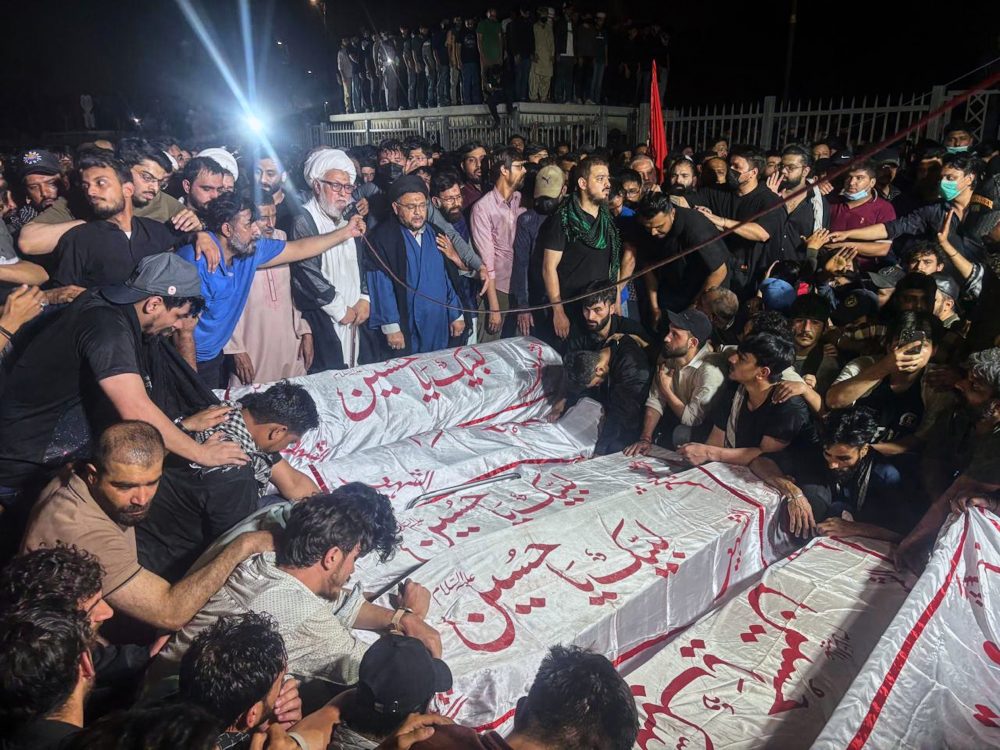

Military forces have taken control of two northern Pakistani cities under emergency curfew orders following deadly weekend violence that claimed at least 23 lives, government officials announced Monday.
The lockdown affects Gilgit and Skardu, where thousands of Shiite protesters stormed United Nations facilities on Sunday in response to U.S.-Israeli military operations that killed Iran’s Supreme Leader Ayatollah Ali Khamenei. The demonstrations turned destructive as crowds targeted the UN Military Observer Group offices that oversee Kashmir ceasefire monitoring and attacked UN Development Programme facilities in Skardu. Violence also erupted in Gilgit, where demonstrators set fire to a police station and caused damage to a school and local charity buildings. Regional police report 12 fatalities and 80 wounded in the Gilgit-Baltistan area alone.
UN spokesperson Stephane Dujarric confirmed Monday that protesters vandalized the UNMOGIP Field Station during the violent confrontations. “The safety and security of U.N. personnel and premises throughout the region remain our top priority, and we continue to closely monitor the situation,” Dujarric stated.
Regional government representative Shabir Mir announced Monday that authorities have restored order, with the emergency curfew scheduled to continue through Wednesday. Police commander Akbar Nasir Khan instructed citizens to remain in their homes due to “deteriorating law and order conditions.”
Violence also erupted in Pakistan’s major southern port of Karachi, where angry crowds breached the U.S. Consulate grounds Sunday, shattering windows and attempting to ignite the structure. Law enforcement responded with riot control measures including batons, tear gas, and live ammunition, resulting in 10 deaths and over 50 injuries. Additional violence in the capital city of Islamabad claimed one life as Shiite protesters attempted to march toward the American Embassy.
American diplomatic facilities suspended normal operations Monday, with the U.S. Embassy and consulates in Karachi and Lahore canceling scheduled visa services and citizen assistance due to security threats. Pakistani security forces have increased protection around all U.S. diplomatic properties nationwide, including enhanced security perimeters around the Peshawar consulate facility.
Financial markets reflected the regional instability Monday as the Pakistan Stock Exchange experienced significant losses, with the primary KSE-100 Index dropping nearly 10 percent. Market analysts attributed the widespread selling across all sectors to increased uncertainty following the Iranian attacks and resulting geopolitical tensions.
The violent demonstrations reflect growing fury throughout Pakistan, especially within Shiite communities, following the U.S.-Israeli military operations that eliminated Khamenei and other high-ranking Iranian officials. Although Shiites represent a minority population nationally, they constitute majorities in certain northern districts and throughout Khyber Pakhtunkhwa province along the Afghan border.
These domestic disturbances occurred as Pakistan continues cross-border military confrontations with Afghanistan that began Thursday following Afghan retaliatory strikes responding to Pakistani air operations conducted the previous Sunday. Pakistani forces have maintained ongoing border operations since the conflict began.