
TOKYO (AP) — Global tensions reached new heights Monday as international leaders grappled with the aftermath of coordinated US and Israeli military operations against Iran that resulted in the death of Supreme Leader Ali Khamenei.
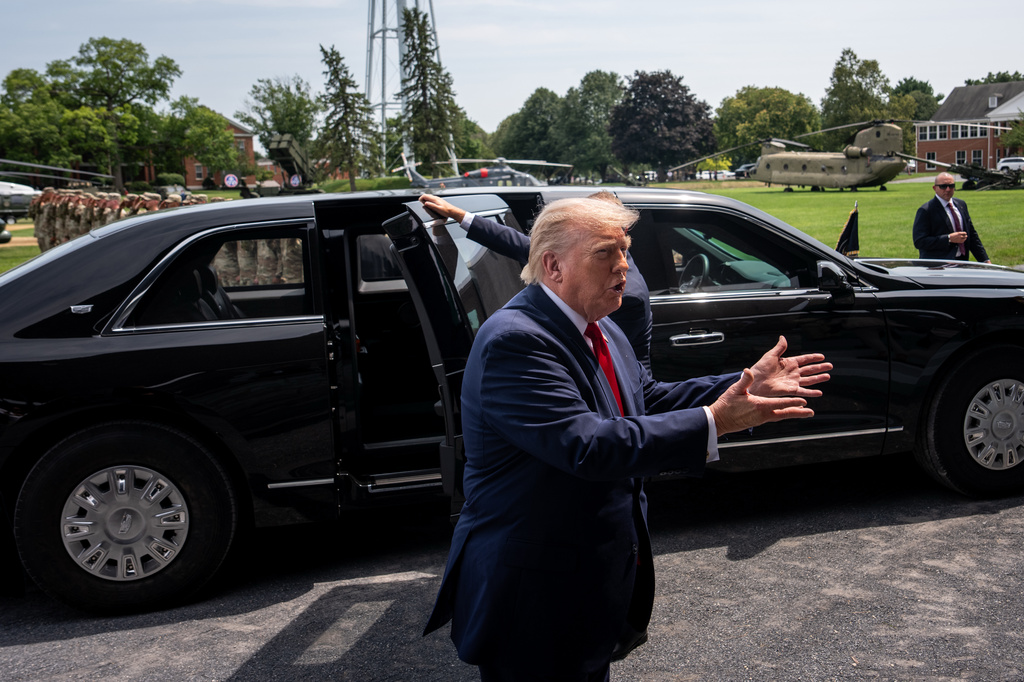
President Donald Trump, confirming Khamenei’s death in the strikes, described the military action as “the single greatest chance for the Iranian people to take back their Country.”
The international response revealed deep divisions, with many nations carefully avoiding direct commentary on the weekend strikes while focusing criticism on Iran’s retaliatory attacks. Several governments condemned Tehran’s missile strikes against Arab nations while remaining silent about the American and Israeli military operations.
Clear divisions emerged among key allies: Australia and Canada voiced explicit backing for the US actions, while Russia, China and Spain issued sharp rebukes of the strikes.
Following Saturday’s major assault by US and Israeli forces, Trump urged Iranian citizens to “seize control of your destiny” and overthrow the Islamic government that has controlled Iran for over four decades. Tehran responded by launching missiles and unmanned aircraft at Israeli targets and American military installations throughout the Middle East.
European leaders Keir Starmer of Britain, Emmanuel Macron of France, and German Chancellor Friedrich Merz issued a joint declaration urging Washington and Tehran to restart diplomatic discussions, emphasizing their preference for a peaceful resolution.
These three nations have spearheaded international efforts to negotiate agreements regarding Iran’s nuclear capabilities.
Thailand’s Foreign Affairs Ministry appealed for peaceful dialogue, requesting “all the parties to prevent the conflict from further deterioration, thereby undermining international peace and security and affecting innocent civilians.”
Oman issued a declaration stating the American military action “constitutes a violation of the rules of international law and the principle of settling disputes through peaceful means, rather than through hostility and the shedding of blood.” However, Omani Foreign Minister Badr al-Busaidi, who previously facilitated nuclear discussions between Washington and Tehran, maintained after two days of fighting that “the door to diplomacy remains open.”
The Arab League, representing 22 member nations, characterized Iran’s attacks as “a blatant violation of the sovereignty of countries that advocate for peace and strive for stability.” This coalition has traditionally criticized both Israeli and Iranian actions that threaten regional stability.
Senior diplomats from six Persian Gulf nations demanded Iran immediately cease attacks on their soil, arguing these actions violated national sovereignty and jeopardized regional peace.
Foreign ministers from Qatar, Saudi Arabia, the United Arab Emirates, Kuwait, Oman and Bahrain conducted an emergency virtual conference Sunday after the US-Israeli strikes triggered Iranian missile barrages against American bases and civilian targets including airports, hotels and residential neighborhoods.
Syria, previously Iran’s strongest regional partner under former President Bashar Assad, issued a statement exclusively condemning Iranian actions, demonstrating the new government’s efforts to strengthen relationships with regional economic powers and the United States.
Saudi Arabia declared it “condemns and denounces in the strongest terms the treacherous Iranian aggression and the blatant violation of sovereignty.”
Several European and Middle Eastern nations chose diplomatic language, avoiding appearances of either endorsing unilateral American military action or directly criticizing the United States.
Other countries responded more forcefully.
Russia’s Foreign Ministry labeled the strikes “a pre-planned and unprovoked act of armed aggression against a sovereign and independent U.N. member state.” Moscow accused America and Israel of using nuclear concerns as cover while actually seeking government overthrow.
Kremlin representative Dmitry Peskov expressed Monday that Russia felt deeply disappointed seeing the US and Israel attack Iran despite recent diplomatic progress.
China’s leadership said it remained “highly concerned” about the American and Israeli strikes, demanding immediate cessation of military activities and renewed negotiations.
Spain’s prime minister criticized the US-Israeli operations, advocating for immediate tension reduction and peaceful talks.
Canada, despite recent diplomatic friction with America, supported the military intervention. “The Islamic Republic of Iran is the principal source of instability and terror throughout the Middle East,” stated Prime Minister Mark Carney.
Australia’s Senate approved a resolution celebrating Khamenei’s death while rejecting provisions praising the United States and Israel.
Japanese Prime Minister Sanae Takaichi downplayed Monday concerns about economic impacts on Middle Eastern oil supplies following the strikes, noting Japan maintains domestic reserves lasting several months.
The Palestinian Authority condemned Iranian attacks on Arab states that have historically provided financial support, while making no reference to Israeli or American strikes.
Anxiety spread across multiple nations. Norwegian Foreign Minister Espen Barth Eide expressed to broadcaster NRK his worry that failed US-Iran negotiations could trigger “a new, extensive war in the Middle East.”
The Nobel Peace Prize-winning International Campaign to Abolish Nuclear Weapons criticized the US and Israeli military operations.
European Union leadership released a Saturday statement advocating restraint and diplomacy to guarantee “nuclear safety.”
Indian Prime Minister Narendra Modi said Monday that India remained troubled by the crisis and supported dialogue to reduce tensions.
Germany announced it would not participate in military operations against Iran but would consider protecting German troops at international bases in Jordan and Iraq if attacked, according to Foreign Minister Johann Wadephul.