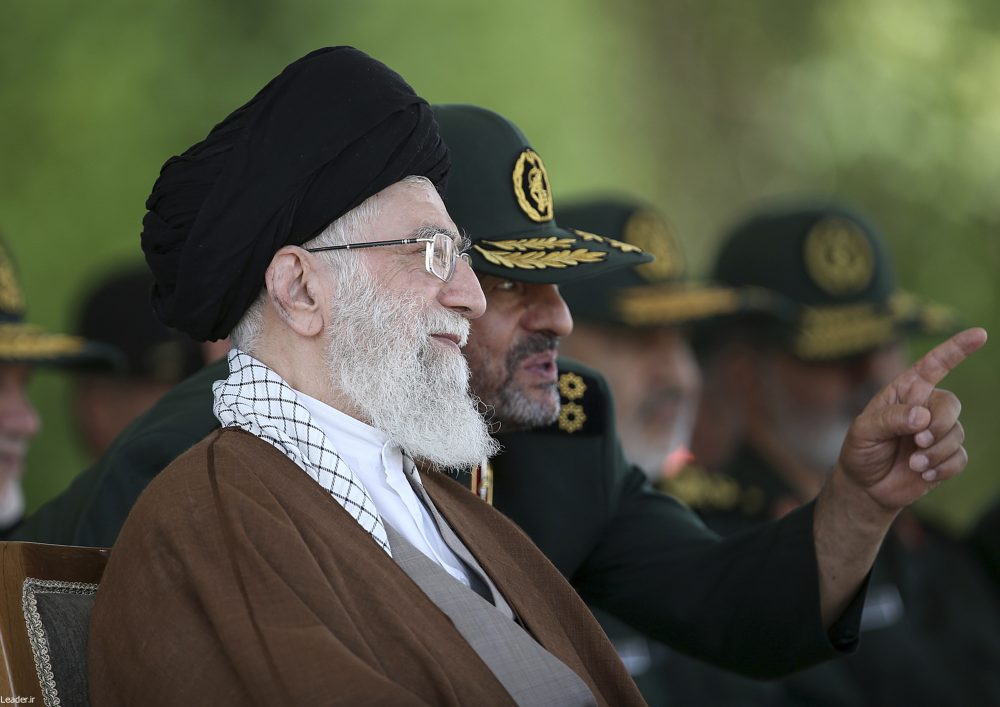

DUBAI, United Arab Emirates — The Islamic Revolutionary Guard Corps has transformed into one of Iran’s most influential military organizations since emerging from the 1979 revolution, operating independently from regular military forces while controlling the nation’s missile capabilities and international operations.
This elite force has gained renewed attention as regional tensions escalate following recent military exchanges between Israel and Iran that resulted in the death of Supreme Leader Ayatollah Ali Khamenei during coordinated airstrikes.
The organization originated during Iran’s 1979 Islamic Revolution with the mission of safeguarding the newly established Shiite clerical government. It developed alongside Iran’s conventional military during the devastating Iran-Iraq conflict of the 1980s, eventually gaining constitutional recognition.
Following the war’s conclusion, Supreme Leader Khamenei authorized the Guard’s expansion into commercial ventures, preventing its dissolution and enabling significant growth. Today, the organization operates Khatam al-Anbia, a major construction enterprise, along with companies managing infrastructure projects, port operations, telecommunications systems, and medical services including laser vision correction.
The Guard’s specialized international wing, known as the Quds Force, played a central role in establishing Iran’s self-described ‘Axis of Resistance’ targeting Israel and the United States. This network supported Syria’s former leader Bashar Assad, Lebanon’s Hezbollah movement, Yemen’s Houthi fighters, and various regional allies, gaining strength after the 2003 U.S.-led Iraq invasion.
American officials report that Guard operatives trained Iraqi insurgents in manufacturing sophisticated explosive devices used against coalition forces. Intelligence suggests the Quds Force and Iranian spy agencies recruited criminal organizations to target dissidents and perceived enemies internationally.
During the current Israel-Hamas conflict, Israeli authorities have detained citizens allegedly receiving Iranian instructions for surveillance and sabotage activities. Iran has rejected involvement in these alleged operations. The Guard also reportedly maintains extensive smuggling networks throughout the Middle East.
The organization operates independent intelligence services responsible for arresting and prosecuting dual citizens and individuals with Western connections on espionage charges through secret proceedings. International observers have criticized Iran for using these detainees as negotiating leverage, particularly regarding nuclear discussions.
The carefully constructed ‘Axis of Resistance’ faces unprecedented challenges following Hamas’s October 7, 2023 attack on Israel that sparked the Gaza war. While Iran supports Hamas, Israel has systematically targeted Iranian-backed organizations, severely weakening Hezbollah and repeatedly striking Houthi positions in Yemen.
Syria’s government collapsed in December 2024, eliminating a crucial Iranian ally and Guard partner. Direct missile exchanges between Israel and Iran have occurred under Guard oversight.
Israeli forces launched extensive airstrikes against Iran in June, killing senior Guard commanders on the first day and disrupting organizational structure. These attacks eliminated ballistic missile facilities and Guard-operated air defense installations.
Domestically, Iran’s theocratic government relies heavily on the Basij, the Guard’s volunteer militia, to suppress civil unrest. Protest footage from December 28 demonstrations shows Basij forces carrying firearms, clubs, and pellet weapons while beating demonstrators and pursuing them through city streets. A prominent Basij leader appeared on state television warning parents to keep children indoors while calling for force deployment against protesters.
The European Union designated the Revolutionary Guard as a terrorist organization in January, citing Iran’s violent suppression of domestic protests.
Iran’s foreign minister recently suggested military units operate independently from central government oversight when questioned about attacks on Gulf Arab nations that previously served as Iranian intermediaries. Strikes have targeted Oman, which facilitated recent nuclear negotiations with the United States, and Qatar, which has mediated with Tehran and shares a major natural gas field with Iran.
‘What happened in Oman was not our choice. We have already told our, you know, army, armed forces to be careful about the targets that they choose,’ Abbas Araghchi told Al Jazeera on March 1. ‘As a matter of fact, our, you know, military units are now in fact independent and somehow isolated and they are acting based on instructions — you know, general instructions — given to them in advance.’
While militaries worldwide develop contingency plans for wartime scenarios, including government disruption, Iran presents unique concerns given the Guard’s control over extensive ballistic missile arsenals and drone stockpiles.
Araghchi’s statements may serve to justify recent attacks while attempting to reduce tensions with Gulf Arab neighbors, who have expressed increasing frustration over continued strikes despite recent diplomatic efforts.