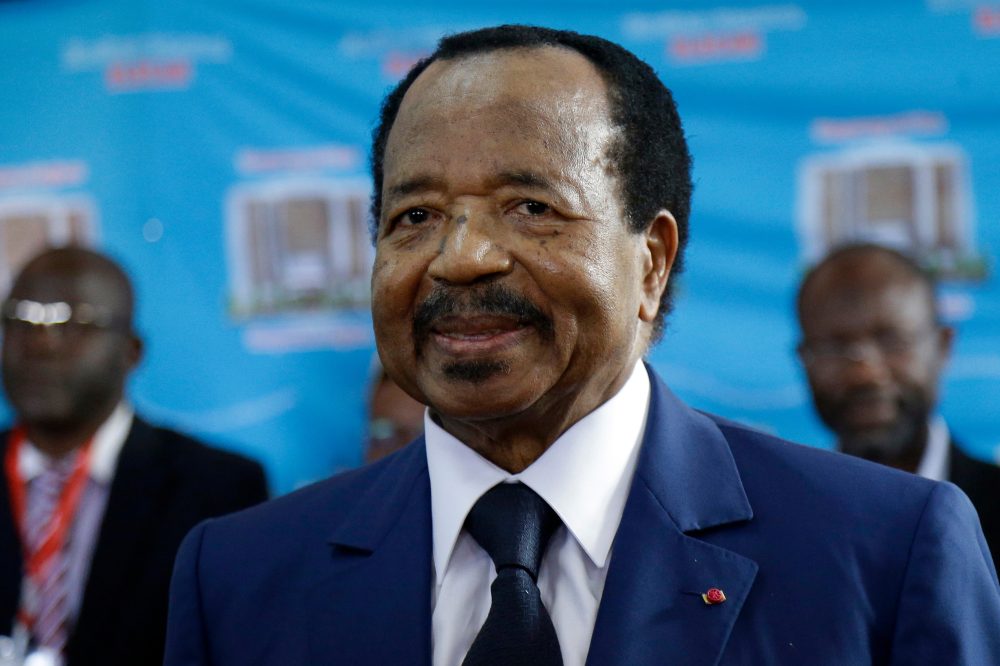

YAOUNDE, Cameroon — Legislators in Cameroon have voted decisively to restore the vice presidency role through a constitutional change that opposition leaders claim will expand the already extensive authority of 93-year-old President Paul Biya.
Biya stands as the globe’s most senior head of state and has governed the central African country for more than four decades since taking power in 1982. He secured his eighth presidential term in a contested election last year that drew widespread criticism.
During Saturday’s combined legislative session involving both chambers, lawmakers passed the controversial measure by a vote of 200 in favor, 18 opposed, and 4 abstentions. The primary opposition party refused to participate in the proceedings, and Biya is anticipated to formally enact the legislation.
Under the new constitutional provision, the elderly president gains complete discretion over the vice presidential role, including the power to select and remove the officeholder without restriction. The deputy would only possess authority specifically granted by Biya. Should the president pass away, step down, or become unable to serve, the vice president would assume temporary leadership for the balance of the seven-year term.
Legislators from the governing Cameroon People’s Democratic Movement praised the new law as essential for maintaining governmental continuity. Opposition voices, however, condemned the measure as an attack on democratic values that substitutes presidential selection for electoral legitimacy.
In an official statement, the opposition Social Democratic Front declared the constitutional change “fails to guarantee democratic legitimacy, inclusiveness, and proper institutional balance.”
SDF parliamentarian Fusi Namukong spoke to The Associated Press about his concerns regarding the legislation’s implications. “It’s not democratic. This is a republic, and in a republic, those who wield power at the highest level of the state should be elected and not appointed,” Namukong stated, adding that the law creates conditions for monarchical rule.
The Cameroon Bar Association has also expressed alarm, cautioning that the amendment “erodes the democratic legitimacy (of) the presidential office” and weakens the nation’s constitutional framework.
Cameroon eliminated the vice presidential position in 1972 through a constitutional vote.
Questions about Biya’s physical condition have persisted as he frequently travels to Europe for extended periods, delegating administrative duties to senior party members and relatives. His victory in the 2025 election triggered significant demonstrations that resulted in at least four fatalities, highlighting increasing friction between the nation’s predominantly youthful population and its elderly president.