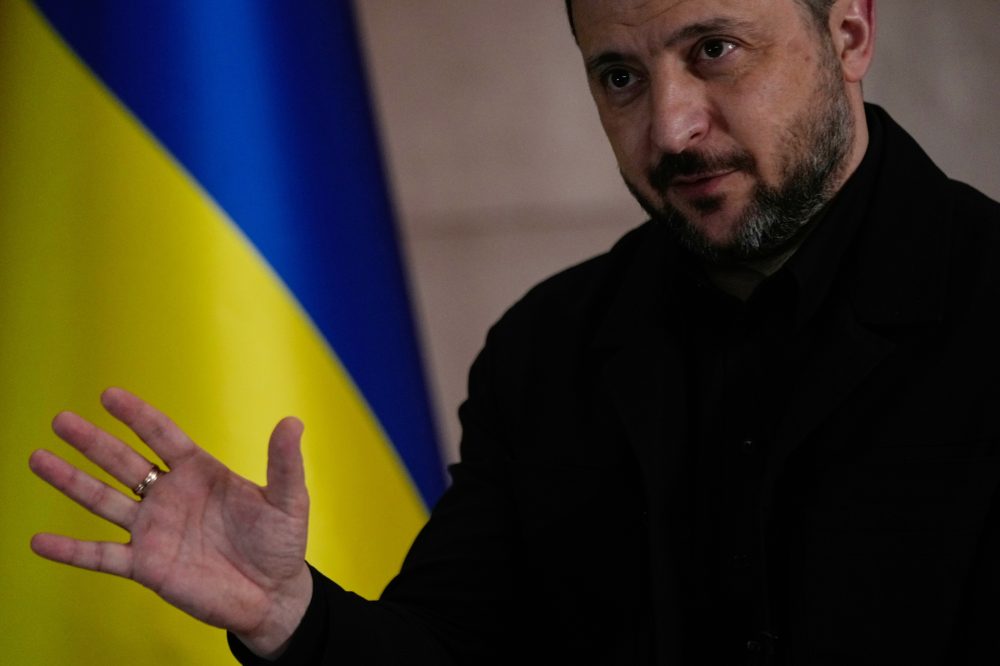

Ukrainian President Volodymyr Zelenskyy has voiced worries that an extended Middle East conflict involving Iran could diminish America’s military assistance to Ukraine, particularly affecting shipments of vital Patriot missile defense systems.
During an exclusive interview with The Associated Press in Istanbul on Saturday, Zelenskyy emphasized Ukraine’s urgent need for additional U.S.-manufactured Patriot defense systems to defend against Russia’s daily missile attacks.
Russia’s continuous bombardment of civilian areas since launching its full-scale invasion over four years ago has resulted in thousands of civilian deaths. Moscow has also systematically attacked Ukraine’s power infrastructure to disrupt production of Ukraine’s domestically developed weapons while depriving citizens of heating and water during winter months.
“We have to recognize that we are not the priority for today,” Zelenskyy said. “That’s why I am afraid a long (Iran) war will give us less support.”
Recent U.S.-mediated negotiations between Russian and Ukrainian representatives concluded in February without any progress. Zelenskyy, who has criticized Russia for “trying to drag out negotiations” while continuing its offensive, confirmed Ukraine maintains communication with American negotiators regarding a possible agreement to conclude the conflict and continues pushing for enhanced security assurances.
However, he noted that even these conversations demonstrate a wider shift in attention away from Ukraine.
Zelenskyy’s primary worry centers on Patriot systems — crucial for stopping Russian ballistic missiles — since Ukraine currently has no viable substitute.
These American defense systems were never provided in adequate numbers initially, Zelenskyy explained, and if the Iran conflict continues, “the package — which is not very big for us — I think will be smaller and smaller day by day.”
“That’s why, of course, we are afraid,” he said.
Zelenskyy had hoped European allies would assist with Patriot acquisitions despite tight availability and restricted U.S. manufacturing capacity.
However, the Iran conflict, now entering its sixth week, has created ripple effects throughout the global economy and drawn in much of the broader Middle East, further stretching these already scarce resources, redirecting stockpiles and leaving Ukrainian cities more vulnerable to missile strikes.
For Ukraine, a primary goal involves weakening Russia’s economy and making the conflict financially unsustainable. Rising oil prices caused by Iran’s blockade of the Strait of Hormuz are undermining this approach by increasing the Kremlin’s petroleum revenues and strengthening Moscow’s ability to continue its military campaign.
During his AP interview, Zelenskyy noted that Russia benefits economically from the Middle East conflict, pointing to the partial relaxation of American sanctions on Russian oil.
“Russia gets additional money because of this, so yes, they have benefits,” he said.
To maintain Ukraine’s prominence on the international stage, Zelenskyy has proposed sharing Ukraine’s combat experience with the United States and allies to create effective defenses against Iranian attacks.
Ukraine has countered Russia’s evolving deployment of Iranian-manufactured Shahed drones with increasing sophistication, technological creativity and cost efficiency.
Russia substantially altered the original Shahed-136, renaming it the Geran-2, improving its capacity to avoid air defenses and enable mass production. Ukraine countered with rapid innovations, including affordable interceptor drones designed to track and eliminate incoming threats.
Zelenskyy indicated Ukraine is prepared to share with Gulf Arab nations targeted by Iran its knowledge and technology, including interceptor drones and naval drones, which Ukraine manufactures in surplus quantities with funding from American and European partners.
In exchange, these nations could assist Ukraine “with anti-ballistic missiles,” Zelenskyy said.
In late March, as the Iran conflict intensified, Zelenskyy traveled to Gulf Arab states to promote Ukraine’s unique expertise in countering Iranian-made Shahed drones, resulting in new defense cooperation partnerships.
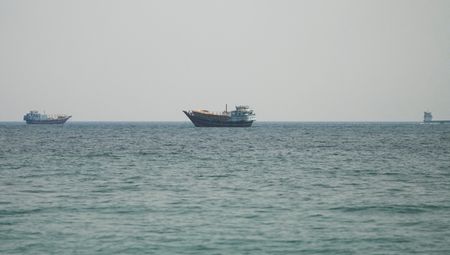
Zelenskyy has also presented Ukraine as a potential ally in protecting global shipping lanes, offering help in reopening the Strait of Hormuz by sharing Ukraine’s knowledge of securing maritime passages in the Black Sea.
Zelenskyy was in Istanbul for discussions with President Recep Tayyip Erdogan, one day after the Turkish leader conversed with Russian President Vladimir Putin.
Zelenskyy said they explored peace negotiations and a potential leaders’ summit in Istanbul. He also mentioned that new defense agreements between the two nations could be finalized soon.
Each year as weather conditions improve, Russia intensifies its grinding war of attrition. Nevertheless, it has failed to capture Ukrainian cities and has achieved only marginal advances across rural territories. Russia controls approximately 20% of Ukraine, including the Crimean Peninsula, which Russia annexed in 2014.
Along the roughly 1,250-kilometer (750-mile) battle line extending across eastern and southern Ukraine, undermanned Ukrainian forces are preparing for a renewed offensive by Russia’s larger military.
The commander-in-chief of Ukraine’s armed forces, Gen. Oleksandr Syrskyi, reported that Russian forces have recently made coordinated attempts to penetrate defense positions in multiple strategic locations.
One principle Zelenskyy says he has maintained and will continue to uphold — territorial concessions and surrendering land will not be part of Ukraine’s negotiating position.