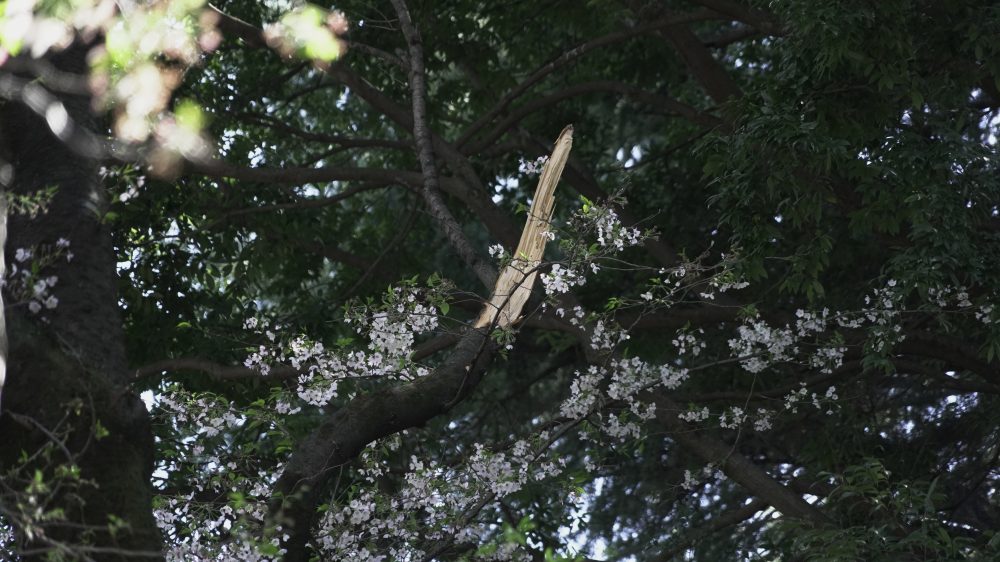

TOKYO (AP) — The iconic cherry blossom trees that draw millions of visitors to Tokyo each spring are showing dangerous signs of age, with several collapsing during this year’s peak viewing season.
Thursday brought fresh concerns when two separate trees toppled over — one striking a fence at Kinuta Park in central Tokyo, while another nearly crashed into the Imperial Palace moat at Chidorigafuchi greenway. Fortunately, no one was hurt in either incident.
The fallen tree at Kinuta Park stood nearly 60 feet tall with a diameter exceeding eight feet, making it among the park’s oldest specimens at more than six decades old, according to city officials. This marks the second collapse at that location this year, following a March incident where a falling cherry tree injured a pedestrian.
The pattern is becoming alarmingly common across the capital. Tokyo parks experienced 85 tree failures last year alone, resulting in three injuries, with cherry trees representing a significant portion of those incidents, reports Masakazu Noguchi, who oversees metropolitan parks.
The timing couldn’t be worse, as these collapses occur during hanami — the beloved tradition of gathering beneath blooming cherry trees that Tokyo helped popularize worldwide.
Tokyo assembly member Yutaka Kazama took to social media last month to voice his alarm, stating that “cherry blossom trees with their roots partially exposed or obviously rotten seem dangerous.” He urged comprehensive safety measures while cautioning against hasty tree removal.
The deterioration stems primarily from the trees’ advanced age and internal fungal infections that weaken their structure over time.
Tree specialist Hiroyuki Wada advises watching for warning signs including severe leaning, unusual flowering along lower trunk areas, and mushroom growth at the base. He notes that water retention in tree trunks following rainfall significantly increases collapse risk.
“Many trees in our daily lives were planted soon after the war and are now 70-80 years old and getting weaker,” Wada explained, pointing to extreme summer heat and prolonged dry periods as additional stress factors.
“I hope people think about the climate change through what’s happening to the cherry blossom trees, which is very symbolic,” he added.
In response to March’s incidents, city officials launched comprehensive tree health assessments at major Tokyo parks before this season’s peak bloom period.
At Kinuta Park alone, preliminary examinations covered more than 800 cherry trees. Officials removed several trees and installed warning signs near others, though Thursday’s fallen tree had not been marked as hazardous.
“At the moment, our measures are mostly temporary, not fundamental steps such as replanting,” Noguchi acknowledged. “We call on visitors to use caution because we cannot say it’s safe even after inspection.”
Inokashira Park, among Tokyo’s most celebrated viewing destinations, has implemented a long-term replacement strategy that has required removing dozens of aging trees in recent years. Social media users have expressed sadness over bare spots around the pond that once featured unbroken circles of pink blossoms.
Despite safety concerns, cherry blossom enthusiasts remain determined to enjoy the brief blooming period.
“I’m a bit worried, but I guess it’s OK if we stay away from tree trunks,” visitor Lisa Suzuki commented.
Fellow visitor Akira Kamiyashiki brought his daughter despite the risks, explaining that weekend rain forecasts made Thursday their best opportunity. “Seeing the keep-off signs, I now feel safe,” he noted.
Cherry blossoms, known as “sakura,” hold special significance in Japanese culture, typically reaching peak bloom from late March through early April as the nation begins its new academic and business year. The tradition of walking and picnicking beneath flowering trees remains deeply embedded in Japanese life.