
WASHINGTON – Fresh intelligence assessments from U.S. agencies indicate that Iran has no intention of releasing its control over the Strait of Hormuz anytime soon, as Tehran views its dominance of the critical oil shipping channel as its primary bargaining chip against America, three informed sources revealed.
These intelligence findings suggest Iran may continue restricting passage through the waterway to maintain elevated energy costs, potentially forcing President Donald Trump to seek a rapid resolution to the ongoing conflict that has lasted nearly five weeks and remains deeply unpopular among American voters.
The assessments also reveal that the military campaign, originally designed to eliminate Iran’s military capabilities, may paradoxically be strengthening Tehran’s regional influence by demonstrating its capacity to threaten this essential shipping route.
President Trump has attempted to minimize the challenges involved in reopening the Strait of Hormuz, through which one-fifth of global oil shipments pass. Last Friday, he seemed to indicate he might deploy American military forces to clear the passage.
“With a little more time, we can easily OPEN THE HORMUZ STRAIT, TAKE THE OIL, & MAKE A FORTUNE,” Trump wrote on his Truth Social platform.
However, military experts have consistently cautioned that using military force against Iran, which maintains control over one side of the strait, could result in significant casualties and potentially drag America into an extended ground conflict.
“In the attempt to try to prevent Iran from developing a weapon of mass destruction, the U.S. handed Iran a weapon of mass disruption,” stated Ali Vaez, who leads the Iran Project at the International Crisis Group, an organization focused on conflict prevention.
According to Vaez, Tehran recognizes that its capacity to influence global energy markets through its control of the strait “is much more potent than even a nuclear weapon.”
Trump’s position regarding potential American military action to reopen the strait has been inconsistent. While he has established ending Iran’s blockade as a requirement for any ceasefire agreement, he has also urged Gulf nations dependent on oil exports and NATO partners to spearhead efforts to restore passage.
A White House representative, speaking on condition of anonymity, stated that Trump remains “confident that the strait will be open very soon” and has made clear that Iran will not be permitted to control waterway traffic following the conflict’s conclusion.
However, the official acknowledged that Trump has also emphasized that other nations “have far more at stake in preventing this outcome” compared to the United States.
The CIA has not yet provided a response to requests for comment.
Iran’s outmatched Islamic Revolutionary Guard Corps has employed multiple strategies to make commercial shipping through the waterway too hazardous or uninsurable since Trump and Israeli Prime Minister Benjamin Netanyahu initiated their military campaign on February 28.
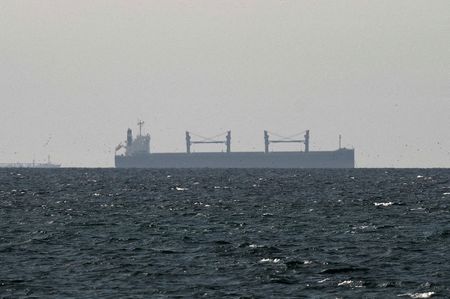
Through attacks on civilian ships, deployment of sea mines, and demands for transit payments, Iran has successfully halted traffic through the strait, causing global oil prices to reach multi-year peaks and creating fuel shortages in nations dependent on Gulf petroleum and natural gas.
Increasing energy expenses threaten to drive up inflation across America, creating political challenges for Trump as he confronts poor polling numbers while his Republican Party prepares for November’s midterm congressional elections.
According to the three sources, Iran shows no signs of relinquishing this strategic advantage in the near future, as warned in recent intelligence reports. The sources declined to specify which agencies produced these evaluations.
“It is certainly the case that now that Iran has tasted its power and leverage over the strait, it won’t soon give it up,” explained one source. All three requested anonymity when discussing the classified intelligence reports.
Military specialists emphasize that any operation to forcibly reopen the waterway would involve substantial risks.
The strait runs between Iran and Oman, measuring 21 miles across at its most narrow section, though the actual shipping channels are only 2 miles wide in each direction, creating vulnerable targets for both vessels and military personnel.
Even if American forces successfully captured Iran’s southern coastline and offshore islands, the IRGC could continue attacking them and maintaining waterway control using drones and missiles launched from Iran’s interior, according to defense experts.
“All it takes to disrupt traffic and deter vessels from passing through is one or two drones,” Vaez noted.
Several analysts believe that even after the conflict ends, Iran will be reluctant to surrender its ability to control strait traffic because the nation will require reconstruction funding, and collecting commercial shipping fees would provide one method of generating revenue.
Tehran “is going to look to maintain the leverage that they have rediscovered by disrupting traffic” through the strait, former CIA Director Bill Burns commented during a Foreign Affairs magazine podcast released Thursday.
Burns explained that Iran will attempt to use its waterway control capabilities to secure “long-term deterrence and security guarantees” in any peace agreement with America while gaining “some direct material benefits” such as charging passage fees to finance post-war rebuilding efforts.
“That,” he concluded, “sets up a really difficult negotiation right now.”