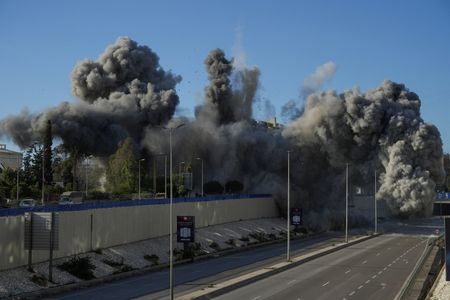

Israeli military forces launched airstrikes against Lebanon’s capital city on Friday evening, with officials stating they were targeting militant infrastructure as tensions continue escalating across the Middle East region.
The attacks occurred around sunset on Friday, with news reporters in the area hearing three powerful explosions that reverberated throughout Beirut. Many residents were observing Good Friday at the time of the strikes, despite the ongoing military hostilities affecting the religiously diverse nation.
Prior to the bombardment, Israeli military officials had issued evacuation warnings to civilians living in seven neighborhoods within Beirut’s southern suburbs, alerting them of planned military operations. Local Lebanese news sources confirmed the strikes targeted these southern suburban areas, though immediate casualty reports were not available.
Israeli military representatives stated they were “striking terror infrastructure in Beirut” but declined to provide additional operational details about the mission.
The conflict has expanded significantly since Israeli forces moved into southern Lebanon, with military leaders vowing to establish control over the region extending to the Litani River. This proposed security buffer zone is intended to protect Israeli communities in the north from attacks by Iran-supported Hezbollah fighters.
The current military campaign began after Hezbollah launched attacks into Israeli territory on March 2, acting in support of Iran following joint US-Israeli military operations against Iranian targets. Since then, the conflict has broadened to include Iranian strikes against Israeli positions, American military bases, and Gulf region nations.
More than one million Lebanese civilians have evacuated their homes due to the fighting, with Israeli evacuation orders now covering approximately 15 percent of Lebanese territory. Casualty figures show over 1,300 people have died in Israeli military strikes, while roughly one-fifth of Lebanon’s population has been forced to relocate.
Despite the widespread displacement, tens of thousands of Lebanese residents have chosen to remain in southern Lebanon communities, including approximately 9,000 Lebanese Christians living in border towns who have told international media they are determined to stay despite advancing military operations.
On Friday, American diplomatic officials in Beirut issued security warnings stating that “Iran and its aligned terrorist militias may intend to target universities in Lebanon.” This alert followed Iranian threats to retaliate against American universities in the region after Iranian educational institutions were damaged in recent attacks.
The American University of Beirut responded to these security concerns by moving to online instruction earlier this week. The US embassy also renewed its advisory for American citizens to leave Lebanon immediately.
The violence has also affected international peacekeeping forces, with three United Nations peacekeepers injured Friday in an explosion at a UN position near the Lebanese border. Two of the injured peacekeepers sustained serious injuries, though the cause of the explosion remains under investigation. This incident follows the deaths of three other UN peacekeepers earlier this week.
Lebanese military forces have withdrawn from southern border areas to avoid direct confrontations with advancing Israeli troops, leaving civilian populations in contested zones.