
Iranian state television has broadcast footage of Iraqi Popular Mobilization Forces (PMF) fighters crossing into Khuzestan province, triggering widespread anger among Iranian citizens who believe these foreign military units are being deployed to suppress domestic opposition and protect the current government.
Iranian President Masoud Pezeshkian expressed gratitude on Tuesday through a social media post, thanking the “Muslim people of Iraq” for supporting Iran during what he characterized as an “unjust” conflict. He wrote, “I warmly shake the hands of the people, officials, and fighters of Iraq in Mesopotamia.”
Local residents in Khuzestan report that approximately 1,000 armed PMF members have crossed the border under the pretense of delivering humanitarian assistance, though they arrived with military vehicles and equipment while displaying official Iraqi flags. Sources suggest additional forces may have entered covertly.
The deployment violates Iran’s own constitutional provisions under Article 146, which prohibits foreign military forces from operating on Iranian territory. Similar criticism arose previously when Russian forces used Iranian military facilities.
A Khorramshahr resident spoke to The Media Line on Wednesday, describing widespread community distress over the PMF arrival, with some locals comparing it to the Iraqi occupation of their city during the Iran-Iraq War four decades ago. During that conflict, Iraqi forces held Khorramshahr for nearly two years.
The PMF deployment extends beyond Khorramshahr to include Abadan and Ahvaz, with forces positioned to assist Iranian military units during potential civil unrest or a possible American ground invasion of Khuzestan province.
Reports indicate PMF units previously entered Iran in January, working alongside the Islamic Revolutionary Guard Corps (IRGC) in violent suppression of civilian demonstrators. Protesters reported seeing non-Persian speaking armed personnel in Tehran firing on demonstrators. Social media footage allegedly shows PMF fighters departing Iran following the brutal crackdown that human rights organizations say resulted in approximately 10,000 deaths over several days beginning January 8.
The PMF also participated in crushing the Woman, Life, Freedom protests during fall 2022 in Tehran and other Iranian cities, working alongside proxy groups including Hezbollah. Witnesses reported these foreign forces operating throughout Tehran as prolonged nationwide demonstrations led by women had weakened Iran’s domestic security apparatus.
Iran has increasingly relied on various mercenary organizations to suppress major public demonstrations, including the Afghan Shiite Fatemiyoun Division and Pakistani Shiite Zainabiyoun Brigade, both of which maintain permanent bases inside Iran. Unlike these groups, PMF fighters typically do not establish permanent Iranian facilities.
PMF elements maintain an unofficial presence at the Ghayour military compound in Ahvaz, which serves as a training facility for Arabic-speaking forces, primarily Iraqis and Lebanese. Other Iranian proxy organizations also operate from this location, including Kata’ib Hezbollah, Harakat al-Nujaba, Asa’ib Ahl al-Haq, Kata’ib Sayyid al-Shuhada, and smaller groups like Saraya Awliya al-Dam.
While the PMF attempts to portray itself as a grassroots organization supported by Iraqi Shiites and remains officially part of Iraq’s military structure despite recent tensions, other groups function primarily as Iran’s operational forces in Iraq, conducting terrorist activities, sabotage operations against Kurdish populations, kidnappings, assassinations, and attacks on U.S. military installations.
PMF leadership also receives training at IRGC military academies, while core members travel regularly to Qom for ideological and political education.
Iran is utilizing the PMF’s extensive urban warfare experience to prepare for potential internal conflicts, assist in city control during a possible U.S. ground assault, and reinforce its own weakened military forces, which are reportedly now recruiting Basij militia members as young as 12 for urban area control.
Middle Eastern security analyst Shukriyga Bradost explained to The Media Line that the PMF’s open entry into Iran reflects the group’s necessity to maintain the Islamic Republic’s stability. “The fall of this regime would effectively mean the end of the PMF and other Shiite groups tied to the Islamic Republic regime,” she stated.
According to Bradost, PMF forces are being positioned for potential use against U.S. ground operations. “If there is a collapse within the regime’s military ranks, they could use the PMF against the United States, because since 2009 this group has had both experience fighting the Americans and also cooperating with them in Iraq, and therefore has greater familiarity with U.S. military forces,” she explained.
The Virginia Tech analyst and international security researcher suggested that U.S. and Israeli forces may have avoided striking PMF units before their Iranian entry because using these forces against protesters could intensify tensions between Iranian security forces and demonstrators, potentially leading to military confrontation or civil war.
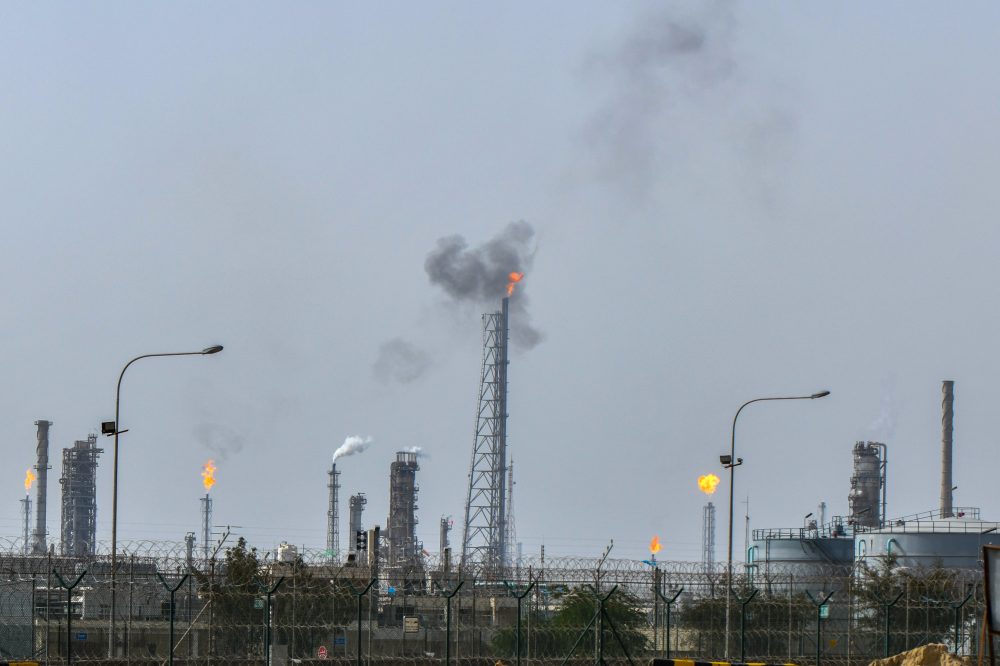
Intelligence reports indicate PMF fighters have been stationed near Abadan’s oil refinery in strategically sensitive locations. These forces reportedly entered Khuzestan through both the Basra border and Shalamcheh crossing, traveling in fully equipped Toyota Hilux vehicles while carrying Iraqi flags and receiving official welcomes from Iranian government representatives.
Meanwhile, several PMF brigades in Iraq that had attacked Iranian Kurdish forces and threatened U.S. positions have come under American military strikes, resulting in reported casualties among their members.
Iraqi officials, concerned about potential U.S. retaliation for PMF deployment into Iran, believe Prime Minister Mohammed Shia al-Sudani’s government has implicitly opposed the entry of PMF fighters into Iran. According to Arab media reports, Baghdad has emphasized that only the commander-in-chief may authorize Iraqi armed forces movements.
Despite his close ties to Iran, Sudani has previously expressed concern about Iraq becoming a battlefield in an Iranian-American conflict. Other Iraqi officials and politicians have similarly warned against Iraq’s involvement in a war between Iran and the United States.
Recent Arab media reports indicate that Kata’ib Hezbollah, considered part of the PMF, also entered Khuzestan without Iraqi government coordination. Al-Araby al-Jadeed reported that several armed groups allied with Iran’s government, including Kata’ib Hezbollah, have defied Iraqi military and security directives requiring them to avoid border areas and parts of Baghdad, while the Iraqi government has remained silent on these violations.
Former Baghdad Post editor-in-chief Sufyan al-Samarrai wrote on social media that, contrary to Iranian government claims, the PMF convoy did not consist of food aid but secretly transported “important equipment, concealed light weapons, and missiles mounted on PMF pickup trucks, in preparation for street warfare in Iranian cities.”
On Tuesday, Iraqi Foreign Minister Fuad Hussein acknowledged in an Al Arabiya interview that Iraq had been unwillingly drawn into the conflict between Iran and the United States.
This development occurs as the PMF’s political influence in Iraq has become increasingly fragmented in recent years, particularly following Ali Khamenei’s death. A faction now identifying more closely with Iraqi Shiite religious authority Ayatollah Ali al-Sistani and Muqtada al-Sadr than with serving as Iran’s proxy force is distancing itself from Tehran’s agenda.
Both Sadr and Sistani are increasingly separating themselves from Iran’s Islamic Republic. Sistani did not issue a specific statement recognizing Mojtaba Khamenei as Iran’s leader, with his office merely expressing wishes for success to the former leader’s “successor.”
Sadr limited his response to a brief social media message following Ali Khamenei’s death, indicating a deepening divide between significant portions of Iraq’s Shiite religious establishment and Iran’s Islamic Republic, naturally placing the PMF in the center of this crisis.
Earlier, amid these disagreements, some PMF elements, including the Abbas Combat Division, separated and joined Iraq’s Ministry of Defense directly. The force is now split between a pro-velayat faction serving Iran’s Islamic Republic and a marjaiya faction loyal to Sistani. Another group, Saraya al-Salam, identifies itself as following Sadr’s orders.
The PMF appears to be losing Iraqi support, even among Shiites, with far more people turning away than in previous years. A recent IIACSS research group poll found that trust in the pro-velayat faction across Iraqi society dropped to approximately 28%, partly due to its service to Iran’s Islamic Republic within Iraq.
Iranian and Iraqi social media users have posted opposition to PMF presence on various platforms. Tishreen movement supporters, using the hashtag “Iraq is not (Iran’s) backyard,” have sharply criticized the economic consequences of PMF forces entering Iran.
Iranian users have expressed surprise that Israel or the United States did not attack the PMF, and, concerned about the likely reasons behind the Iraqi proxy group’s entry into Iran, have been discussing various scenarios.
One user named Mahtab wrote: “The country’s infrastructure has been destroyed, but the regime is still standing, and the PMF enters the country without coming under air attack. Isn’t that strange?”