
Cuban authorities commenced the release of inmates from detention facilities Friday, just hours after the island nation’s communist leadership announced a comprehensive prisoner amnesty amid heightened tensions with Washington.
The government plans to free more than 2,000 individuals in what state media described Thursday as a “sovereign and humanitarian” action, marking the most extensive such release in a decade.
Washington officials confirmed they are carefully observing whether individuals they classify as political detainees will be included in the releases.
“It is unclear how many, if any, political prisoners will be released,” the spokesperson said. “We continue to call for the immediate release of the hundreds of other brave Cuban patriots who remain unjustly detained.”
The issue of political detainees has remained a significant obstacle in diplomatic discussions between the two nations. If Cuba were to free all or most political prisoners, it would represent a substantial compromise in current negotiations.
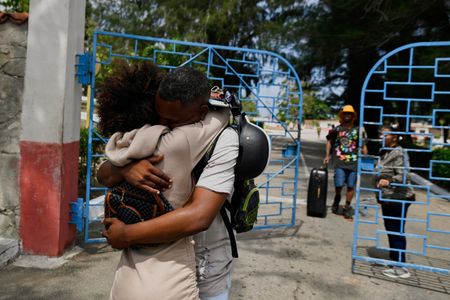
Throughout Friday morning, a continuous flow of men and women emerged from La Lima detention center in Guanabacoa, located on Havana’s outskirts. Reuters interviewed several individuals who received pardons for various offenses including stealing and corruption, though none had participated in anti-government demonstrations.
“Long-live freedom,” shouted one man, convicted of theft, as he embraced his sister, waiting for him outside the prison gates. Others departed more quietly, some in tears, holding a single white slip of paper that stated the reason for their discharge was a “pardon.”
Abel Tamayo, who received a corruption conviction in 2024 and gained freedom Friday, described the amnesty as evidence of the Cuban leadership’s willingness to embrace reform.
“This shows they are open to everything, open to dialogue, open to national unity,” Tamayo told Reuters. “There are many people who are imprisoned who may well be bad people, but there are also many who are good people.”
Cuban officials have consistently denied making policy decisions in response to American demands.
Thursday evening’s official announcement made no reference to either the United States or the Vatican, which participated in previous amnesty efforts.
Human rights organizations, including some that receive American funding, claim Cuba detains hundreds of political prisoners, though exact numbers vary, and have pledged to closely examine the release proceedings.
Cuban authorities maintain they hold no political prisoners. Government officials argue those jailed following anti-government demonstrations were convicted of legitimate offenses including disturbing the peace, resisting law enforcement, theft, and property damage.
The Cuban Observatory for Human Rights, a Madrid-based organization that has received U.S. funding, reported that by midday Friday it had not documented the release of any individuals they classify as “prisoners of conscience.”
The island nation typically does not make public the identities of prisoners freed during such amnesties, making verification by advocacy groups more difficult.
Multiple sources informed Reuters that detention facilities throughout the Havana area and other Cuban regions had started releasing inmates.
During late 2015, Cuban leadership pardoned 3,522 prisoners to mark Pope Francis’ island visit during improved U.S.-Cuba diplomatic relations under former President Barack Obama.
In March, Cuba released 51 prisoners through an arrangement with the Vatican.
Rights organizations noted that some, though not all, of those freed last month were individuals they regarded as political prisoners.