
Iranian forces have brought down two American military aircraft in a rare escalation that represents the first enemy shootdown of US warplanes in over two decades, highlighting Tehran’s persistent defensive capabilities even after President Donald Trump claimed the nation had been “completely decimated.”
The aircraft losses occurred five weeks following initial US and Israeli bombardments of Iran, despite Trump’s recent assertion that Tehran’s “ability to launch missiles and drones is dramatically curtailed.”
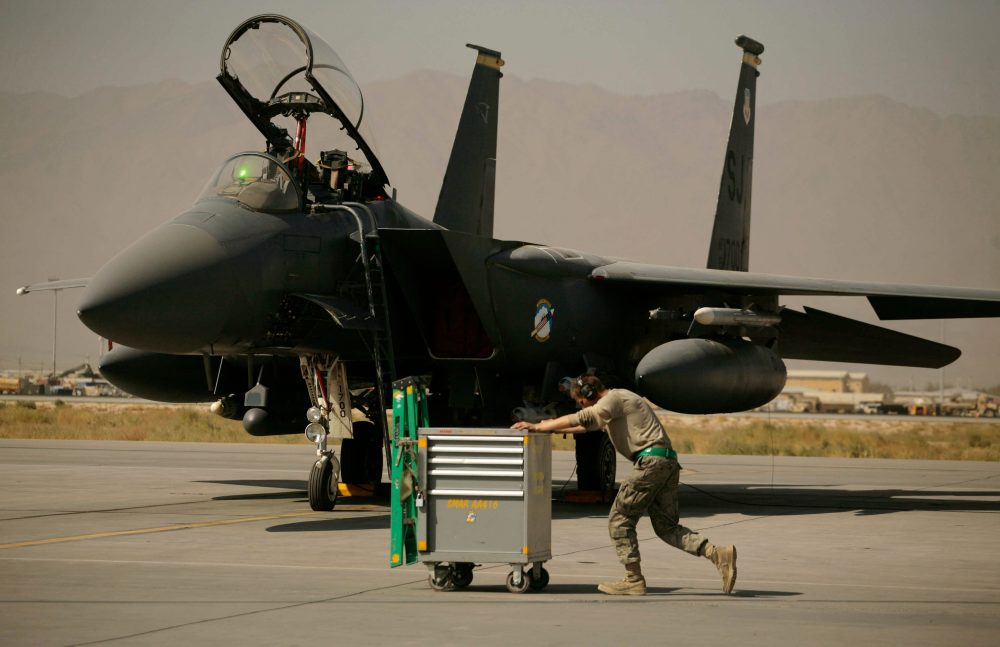
Iranian defensive units downed an American F-15E Strike Eagle fighter on Friday, with military officials confirming one crew member was successfully recovered while search operations continue for the second. Tehran’s state-controlled media reported that Iranian defense forces also struck a US A-10 attack plane, causing it to crash.
The previous instance of an American fighter being destroyed in battle occurred during the 2003 Iraq invasion when an A-10 Thunderbolt II was lost, according to retired Air Force Brigadier General Houston Cantwell, who previously flew F-16 fighters.
However, Cantwell noted that American forces had primarily faced insurgent groups lacking sophisticated anti-aircraft systems in recent conflicts. The limited number of aircraft losses in Iran demonstrates the effectiveness of US military capabilities, he explained.
“The fact that this hasn’t happened until now is an absolute miracle,” stated Cantwell, who completed four combat deployments and currently works as a senior resident fellow at the Mitchell Institute for Aerospace Studies. “We’re flying combat missions here, they are being shot at every day.”
US Central Command reported Wednesday that American military units have conducted over 13,000 sorties during the Iran conflict while engaging more than 12,300 targets.
Despite enduring over a month of intensive US-Israeli bombing campaigns, Iran’s weakened but determined military continues to present significant challenges. Tehran’s ongoing attacks against Israel and neighboring Gulf states have created regional instability and worldwide economic disruption.
Regarding American control of Iranian airspace, a clear difference exists between achieving air superiority versus complete air supremacy, explained Behnam Ben Taleblu, who directs Iran programs at the Foundation for Defense of Democracies, a hawkish Washington policy organization.
“A disabled air defense system is not a destroyed air defense system,” he emphasized. “We shouldn’t be shocked that they’re still fighting.”
US aircraft have been conducting operations at reduced altitudes, increasing their exposure to Iranian missile systems, Taleblu noted. While Iran may have engaged the F-15 using surface-to-air missiles, portable shoulder-launched weapons were more probable, he suggested. These systems are significantly harder to detect and demonstrate how Iran remains “weak but still lethal.”
“This is a regime that is fighting for its life,” he observed.
Mark Cancian, a former Marine colonel and senior defense consultant with the Center for Strategic and International Studies, concurred that shoulder-fired missiles likely targeted the fighter aircraft.
Despite these losses, the American aerial campaign against Iran has achieved “tremendous success” thus far, he assessed.
For historical context, he referenced that American warplane losses over Germany during World War II reached 3% at certain points, which would translate to approximately 350 aircraft in the current Iranian conflict.
“But then there’s the political side — you have a American public that is accustomed to fighting bloodless wars,” Cancian explained. “Then a large part of the country doesn’t support the war. So to them, any loss is unacceptable.”
The most recent US aircraft shot down in combat was hit by an Iraqi surface-to-air missile above Baghdad on April 8, 2003. The pilot successfully ejected and was recovered safely, Air Force records show.
During high-risk operations like Iranian missions, aviators experience elevated stress responses and heightened awareness of incoming missile threats, retired General Cantwell described. These weapons typically use infrared or radar guidance systems, each requiring distinct evasive maneuvers.
When aircraft are struck and pilots must eject, they receive extensive training for post-ejection procedures, he explained.
Airmen learn to assess injuries following violent ejections and missile blast trauma, and most importantly, how to relay their position for rescue teams to locate them.
Simultaneously, enemy forces likely attempt to intercept these communications or provide false location data, he added.
Friday’s downed aircraft were not the initial crewed American planes lost in Iranian territory.
A military helicopter and transport plane exploded in 1980 during a failed rescue attempt for dozens of American hostages held at the US embassy in Tehran, Air Force Historical Support Division records indicate.
Following multiple complications including severe sandstorms and equipment malfunctions, mission commanders aborted the operation. During departure, rotor blades from an RH-53 helicopter struck a fuel-laden EC-130 aircraft, causing both to explode and killing eight personnel.
Additional US helicopters have been destroyed in recent years, including an Army MH-47 Chinook struck by rocket-propelled grenades in Afghanistan during 2005, resulting in 16 fatalities. Helicopters face greater risks because “the lower and the slower, the more susceptible you are,” Cantwell noted.
This makes this week’s rescue operations, likely conducted using helicopters, “such a brave and honorable act,” he concluded.