
NATO’s highest-ranking military commander stated Tuesday that he anticipates no additional reductions in American military personnel stationed across Europe, at least in the immediate future, beyond the 5,000 service members that U.S. President Donald Trump recently declared would depart the continent.
These comments from U.S. Lt. Gen. Alex Grynkewich came after Trump’s unexpected announcement earlier this month regarding the troop reduction. The American president has engaged in disputes with international partners concerning the Iran conflict and has demanded various modifications.
Defense officials later clarified that the reduction would involve canceling scheduled deployments to Poland and Germany rather than removing military personnel currently based in those locations.
Trump’s declaration caught NATO off guard and occurred despite American commitments to collaborate on military decisions with partner nations and prevent security vulnerabilities.
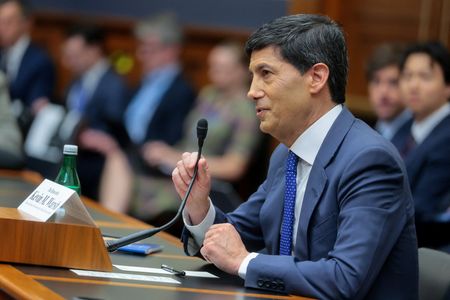
“It will be 5,000 troops coming out of Europe,” Grynkewich told reporters at NATO headquarters in Brussels, where top officers from across the 32-nation military organization were meeting. “It’s all that I’m expecting in the near term.”
Trump expressed particular frustration with Germany following Chancellor Friedrich Merz’s statement that the United States was being “humiliated” by Iranian leadership and his criticism of what he described as insufficient U.S. strategy in the conflict.
There had been initial concerns that additional reductions might follow, and Grynkewich’s statements may help ease those worries.
Under the current plan, approximately 4,000 soldiers from the Army’s 2nd Armored Brigade Combat Team will not proceed to Poland as originally scheduled, while the German deployment of roughly 1,000 personnel specialized in operating long-range rocket and missile systems has been suspended. Officials are still finalizing many specifics.
Grynkewich mentioned that he had discussions earlier that day with military leaders positioned along the front lines with Ukraine and Russia — including commanders from Estonia, Latvia, Lithuania and Poland — regarding “some of the options and how we might array capabilities on the eastern flank.”
While he maintained that European security would remain intact, he cautioned that European partners should prepare for additional reductions in future years.
“Over the long term, we absolutely should expect additional redeployments as European continues to build capability and capacity and step up to provide more of the conventional defense of Europe,” Grynkewich said.
“It’s going to be an ongoing process for several years,” he said, but added: “We’re going to stay well-synchronized with our allies moving forward.”
The number of departing troops represents a relatively small portion compared to the estimated 80,000 American military personnel currently positioned throughout Europe and hasn’t caused significant concern among partner nations, though the lack of coordination in their withdrawal and the perception that Germany was being penalized has created tension.