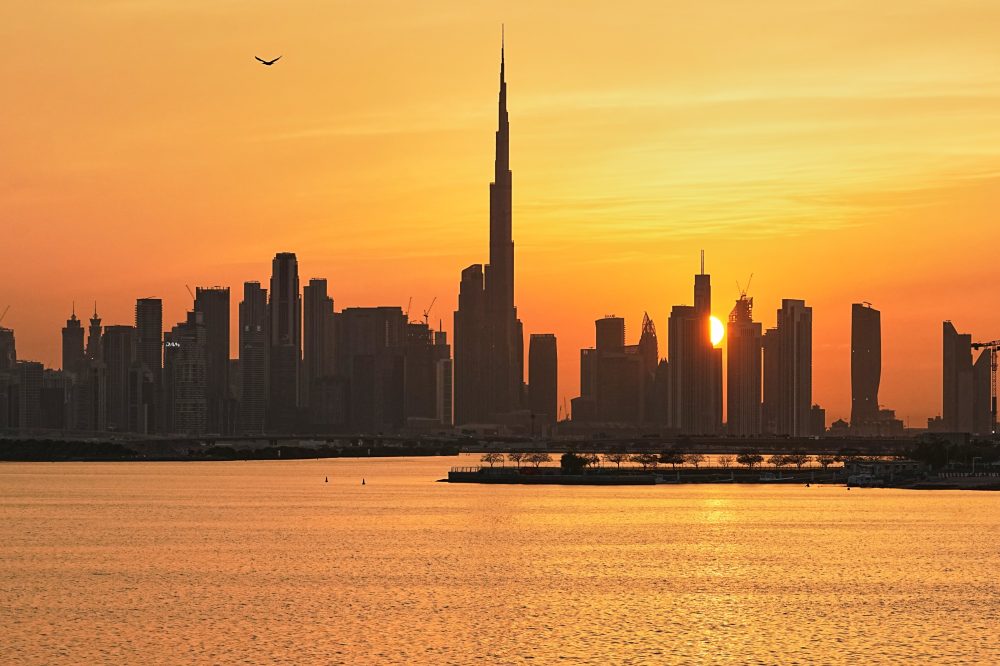

DUBAI, United Arab Emirates (AP) — For generations, the United Arab Emirates has promoted itself as a secure destination for global commerce amid the turbulent Middle East. Now, conflict has reached this nation’s doorstep, challenging its business-friendly reputation in unprecedented ways.
The UAE, which maintains strong ties with both the United States and Israel, has endured more missile and drone strikes from Iran throughout this conflict than any other nation. These assaults — combined with Iran’s control over the Strait of Hormuz — have slashed the Emirates’ oil and natural gas exports by more than half. The nation’s tourism and convention industries have also taken significant hits.
Located directly across the Persian Gulf from Iran, the country has projected an image of resilience while implementing major strategic shifts. Officials recently unveiled plans for a new pipeline to decrease dependence on the strait, and the nation withdrew from the OPEC oil cartel to enable long-term increases in energy production — a move that had been considered before the war began.
Though the U.S. and Israel initiated the conflict, the UAE finds itself deeply involved. A drone strike on Sunday targeting its Barakah nuclear power plant highlights ongoing dangers — even with a fragile ceasefire in place.
Thanks to the Emirates’ substantial cash reserves, the war’s economic impact has not yet triggered widespread unemployment or a mass departure of international businesses. However, the longer this standoff continues and disrupts normal operations, the greater the threat to the reputation that has been crucial for attracting global business and investment.
Emirati leadership increasingly labels Iran’s actions as piracy and terrorism, while issuing warnings of potential military response.
The UAE “will not tolerate any threat to its security and sovereignty under any circumstances,” its Foreign Ministry declared Sunday evening. “It reserves its full, sovereign, legitimate, diplomatic, and military rights to respond to any threats, allegations or hostilities.”
The Emirates’ response to the Barakah incident remains unclear. The attack produced no radioactive contamination and has not interrupted operations at the nuclear facility located in Abu Dhabi’s remote western desert.
The UAE consists of seven autocratic sheikhdoms, including Dubai and Abu Dhabi. While the Federal Supreme Council, made up of hereditary leaders from all seven emirates, serves as the top governing body, Abu Dhabi’s Sheikh Mohammed bin Zayed Al Nahyan and his family control most major decisions.
According to analysts, the ruling family has pursued increasingly assertive foreign policies in recent decades, including military involvement in Yemen’s conflict against Iranian-supported Houthi rebels. The UAE supported Egyptian President Abdel-Fattah el-Sissi’s rise to power in 2013, and faces allegations of arms shipments to factions in Sudan and Libya’s civil conflicts, which it disputes.
Sheikh Mohammed, who seldom makes public statements, offered his only brief comments about the war to state media during a March hospital visit with Iranian attack victims.
“The UAE is attractive, the UAE is beautiful, the UAE is a model. But I say to them: do not be misled by the UAE’s appearance,” the sheikh cautioned then. “The UAE has thick skin and bitter flesh; we are no easy prey.”
However, the nation has certainly experienced significant hardship.
The Strait of Hormuz blockade has severely limited the UAE’s crude oil and natural gas sales, though some tankers have successfully departed. The country can ship roughly 1.8 million barrels of crude daily via a pipeline to Fujairah, a coastal city with an oil terminal on the Gulf of Oman beyond the strait. The Emirates is accelerating construction of a second pipeline to double this capacity.
The UAE’s tourism and conference sector — representing over 12% of economic output — has suffered severe damage.
Since hostilities began February 28, more than 70 planned events in the UAE have been delayed, cancelled, or otherwise impacted, according to Northbourne Advisory, a Qatar-based communications company monitoring war effects. While the Emirati government imposed no blanket event prohibition, organizers likely altered plans due to “insurance withdrawal and liability exposure,” the firm noted.
On May 4, the national carrier Emirates announced it had restored nearly its complete flight schedule from Dubai International Airport, which has ranked as the world’s busiest for international travel for years. That same day, however, Iran launched multiple drone and missile attacks, triggering mobile phone alerts and frustrating the Emirates’ business community, which seeks a return to normalcy.
The airport appears to be constructing protective barriers around its jet fuel storage, though officials there refused to comment.
Hotels, including Dubai’s distinctive sail-shaped Burj Al Arab, have shut down for renovations as occupancy has dropped to approximately 20%. Moody’s Analytics projects that figure will decline to 10% in the June quarter, compared to 80% before the conflict.
Moody’s cautioned that occupancy levels will likely remain depressed through 2026, as travelers may stay away even after fighting ends.
In a Monday analysis, the Institute of International Finance observed: “Dubai’s openness makes it vulnerable to shocks in travel, logistics, and confidence, while Abu Dhabi’s balance sheet and energy assets give the federation the capacity to absorb the blow.”
Dubai has made particular efforts to demonstrate continued accessibility.
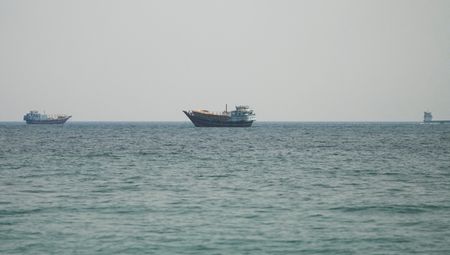
Over the weekend, Dubai held a condensed version of its yearly Art Dubai exhibition. The war’s proximity was evident not only because the show’s preview coincided with Iran’s seizure of a vessel near Fujairah.
One artwork featured a coin-operated black fighter aircraft decorated with pairs of black Nike sneakers.
Spanish artist Solimán López presented a piece exploring his claimed ownership of a metal-rich asteroid targeted by a NASA mission. The work examines how nations and corporations extract oil and other resources.
The conflict complicated his attendance with the artwork, he explained. “But I said I have to do my best, because I do believe that it’s the perfect context to talk about this in the region,” he stated.
Beirut artist Alfred Tarazi mentioned his grandparents survived two world wars.
“Life doesn’t stop in a world war,” he observed. “We can only counter a narrative of violence with culture.”