
WASHINGTON — Following military operations in Venezuela earlier this year that resulted in President Nicolás Maduro’s detention, the United States has intensified its pressure campaign against Cuba’s communist government.
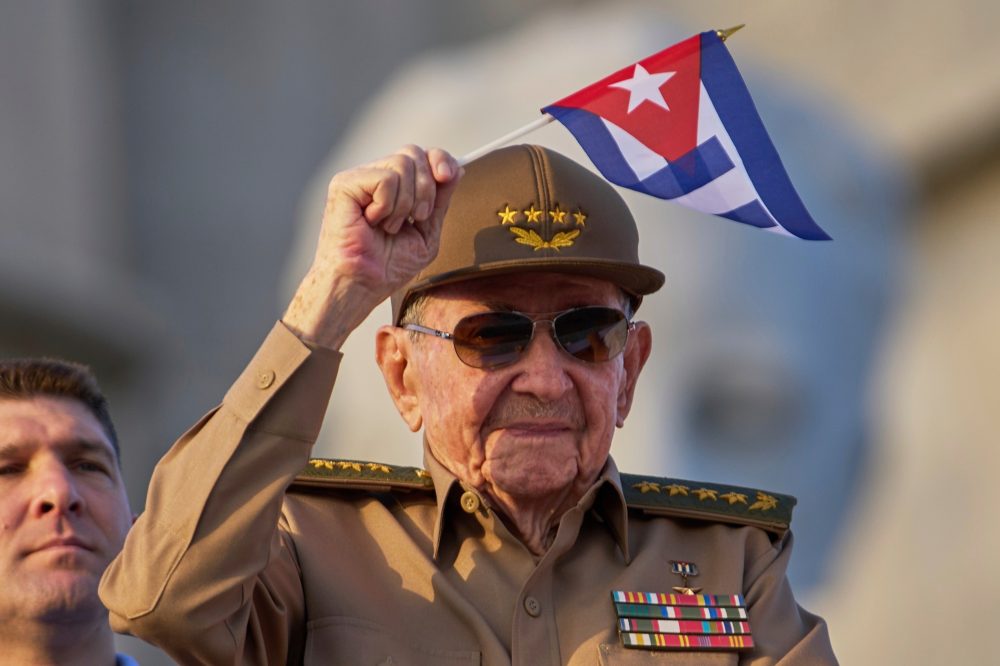
Federal prosecutors are moving forward with plans to pursue criminal charges against former Cuban leader Raúl Castro. Such an indictment would require grand jury approval and could significantly worsen relations with Havana.
This development occurs during a period of escalating friction between President Donald Trump’s administration and Cuban officials this year. Simultaneously, the United States maintains an unstable ceasefire in its conflict with Iran.
The following details chronicle the year’s key events between the two nations:
Following the Venezuelan operation that resulted in Maduro’s capture, Secretary of State Marco Rubio stated Cuba’s government was “in a lot of trouble,” while the president renewed his push for American control of Greenland, the Danish territory.
Trump issued a stern warning to Cuban leadership as Venezuela’s close partner prepared for possible domestic upheaval following Maduro’s removal. Trump urged the Cuban government “to make a deal BEFORE IT IS TOO LATE.”
Cuban President Miguel Díaz-Canel fired back, stating, “Those who turn everything into a business, even human lives, have no moral authority to point the finger at Cuba in any way, absolutely in any way.”
Trump enacted an executive order establishing tariffs on goods from nations that sell or supply oil to Cuba, a measure that could further devastate the island’s economy.
One day prior to the Iranian conflict’s start, Trump revealed the United States was engaged in discussions with Havana and mentioned the potential for a “friendly takeover of Cuba,” without providing specifics.
Trump indicated Rubio was conducting negotiations with Cuban officials “at a very high level.”
While Trump did not elaborate on his statements, he appeared to suggest that relations with Cuba, one of Washington’s most enduring foes for generations, had reached a pivotal moment.
Raúl Guillermo Rodríguez Castro, Castro’s grandson nicknamed “Raúlito,” conducted a private meeting with Rubio during a Caribbean Community summit in St. Kitts in February.
Díaz-Canel acknowledged that Cuba and the United States conducted negotiations, representing the first official confirmation from the Caribbean nation regarding widely reported discussions with the Trump administration during an energy shortage.
He explained the negotiations “were aimed at finding solutions through dialogue to the bilateral differences between our two nations. International factors facilitated these exchanges.”
A sanctioned Russian petroleum vessel reached Cuba, marking the first fuel delivery to the island in three months.
Díaz-Canel declared he would not resign from office.
During an interview, Díaz-Canel stated he would not step down and argued the United States lacks justification for military action against the island or attempts to remove him from power.
In his appearance on NBC’s “Meet the Press,” the president warned that a Cuban invasion would be expensive and threaten regional stability.
Díaz-Canel addressed a gathering of hundreds during a commemoration of the 65th anniversary of the Cuban Revolution’s socialist declaration.
“The moment is extremely challenging and calls upon us once again, as on April 16, 1961, to be ready to confront serious threats, including military aggression. We do not want it, but it is our duty to prepare to avoid it and, if it becomes inevitable, to defeat it,” Díaz-Canel declared.
Reports surfaced that an American delegation recently conducted meetings with Cuban government representatives, signaling renewed diplomatic efforts. This represented at least the third encounter with Rodríguez Castro.
A high-ranking State Department representative met with Rodríguez Castro earlier that month, according to a department official who requested anonymity due to the sensitive nature of the discussions.
The official declined to identify which American representatives met with Rodríguez Castro, whose grandfather reportedly maintains significant influence in Cuban governance despite lacking an official position. A second U.S. official confirmed Rubio was not among the delegation that traveled to Havana.
A Cuban representative speaking at the United Nations declared Havana would not comply with American “ultimatums” to free political prisoners during new negotiations.
In an Associated Press interview, Cuban U.N. Ambassador Ernesto Soberón Guzmán stated that domestic matters concerning detainees “are not on the negotiating table.” Prisoner releases represented a primary U.S. condition as the long-standing rivals conducted their first discussions in Cuba in ten years.
Senate Republicans blocked Democratic legislation that would have mandated Trump end the U.S. energy embargo on Cuba without Congressional authorization.
The war powers resolution vote demonstrated continued Republican support for Trump as he unilaterally exercises American military power across multiple global conflicts, including Venezuela, Iran and Cuba — among America’s nearest neighbors.
U.S. officials indicate the United States was not considering immediate military intervention against Havana despite Trump’s repeated warnings that “Cuba is next” and suggestions that American naval forces deployed in the Middle East for the Iranian conflict might return via the island.
Officials participating in initial discussions with Cuban authorities also informed the AP they remain pessimistic about the communist government accepting an offer including tens of millions in humanitarian assistance, two years of complimentary Starlink internet service for all Cubans, agricultural aid and infrastructure support.
However, they note Cuba has not definitively rejected the proposal, which includes conditions the government has historically opposed, even after the Trump administration implemented additional sanctions on Havana.
Both U.S. and Cuban officials confirmed CIA Director John Ratcliffe conducted meetings with Cuban representatives including Raúl Castro’s grandson during a significant visit to the island.
Ratcliffe met with Rodríguez Castro, Interior Minister Lázaro Álvarez Casas and Cuba’s intelligence chief, discussing intelligence collaboration, economic stability and security matters. A CIA official verified the meetings to the AP.
The Justice Department is moving to pursue an indictment against Castro, three sources familiar with the situation informed the AP.
One source indicated the potential charges relate to Castro’s suspected involvement in the 1996 downing of four aircraft operated by the Miami-based exile organization Brothers to the Rescue. Castro served as defense minister during that period.
All three sources requested anonymity because they lacked authorization to discuss an active investigation. Cuban government officials did not respond to requests for comment regarding the potential indictment, which CBS previously reported.