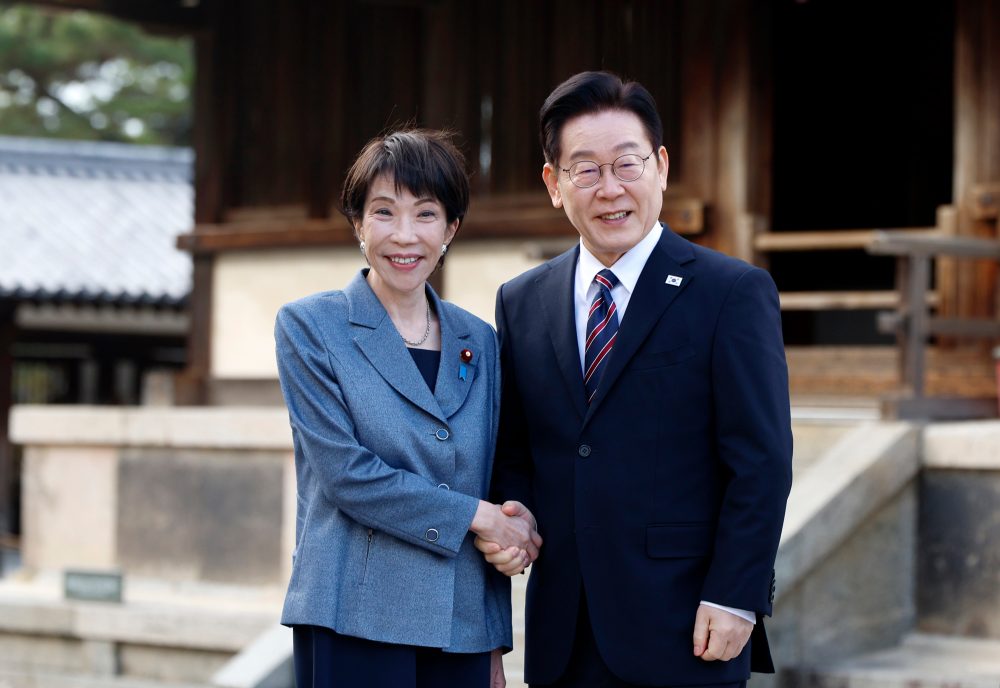

SEOUL, South Korea — Two Asian leaders are making history Tuesday as South Korean President Lee Jae Myung welcomes Japanese Prime Minister Sanae Takaichi to his hometown for an unprecedented diplomatic gathering between the neighboring nations.
The meeting in Andong, a city in southeastern South Korea known for its ancient folk village recognized by UNESCO, represents the fourth encounter between Lee and Takaichi in approximately half a year. This follows their January meeting in Takaichi’s home city of Nara, marking the first occasions where sitting leaders from both countries have conducted official visits to each other’s birthplaces.
Officials from South Korea’s presidential office have indicated their hopes that Tuesday’s discussions will build stronger mutual confidence between the two leaders. Speaking to media Tuesday morning, Takaichi expressed her desire for the conversations to enhance collaboration “under the severe geopolitical conditions such as situations in the Middle East and the Indo-Pacific.”
The formal discussion topics will cover economic partnerships, energy collaboration, the Iran war, and advancing their bilateral relationship, which currently faces no major obstacles. Political analysts predict the session will proceed without significant friction and that positive momentum between the nations will continue.
“The two countries put more emphasis on agenda for cooperation than contentious issues,” explained Choi Eunmi, a Japan expert at the Seoul-based Asan Institute for Policy Studies. “They would now think scenes of constantly fluctuating relationship or eventually negative bilateral ties won’t be helpful to anyone now.”
While both South Korea and Japan serve as important U.S. partners with strong democratic systems, their diplomatic history has been marked by significant tensions rooted in Japan’s 35-year occupation of the Korean Peninsula that ended with World War II.
A turning point came in 2023 when the previous leaders from both nations decided to move past historical disagreements and focus on shared concerns including U.S.-China tensions, supply chain issues, and North Korea’s growing nuclear capabilities.
When Lee and Takaichi assumed their leadership roles last year, some experts expressed concern about Takaichi’s conservative security stance and expectations that Lee, known for his liberal politics, might favor closer ties with North Korea and China over relationships with the U.S. and Japan. However, both leaders have sustained their cooperative approach in remarkable ways.
In August, before Takaichi officially took office, Lee made Japan his first choice for a bilateral summit destination, becoming the first South Korean leader to do so. Their January meeting concluded with an unusual moment where both leaders played drums to popular Korean music including BTS’ “Dynamite,” an activity suggested by Takaichi, who played drums during her university years and enjoys heavy metal music.
Lee has stated that he and Takaichi both believe national leaders should conduct themselves differently than typical politicians. Many observers suggest the leaders also recognize the importance of closer cooperation given more serious global challenges than their predecessors faced, including U.S. President Donald Trump’s America-first policies and worldwide economic impacts from the Iran war.
Both countries have committed substantial investments in U.S. business ventures totaling hundreds of billions of dollars. Trump’s trade policies and his business-focused approach to security arrangements have created uncertainty about American reliability among citizens in both South Korea and Japan.
The Seoul-Tokyo relationship remains fragile and could face unexpected difficulties if leaders fail to develop strategies for sensitive historical matters including Japan’s wartime use of Koreans as forced workers and sex slaves, according to experts who note that disputes over these topics have diminished as both governments avoid public debates.
“Both countries aren’t talking about how to resolve and prevent recurrences of conflicts over those issues and we don’t know when they could occur again,” Choi said.