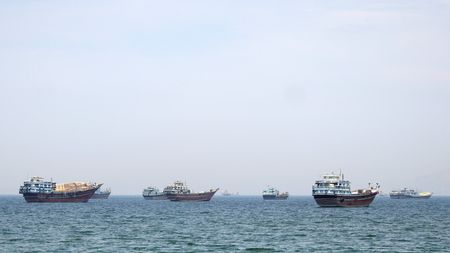

Two Chinese oil tankers carrying crude successfully navigated through the Strait of Hormuz on Wednesday, according to shipping data, as optimistic statements from President Donald Trump and Vice President JD Vance suggest progress in resolving the ongoing U.S.-Israeli conflict with Iran.
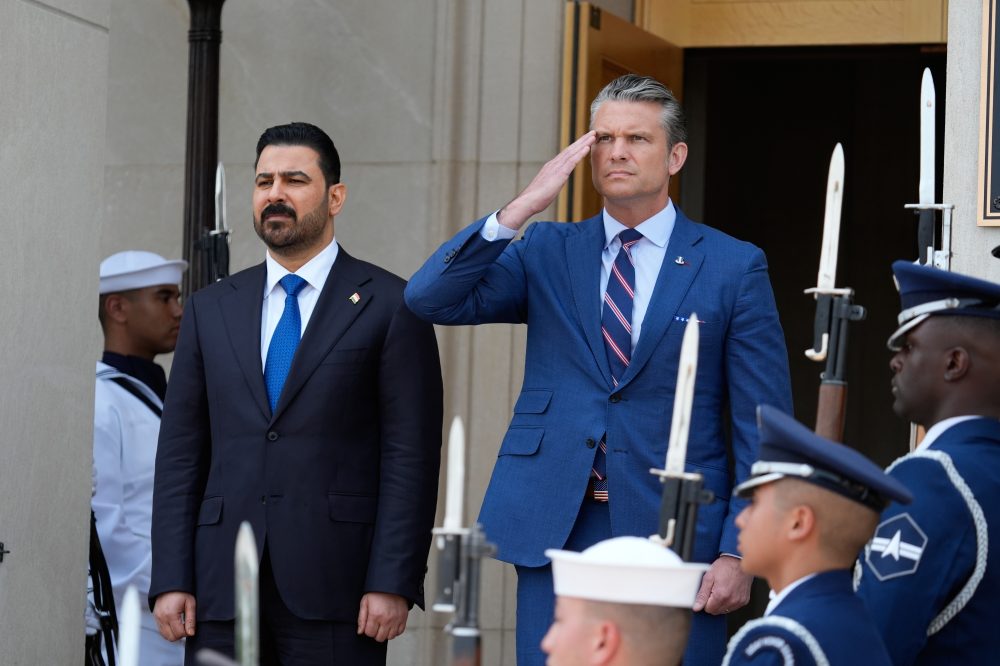
Speaking Tuesday, President Donald Trump indicated the conflict would conclude “very quickly” while Vice President JD Vance highlighted advancement in negotiations with Tehran aimed at ending the hostilities.
“We’re in a pretty good spot here,” Vance stated during a White House press briefing.
Trump’s remarks came one day after he announced delaying planned military action following Tehran’s newest proposal to conclude the conflict.
“I was an hour away from making the decision to go today,” Trump explained to White House reporters on Tuesday.
According to Trump, Iranian leadership is desperately seeking an agreement, though he warned that fresh U.S. military action would occur within days without a successful accord.
The United States has faced challenges ending the conflict it initiated alongside Israel approximately three months ago. Throughout the hostilities, Trump has consistently claimed a Tehran agreement was imminent while simultaneously threatening significant strikes against Iran for failing to reach a settlement.
Domestic political pressure continues mounting on the U.S. president to secure an agreement reopening the Strait of Hormuz – a crucial pathway for worldwide oil and commodity shipments. With elevated gasoline costs and Trump’s declining approval numbers ahead of November’s congressional elections, pressure remains intense.
The conflict has created unprecedented global energy supply disruptions, trapping hundreds of tankers in the Gulf while damaging energy infrastructure and shipping operations throughout the region.
The two Chinese vessels, part of a small group of supertankers transporting Iraqi crude that have departed the Gulf this month, carried approximately 4 million barrels of crude through the narrow waterway, based on LSEG and Kpler data.
Oil markets responded positively to encouraging White House and Gulf signals, with Brent crude dropping to $110.16 per barrel before recovering most losses.
“Investors are keen to gauge whether Washington and Tehran can actually find common ground and reach a peace agreement, with the U.S. stance shifting daily,” commented Toshitaka Tazawa, an analyst at Fujitomi Securities.
During a White House briefing, Vance acknowledged challenges in negotiating with Iran’s divided leadership. “It’s not sometimes totally clear what the negotiating position of the team is,” he explained, noting the U.S. is working to clarify its own boundaries.
Vance also mentioned that preventing regional nuclear proliferation represents one goal of Trump’s policy approach.
Ebrahim Azizi, who leads the Iranian parliament’s national security committee, posted on X that Trump’s attack postponement resulted from understanding that any action against Iran would trigger “facing a decisive military response.”
Iranian state media reported Tehran’s most recent peace proposal includes ending hostilities across all fronts including Lebanon, withdrawing U.S. forces from areas near Iran, and providing reparations for damage from U.S.-Israeli attacks.
Tehran additionally requested sanctions removal, release of frozen assets and termination of the U.S. marine blockade, according to Deputy Foreign Minister Kazem Gharibabadi as quoted by IRNA news agency.
The conditions outlined in Iranian reports seemed largely unchanged from Iran’s earlier offer, which Trump dismissed last week as “garbage.”
The U.S.-Israeli bombing campaign resulted in thousands of Iranian deaths before suspension under an early April ceasefire. Israel has caused thousands more casualties and displaced hundreds of thousands in Lebanon, which it invaded while pursuing the Iran-supported Hezbollah militia.
Iranian attacks on Israel and neighboring Gulf nations have resulted in dozens of deaths.
While the Iran ceasefire has generally remained intact, recent drone launches from Iraq targeting Gulf countries, including Saudi Arabia and Kuwait, appear linked to Iran and its allies.
Trump and Israeli Prime Minister Benjamin Netanyahu stated they initiated the conflict to limit Iran’s regional militia support, dismantle its nuclear program, destroy missile capabilities and establish conditions for Iranians to overthrow their government.
However, the conflict has not eliminated Iran’s near-weapons-grade enriched uranium stockpile or its capacity to threaten neighbors through missiles, drones and proxy militias.
The Islamic Republic’s clerical leadership, which had confronted mass protests earlier this year, survived the superpower assault without signs of organized resistance.