
Medical professionals working to contain Congo’s Ebola crisis are confronting a dangerous new challenge as violent incidents target treatment facilities, causing infected patients to escape into surrounding communities.
Three separate assaults have taken place in Ituri province, where initial cases emerged, including two weekend incidents at one hospital that resulted in more than 24 patients fleeing the facility.
These violent episodes echo the widespread targeting of medical centers during Congo’s 2018-2020 Ebola crisis in the eastern region, which resulted in over 25 healthcare worker fatalities.
Previous attacks involved community members angry about burial restrictions or those believing the disease was fabricated. The sudden arrival of resources and personnel in regions long overlooked during years of warfare and humanitarian disasters has created local skepticism about true intentions behind the heightened attention.
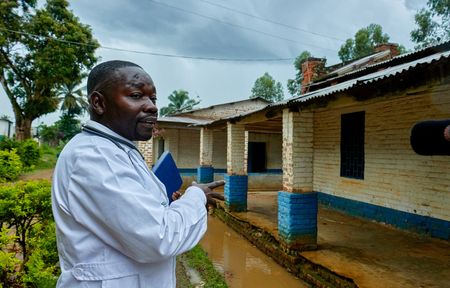
Dr Richard Lokodu, who leads the Mongbwalu General Referral Hospital that experienced attacks on both Saturday and Sunday, indicated similar patterns are emerging now.
“There is denial of the disease within the population, with some members wanting to claim the bodies of suspected and/or confirmed cases,” he said.
The World Health Organization has classified this outbreak of the uncommon Bundibugyo strain as the third-largest recorded and declared it a public health emergency of international concern.
WHO chief Tedros Adhanom Ghebreyesus reported Sunday that more than 900 suspected cases have occurred during this outbreak, with 101 laboratory-confirmed infections.
On Monday, Tedros announced 220 suspected fatalities in the current crisis and noted that delayed case identification has left response teams “playing catch-up”.
At Mongbwalu General Referral Hospital in the town where numerous cases have emerged, 18 Ebola patients escaped Saturday after “unidentified individuals” set fire to isolation tents established by medical charity Medecins Sans Frontieres, according to Lokodu.
Laboratory testing of four escapees has returned three negative and one positive result, he reported.
“So we have one confirmed case of Ebola that continues to circulate in the community and evade the response,” Lokodu said.
Sunday brought four separate assault waves by youth organized by family members of a deceased Christian religious leader who died from Ebola, he explained.
Seven additional patients escaped while Congolese law enforcement and military forces intervened to restore calm, he said.
A critically ill suspected Ebola patient experiencing hemorrhaging died during the second assault while attempting to leave his bed, Lokodu reported.
Those conducting the attacks demanded release of deceased Ebola victims for burial purposes, according to Lokodu.
Ebola victims remain extremely contagious after death, and improper burials where family members contact bodies without adequate protective gear represent a primary transmission source.
Healthcare workers encountered several mob attacks during West Africa’s 2013-2016 outbreak, the largest recorded, with some accusers claiming medical staff were spreading the disease.
However, such incidents dramatically increased during eastern Congo’s 2018-2020 outbreak in a region characterized by widespread violence and distrust toward official institutions.
Beyond spontaneous community anger, research revealed many attacks were conducted by armed groups seeking to exploit the outbreak for political and economic advantage.
The present outbreak reportedly began in Ituri before expanding to North and South Kivu provinces, including territories controlled by Rwanda-backed M23 rebels, and crossing into neighboring Uganda.
Monday brought two additional confirmed Ebola cases in Uganda, raising that country’s total to seven infections.