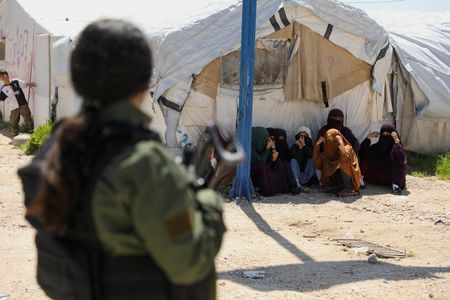

Australian officials announced Tuesday that seven women and 12 children with connections to the Islamic State have arranged to depart a Syrian refugee camp and return to Australia, marking the second such group to make this journey within the month.
Home Affairs Minister Tony Burke emphasized that the government is providing no assistance with their travel arrangements and warned that anyone who has broken laws “can expect to face the full force of the law.”
“These are people who have made the horrific choice to join a dangerous terrorist organisation and to place their children in an unspeakable situation,” Burke stated.
While Burke did not specify an arrival date for this second group, and his office has not yet provided additional details, the Australian Broadcasting Corporation reported the group departed a northeastern Syrian camp last Thursday and may arrive within days.
Earlier this month, four women and nine children returned to Australia following more than seven years in Syrian detention facilities. Authorities subsequently charged two of the women with slavery-related crimes, while a third faced terrorism charges, including allegations of joining the Islamic State.
The upcoming arrivals have sparked opposition criticism, with detractors arguing the center-left government has failed to prevent these repatriations. Government officials countered that there are “very serious limits” on their ability to block Australian citizens from re-entering their home country.
Officials stated that law enforcement and intelligence services have spent over ten years preparing for such returns and have established monitoring protocols for arriving individuals.
During the period from 2012 to 2016, several Australian women traveled to Syria to reunite with husbands who were reportedly ISIS members. After the caliphate’s fall in 2019, many ended up in detention camps.
This January, the United States initiated the relocation of detained ISIS members from Syria following the breakdown of the Kurdish-led Syrian Democratic Forces, which had been overseeing approximately twelve facilities housing fighters and associated civilians, including foreign nationals.