
BANGKOK — Rescue operations for seven villagers stuck in a water-filled cave in central Laos have reached their seventh day Tuesday, with emergency crews facing challenging conditions and harsh weather while attempting to locate the group whose status remains unclear.
The group went into the cave located in Xaisomboun province on May 19, but intense rainfall caused sudden flooding that sealed off their way out, rescue teams from Laos and Thailand reported.
Rescue Volunteer for People, a Lao organization collaborating with local officials, announced on Facebook that Tuesday’s rescue strategy involves examining air shafts located above the cave to find potential entry routes and determine where the trapped individuals might be.
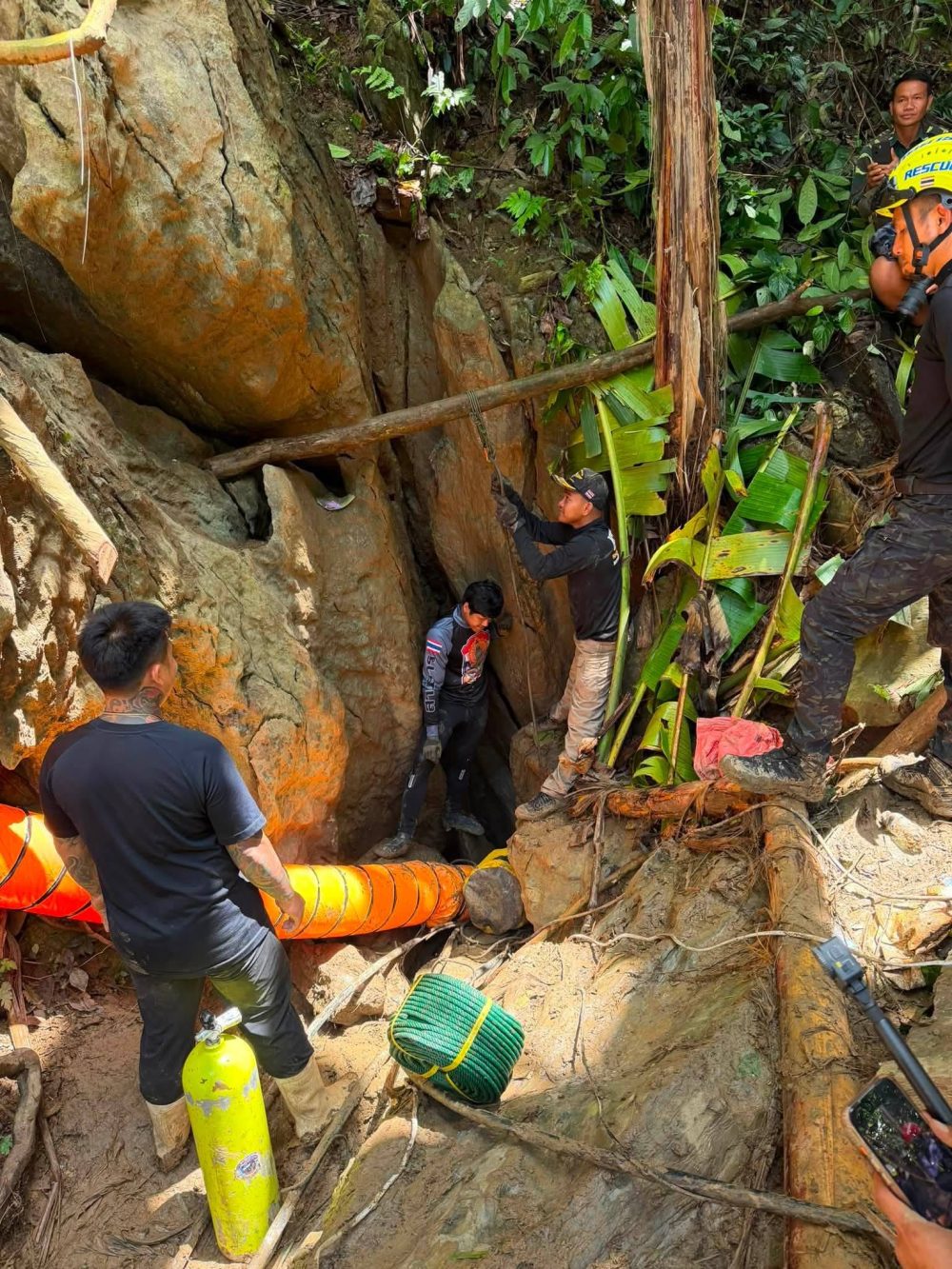
Emergency personnel from Thailand arrived at the location during the weekend to help with rescue efforts.
Rescue teams report that diving specialists have made their way approximately 100 meters into the water-filled, confined cave. Officials believe the villagers could be stuck roughly 30 meters past the farthest reachable location. Teams are operating pumps to remove water from the cave to help their search mission.
The location sits in an isolated section of Longcheng district in Xaisomboun province, positioned approximately 120 kilometers (75 miles) north of Vientiane, the capital city. Emergency workers have documented on social media the difficult mountainous landscape and persistent rainfall creating obstacles for their mission.
Online footage from Thai rescue workers demonstrated that accessing the cave opening demands a challenging uphill trek on foot covering roughly 4 kilometers (2.5 miles). The opening itself features steep, rocky terrain and remains so narrow that only one individual can pass through at any given time.
Within the cave, rescue workers must navigate through muddy corridors, water-filled areas and tight passages requiring them to crawl on their hands and knees.
Officials have not provided formal confirmation regarding the villagers’ purpose for entering the cave, though rescue personnel indicated they went inside searching for gold deposits.
Bounkham Luanglath from the Lao rescue organization informed The Associated Press that local people regularly visited the cave seeking gold, despite repeated safety warnings from authorities advising against cave entry.
Laos maintains one of Southeast Asia’s lowest average individual incomes at approximately $2,000-2,500, with even lower earnings in underdeveloped rural regions.
While Laos doesn’t rank as a significant gold-producing nation, its mining sector represents a substantial portion of the developing country’s economy. Foreign investment, primarily from Thailand and China, drives the mining industry. Copper serves as a major export product, while rare earth element mining for modern technology has grown increasingly prevalent in Laos.
The Laos Foreign Ministry stated Tuesday that no official details are available for media distribution. The Southeast Asian country operates as a single-party communist government without organized political opposition and maintains strict control over information release.
The situation gained attention in Thailand due to similarities with the dramatic 2018 cave rescue in northern Thailand, where 12 boys and their soccer coach remained trapped for over two weeks before successful rescue in an operation that captured worldwide attention. A former Thai navy SEAL diver died during that search and rescue mission.
Another recent tragedy occurred this month when five Italian divers were discovered dead after disappearing while cave diving in the Maldives. A Maldivian military diver participating in the body recovery operation was killed during the dangerous retrieval mission.
Cave entrapment poses significant health dangers, with cold temperatures rapidly causing hypothermia. While the human body can survive weeks without food, clean water remains essential to prevent dehydration. Contaminated water sources may trigger diarrhea, accelerating dehydration.
Reduced oxygen levels create symptoms resembling altitude sickness and can eventually harm lungs and other vital organs, while carbon dioxide accumulation leads to fatigue and potential loss of consciousness.
Continuous darkness affects time awareness and disrupts the body’s natural sleep cycles. It also creates extreme light sensitivity when eyes must readjust to illumination.