
Financial markets across Asia showed varied results Tuesday following U.S. military operations in southern Iran that targeted missile launch facilities and vessels deploying mines, according to military officials who described the actions as defensive measures.
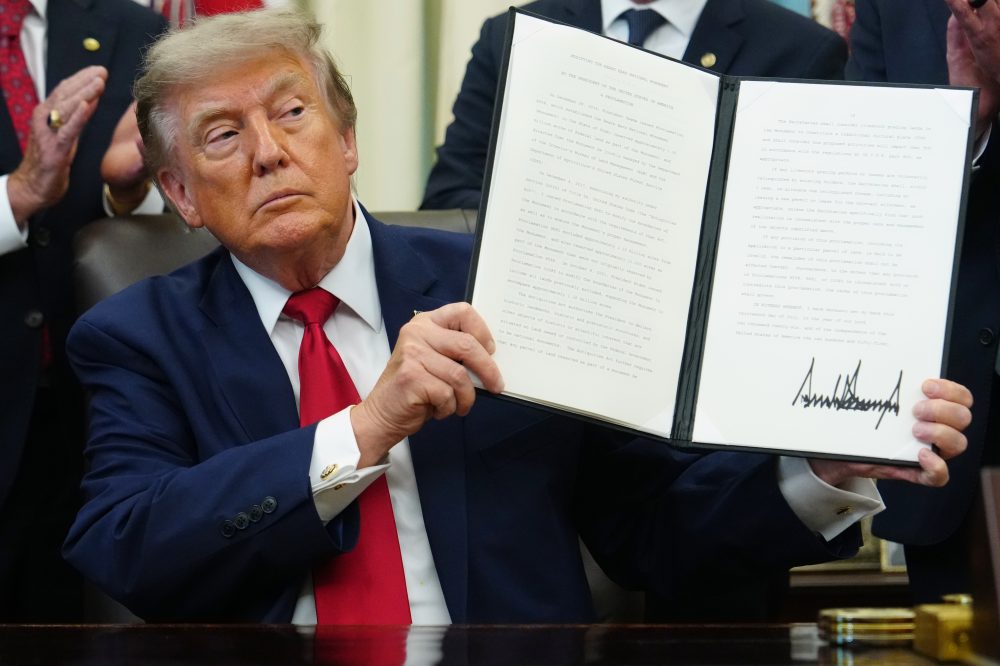
The military operations occurred despite President Donald Trump’s social media statements indicating that peace negotiations were “proceeding nicely.”
American market futures experienced significant gains while petroleum prices showed mixed movement, with Brent crude trading under $95 per barrel.
Military officials stated the Monday operations aimed “to protect our troops from threats posed by Iranian forces.” They noted exercising restraint due to an existing ceasefire agreement with Iran, which has not provided an official statement. Additional information regarding specific Iranian threats and negotiation implications remained unavailable.
Financial markets continue responding to various developments and Trump’s statements as the future of peace discussions with Iran remains uncertain.
“Markets are behaving as though a full Iran breakthrough already exists, even though the hardest parts of the negotiation remain unresolved,” Stephen Innes of SPI Asset Management wrote in a commentary. “Washington continues to signal optimism, while Tehran insists no agreement is imminent.”
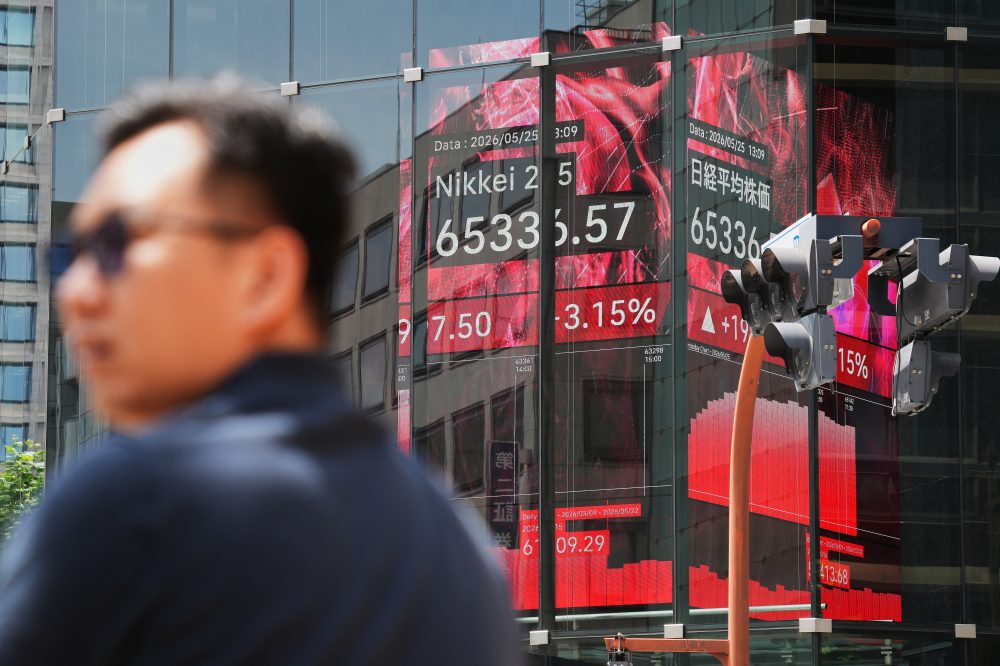
Japan’s Nikkei 225 declined 0.4% to 64,897.64, retreating from Monday’s record closing high.
Hong Kong’s Hang Seng index climbed 0.3% to 25,668.55, while Shanghai’s Composite index dropped 0.7% to 4,122.87.
South Korea’s Kospi surged 2.9% to 8,075.71, making up ground after Monday’s holiday closure.
Australia’s S&P/ASX 200 fell 0.4% to 8,653.80.
Early Tuesday trading showed S&P 500 and Dow Jones Industrial Average futures rising 0.6%.
U.S. benchmark crude oil dropped $5.01, more than 4%, reaching $91.59 per barrel. International standard Brent crude increased $1.57 to $94.99 per barrel following Monday’s nearly $5 decline.
American markets remained closed Monday for Memorial Day while European exchanges posted gains.
France’s CAC 40 advanced 1.1%, Germany’s DAX climbed 1.0%, and Britain’s FTSE 100 added 0.2%.
The increases followed indications of peace agreement progress. Regional officials reported Sunday that the United States was approaching a deal with Iran to conclude the conflict, reopen the Strait of Hormuz, and secure Iran’s surrender of highly enriched uranium stockpiles.
The Strait of Hormuz reopening will significantly influence petroleum pricing direction. War-related closure has blocked oil tankers from leaving the Persian Gulf and delivering crude to global customers. Japan, which imports nearly all its oil primarily through the strait, exemplifies this impact.
Early Tuesday currency trading showed the U.S. dollar rising to 158.94 Japanese yen from 158.91 yen. The euro traded at $1.1634, down from $1.1645.