
The dismissal of Senegal’s prime minister by President Bassirou Diomaye Faye has injected new momentum into long-stalled negotiations to address West Africa’s most severe debt crisis, though the move brings both opportunities and fresh uncertainties.
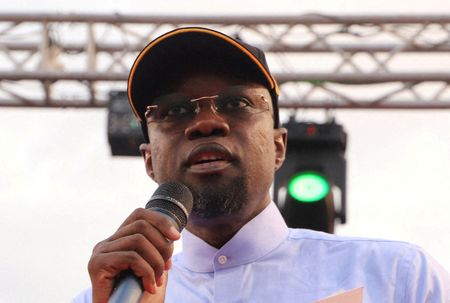
Faye’s decision Friday to remove Prime Minister Ousmane Sonko, a vocal opponent of International Monetary Fund policies, could eliminate a key barrier to reaching an IMF agreement. However, financial experts and investors warn that the political upheaval may create new challenges for the ongoing discussions and increase risks for those holding Senegalese bonds.
“The removal of PM Sonko creates additional political uncertainty,” explained Thalia Petousis, portfolio manager at Allan Gray. “There is also a chance that a newly appointed PM might be in favour of a deep debt restructuring, increasing the probability of a negative outcome for Senegalese bondholders.”
On Monday evening, Faye appointed Ahmadou Al Aminou Lo, an experienced economist and former regional central bank official, to take over from the populist Sonko.
Financial markets responded negatively Tuesday, with Senegal’s foreign currency government bonds dropping significantly – falling as much as 5.7 cents on the euro and nearly 4 cents on the dollar, according to Tradeweb data.
Morgan Stanley noted Tuesday that investors were now calculating higher chances of a restructuring following recent developments.
Petousis cautioned that if foreign-currency debt underwent restructuring while local currency debt remained untouched, “the risks are that realised haircuts could be steeper than what is currently priced.”
Over the past three months, Senegalese dollar-denominated bonds have generated losses of 9.7% for investors, contrasting sharply with the 0.1% average return of comparable securities in the JPM EMBI Global Diversified Africa index. Bonds maturing in May 2033 were trading around 50.6 cents on the dollar, reaching historic lows.
Senegal has been pursuing intermittent discussions to secure a new IMF agreement since the Fund suspended a $1.8 billion program in 2024 after discovering previously undisclosed debt that pushed the country’s debt-to-GDP ratio beyond 130%.
The nation is essentially shut out of international capital markets and faces mounting challenges in controlling escalating fuel subsidy costs. Investors are becoming increasingly concerned about the government’s capacity to meet its debt obligations.
Earlier this month, President Faye’s office announced he was assuming direct control of Senegal’s debt portfolio. Cheikh Diba, who served as finance minister until Friday, indicated that IMF discussions would restart during the week of June 8, with a potential agreement on a new program’s framework possible by late June.
In one of his final actions as prime minister, Sonko, who had previously advocated against debt restructuring pressure, criticized the IMF Friday before lawmakers, declaring it had “never developed a country” and arguing Senegal should depend more on domestic resources rather than foreign lenders.
Despite losing his prime ministerial position, Sonko is expected to maintain significant political influence. His party continues to control the National Assembly and plans to meet Tuesday to “reintegrate” him as a legislator.
The sudden resignation of the National Assembly speaker Sunday has sparked rumors that Sonko might assume that position, which would preserve his ability to influence Senegal’s future relationship with the Fund.
Previous government timelines for IMF agreements have proven overly ambitious, with officials initially projecting a program would be established last year.
Responding to emailed inquiries, the IMF told Reuters it was monitoring Senegalese developments closely and anticipated working with the new administration.
“The timing of IMF staff’s next visit to Dakar will be guided by the availability and readiness of the incoming authorities,” the organization stated.
Fuel subsidies will likely dominate future negotiations when talks resume.
Senegal had allocated 250 billion CFA francs ($446.03 million) for subsidies this year before the U.S. and Israel attacked Iran in late February, triggering a conflict that drove oil prices higher.
Former Finance Minister Diba warned Friday that subsidy costs could surpass the 2026 budget by 1.39 trillion CFA francs – approximately $2 billion – should oil prices reach $115 per barrel.
However, Sonko had rejected a proposal to increase fuel prices, Diba informed parliament.
Barclays analyst Michael Kafe wrote that it “seems unlikely that the IMF would sign an agreement with Senegal that would not include the removal of the country’s expensive fuel subsidies.”
Should Sonko become parliament speaker, Kafe added, this could create conditions for future confrontations between executive and legislative branches.
“In many countries, energy prices are incredibly politically sensitive and thus governments will be tempted to alleviate price pressure,” observed Nicholas Sauer, portfolio manager at Robeco.
“There is indeed a long history of inflation-inspired social unrest that can eventually topple governments.”