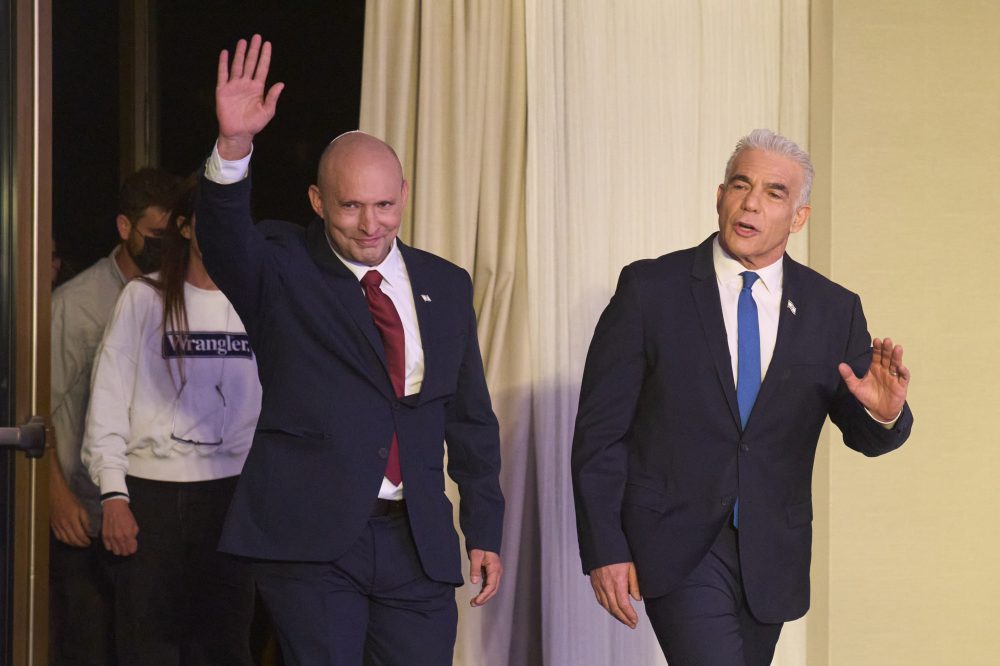

Israel’s opposition leader Yair Lapid condemned on Monday the potential agreement under discussion between the United States and Iran, stating it accomplishes none of Israel’s objectives for the conflict while criticizing Prime Minister Benjamin Netanyahu for his inability to secure more favorable terms.
Speaking to reporters in Jerusalem, Lapid, who leads an alliance working to remove Netanyahu from office in upcoming elections this year, described the specifics of the potential agreement as “troubling.”
“The deal is bad for Israel, bad for the region, bad for the citizens of Iran,” Lapid stated.
The conflict began February 28 with Israel and the United States declaring their intention to dismantle Iran’s ballistic missile capabilities, halt its backing of proxy militant organizations throughout the region, and eliminate Iran’s capacity to develop nuclear weapons. Both Netanyahu and President Donald Trump also expressed hopes of creating circumstances that would lead to the overthrow of Iran’s current government.
Regional officials report that the current agreement under consideration would require Iran to surrender its stockpile of highly enriched uranium and reopen the crucial Strait of Hormuz. In return, the U.S. would end its blockade of Iranian ports and remove sanctions against the country. Critical aspects of Iran’s nuclear program would be addressed through negotiations over a 60-day timeframe. Whether the agreement will tackle Iran’s missile capabilities or its backing of regional militant organizations remains uncertain.
While Lapid thanked Trump for initiating the conflict alongside Israel, he faulted Netanyahu for permitting Washington to pursue negotiations with minimal coordination with Israeli leadership.
“The Israeli government is at an all-time low in its ability to influence decisions in Washington,” he stated, referencing Trump’s recent comment that “Netanyahu will do whatever I want him to do.”
The leader of the centrist “Yesh Atid” party, Lapid held the position of prime minister temporarily in 2022 through a power-sharing arrangement with Naftali Bennett, who heads a smaller conservative party. Their coalition administration brought Netanyahu’s 12-year tenure to an end.
The two politicians have again combined their parties into a unified faction under Bennett’s leadership as they work to defeat Netanyahu in elections scheduled by late October.
Since Netanyahu’s return to office in late 2022, Lapid has served as Israel’s opposition leader, while Bennett stepped away from political activities. Their partnership seeks to consolidate a divided opposition largely united by their mutual opposition to Netanyahu.
Among the dwindling number of Israeli political figures who advocate for Palestinian independence, Lapid indicated this matter would not be prioritized by the next administration. He cited inappropriate conditions following the devastating impact of the Hamas attacks on October 7, 2023, and subsequent conflicts.
“There will be no two-state solution in the coming years, because Israelis now understand this will become just another failing terrorist state on our borders,” Lapid explained, adding that the Palestinian Authority lacks the capability to effectively stop attacks against Israel.
However, Lapid indicated he would resist unilateral actions that would eliminate the possibility of a future Palestinian state and had secured commitments from Bennett, a former West Bank settlement leader, that Israel would not pursue annexation of the occupied territory.
Lapid also dismissed the possibility of working with Arab parties to create a coalition capable of removing Netanyahu from power.
Polling data suggests Bennett and Lapid may be unable to establish a governing majority without support from Arab legislators, similar to their previous administration. They challenged a long-standing convention in 2021 by including Mansour Abbas, who leads a small Arab faction, in Israel’s governing coalition – marking the first and only occurrence in the nation’s history.
Lapid characterized his earlier collaboration with Abbas as “the right government for the moment,” but emphasized that Israel faces vastly different circumstances after almost three years of warfare, and he and Bennett will not form a coalition with Abbas’ party in the upcoming elections.