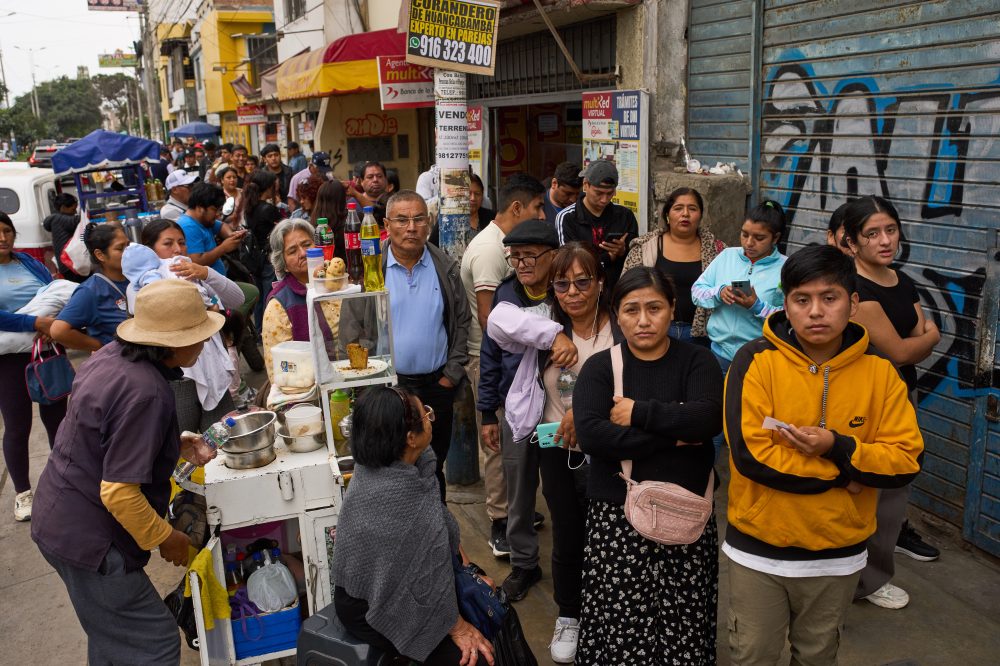

LIMA, Peru (AP) — Citizens of Peru head to the polls Sunday to select between two candidates offering contrasting political visions, as the nation prepares to install its ninth president within a decade while grappling with escalating criminal activity.
The runoff features Keiko Fujimori, a conservative politician whose father previously held the presidency, facing off against Roberto Sánchez, a nationalist lawmaker. Both candidates advanced from an initial voting round in April where they defeated 33 other contenders, though each received less than 20% of voter support. Polling data suggests approximately 30% of the electorate has yet to make a decision.
Election officials anticipate a close contest on Sunday, and based on the previous round’s timeline, final results may take several days to determine. It required more than a month for electoral authorities to formally announce Fujimori and Sánchez as the April winners.
Peru mandates voting participation for citizens between 18 and 70 years old. Registration records show over 27 million eligible voters, with roughly 1.2 million expected to participate from overseas locations, primarily from the United States and Argentina.
April’s official tallies showed Fujimori securing 17% support compared to Sánchez’s 12%. Following more than six weeks of campaigning, a national survey by Ipsos revealed comparable backing for both candidates, with approximately 3 out of 10 respondents remaining uncommitted.
Fujimori carries associations with the authoritarian and corrupt administration of her late father, Alberto Fujimori, during the 1990s. She assumed the role of Peru’s first lady in 1994 following her parents’ marital split.
Sánchez maintains close ties to imprisoned former President Pedro Castillo, widely viewed as corrupt and ineffective. Castillo’s 16-month presidency witnessed over 70 Cabinet personnel changes.
Rising criminal activity, especially extortion schemes, represents the primary voter concern. A 2025 national survey conducted by the state’s National Institute of Statistics and Informatics revealed that 84% of urban respondents expressed fear of becoming crime victims within the next year.
Analysts link the growing influence of organized crime in Peru to revenue generated by established criminal organizations through illegal gold mining operations in the Andes and Amazon regions.
Throughout her fourth presidential bid, Fujimori has emphasized tough crime-fighting measures. Her platform includes deploying technology to monitor extortion activities, militarizing border regions, and expanding police and military presence in dangerous areas. The 51-year-old candidate has also proposed requiring prisoners to work and “repay society.”
During the sole pre-runoff debate, Fujimori defended her father’s administration and vowed to eliminate crime similar to his defeat of the Shining Path, a violent extremist organization. She assured voters that under her leadership, they could leave their homes and return without falling victim to criminal acts.
Sánchez, a former minister who has gained popularity among rural constituents, has committed to fighting police corruption and advancing reforms allowing military assistance in security operations.
The 57-year-old candidate, who wears a wide-brimmed peasant hat given by Castillo, told debate audiences he would remain open to “all options to generate jobs and progress” while highlighting his backing of Chinese investments.
He has also attempted to calm investor anxieties about his candidacy, stating he will not nationalize assets belonging to transnational companies engaged in mineral or gas extraction from Peru.