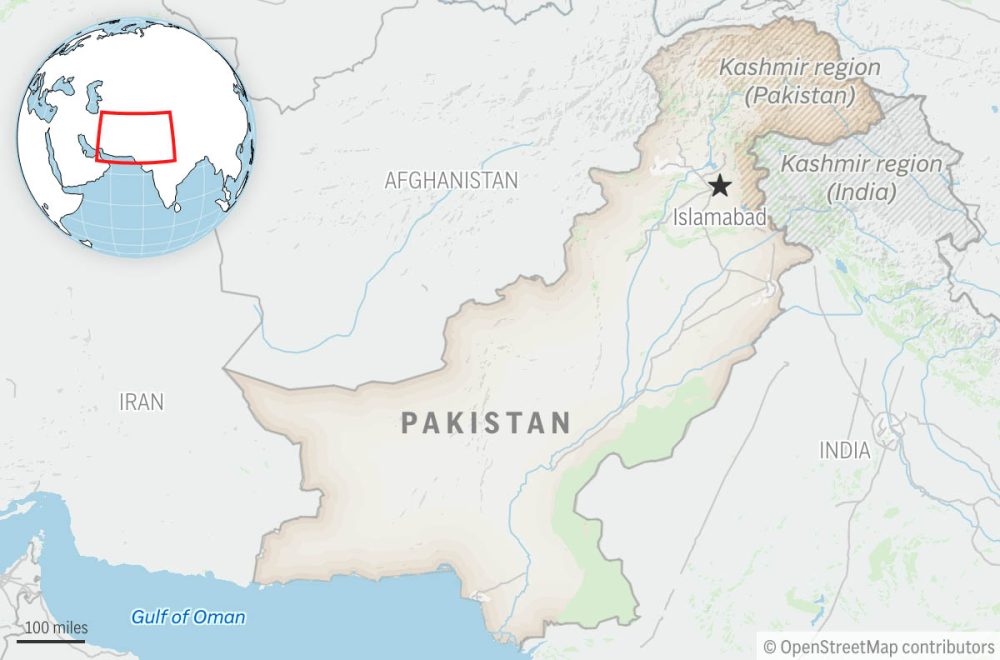

ISLAMABAD (AP) — Pakistan-administered Kashmir’s highest court determined Sunday that a dozen assembly seats designated for Kashmiri refugees residing in Pakistan have constitutional safeguards and cannot be eliminated except through constitutional modifications.
The decision bolstered the regional administration’s stance in a conflict that has sparked weeks of demonstrations before next month’s legislative elections.
The Supreme Court of Azad Jammu and Kashmir delivered its judgment after receiving a presidential inquiry requesting clarification on constitutional matters related to the refugee representation and the forthcoming election for the 45-seat Legislative Assembly.
This significant decision eliminates legal ambiguity surrounding the electoral procedure, declaring that public safety cannot be compromised under the guise of demonstrations. The ruling followed Saturday’s arrest of numerous supporters of the Joint Awami Action Committee, known as JAAC, an organization recently prohibited by regional authorities due to alleged public safety and security concerns.
The organization has conducted violent demonstrations in previous years and announced intentions to stage another protest next week to compel the government to meet its requirements.
The disputed refugee representation is allocated for individuals who relocated to Pakistan from Indian-administered Kashmir years ago, maintaining hopes of eventual return should the enduring territorial conflict reach resolution.
Kashmir remains split between Pakistan and India, with both nations asserting complete territorial claims over the Himalayan region and having engaged in two military conflicts since gaining independence from British rule in 1947.
The tribunal determined that legislative elections must occur within constitutionally mandated timeframes and that political conflicts, demonstrations, or constitutional disagreements cannot justify postponing the vote.
The court affirmed that refugee seats possess constitutional safeguards and may only be modified through constitutional amendments.
The judges also supported the administration’s position that unresolved constitutional matters should be handled by the Legislative Assembly. While acknowledging peaceful demonstration as a constitutional privilege, the court stated that activities disrupting public life, obstructing roadways, threatening citizens, or interfering with constitutional procedures lack legal immunity.
The ruling supports the administration’s contention that it cannot eliminate refugee seats through executive measures — a stance consistently maintained by Prime Minister Faisal Mumtaz Rathore during discussions with JAAC.
Relations have deteriorated between regional authorities and the protest organization before a demonstration scheduled for Tuesday. Officials prohibited JAAC this week, claiming it threatens public safety.
Rathore stated Saturday that the administration had accommodated 36 of the organization’s 38 requests last year following negotiations between JAAC representatives, regional authorities, and Pakistan’s federal administration. He explained the remaining two requests concern constitutional matters that only the Legislative Assembly can modify.
The organization claimed Saturday that authorities killed one member when police discharged weapons. Kashmir police rejected the allegation, stating armed individuals had fired at officers overnight after being instructed to halt their vehicle.
Previous year’s confrontations between demonstrators and security personnel resulted in multiple fatalities, including law enforcement officers.