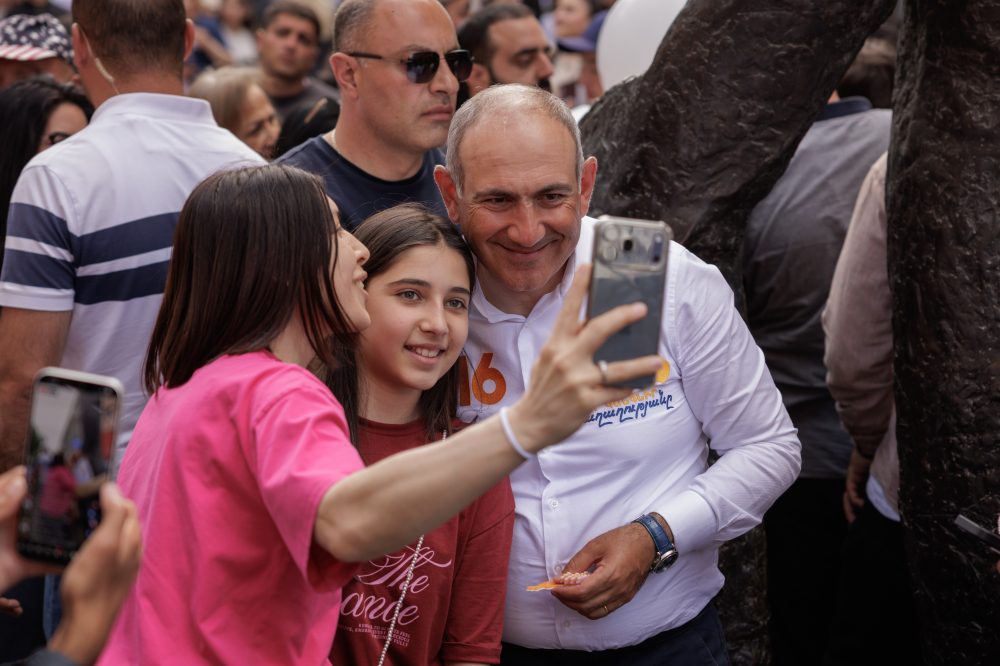

Citizens of Armenia will cast ballots Sunday in parliamentary elections while the current administration faces increasing pressure from Russia as it attempts to strengthen relationships with Western nations and reduce dependence on Moscow.
The prime minister and his Civil Contract party are seeking a robust endorsement for shifting the country’s geopolitical direction. Opposition groups competing against them include several organizations that openly support closer Russian ties.
Moscow has imposed numerous trade barriers on Armenian goods in recent weeks, and senior Russian leadership, including the president, have made subtle warnings drawing parallels between Armenia’s trajectory and the path Ukraine has followed.
Armenian law enforcement announced they had issued six arrest warrants for Strong Armenia party members on Saturday, claiming they engaged in vote purchasing. The country’s Central Election Committee verified that the party would be permitted to participate after a Republic party member challenged efforts to exclude Strong Armenia based on corruption claims.
The National Assembly requires a minimum of 101 members serving five-year terms. Individual parties need at least 4% of votes to gain representation, while coalitions of three or more parties must reach 8%.
Sunday’s contest features two political coalitions and 17 individual parties. Political analysts and polling organizations widely expect the prime minister, who assumed office in 2018 after massive public demonstrations, to emerge victorious.
“I think Armenians expect, first of all, a peaceful, independent and prosperous Armenia from this election, as we have today,” said Hripsime Grigoryan, a Civil Contract member of the outgoing Parliament.
The prime minister has repeatedly emphasized the importance of maintaining balanced international relationships that preserve positive connections with the United States, Europe, Russia, and regional powers including Turkey and Iran.
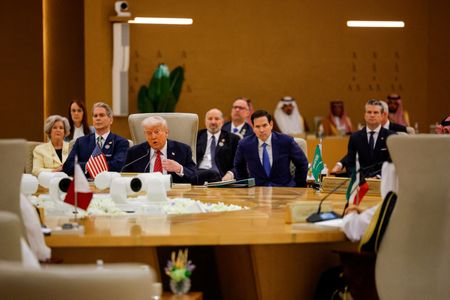
Nevertheless, Western leaders have shown significantly more support for the prime minister than Moscow has. Multiple European officials and the U.S. president have publicly backed his leadership.
“Prime Minister Nikol Pashinyan, of Armenia, a great friend and Leader, is making his Country strong, wealthy, and very secure,” the U.S. president posted on social media, encouraging Armenians to “Make (Armenia) Great Again.”
This Western support has frustrated the Kremlin. During a media appearance following Russia’s Victory Day parade on May 9, the Russian president stated that if Armenians believed European Union membership would benefit them, “we will certainly have nothing to say against it.”
However, he also cautioned reporters, “We are currently living through everything that is happening in respect of Ukraine. And how did it start? It started with Ukraine’s joining or attempting to join the EU.”
In contrast to the Civil Contract party, most Armenian opposition groups favor strengthening connections with Moscow.
Strong Armenia advocates for expanding commercial relationships with Russia and has criticized the prime minister for allegedly attempting to provoke conflict with Moscow. The party’s leader is currently facing trial for supposedly promoting government overthrow, charges the Armenian-Russian billionaire dismisses as politically driven. He has directed the party’s campaign from house arrest with assistance from his nephew.
Additional opposition candidates include a former president leading the Hayastan bloc who has criticized the prime minister for “seriously undermining” Russian relations, and the Prosperous Armenia Party headed by a pro-Russian business leader.
These opposition groups have also sharply criticized the prime minister’s efforts to establish normal relations with neighboring Azerbaijan. The Armenian leader and the Azerbaijani president signed an initial agreement toward a peace settlement at the White House with the U.S. president in August.
The two nations have been engaged in a prolonged dispute over Karabakh, a separatist territory that ethnic Armenian forces supported by Armenia had controlled for decades. Azerbaijan gained complete control of the Karabakh region through a swift military campaign in 2023.
“I want this government to change because the condition of our country is getting worse,” Sahakyan Elina, a supporter of the Prosperous Armenia Party, told The Associated Press at a rally Thursday. “I don’t want to live with my enemies in unity.”
Russian authorities have implemented fresh restrictions on Armenian agricultural products leading up to the parliamentary election, prohibiting imports of Armenian flowers, specific cognac and wine varieties, eggplants, potatoes, dried fruits, fish, and additional items.
Russia claims these prohibitions stem from violations of agricultural import regulations.
The European Commission on Thursday described the move as “nothing short of economic coercion.”
“By extending export restrictions on Armenian products, Moscow is weaponizing economic relations for political pressure. We know this playbook all too well,” the commission said in a statement.
Moscow also maintains substantial control over Armenia’s energy sector and infrastructure while providing discounted natural gas, a leverage point the Russian president has emphasized during meetings with the Armenian prime minister.
The Russian president has also stressed that Armenia cannot simultaneously join the EU while remaining in the Eurasian Economic Union, a Russian-led trade organization.
“Being in a customs union with the European Union and the Eurasian Economic Union is impossible,” the Russian president said. “It’s simply impossible by definition.”