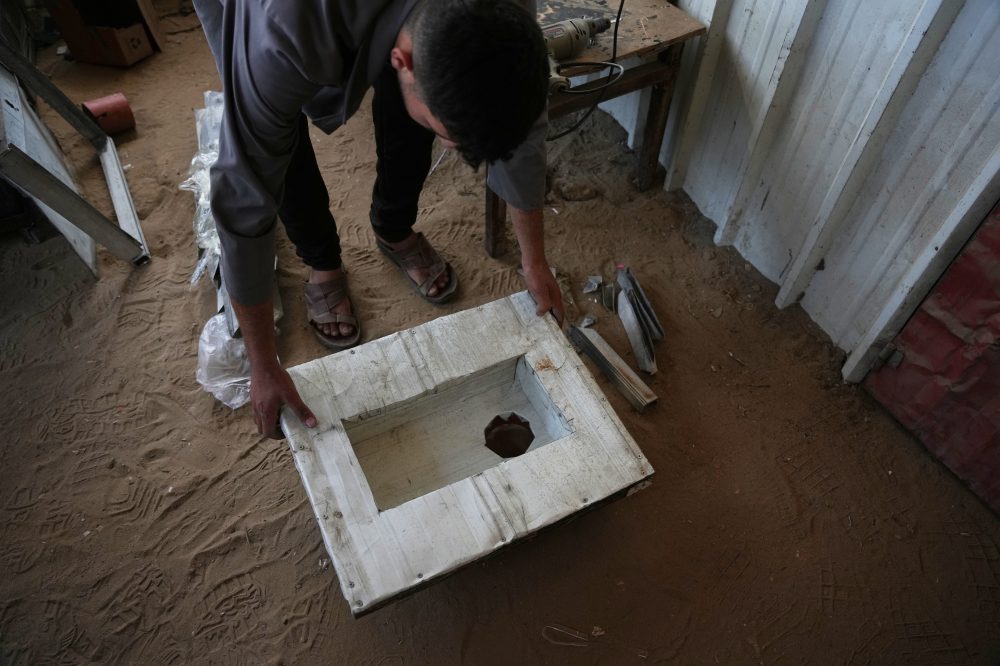

In a basic tent within southern Gaza, Mostafa Shaaban constructed a crude bathroom facility for his family using whatever materials he could find. Behind a makeshift curtain, he excavated a shallow hole in the sand, surrounded it with concrete, placed a bucket without a bottom over the opening, and added an old plastic toilet seat on top.
The improvised latrine produces terrible smells and attracts swarms of insects just steps away from where his family sleeps and cooks. Weekly, Shaaban must manually remove waste from the pit. Despite these conditions, he considers it preferable to the overcrowded shared facilities used by hundreds of others in the expansive encampment.
“I did not want the kids and my wife to use any public toilet. It is humiliating,” said the 38-year-old Shaaban, who was driven from his home city of Rafah by Israeli forces two years ago and eventually settled in a tent camp in Khan Younis.
“The situation is revolting,” he said of having the toilet inside the tent, “but at least it has more dignity.”
Across the enormous temporary settlements that shelter most of Gaza’s 1.7 million displaced Palestinians, not one adequate restroom facility exists. Families without homes have been forced to create their own waste disposal systems, with some facilities serving multiple related households.
At shared camp restrooms, people of all ages form lengthy queues before using facilities separated from waiting crowds by only thin fabric or metal barriers. Women are afraid to walk to these communal areas after dark.
This creates a catastrophic health situation as terrible odors spread throughout the densely populated tent areas and sewage pools form from overflowing waste pits or people emptying their personal latrines. Rights organizations report that more than 80% of Gaza’s sewage treatment facilities have been destroyed during Israel’s military operations over the past 2 ½ years.
While some humanitarian organizations have undertaken small projects to enhance family sanitation facilities, these efforts remain limited in scope due to supply shortages. When Gaza’s reconstruction might commence remains highly uncertain.
The U.S.-backed official overseeing the ceasefire in place since October has blamed Hamas for holding up the process by failing to reach an agreement on disarmament. The ceasefire deal calls for the entry of major construction and repair equipment into Gaza even before disarmament, and so far little has entered.
“It’s the most basic right. Making a toilet is more important than food and water, because you see the insects everywhere, the smell covers everyone,” said Shaaban’s wife, Iman Mansour, who is pregnant with their third child. “We want something clean.”
Creating a latrine requires significant expense. Shaaban explained that establishing his toilet took considerable time because he needed to purchase piping for the waste hole and concrete for sealing. The concrete frequently deteriorates, requiring replacement when finances allow.
A ceramic toilet seat costs between 1,700 to 2,000 shekels ($500 to $680), making it unaffordable for most families. Even if purchased, such a seat would simply rest over the hole without flushing capability. People instead use modified chairs or bottomless containers, or squat directly over the opening.
One merchant operating from a tent in Khan Younis creates metal coverings that fit around latrine openings, offering easier cleaning and selling them for 100 shekels ($34).
At one encampment near Khan Younis, Khaled Kollab worked to clear sewage drainage and pools of contaminated water beside his shelter. His tent’s waste facility consists of a basic squat toilet without seating, constructed from salvaged materials due to financial constraints. His 3-year-old daughter, Sila, stood close by, her skin showing multiple sores.
“You go into this toilet and feel humiliation and shame,” Kollab said.